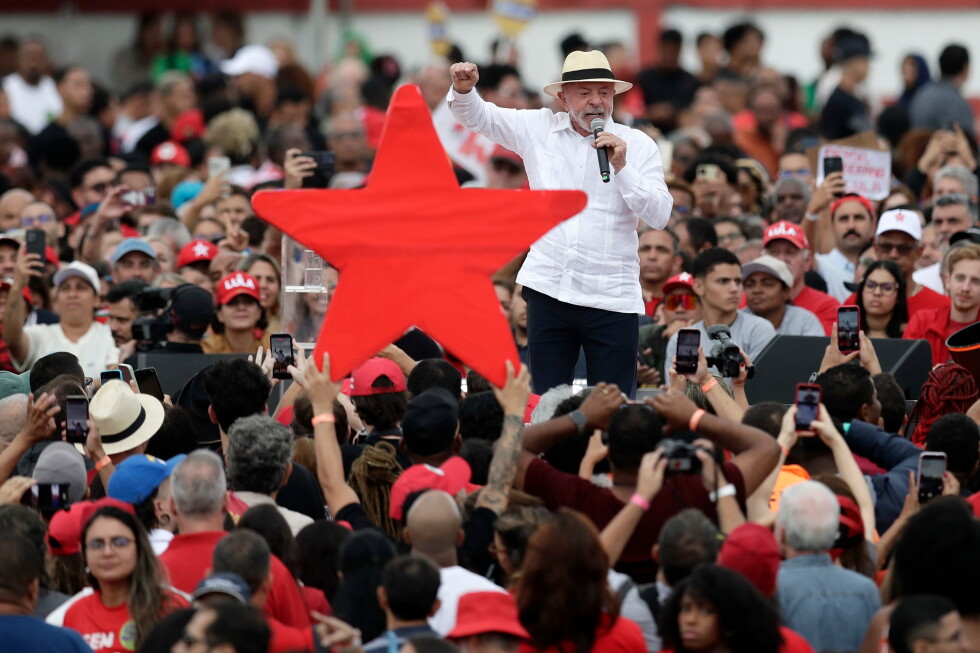
Brazil’s high-stakes presidential contest enters a new phase this Friday, as the two front-runners — incumbent Luiz Inácio Lula da Silva and opposition leader Sen. Flávio Bolsonaro — launch their official free campaign advertising blitz across national television and radio networks. Long-time political observers note that even amid the global explosion of social media campaigning, these traditional broadcast platforms remain one of the most influential tools for winning voter support across Brazil’s vast, continental territory.
Polls currently show the race is a dead heat: Lula, who is running for an unprecedented fourth non-consecutive term, holds a negligible lead over Flávio Bolsonaro, the eldest son of former far-right president Jair Bolsonaro. This tight margin has political analysts forecasting that the ad campaigns will be among the most combative in recent Brazilian history. Independent political consultant and former Brazilian government minister Thomas Traumann warns that the tone of this election will be even more toxic than the 2022 presidential race, which stands as one of the most divisive in the country’s post-democracy history. That 2022 contest saw Lula defeat Jair Bolsonaro by the narrowest margin since Brazil returned to democratic rule in 1985, and the former president is currently serving a 27-year prison sentence for his role in orchestrating the 2023 coup attempt following his election loss.
For millions of Brazilian voters, the arrival of daily campaign ads on TV and radio serves as an unmistakable marker that election season is underway, much like iconic Brazil national flags and street art signal the coming of the World Cup. Unlike the United States, where political candidates must spend hundreds of millions of dollars to buy broadcast ad time, Brazil’s system allocates free airtime to political parties based on the size of their electoral coalitions and their existing representation in the country’s lower house of Congress.
Communications scholar Bruno Pompeu, a professor at the University of Sao Paulo, explains that this free ad framework is intentionally designed to uphold core democratic principles. “The gratuity of ads defends the democratic principle of equal treatment and means the amount of time each party gets is not going to be determined by the economic power of each party,” Pompeu noted.
This structure has already created an uneven playing field for the two front-runners in the first round of voting, scheduled for October 4. Lula and his allied coalition have secured 5 minutes and 31 seconds of daily dedicated ad time, while Flávio Bolsonaro’s bloc will only receive 4 minutes and 20 seconds. The remaining allocated airtime will be split between the two smaller party candidates still in the race. Traumann argues that this smaller allocation of time for Bolsonaro highlights a key weakness in his candidacy: unlike his father, who successfully united a broad right-wing coalition on his way to winning the 2018 presidency, Flávio Bolsonaro has struggled to win the backing of major established parties. If a run-off vote is required — scheduled for October 25 — the two remaining candidates will receive equal airtime under Brazilian electoral law.
For many long-time voters, these broadcast ads remain a core part of how they engage with elections. Maria Izabel Pecanha, an 84-year-old retired history teacher living in Rio de Janeiro, says she has relied on TV and radio campaign coverage since the 1950s, and ignores most social media political content. “I like to watch them to feel excited, to feel angry, to think of how Brazil’s political actors show themselves. It is always very instructive,” Pecanha said. “I have watched today’s and I will keep doing that until the end of the campaign, it is like watching a bit of history unfold.”
Even as digital campaigning grows in prominence, political analysts say traditional broadcast ads retain unmatched reach, penetrating remote rural regions of Brazil where social media access is often limited or inconsistent, and shaping national public conversation around the election. Still, the medium is evolving to match shifting media habits: João Ricardo Matta, a business professor at the Getulio Vargas Foundation, one of Brazil’s leading academic and research institutions, says social media’s more casual, conversational tone is already shaping the style of this cycle’s TV and radio spots. “They will be less artificial, more natural, with the appearance of something homemade,” Matta said, adding that many campaigns are shifting a larger share of their overall budgets from traditional broadcast ad production to digital social media content.
Overall, broadcasters are required to set aside 14 minutes of daily airtime for nearly 1,000 30-second campaign ads across all races, plus an additional 12 and a half minutes reserved exclusively for presidential candidates, in the lead-up to the October 4 first round.