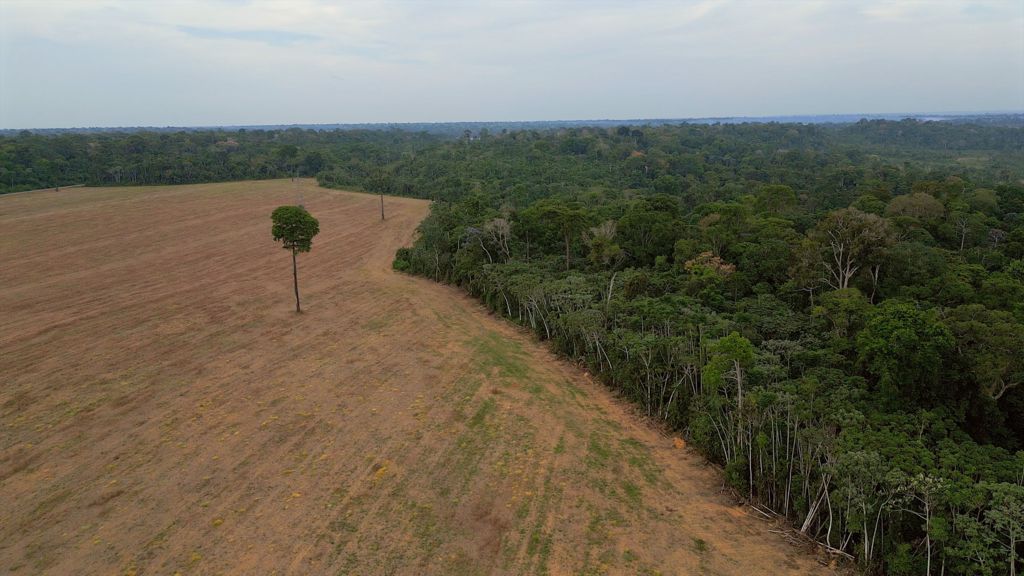
The Amazon rainforest, often referred to as the ‘lungs of the Earth,’ is at risk of a renewed wave of deforestation as efforts intensify to overturn a long-standing ban that has protected it. Known as the Amazon Soy Moratorium, this agreement prohibits the sale of soya grown on land cleared after 2008 and has been hailed as a global environmental success story. However, powerful farming interests in Brazil, supported by a faction of politicians, are pushing to lift these restrictions, particularly as the COP30 UN climate conference progresses. Critics argue that the ban unfairly favors a small group of companies, creating a ‘cartel’ in the soya trade. Environmental groups, however, warn that revoking the moratorium would be catastrophic, potentially leading to widespread land grabbing and further deforestation. Scientists have already cautioned that the Amazon is nearing a ‘tipping point,’ where the rainforest could irreversibly transform into a savannah, releasing vast amounts of carbon and disrupting global weather patterns. Brazil, the world’s largest producer of soya beans, plays a pivotal role in this debate. Much of the soya imported into the UK, a key component of animal feed, originates from the Brazilian Amazon. Major UK food companies, including Tesco, Sainsbury’s, and McDonald’s, have joined the UK Soy Manifesto, advocating for the continuation of the moratorium to ensure deforestation-free supply chains. Public opinion in the UK also strongly supports protecting the Amazon, with 70% of respondents in a recent World Wildlife Fund survey backing government action to eliminate illegal deforestation from supply chains. Despite this, Brazilian opponents of the moratorium argue that it stifles economic growth and have called for the Supreme Court to investigate whether the agreement constitutes anti-competitive behavior. The debate has even divided the Brazilian government, with the Justice Ministry questioning the ban while the Ministry of the Environment and the Federal Public Prosecutors Office defend it. The moratorium, initially signed nearly two decades ago by farmers, environmental organizations, and global food companies, has significantly reduced deforestation rates in the past. However, the pressure to lift the ban comes as Brazil prepares to open a major new railway that could further incentivize land clearing. Scientists monitoring the Amazon warn that deforestation is already reshaping the rainforest, with potentially devastating consequences for global climate stability and biodiversity.