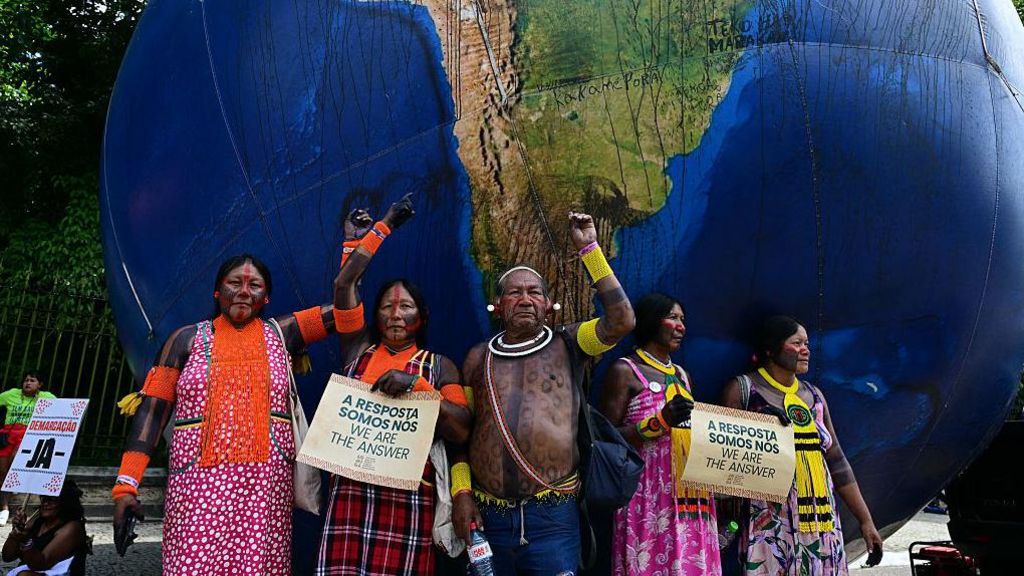
In a landmark decision during the COP30 climate summit in Belém, Brazil, the government has officially designated 10 new Indigenous territories. This move, formalized through a presidential decree, aims to protect the culture and environment of these areas under Brazilian law, though enforcement remains inconsistent. The announcement follows President Luiz Inácio Lula da Silva’s previous recognition of 11 Indigenous territories last year, marking a significant shift from the policies of his far-right predecessor, Jair Bolsonaro, who promoted mining on Indigenous lands. The newly protected regions span hundreds of thousands of hectares and are home to thousands of Indigenous people from various communities, including the Mura, Tupinambá de Olivença, and Guarani-Kaiowá. One of the areas overlaps with 78% of the Amazon National Park, a critical component of the global climate system. The decision aligns with Indigenous Peoples’ Day at COP30 and responds to protests demanding immediate demarcation of Indigenous lands. Demonstrators, some from Indigenous groups, carried signs reading ‘our forests are not for sale’ and clashed with security earlier in the week. Studies suggest that expanding Indigenous territories could prevent up to 20% of deforestation and reduce carbon emissions by 26% by 2030. Currently, Indigenous lands cover 117.4 million hectares, roughly the size of Colombia. The Amazon rainforest, already under threat from deforestation, plays a vital role in carbon sequestration. The COP30 summit aims to address global climate challenges, with countries striving to limit temperature rises to 1.5°C above pre-industrial levels to avoid severe consequences like extreme heat and food insecurity.