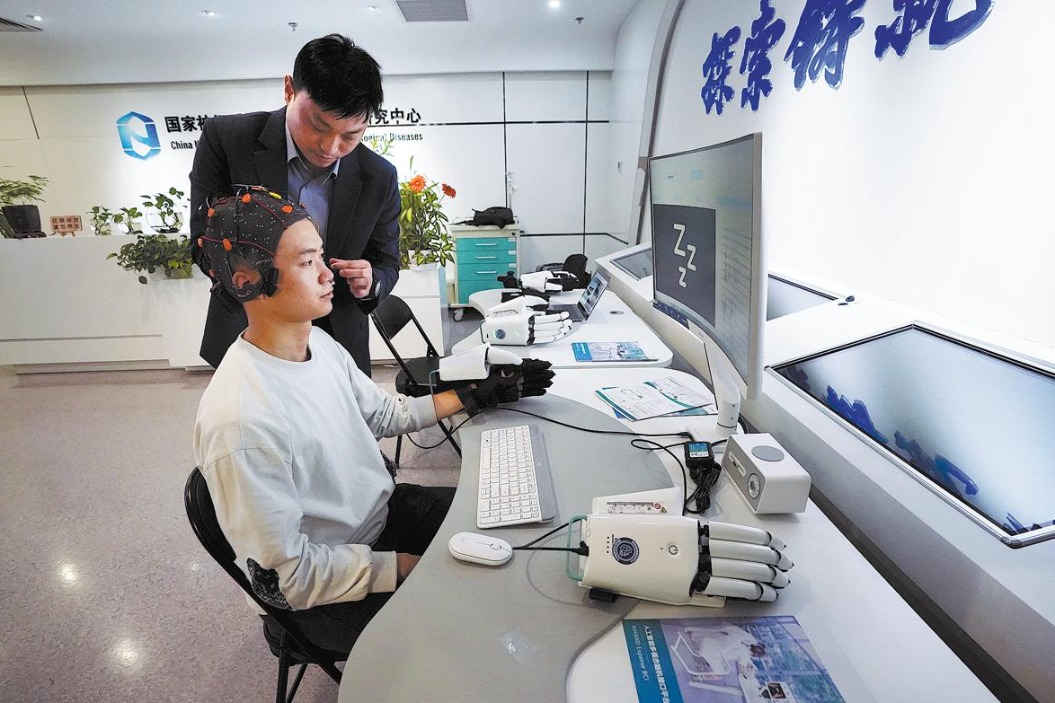
In a remarkable demonstration of medical innovation, brain-computer interface (BCI) technology is offering new hope to individuals suffering from paralysis and neurodegenerative conditions. At the forefront of this revolution, Chinese medical researchers are achieving significant milestones in clinical applications that restore movement and communication capabilities.
At a Langfang nursing home in Hebei province, ALS patient Wang Ming represents thousands awaiting transformative BCI treatments. With minimal muscle control after six years of battling amyotrophic lateral sclerosis, Wang’s simple aspiration to operate his phone independently exemplifies the life-changing potential of this technology. He is among over 500 patients registered for ongoing clinical trials across China.
Professor Qu Yan, Director of Neurosurgery at Tangdu Hospital in Xi’an, explains the technology’s mechanism: “BCI functions as a digital bridge for the nervous system. When conditions like ALS or spinal cord injuries disrupt neural pathways, our systems bypass damaged areas by capturing brain signals directly, decoding them, and converting them into commands for external devices or muscle stimulation.”
The technology translates cognitive intentions into physical actions. As Professor Qu illustrates: “When a patient sees a flame and wishes to move away, that intention is captured by implanted chips and transformed into movement commands.”
While Western nations pioneered early BCI research, China has emerged as a formidable innovator in the field. A July 2025 Nature report highlighted China’s rapid ascendance, noting that certain Chinese-developed devices now surpass even Elon Musk’s Neuralink project in specific performance metrics. Professor Qu attributes this accelerated progress to China’s extensive medical infrastructure and substantial population base, which provides unparalleled opportunities for clinical testing and refinement.
This convergence of neurological science and digital technology represents one of the most promising frontiers in medical rehabilitation, potentially restoring independence to those with severe motor impairments.