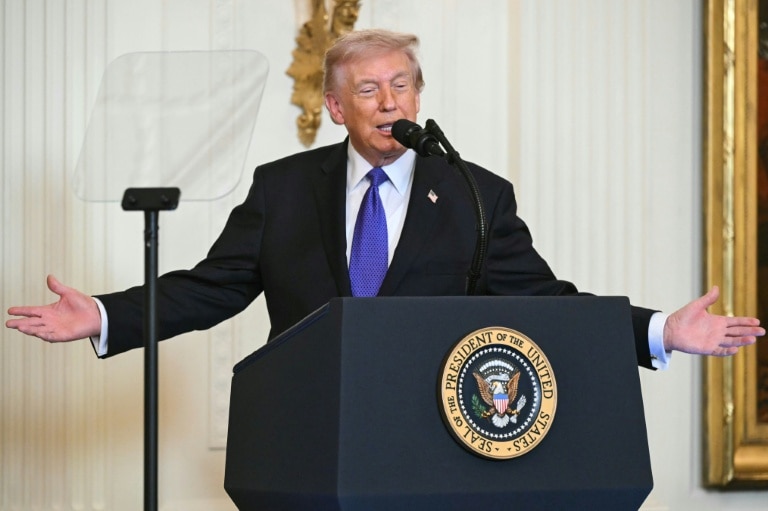
The United States military campaign against Iran, codenamed ‘Epic Fury,’ has entered a critical phase with President Donald Trump demonstrating what officials describe as ‘epic fury’ while maintaining strategic ambiguity about the operation’s ultimate objectives. The joint US-Israeli offensive, launched following coordinated airstrikes that resulted in the death of Iran’s Supreme Leader Ayatollah Ali Khamenei, has triggered significant regional instability and raised questions about long-term geopolitical consequences.
Initial statements from the White House suggested support for regime change, with President Trump explicitly encouraging Iranian citizens to rise against their government. However, administration officials subsequently clarified that the military operation does not officially seek to overthrow the Iranian government—a position that has created confusion among allies and analysts alike.
According to Defense Department sources, the campaign’s stated military objectives include the systematic degradation of Iran’s naval capabilities, the destruction of key military infrastructure, the elimination of Tehran’s support network for regional militant groups, and the permanent prevention of nuclear weapons development. The operation has already resulted in significant casualties, with hundreds reported dead in a nation of 90 million people.
Strategic analysts remain divided on the administration’s true endgame. Matthew Kroenig of the Atlantic Council suggests the operation may represent a limited engagement strategy designed to achieve maximum impact while avoiding prolonged nation-building exercises similar to those in Iraq and Afghanistan. ‘I think they could go home almost at any time and declare this a success,’ Kroenig noted, highlighting the administration’s apparent focus on avoiding extended military commitments.
Conversely, critics including Negar Mortazavi of the Center for International Policy warn that Iran’s leadership may resist ceasefire negotiations, believing that insufficient retaliation could invite future attacks. From this perspective, Iranian officials might calculate that enduring significant pain represents the only pathway to establishing credible deterrence.
The Israeli dimension adds another layer of complexity. Prime Minister Benjamin Netanyahu’s government has pursued a consistent strategy of degrading Iranian capabilities during periods of perceived weakness, while simultaneously supporting interim leadership figures like former jihadist Ahmed al-Sharaa. This approach mirrors Israel’s previous operations in Syria and its devastating campaign in Gaza following Hamas’s October 2023 attacks.
Trita Parsi of the Quincy Institute suggests the administration may be pursuing ‘regime implosion’ rather than outright regime change—a strategy that aims to severely degrade state capabilities without directly installing a new government. This approach reportedly finds favor with Israeli strategists who view the potential collapse of Iranian state structures as preferable to mere leadership changes.
The political context includes support for Reza Pahlavi, son of the deposed Shah, who has called for popular uprising at what he terms ‘the opportune moment.’ This development occurs against the backdrop of recently suppressed protests that resulted in thousands of civilian casualties.
Military historian Max Boot summarizes the administration’s approach as strategically ambiguous: ‘I think he’s basically keeping it ambiguous so that whatever happens, he can claim it was a huge victory.’ This ambiguity, while potentially tactically advantageous, raises significant questions about long-term regional stability and the humanitarian consequences of prolonged conflict.