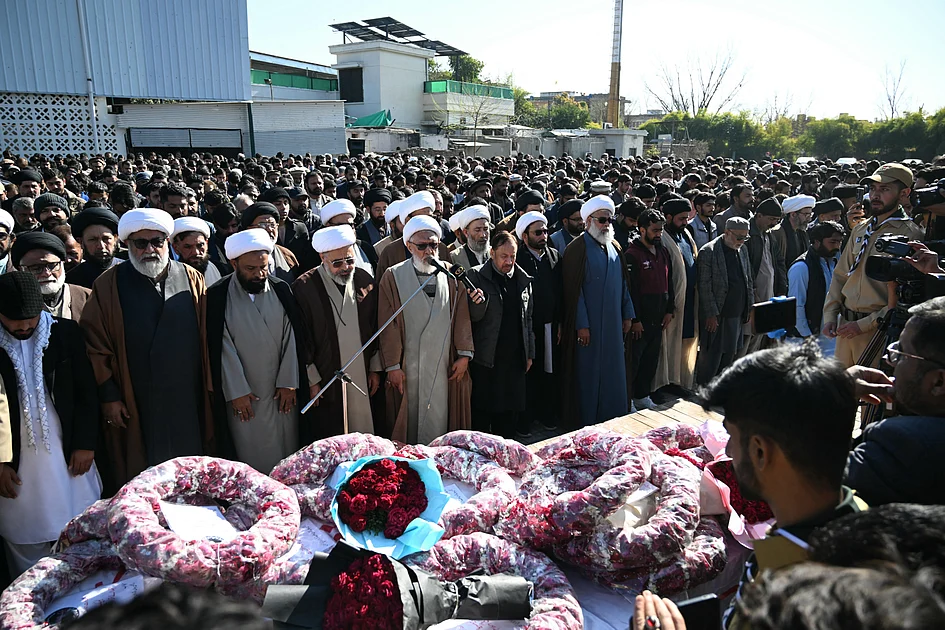
ISLAMABAD – The Islamic State (Daesh) has officially claimed responsibility for a catastrophic suicide bombing that tore through a Shiite mosque in Pakistan’s capital during Friday prayers, marking the deadliest attack in Islamabad in nearly two decades.
According to the SITE Intelligence Group, which monitors jihadist communications, the terrorist organization admitted to orchestrating the assault that left 31 dead and 169 wounded. The attack represents the most severe violence to hit the Pakistani capital since the 2008 Marriott hotel bombing that claimed 60 lives.
Eyewitness accounts obtained by AFP reveal harrowing details of the assault at the Imam Bargah Qasr-e-Khadijatul Kubra mosque. Muhammad Kazim, 52, a regular worshipper from Gilgit-Baltistan who now resides in Islamabad, described the moment of detonation: “During the first bow of the Namaz, we heard gunfire. While we were still in the bowing position, an explosion occurred.”
Kazim, who escaped physically unharmed but accompanied an injured friend to the Pakistan Institute of Medical Sciences, recounted the immediate aftermath: “The explosion was extremely powerful and caused numerous casualties. Debris fell from the roof, and windows were shattered. When I got outside, many bodies were scattered.”
Another witness, Imran Mahmood, provided critical details about the attack sequence, describing a violent confrontation between the assailants and volunteer security personnel. “The suicide attacker was trying to move forward, but one of our injured volunteers fired at him from behind, hitting him in the thigh,” Mahmood stated. “He fell but got up again. Another man accompanying him opened fire on our volunteers before the attacker jumped onto the gate and detonated the explosives.”
The tragedy has exposed significant security vulnerabilities at religious sites. Kazim noted that security had been consistently lax during his weeks attending Friday prayers at the mosque. “I have never seen proper security in place. Volunteers manage security on their own, but they lack the necessary equipment to do it effectively,” he revealed, adding that “Shiite mosques are always under threat, and the government should take this seriously.”
The response effort faced challenges according to witnesses, with Kazim noting that unhurt worshippers initially provided assistance using personal vehicles before ambulances arrived approximately 20-25 minutes after the explosion. The area was subsequently sealed off from public access as emergency services worked to manage the crisis.