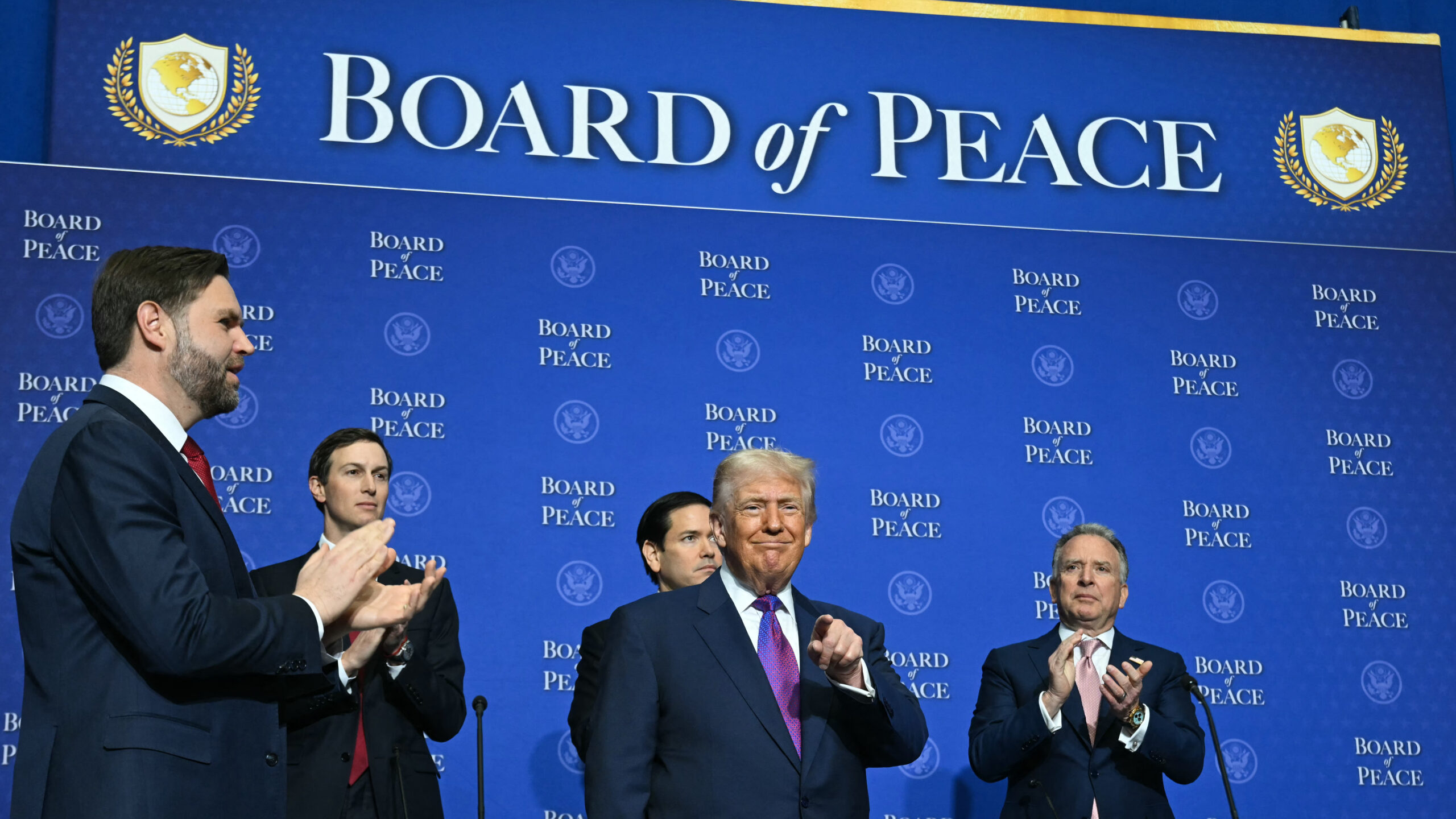
The inaugural session of the Trump-proposed Board of Peace for Gaza convened Thursday at the newly renamed Donald J Trump Institute for Peace in Washington DC, generating immediate controversy across multiple fronts. President Trump, designated as the board’s lifetime chairman, presided over a meeting that outlined a $7 billion commitment from nine nations toward Gaza relief efforts and revealed plans for a controversial $10 billion allocation of U.S. taxpayer funds for the board’s broader operations.
Bulgarian diplomat Nickolay Mladenov, appointed to oversee Gaza’s demilitarization, reported that police recruitment with 2,000 Palestinian enlistments was already underway, emphasizing that reconstruction would not commence until Hamas was fully disarmed. The proceedings were immediately met with fierce criticism from lawmakers and social media users who questioned the legality of allocating federal funds without Congressional approval.
The meeting featured several controversial moments, including Jared Kushner’s assertion that no participants would “personally” profit from Gaza’s reconstruction—a statement many observers found deliberately misleading given Kushner’s unofficial role as a government volunteer. Billionaire Apollo Global Management CEO Marc Rowan raised additional concerns by quantifying Gaza’s coastline as “$50 billion of value alone” that needed “unlocking and financing.”
International reactions drew particular scrutiny, with Pakistan’s Prime Minister Shehbaz Sharif labeling Trump the “saviour of South Asia” and Kazakhstan’s president presenting an award to Trump—gestures critics described as “beyond parody” and emblematic of a servile diplomatic culture. The absence of any mention of “Gaza” or “Palestinian” in the board’s charter, combined with the seating of Palestinian representative Ali Shaath without an identified title, further fueled accusations that the initiative disregarded Palestinian interests.
Palestinian journalist Motasem Dalloul, reporting from Gaza, condemned the proceedings as primarily benefiting Israel while ignoring essential issues like ending the siege, allowing entry of food and medicine, and conducting reconstruction without “blackmail.” The meeting’s peculiarities—including Trump briefly falling asleep during speeches and the YMCA song playing during a group photo—added surreal elements to what many critics characterized as a potentially unlawful appropriation of public funds for private interests.