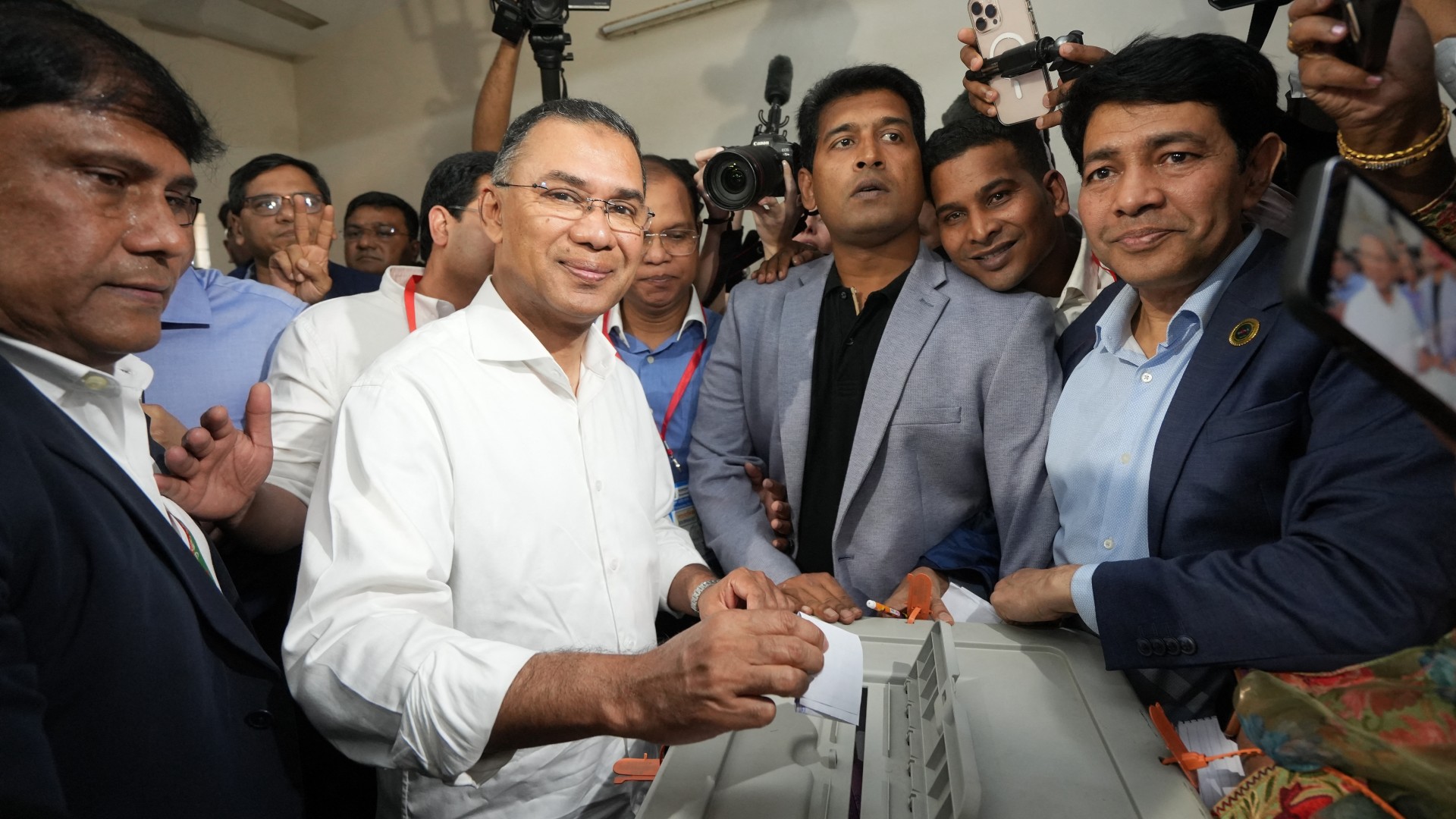
Bangladesh has witnessed a historic political transformation with the Bangladesh Nationalist Party (BNP) achieving a decisive victory in parliamentary elections, marking the nation’s first genuinely free and fair electoral process in nearly two decades. According to official results released by the election commission on Friday, the BNP secured a commanding majority with at least 212 of the 299 parliamentary seats.
The opposition coalition, spearheaded by Jamaat-e-Islami, obtained 77 seats in the newly constituted parliament. This electoral outcome positions BNP leader Tarique Rahman to assume national leadership, continuing a powerful political dynasty as the son of former Prime Minister Khaleda Zia and assassinated former President Ziaur Rahman.
In a remarkable demonstration of restraint, the victorious BNP explicitly prohibited celebratory processions or rallies despite their substantial margin of victory, instead encouraging supporters to offer prayers in acknowledgment of their success.
This political shift concludes a period of significant turbulence that began with the ousting of long-serving Prime Minister Sheikh Hasina in August 2024 following widespread student-led protests. Hasina, currently residing in exile in India, presided over an administration widely criticized for suppressing political opposition, silencing dissent, and committing human rights violations during her tenure from 2009 until her removal. In November, an absentia court verdict sentenced her to death for crimes against humanity related to lethal crackdowns on student protesters, resulting in her Awami League party’s exclusion from the electoral process.
Since Hasina’s departure, Bangladesh has been governed by an interim administration under Nobel Peace laureate Muhammad Yunus. Although Jamaat-e-Islami’s coalition, which included youth activists from the National Citizen Party, anticipated stronger performance, the party acknowledged defeat while expressing dissatisfaction with vote counting procedures in certain constituencies. Despite this setback, Jamaat achieved its highest parliamentary representation with 70 seats, marking its return to electoral politics after being banned by Hasina’s government in 2013.
Rahman’s impending leadership represents a significant milestone as Bangladesh prepares to welcome its first non-interim male prime minister in over 35 years. His return from a 17-year exile in London last December preceded a campaign focused on job creation, protection for low-income households, and ensuring fair pricing structures for agricultural producers. For many observers, Rahman’s ascendancy perpetuates the dynastic political tradition that has characterized Bangladeshi governance since the nation’s independence in 1971.
International responses have begun emerging with India, Pakistan, and the United States extending congratulations to the BNP. The relationship between Bangladesh and India, traditionally close allies, has experienced recent strain primarily due to New Delhi’s refusal to extradite the exiled Hasina.
Voter participation was reported at approximately 60 percent during the elections, which coincided with a constitutional referendum advocating significant political reforms. Championed by interim leader Yunus, these proposed amendments include implementing two-term limits for prime ministers, enhancing judicial independence, increasing female representation in government, establishing neutral interim administrations during election periods, and creating a new second parliamentary chamber. Although official results remained pending by Friday afternoon, media projections indicated comfortable passage with over 65 percent approval for these measures designed to prevent future autocratic leadership and government overreach.