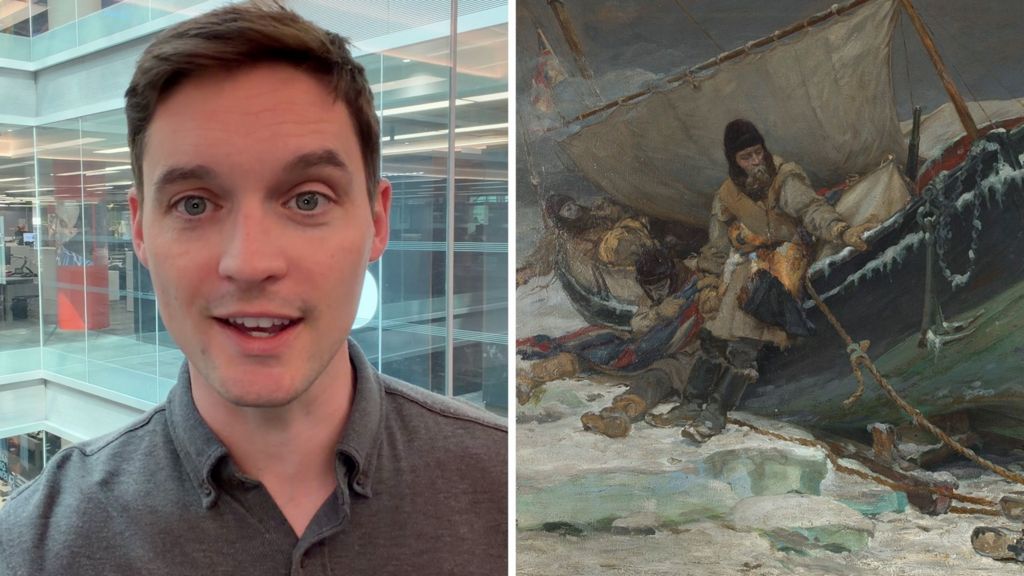
Decades of mystery surrounding one of the 19th century’s most infamous Arctic expeditions have taken an unexpected turn, as genetic research has unlocked a direct family link between a long-dead crew member and a contemporary British journalist.
The story began with the doomed 1845 Franklin Expedition, led by Sir John Franklin, which set out from Britain to chart the Northwest Passage through the Canadian Arctic. The entire expedition, consisting of 129 sailors including John Bridgens, disappeared without a clear trace, leaving behind one of the polar region’s most enduring historical puzzles. For nearly 180 years, archaeologists and researchers have slowly pieced together fragments of the expedition’s tragic end, recovering skeletal remains from scattered archaeological sites across the Arctic islands.
A team of genetic scientists from Canada’s University of Waterloo recently conducted advanced DNA testing on remains recovered from one of these sites, cross-referencing the genetic profile against a public database of family history and genetic samples. What they found delivered a stunning revelation: the remains belonged to John Bridgens, the great-great-great uncle of Rich Preston, a reporter working for the BBC. When the match was confirmed, lead researchers exclaimed the triumphant line: “Bingo! It’s a match.”
This breakthrough does more than just identify a single sailor’s remains. It highlights how modern genetic genealogy is transforming the study of historical mysteries, allowing researchers to connect long-lost historical figures to living descendants and shed new light on the fates of the men who died on the Franklin Expedition. For Preston, the discovery offers a deeply personal connection to a little-known ancestor who played a small part in one of history’s most famous maritime disasters.