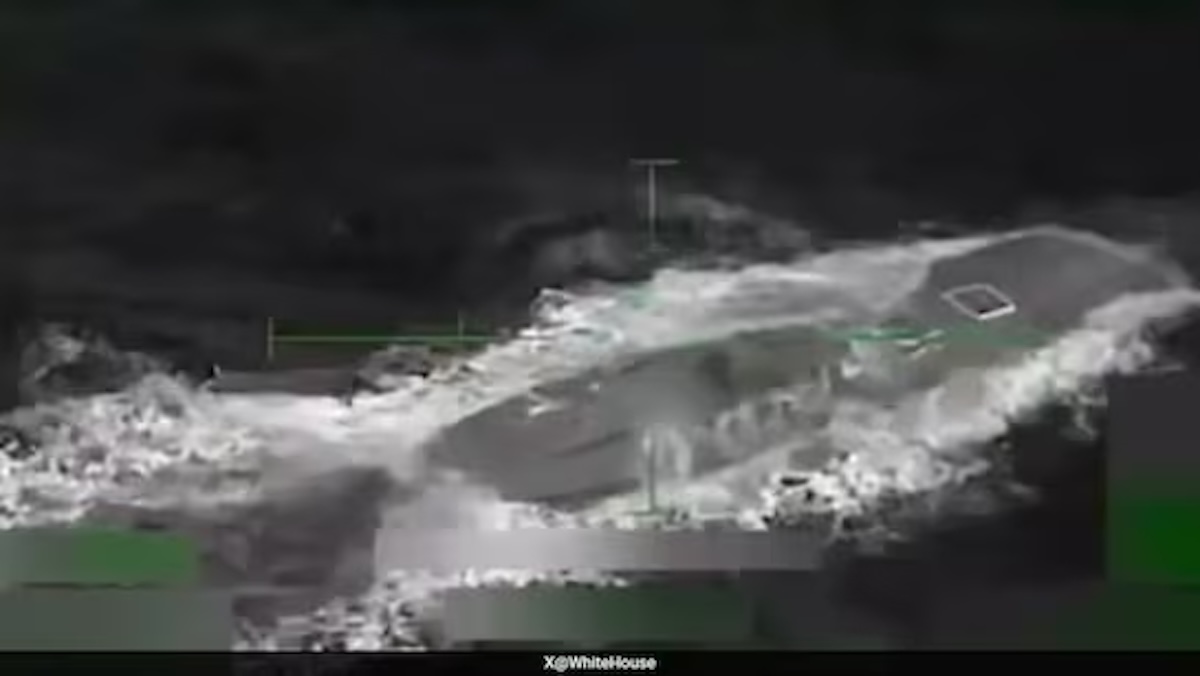
The US military has intensified its efforts to combat drug trafficking by deploying advanced drone technology to target and destroy narco vessels. In a recent operation, a semi-submersible vessel was struck by two Hellfire missiles, likely launched from a drone. This marks a significant escalation in the US strategy to disrupt drug cartels’ maritime operations. The Trump administration released a video of the strike but withheld details about the platform or operator involved. Experts speculate that the attack was carried out by an MQ-9 Reaper drone, known for its precision and endurance in surveillance and strike missions. Drones offer a cost-effective and efficient alternative to helicopters, which have limited range and slower response times. The US Marine Corps’ 22nd Marine Expeditionary Unit (MEU) has integrated MQ-9A Reaper drones into its operations in the Caribbean, supported by surveillance assets like the P-8 Poseidon aircraft. Narco vessels, including go-fast boats, semi-submersibles, and home-built submarines, are manufactured clandestinely in South America, primarily in Colombia. These vessels are designed to evade detection and transport large quantities of illegal drugs. Despite the US military’s efforts, experts argue that intercepting drug shipments at sea has minimal impact on the lucrative drug trade. The Trump administration faces criticism for its high-seas operations, which some consider illegal under international law. Additionally, the cartels’ vast resources enable them to bribe officials and maintain their operations. The US is exploring strategies to disrupt drug production and export infrastructure, impose financial sanctions on cartel leaders, and target corrupt officials who protect the cartels. However, the effectiveness of these measures remains uncertain, as the drug trade continues to thrive despite increased military interventions.