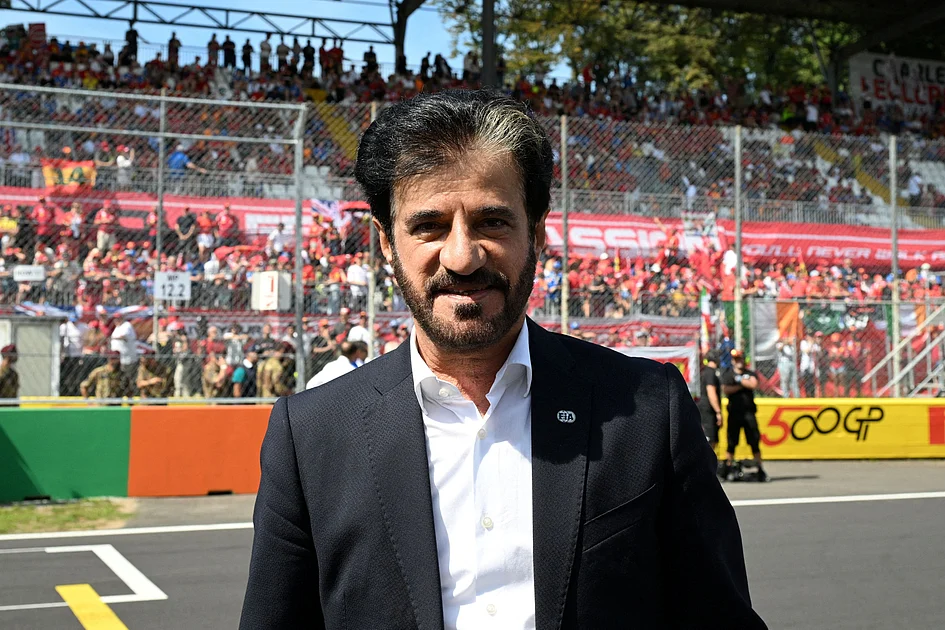
The Fédération Internationale de l’Automobile (FIA), under the renewed leadership of President Mohammed Ben Sulayem who has commenced his second term, is steering Formula One toward its most transformative period in decades. With the 2026 season on the horizon, the sport is poised for a comprehensive overhaul designed to enhance competitiveness, safety, and sustainability, marking a pivotal chapter in its history.
The cornerstone of this revolution is the introduction of the ‘Nimble Car Concept,’ a radical redesign philosophy aimed at reversing the trend of increasingly large and heavy vehicles. The 2026 chassis will be significantly leaner, with a reduction in weight by 30kg, bringing the target mass to 724kg including tires. Dimensions are also shrinking; the wheelbase will be shortened by 200mm to 3,400mm, while the overall car width and floor width are reduced by 100mm and 150mm, respectively, promising greater agility on track.
Aerodynamics will undergo a fundamental shift with the elimination of the Drag Reduction System (DRS). In its place, an active aerodynamics system featuring moveable front and rear wings will be implemented. This technology is primarily an energy conservation tool, allowing drivers to switch between modes to reduce drag on straights, which is crucial for the new, more electrically dependent power units. Overtaking assistance will now be provided by a new ‘Overtake Mode,’ granting a boost of an additional +0.5MJ of electrical energy when a driver is within one second of a rival at designated activation points.
The powertrain evolution is equally significant. While retaining the 1.6-litre hybrid internal combustion engine, the 2026 power units will achieve a remarkable 300% increase in battery power, resulting in an even 50/50 split between combustion and electrical energy output. This technological leap has attracted new manufacturer involvement, with Audi entering as a full works team, Ford partnering with Red Bull Powertrains, and Honda returning to the grid in a full works capacity with Aston Martin. Furthermore, Cadillac, under General Motors, will debut as a new constructor, the first entirely new entrant since Haas in 2016.
Sustainability is a key pillar of the new regulations. From 2026 onwards, all cars will exclusively use advanced sustainable fuels, aligning with global environmental goals. Concurrently, driver safety is being elevated to unprecedented levels. Enhancements include a revised front impact structure, increased side intrusion protection, and more robust roll hoops capable of withstanding impacts of 20G, up from 16G.
President Ben Sulayem heralded the changes as a ‘defining moment’ for the championship, emphasizing that the new framework is the product of extensive collaboration and is designed to secure the sport’s exciting and sustainable future for the next decade and beyond.