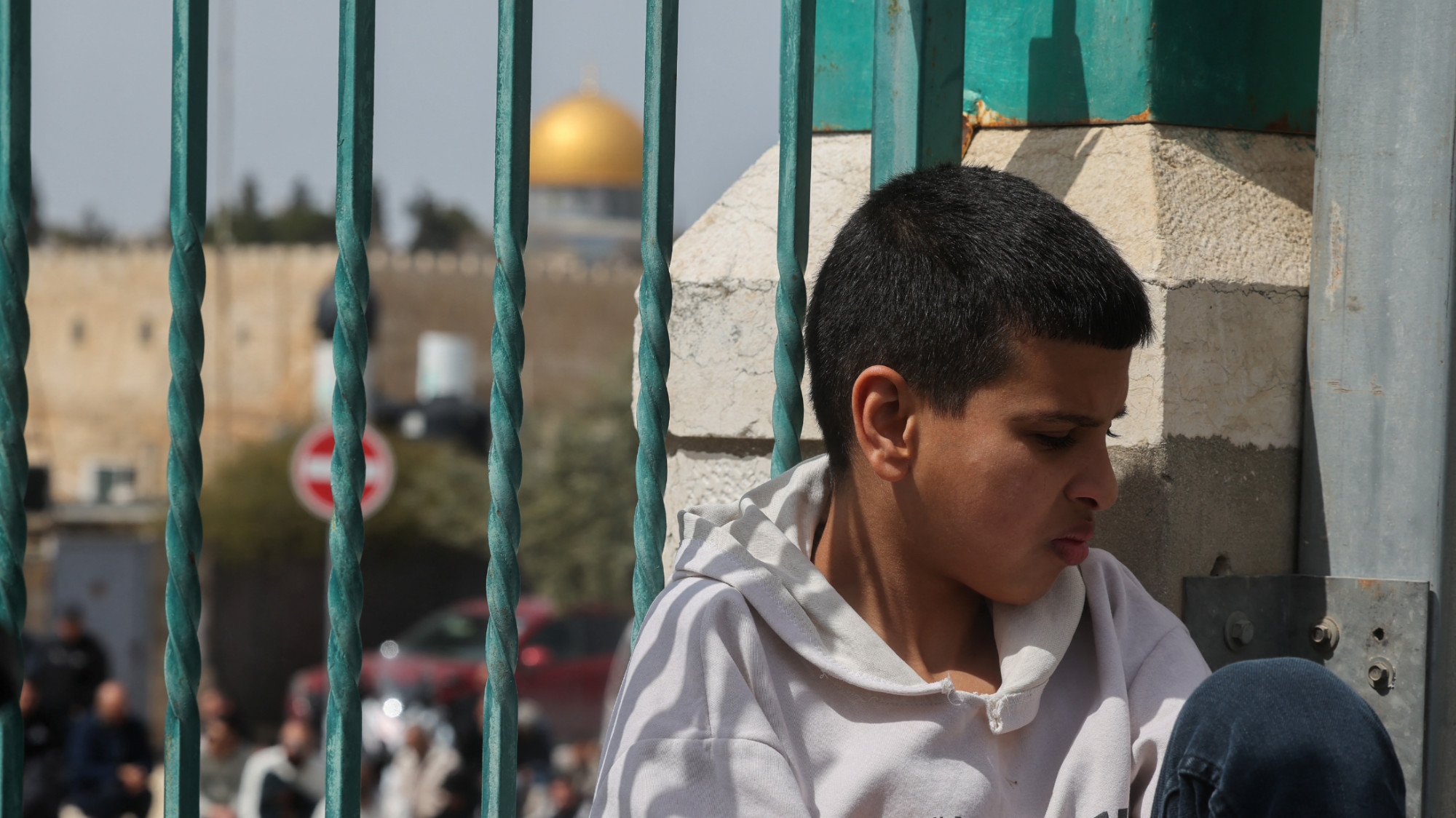
On a tense Monday in occupied East Jerusalem, Israeli far-right National Security Minister Itamar Ben Gvir launched a controversial incursion into the Al-Aqsa Mosque compound, entering through the Moroccan Gate under a heavy escort of armed Israeli police. The incursion took place against the backdrop of an unprecedented, month-long closure that has barred nearly all Muslim worshippers from accessing one of Islam’s most sacred holy sites, a move that has already stoked deep anger across the Muslim world.
Israeli authorities have justified the ongoing closure by citing security concerns tied to the ongoing war with Iran, but Palestinian officials and advocacy groups have openly questioned the credibility of these claims. They point to the fact that Israeli officials have allowed large-scale public gatherings for Jewish holiday celebrations in other parts of the country, raising accusations that the security pretext is being used to advance a long-held far-right agenda to reshape control of Al-Aqsa.
In parallel to Ben Gvir’s incursion, Israeli police — operating under Ben Gvir’s oversight — have drafted a new access plan that would resume daily incursions by ultra-nationalist Jewish settlers into the mosque compound once it reopens. The proposal, which still requires approval from Israel’s High Court, would cap entry at 150 people at a time, a limit that applies equally to both Muslim worshippers and Jewish visitors. The plan marks a break from the pre-war status quo arrangement, which has for decades recognized the Jerusalem Islamic Waqf as the sole exclusive administrative authority over Al-Aqsa, including full control over entry and site management.
Critics of the plan warn that the 150-person cap is not an even-handed restriction: with the compound’s capacity to hold hundreds of thousands of worshippers for weekly Friday prayers and thousands for daily prayers, the limit effectively shuts out the vast majority of Muslim worshippers while normalizing and expanding daily settler incursions. Before the war, these incursions — which already violated the long-standing status quo — took place twice daily on non-weekends, with settlers entering in groups of fewer than 100 people under constant police protection. The new plan would raise the maximum group size to 150, a change that has been openly celebrated by ultra-nationalist Israeli activists who advocate for Israeli control over Al-Aqsa. Arnon Segal, a prominent leader in Temple Mount activist groups that organize these incursions, called the new cap a “historic development” and a long-awaited “dream” in a post on social media platform X.
The incursion and the new access plan have drawn widespread condemnation from Palestinian, regional, and international actors. The Palestinian Ministry of Religious Affairs called Ben Gvir’s incursion, carried out while the site remains closed to Muslim worshippers, an extremely dangerous step that undermines the inherent religious sanctity of Al-Aqsa. The Al-Quds International Institution, in a hard-hitting official statement released Monday, argued that the plan “deepens the division of Al-Aqsa Mosque” between Muslim and Jewish communities, saying it leverages the ongoing war to quietly transform the site into a shared Jewish-Islamic holy site as a stepping stone to the full Judaization of the compound. The institution also noted that the arrangement would place Ben Gvir in de facto control of all of the mosque’s affairs, fully sidelining the Jerusalem Islamic Waqf, the internationally recognized governing body for the site. It called the move a deliberate insult to Arab and Muslim leaders who have so far only issued verbal statements against Israeli actions, reducing them to passive onlookers while a sacred site is reshaped against their will.
In practical terms, the Al-Quds International Institution explained, the 150-person cap means that even when the site formally reopens, it will remain effectively closed to the vast majority of Muslim worshippers: 150 people would not even fill the first row of the Qibli Mosque, the largest indoor prayer hall in the 144,000-square-meter Al-Aqsa compound. The institution warned that the plan would have “serious consequences” and issued an urgent call for action from Palestinians and all Muslim-majority nations, specifically calling on Jordan — the internationally recognized custodian of Jerusalem’s holy sites — and the Jerusalem Waqf to take concrete steps to push back against attempts to eliminate their long-standing role governing Al-Aqsa. “If implemented, Al-Aqsa Mosque will effectively be closed to Muslims and open to settler incursions. This is a humiliating act of aggression and an unacceptable reality that must be confronted by all possible means,” the statement read.
Hamas also issued a condemnation, saying Ben Gvir’s incursion “reflects a deepening of the occupation’s arrogance and its deliberate targeting of the mosque’s sanctity.” Jordan and Qatar have also added their voices to the criticism of the move. Ben Gvir, for his part, has defended the plan, arguing that it is a matter of fairness: he noted that anti-war protests of up to 600 people have been allowed in Israel, so he is “obliged to ensure justice and prevent discrimination” against those seeking access to the Western Wall and Al-Aqsa compound, which he refers to by the Israeli name Temple Mount. He called on the High Court to approve the plan to allow small-group access to both sites.