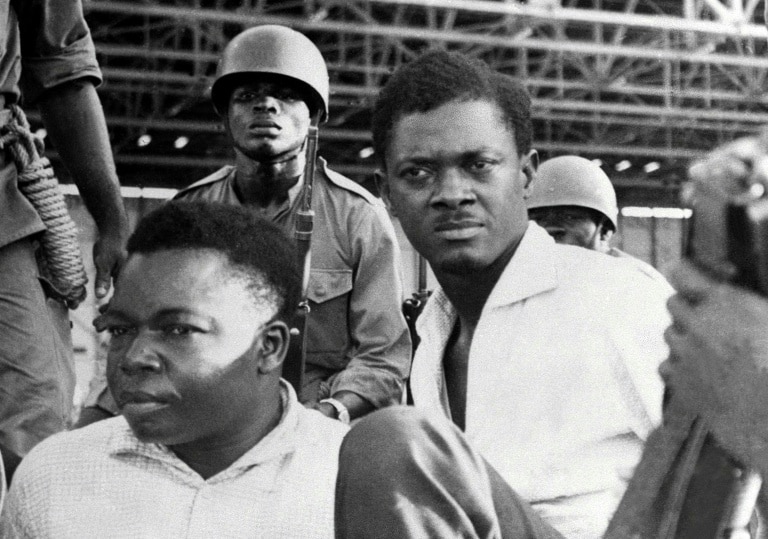
A Brussels court is poised to deliver a landmark decision on Tuesday regarding the potential prosecution of 93-year-old former Belgian diplomat Etienne Davignon for alleged complicity in the 1961 assassination of Congolese independence leader Patrice Lumumba. This case represents the most significant legal development in six decades of seeking accountability for the murder of Congo’s first prime minister.
Davignon, who later served as a European Commission vice president during the 1980s, stands as the sole surviving defendant among ten Belgians accused by Lumumba’s family of participating in a state-sponsored operation to eliminate the charismatic leader. The prosecution seeks to charge him with ‘participation in war crimes’ specifically related to Lumumba’s ‘unlawful detention and transfer’ and subsequent ‘humiliating and degrading treatment.’
The legal proceedings have revealed starkly contrasting arguments. Davignon’s defense team contends that the extraordinary passage of time—more than six decades—renders a fair trial impossible, while Lumumba’s descendants maintain that justice delayed should not mean justice denied. ‘We are counting on the Belgian justice system to do its job and shed light on history,’ stated Yema Lumumba, the 35-year-old granddaughter of the assassinated leader.
Historical context reveals Lumumba as a fiery critic of Belgian colonial rule who ascended to power when Congo gained independence in 1960. His tenure proved brief however, as he quickly alienated both Belgian and American interests, leading to his ouster in a coup merely months after assuming office. On January 17, 1961, Lumumba was executed at age 35 in Katanga province with support from Belgian mercenaries, after which his body was dissolved in acid to prevent recovery.
This case emerges within Belgium’s broader reckoning with its colonial past, a process that has already yielded symbolic gestures including the 2022 repatriation of Lumumba’s sole known remains—a tooth confiscated from the daughter of a deceased Belgian police officer involved in the body’s disposal. During the remains transfer ceremony, then-Prime Minister Alexander De Croo formally acknowledged Belgium’s ‘moral responsibility’ in Lumumba’s disappearance, citing officials who ‘chose not to see’ and ‘not to act.’
The court’s decision remains subject to appeal, with potential trial proceedings possibly commencing in early 2027 should prosecutors prevail. Legal representatives for the Lumumba family have characterized Davignon as ‘a link in the chain’ of a ‘disastrous state-sponsored criminal enterprise,’ highlighting his role as a junior diplomat involved in Congolese independence negotiations preceding the assassination.