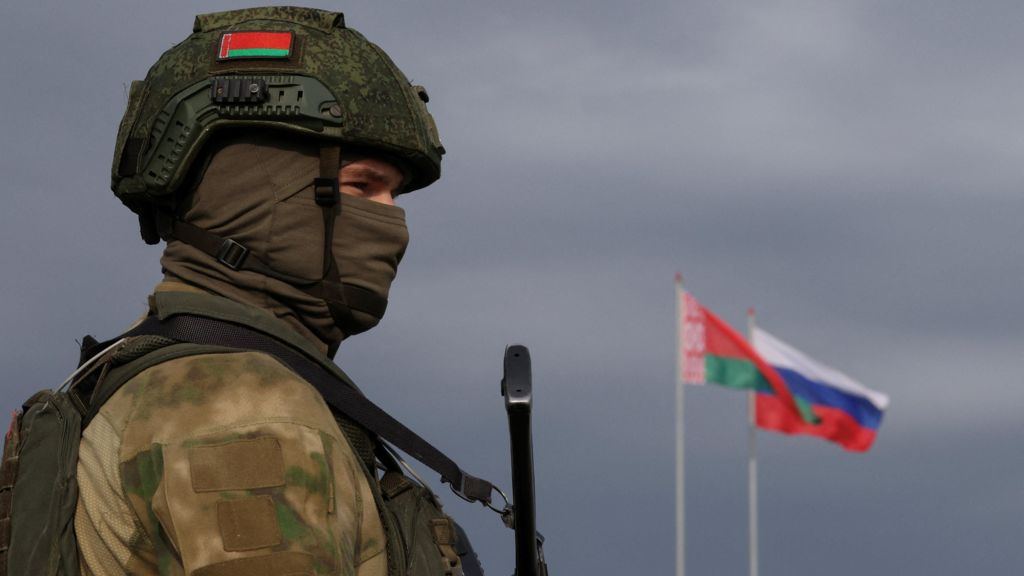
In a dramatic display of military might, Belarus and Russia have launched their joint military exercises, codenamed ‘Zapad-2025’ (West 2025), at the Borisovsky training ground, located 45 miles from Minsk. The drills, which occur every four years, feature a series of simulated combat scenarios, including guided bomb drops by Sukhoi-34 bombers, artillery shelling, and helicopter gunship attacks. Surveillance drones hover overhead, capturing the intensity of the maneuvers. Despite the spectacle, Belarusian and Russian officials insist the exercises are purely defensive, aimed at bolstering the security of both nations against potential external threats. However, the timing of the drills has raised eyebrows, coinciding with heightened tensions in Eastern Europe. Poland, in particular, has expressed concern, with Prime Minister Donald Tusk labeling the exercises as ‘very aggressive.’ The drills also come amid ongoing conflict in Ukraine, where Russia continues its military operations. In a bid for transparency, Belarus invited international media and military attachés from 23 countries, including the US, Turkey, and Hungary, to observe the exercises. Major General Valery Revenko, assistant to the Belarusian defense minister, emphasized the unprecedented openness of the event, stating, ‘We are not threatening anyone. We are for constructive and pragmatic dialogue.’ Yet, recent incidents, such as Russian drone incursions into Polish and Romanian airspace, have fueled fears that these exercises may be part of a broader strategy to test NATO’s resolve. While both Russia and Belarus have sought to improve relations with Washington, their ties with Europe remain strained. The ‘Zapad-2025’ drills serve as a stark reminder of the military capabilities on Europe’s doorstep, sending a clear message to the West: confrontation with Moscow may not be in their best interest.