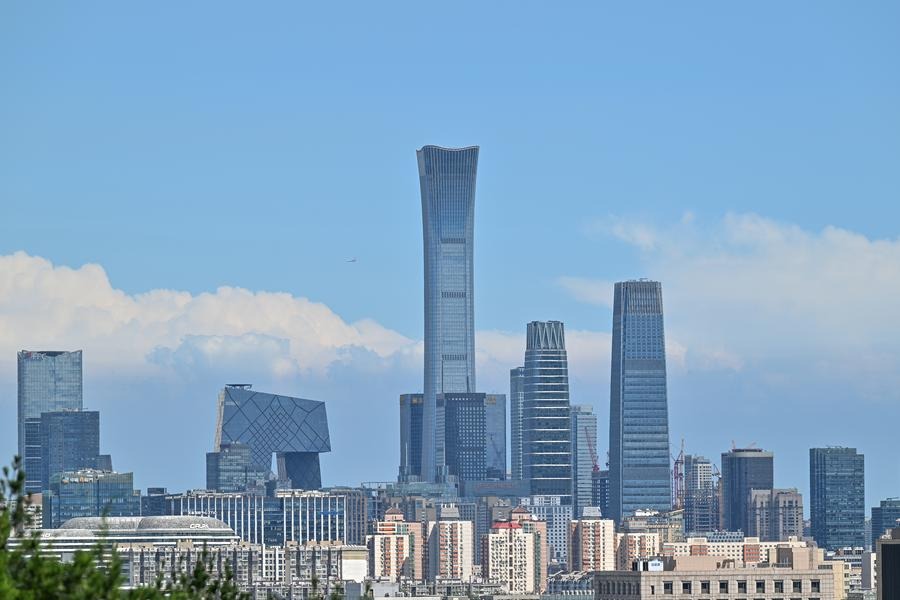
Beijing has laid out an ambitious yet pragmatic economic roadmap for the second half of the 2020s, announcing an average annual GDP growth target of 4.5 to 5 percent for the 2026 to 2030 period as part of its newly released 15th Five-Year Plan. Unveiled to the public on Wednesday, the blueprint projects that this growth trajectory will expand the Chinese capital’s overall economic output by more than 1 trillion yuan, equivalent to approximately $147 billion, over the five-year window.
The target builds on a strong track record of steady expansion from the previous planning cycle. Over the past five years, Beijing recorded an average annual GDP growth rate of 5.2 percent, pushing the city’s total annual GDP to 5.2 trillion yuan by the end of 2025.
Officials from the Beijing Commission of Development and Reform noted that the new growth range was formulated after a careful balancing of long-term development needs and practical economic feasibility. The target is aligned with Beijing’s overarching 2035 vision to roughly double the city’s 2020 economic output, while intentionally building flexibility into growth projections to accommodate ongoing structural economic adjustment, deepening reform efforts, and a continued shift toward higher-quality, sustainable growth rather than sheer expansion.
Of the 13 sector-focused chapters in the plan, the first five are dedicated to reinforcing Beijing’s core role as China’s national capital, with particular focus placed on strengthening its standing as a leading international exchange hub and a national center for scientific and technological innovation.
On the front of international openness, the plan sets a clear target to raise Beijing’s share of the country’s total cross-border passenger flows from 3.08 percent in 2025 to roughly 3.8 percent by 2030. City planners aim to achieve this by upgrading targeted service improvements designed to position Beijing as the preferred entry point for international travelers visiting China.
For scientific and technological advancement, Beijing plans to ramp up research and development investment to more than 6 percent of its total annual GDP. Leveraging its existing innovation ecosystem— which currently hosts 145 national key laboratories, accounting for 28 percent of all such facilities across China, alongside a dense network of top-tier research institutions and industry-leading technology companies— the city is positioned to generate a wave of new original scientific and technological breakthroughs in the coming years.
Beyond economic and innovation goals, the plan identifies expanded social support for elderly and child care as a top policy priority for the 2026-2030 period. As of 2024, Beijing was home to more than 687,000 residents aged 80 or older. To meet growing demand for elder care services, the city aims to build a fully accessible, inclusive care network that will see regional elderly care service centers cover 80 percent of all urban subdistricts and rural townships by the end of the planning period.
The comprehensive five-year blueprint also includes detailed targets and policy roadmaps for childcare provision, K-12 and higher education, public healthcare improvements, coordinated regional development across the Beijing-Tianjin-Hebei corridor, urban renewal projects, and public safety infrastructure upgrades.