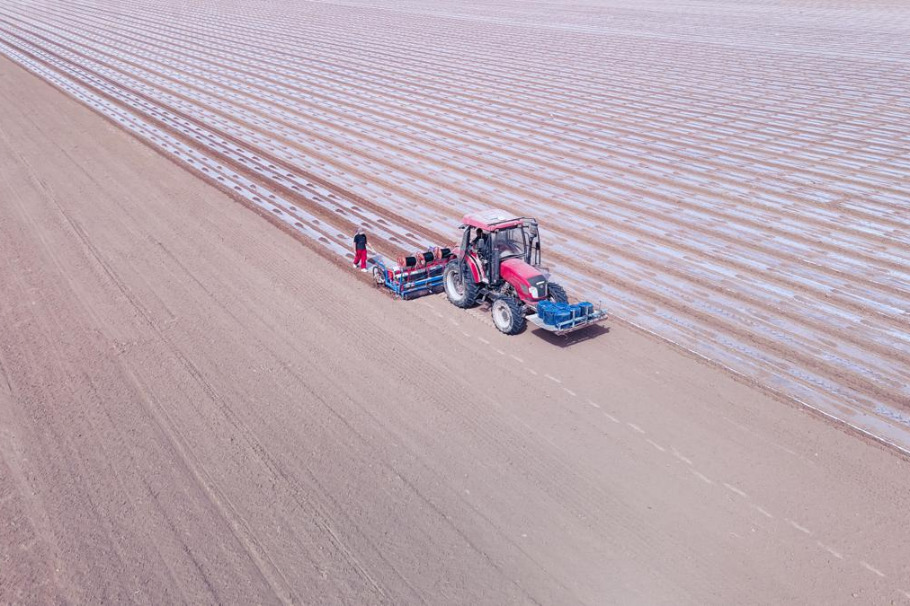
As the 2026 spring sowing season kicks off across northwest China’s Xinjiang Uygur autonomous region, the cotton fields of Artux have come alive with the deep roar of agricultural machinery and the lively chatter of local farmers gearing up for a new growing cycle. At the region’s flagship high-standard cotton cultivation base, a quiet technological revolution is playing out across the expansive farmland: modern seeding machinery fitted with China’s domestically developed Beidou Navigation Satellite System is reshaping the traditional cotton planting process, delivering unmatched levels of accuracy and productivity that were out of reach for previous generations of growers.
Unlike manual seeding or older mechanized methods that relied on rough visual alignment, Beidou-guided seeders traverse the sprawling fields with consistent, centimeter-level precision, laying each row of cotton seeds at a uniform depth and spacing. As the machines complete their passes, neatly stretched lines of plastic mulch – used to retain soil moisture and suppress weed growth in Xinjiang’s arid climate – stretch toward the horizon in perfectly straight rows, a visible marker of the navigation system’s reliability.
This integration of domestic satellite navigation technology with modern agricultural equipment has cut down on unnecessary fuel use, reduced seed waste, and cut the total time required to complete sowing, streamlining the entire early stage of cotton production for local farming operations. As global demand for cotton remains steady and China continues to push for modernization of its agricultural sector, the adoption of Beidou-powered smart farming tools in major cotton-producing regions like Xinjiang marks a key step forward in boosting domestic output and strengthening the resilience of the global cotton supply chain.