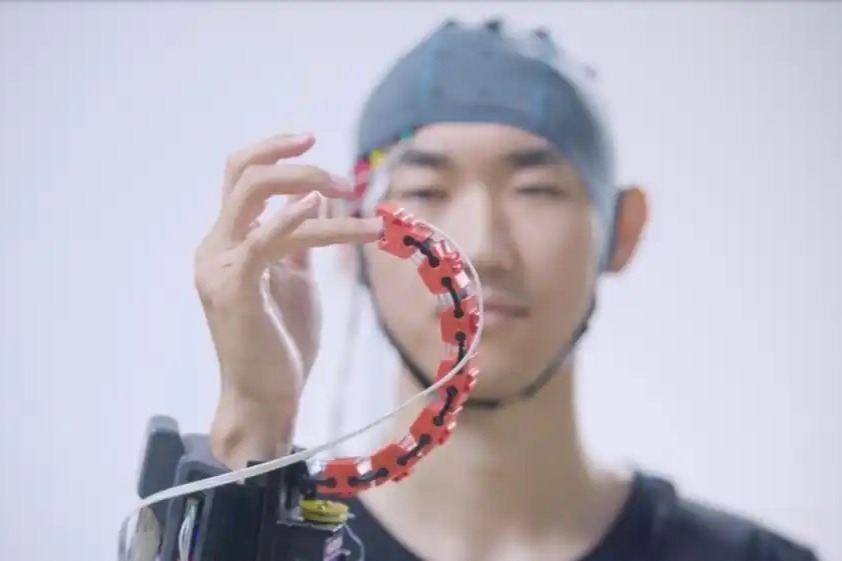
In a significant advancement for neurotechnology commercialization, Chinese firm NeuroXess has commenced construction on a groundbreaking production facility dedicated to implantable brain-computer interface (BCI) systems. The project, launched on January 13 in Ganjiang New Area, Nanchang, represents a crucial transition from experimental research to standardized manufacturing within China’s strategically prioritized technology sector.
The manufacturing complex, scheduled for completion in late 2026, constitutes the core industrial component of NeuroXess’ dual-hub operational strategy. This innovative approach maintains research and development activities in Shanghai while establishing production capabilities in Jiangxi province. The facility will not only manufacture implantable BCI devices but also support complementary functions including data processing, rehabilitation training, and artificial intelligence integration.
Founder and Chief Scientist Tao Hu explained the strategic rationale behind this geographical division: “This configuration optimally leverages Shanghai’s exceptional talent pool and research infrastructure alongside Jiangxi’s competitive advantages in manufacturing ecosystems, labor availability, and operational costs.”
This development aligns with China’s national technology roadmap, which has designated brain-computer interfaces as one of six priority future industries in its 15th Five-Year Plan (2026-2030). The project has already established collaborative frameworks with three major Jiangxi medical institutions.
Medical partnerships include the First Affiliated Hospital of Nanchang University, which performed Jiangxi’s first research-oriented BCI implantation in July 2025 and subsequently established the province’s inaugural BCI clinical research ward with NeuroXess. The Second Affiliated Hospital and Jiangxi Provincial People’s Hospital have also joined collaborative clinical research initiatives.
Neurosurgeon Zhang Jianzhong of Jiangxi Provincial People’s Hospital noted that standardized production could expand patient access if clinical studies maintain positive outcomes. “BCI technology remains predominantly in clinical research,” Zhang stated. “Consistent reliability could eventually benefit patients with motor or language impairments.”
Despite promising developments, significant challenges persist including long-term signal stability, the complexity of neural decoding—particularly for language—and considerations regarding ethics, cost structures, and insurance coverage. China’s progress in BCI technology reflects broader global advancements in this rapidly evolving field.