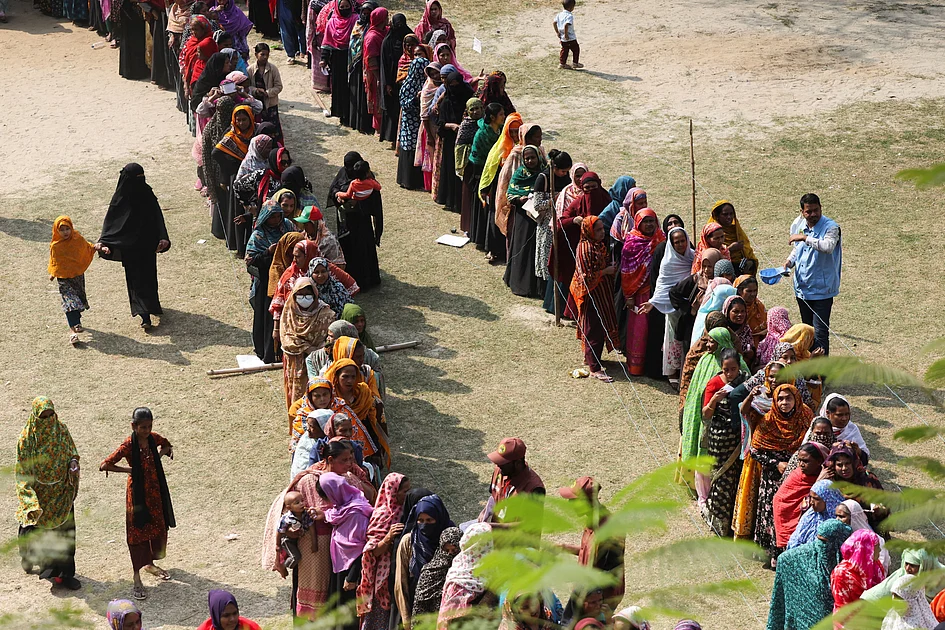
Bangladesh commenced a historic national election on Thursday, marking its first electoral process since the 2024 Gen Z-led uprising that ousted long-serving Prime Minister Sheikh Hasina. This pivotal moment represents a critical test for democratic renewal in the South Asian nation of 175 million people.
The electoral contest features two primary coalitions: the Bangladesh Nationalist Party (BNP) and the Islamist Jamaat-e-Islami, with opinion polls indicating a slight advantage for the BNP. Over 2,000 candidates from at least 50 political parties are competing for 300 parliamentary seats in the Jatiya Sangsad (House of the Nation), setting a national record for political participation.
Voters expressed unprecedented enthusiasm, with Mohammed Jobair Hossain, 39, noting he hadn’t voted since 2008. “I am feeling excited because we are voting in a free manner after 17 years,” Hossain stated. “Our votes will matter and have meaning.”
The election occurs alongside a constitutional referendum proposing significant reforms, including establishing a neutral interim government during election periods, creating a bicameral legislature, enhancing women’s representation, strengthening judicial independence, and implementing a two-term limit for prime ministers.
Nobel laureate Muhammad Yunus, heading the interim government installed after Hasina’s ouster, emphasized the election’s significance: “The public awakening we witnessed against long-standing anger, inequality, deprivation and injustice finds its constitutional expression in this election.”
Security measures were extensive with approximately 958,000 personnel from police, army, and paramilitary forces deployed nationwide. Despite the high stakes, the campaign period remained largely peaceful with minimal incidents.
Thomas Kean of the International Crisis Group noted: “The crucial test for Bangladesh now will be to ensure the election is conducted fairly and impartially, and for all parties to then accept the result. If that happens, it will be the strongest evidence yet that Bangladesh has indeed embarked on a period of democratic renewal.”
With nearly 128 million registered voters (49% women) and nearly half aged 18-35, this election represents a generational shift in Bangladeshi politics. Results are anticipated by Friday morning, potentially reshaping the nation’s political landscape and international alliances, particularly as China seeks expanded influence amid Dhaka’s deteriorating relations with New Delhi.