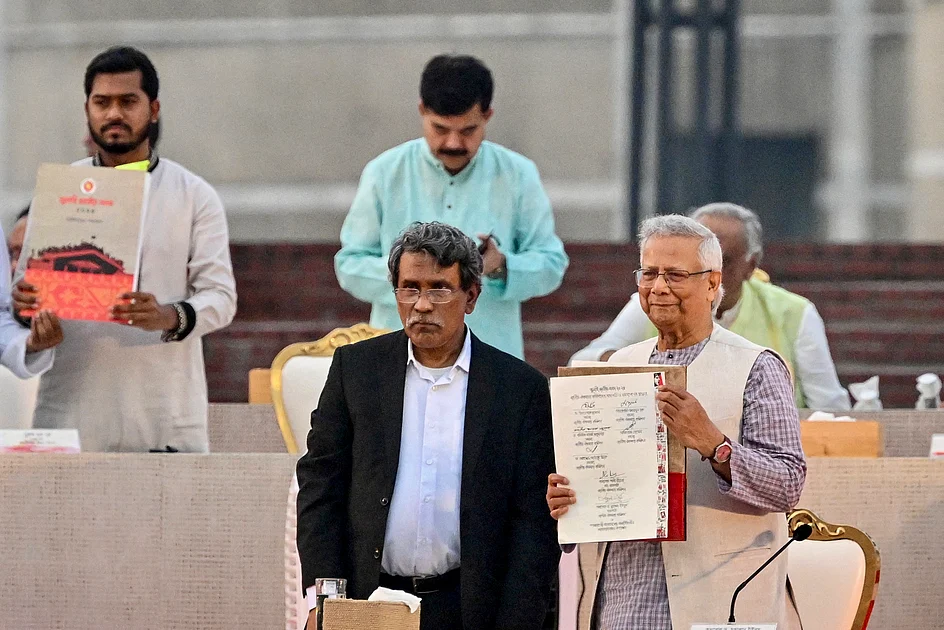
Bangladesh is set to hold a national referendum on the implementation of the ‘July Charter,’ a comprehensive reform proposal aimed at reshaping the country’s political and institutional landscape. Muhammad Yunus, the head of the interim government, made the announcement on Thursday, emphasizing that the referendum will address the charter’s proposals, which include constitutional recognition of the 2024 student-led uprising that forced former Prime Minister Sheikh Hasina to flee to India. Yunus also confirmed that parliamentary elections will proceed in February, promising they will be conducted freely and fairly. The July Charter, drafted in response to last year’s uprising, has garnered support from a majority of political parties, though the National Citizens Party (NCP) and four left-leaning parties boycotted the agreement, citing the absence of a legal framework or binding guarantees for its implementation. While proponents view the charter as a cornerstone for institutional reform, skeptics argue its impact may remain largely symbolic without broader parliamentary consensus or enforceable mechanisms.