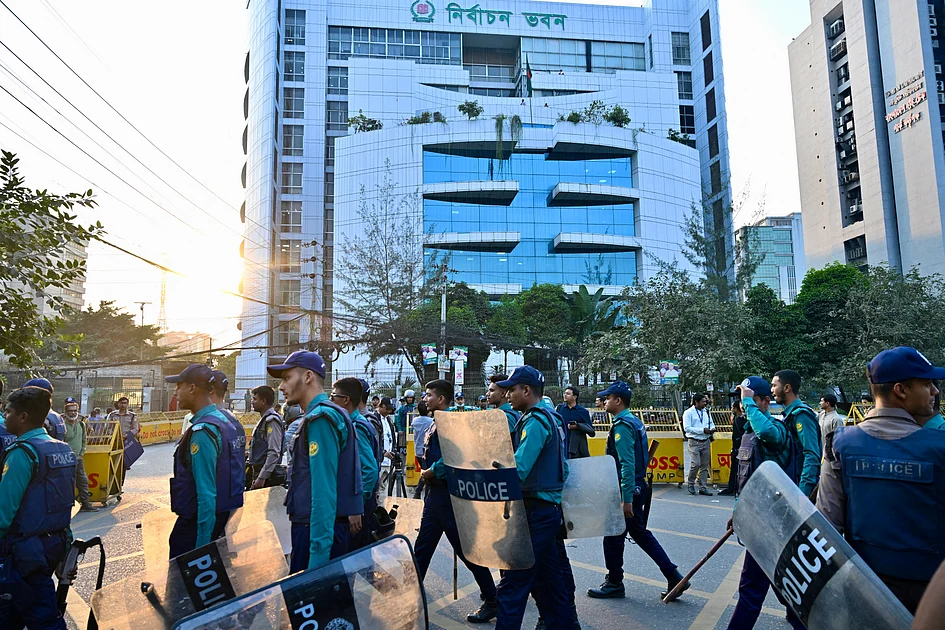
Bangladesh has intensified security measures across the capital Dhaka following the assassination of prominent youth leader Sharif Osman Hadi, whose death has triggered widespread violence and targeted attacks on media institutions. The interim government of Nobel laureate Muhammad Yunus declared Saturday a day of state mourning while appealing for public resistance against “mob violence by fringe elements.
Hadi, a central figure in the 2024 student-led uprising that ousted long-serving Prime Minister Sheikh Hasina, was fatally shot by masked assailants during his campaign launch last week. The 32-year-old activist succumbed to his injuries Thursday night in Singapore after six days on life support, sparking coordinated attacks on major newspapers and cultural organizations.
The ongoing turmoil presents significant challenges to Bangladesh’s fragile democratic transition ahead of February 12 parliamentary elections. The violence has exposed governance limitations within Yunus’s interim administration and threatens to undermine the nation’s recovery from nearly two years of political instability.
International human rights organizations have condemned both the assassination and subsequent attacks on press freedom. Human Rights Watch described Hadi’s killing as a “terrible act” and called for urgent government action to curb the violence that has persisted since Hasina’s ouster in August 2024. Amnesty International has demanded independent investigations into both the assassination and the systematic targeting of media institutions.
The unrest has extended beyond Dhaka, with protesters attacking the Indian Assistant High Commission in Chittagong—reflecting growing anti-India sentiments since Hasina sought refuge in New Delhi. The banned Awami League party has threatened further unrest, raising concerns about potential election disruption in the world’s second-largest apparel manufacturing nation.