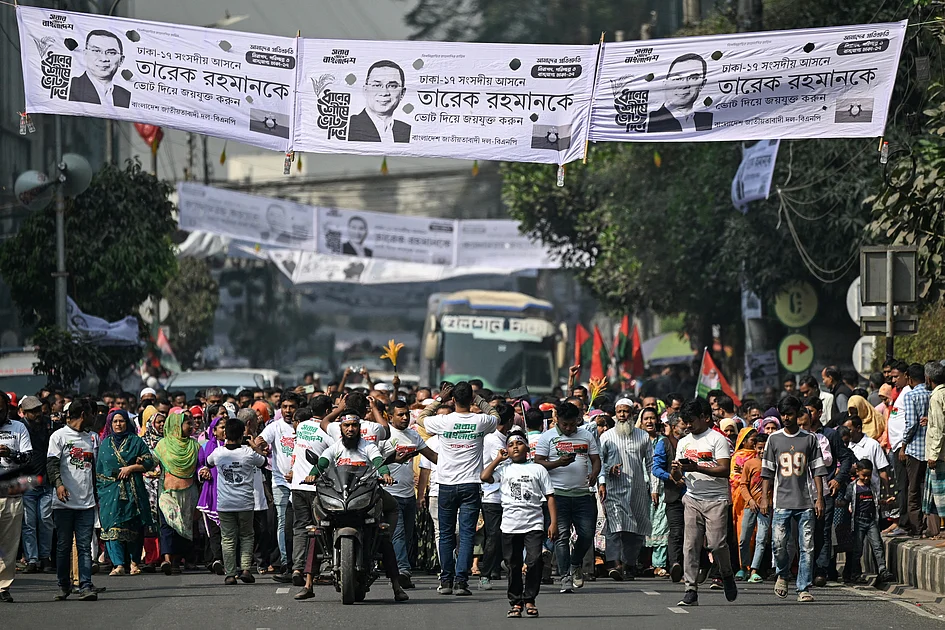
With Bangladesh’s parliamentary elections scheduled for February 12, the nation’s political landscape has reached a fever pitch as rival parties concluded their final day of campaigning on Monday. The electoral contest marks a historic turning point for the South Asian nation, occurring just eighteen months after the mass uprising of August 2024 that ended Sheikh Hasina’s 15-year autocratic rule.
Tens of thousands of enthusiastic supporters flooded the streets of Dhaka throughout the campaign period, waving party flags and chanting revolutionary slogans that echoed the sentiments of the 2024 pro-democracy movement. The electoral competition has centered around competing interpretations of the uprising’s legacy and divergent visions for the future of this nation of 170 million people.
The Bangladesh Nationalist Party (BNP), led by Tarique Rahman who returned from 17 years of exile in December, has emerged as a frontrunner in the parliamentary race. The 60-year-old leader, widely known as Tarique Zia, assumed control of the party following the December passing of his mother, former Prime Minister Khaleda Zia. At a Sunday rally in Dhaka’s Mirpur neighborhood, Rahman urged supporters to back local BNP candidate Shafiqul Islam Milton, promising representation that would genuinely serve constituents’ interests.
Meanwhile, Jamaat-e-Islami chief Shafiqur Rahman addressed packed crowds in the Dhaka-11 constituency, a significant flashpoint during the 2024 uprising. Leading a coalition of Islamist parties under the symbol of weighing scales, Rahman accused the former ruling party of systematic repression while warning that new forms of abuse had emerged following its ouster. “A section of the oppressed turned into oppressors just a day after August 5,” he asserted, alleging widespread extortion and corruption by returning political figures.
Jamaat-e-Islami, ideologically aligned with the Muslim Brotherhood, has formed an alliance with the National Citizen Party (NCP) founded by student leaders who spearheaded the 2024 uprising. NCP leader Nahid Islam accused major political parties of covertly sharing what he described as “businesses of extortion and crime” for decades.
The electoral atmosphere has been charged with revolutionary fervor, with supporters repeatedly chanting “Long live the revolution!” and engaging in call-and-response cries of “Slavery or freedom?” answered by thunderous shouts of “Freedom, freedom!”
Voters expressed diverse motivations for their electoral choices. Mohammed Harun, 65, revealed he hadn’t voted in 17 years but would support the Jamaat-led alliance hoping for a “just, corruption and violence-free country.” First-time voter Abdullah-al-Rahat, a 21-year-old Dhaka University student who participated in the 2024 uprising, expressed preference for a unity government should no party secure a majority.
The Awami League, former Prime Minister Sheikh Hasina’s party, has been banned from participating in the elections by the interim government—a move criticized by various human rights organizations. Hasina, now 78, was sentenced to death in absentia last November for crimes against humanity related to her government’s deadly crackdown on protesters during her final bid to maintain power. She remains in hiding in India.
The election represents not merely a political transition but a profound test of Bangladesh’s democratic institutions and its ability to channel revolutionary energy into sustainable governance structures.