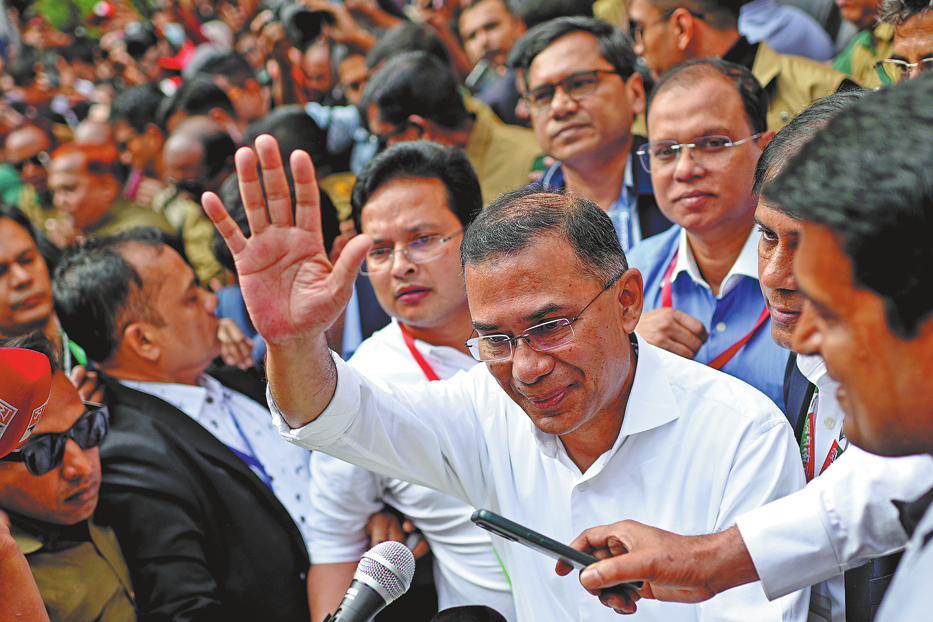
In a decisive political shift, the Bangladesh Nationalist Party (BNP) has achieved a commanding victory in the nation’s parliamentary elections, capturing 209 out of 299 contested seats. This substantial win grants the party more than a two-thirds majority in parliament, positioning it to form the next government.
The election’s most anticipated outcome is the expected ascension of BNP Chairman Tarique Rahman, 60, to the prime minister’s office. Rahman, carrying a significant political legacy as the son of former president Ziaur Rahman (who founded BNP) and former prime minister Khaleda Zia (who passed away in December), now stands to lead the nation.
According to Election Commission Senior Secretary Akhtar Ahmed, Bangladesh Jamaat-e-Islami secured second place with 68 seats, while independent candidates and smaller allied parties obtained the remaining 20 seats. Voter participation reached 59.44% of the eligible population of approximately 170 million.
This election marks a critical juncture for Bangladesh, being the first general election since former prime minister Sheikh Hasina resigned and departed the country in August 2024 amid widespread political turmoil. Since her departure, Nobel laureate Muhammad Yunus has led an interim administration.
The BNP leadership has responded to its victory with measured enthusiasm. Senior Joint Secretary-General Ruhul Kabir Rizvi extended congratulations to the Bangladeshi people while simultaneously announcing that the party would refrain from organizing celebratory processions or rallies despite their substantial margin of victory.
International recognition began promptly, with the Chinese embassy in Bangladesh issuing a formal congratulatory message on Facebook, praising the “smooth and successful” election and expressing anticipation for collaborative efforts with the incoming administration to enhance bilateral relations.
With two constituencies postponing results and polling delayed in one following a candidate’s death, the Election Commission confirmed it would soon issue an official gazette notification formalizing the outcomes. Political adviser Asif Nazrul indicated that the transition of power would occur before Ramadan begins around February 19.
The Bangladeshi parliamentary system comprises 350 members total, with 50 seats reserved for women who are elected subsequently through proportional representation by the 300 directly-elected members.