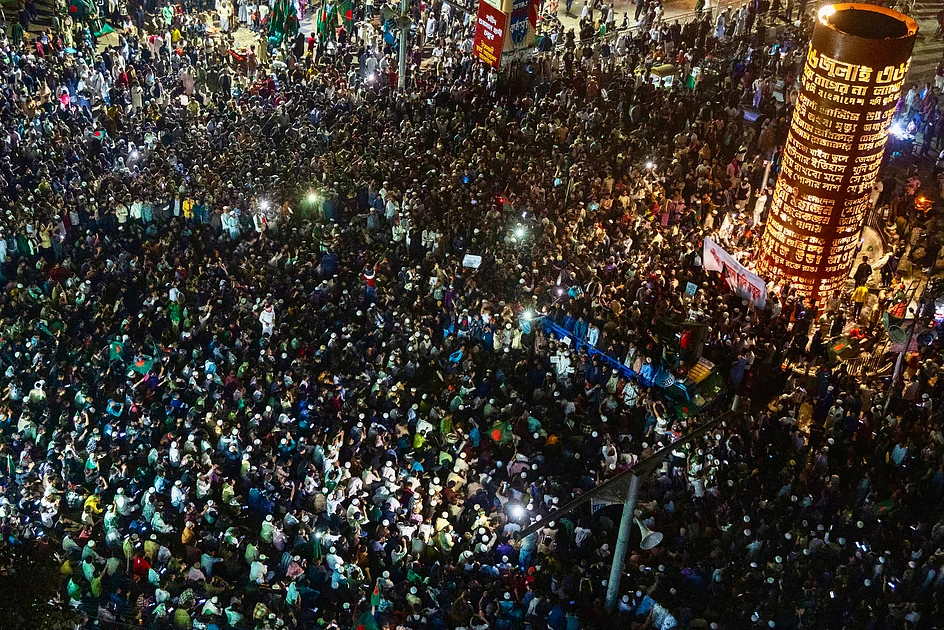
Media executives in Bangladesh issued urgent warnings on Monday that the nation’s press corps faces an existential threat following a wave of targeted mob violence against news organizations. The alarming escalation comes after the assassination of prominent youth activist Sharif Osman Hadi, whose death triggered widespread protests that rapidly devolved into coordinated attacks on major media institutions.
Hadi, a 32-year-old key figure in the student-led uprising that ousted long-serving Prime Minister Sheikh Hasina last year, was fatally shot by masked assailants in Dhaka while campaigning for February’s parliamentary elections. His killing on Thursday served as the catalyst for subsequent arson and vandalism attacks targeting the offices of leading publications including The Daily Star and Prothom Alo.
Assailants explicitly accused these media outlets of “serving the interests of India and Sheikh Hasina,” allegations that editors have vehemently denied. Hasina, who fled to India following her removal from power, remains in New Delhi despite extradition requests from Bangladeshi authorities.
During an emergency meeting convened by the Editors’ Council and Newspaper Owners’ Association of Bangladesh, The Daily Star editor Mahfuz Anam revealed that journalists are receiving direct death threats through social media channels. “We have seen messages specifically calling for hunters to target and kill journalists from The Daily Star and Prothom Alo in their homes,” Anam stated. “This situation has moved beyond concerns about freedom of expression—it has become a fundamental struggle for the right to remain alive.”
The crisis unfolds against Bangladesh’s troubling position at 149th out of 180 countries on the World Press Freedom Index. Human rights organizations warn that continued attacks on journalists and activists could severely constrict civic freedoms ahead of the February 12 parliamentary elections.
Adding to the gravity of the situation, New Age editor and Editors’ Council president Nurul Kabir reported being physically assaulted while attempting to rescue colleagues during the attacks. Kabir accused the assailants of attempting to immolate journalists inside their offices.
The interim administration led by Nobel laureate Muhammad Yunus, which currently governs Bangladesh, has characterized the violence as the work of fringe elements and promised full accountability. Yunus’ press office confirmed on Monday that police have identified 31 suspects and made nine arrests in connection with the assaults.