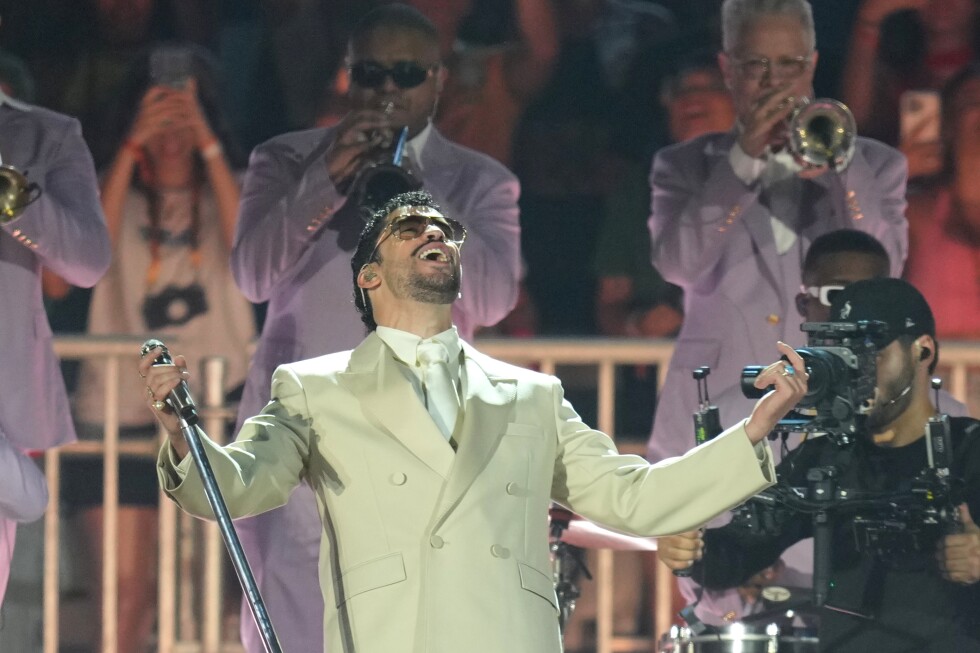
SAO PAULO — Global music phenomenon Bad Bunny has achieved a significant breakthrough in one of the world’s most challenging markets for international artists, marking a cultural shift during his inaugural Brazilian performances this weekend. Despite his worldwide streaming dominance, the Puerto Rican superstar had previously struggled to penetrate Brazil’s music scene, where domestic artists command an impressive 75% of streaming consumption according to Luminate’s 2025 midyear report.
The turning point emerged with his Grammy-winning album “Debí Tirar Más Fotos,” but the catalyst proved to be his historic Super Bowl halftime performance. Subsequent data reveals a staggering 426% surge in Bad Bunny’s Spotify streams in Brazil during the post-Super Bowl week, with his track “Yo Perreo Sola” experiencing an extraordinary 2,536% increase.
Ethnomusicologist Felipe Maia, currently pursuing doctoral research on popular music at Paris Nanterre University, observes: “This represents the optimal moment to conquer a market like Brazil, occurring precisely when he has achieved near-global domination.”
The demand manifested visibly as both scheduled shows at Sao Paulo’s Allianz Parque stadium sold out immediately, necessitating additional dates. By Friday afternoon, extensive queues had formed featuring not only Brazilian devotees but enthusiasts from across Latin America including El Salvador, Colombia, and Venezuela. Many attendees sported traditional Puerto Rican jíbaro straw hats, symbolizing their connection to the artist’s cultural roots.
Ticket economics underscored the frenzy: while official prices ranged from $50 to $210, resellers demanded over $830 for last-minute entries—exceeding 2.5 times Brazil’s monthly minimum wage.
Flávia Durante, a Sao Paulo-based Latin music specialist DJ, notes a transformative shift in perception: “Some Brazilians historically associated Spanish-language music with telenovela clichés, but Bad Bunny has shattered that bubble. Nowadays, everyone knows the lyrics and engages passionately, even requesting his music at rock or 80s pop events.”
The phenomenon extends beyond commercial success into cultural identity. Colombian-Brazilian writer Nicole Froio, who sported Bad Bunny-themed attire during Rio’s Carnival celebrations for the third consecutive year, identifies the artist as representing “Latino resistance.” She emphasizes: “While other Latin stars recorded full songs in other languages, Bad Bunny maintains artistic authenticity through Spanish—inspiring me to embrace my identity unapologetically.”
This cultural resonance finds reinforcement in Bad Bunny’s Super Bowl acknowledgment of the Americas’ geographic scope, challenging the United States’ linguistic appropriation of “America.” For longtime fan Diogo da Luz, 22, this inclusive approach “reinforces that we belong to one united people.”