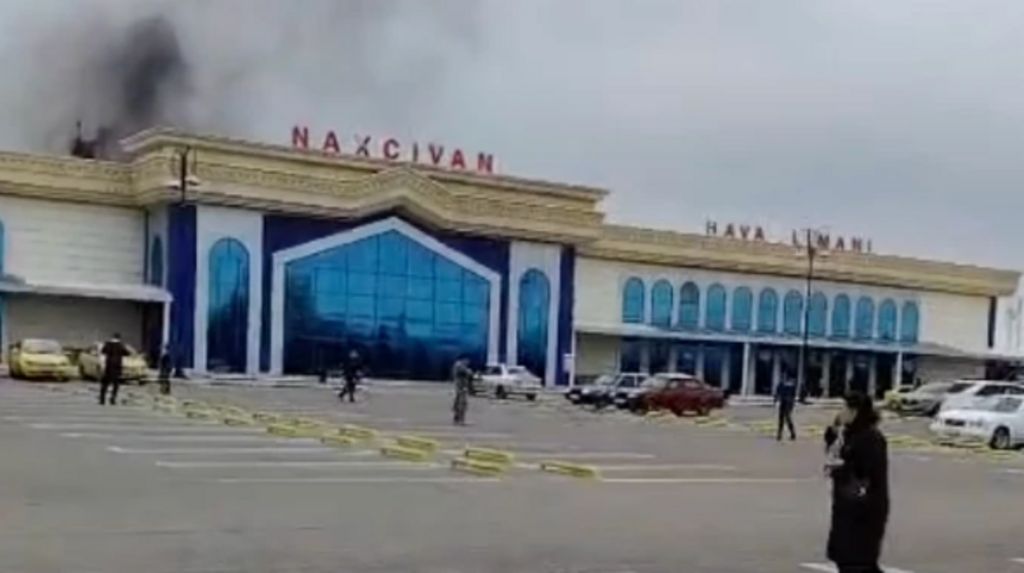
Azerbaijan has accused Iran of conducting a drone strike on its Nakhchivan exclave, marking a significant escalation in regional tensions and drawing the Caspian nation deeper into Middle Eastern conflicts. The attack, which occurred on Thursday, targeted Nakhchivan Airport with one direct hit while additional drones struck near a school—injuring civilians—and were intercepted by Azerbaijani defenses.
President Ilham Aliyev issued a vehement condemnation, labeling the assault an ‘act of terror’ and placing the nation’s military on high alert. In an unprecedented move, Aliyev delivered a scathing personal critique of Iranian forces, describing them as ‘ugly, cowardly and disgusting,’ while explicitly referencing Azerbaijan’s role as a ‘place of hope’ for ethnic Azeris within Iran—a deliberate provocation targeting Tehran’s sensitivities.
Iran has categorically denied involvement, instead suggesting the strike may constitute an Israeli false-flag operation. The Islamic Republic maintains that Azerbaijan’s security partnership with Israel—including intelligence cooperation and oil exports—represents a direct threat to regional stability.
The incident exposes longstanding geopolitical friction: Iran opposes Azerbaijan’s proposed land corridor to Nakhchivan through Armenia and resents Baku’s military victories in Karabakh conflicts, achieved partly with Turkish and Israeli support. Conversely, Azerbaijan perceives Iran’s support for Armenia as deliberate interference in its sovereign security matters.
Complicating matters, Iran’s substantial ethnic Azerbaijani minority—estimated at 20-25 million—faces cultural suppression, including bans on education in their native language. Aliyev’s decision to highlight their plight signals a strategic shift, potentially leveraging domestic Iranian tensions as diplomatic retaliation.
Despite both nations publicly denying intentions toward further escalation, the introduction of ethnic grievances into the confrontation creates unpredictable risks. Critical energy infrastructure, including the Baku-Tbilisi-Ceyhan oil pipeline supplying Europe and Israel, now faces heightened security concerns as regional hostilities intensify.