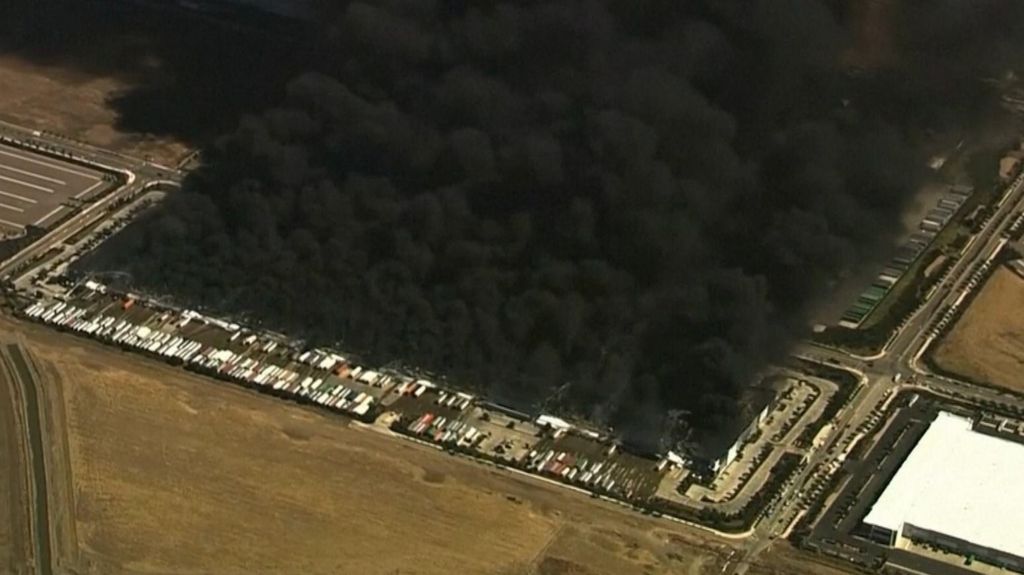
A large-scale out-of-control fire has completely destroyed a warehouse belonging to a medical equipment distribution center located just outside the San Francisco city limits. The company that operates the facility confirmed late Wednesday that all on-site staff were quickly evacuated from the burning structure as flames spread rapidly across the property. Emergency fire crews were dispatched to the scene immediately after witnesses reported plumes of black smoke rising from the industrial zone where the warehouse is situated. A full headcount conducted after evacuation confirmed that every employee was accounted for, with no reports of injuries related to the incident so far. Investigators have not yet released information about the potential cause of the fire, and an inquiry into the origin and spread of the blaze is already underway. The distribution center plays a key role in getting critical medical supplies to healthcare providers across Northern California, and early assessments are now being conducted to gauge what impact the loss of the facility will have on regional supply chains in the coming weeks. While the company has moved quickly to reassure partners that alternative distribution channels are being activated, local healthcare stakeholders are monitoring the situation closely to avoid disruptions to patient care.
作者: admin
-

Keir Starmer says he’s staying put after defense secretary’s departure hammers his authority
LONDON — British Prime Minister Keir Starmer is facing the most severe threat to his premiership to date after the abrupt resignation of his most trusted senior cabinet member, Defense Secretary John Healey, has left his already fragile administration reeling and pushed growing internal unrest within the ruling Labour Party to a breaking point.
Healey, a widely respected loyalist who had stood by Starmer through months of political turbulence, stepped down from his post Thursday, publicly breaking with the government over its failure to commit to accelerated military spending amid growing global security threats. In his resignation statement, Healey warned that current planned defense investment levels are insufficient to guarantee Britain’s national security at a moment of intensifying global risk. Just hours after Healey’s departure, junior defense official Al Carns also resigned, echoing criticism that the government’s long-awaited Defense Investment Plan lacks the transformative change the British military requires.
The resignation hits Starmer particularly hard, as foreign and defense policy had remained the lone area where the embattled prime minister had retained consistent public and cross-party praise since he took office following a landslide general election victory in July 2024. During his short tenure, Starmer positioned Britain as a leading European security leader: he deepened military and diplomatic support for Ukraine, partnered with French President Emmanuel Macron to build a multinational “coalition of the willing” to secure Ukraine’s borders in the event of a future ceasefire, and joined Paris to launch a joint maritime security task force to protect commercial shipping through the Strait of Hormuz. He also took a firm public stance aligning with pressure from former U.S. President Donald Trump, urging European NATO members to increase their own defense spending commitments to match the changing security landscape.
“Starmer has been consistently staunch about warning of the security risk from Russia,” explained Olivia O’Sullivan, head of the U.K. in the World program at the London-based think tank Chatham House. “He’s been given quite a bit of credit by the public for having to deal with Trump and doing so with a level of steadiness and calm. And he has been, in line with previous U.K. governments, a close and consistent ally of Ukraine.”
The core dispute that triggered Healey’s resignation centers on funding for the government’s 10-year Defense Investment Plan, which outlines a target to raise British military spending to 3.5% of gross domestic product by 2035. For years, the British military has pushed to reverse decades of underinvestment and capability decline, as Russia has grown increasingly militarily assertive following its 2022 full-scale invasion of Ukraine, regularly conducting overt and covert probes of NATO’s northern and eastern European defenses. Healey argued that accelerating spending to hit a 3% of GDP target by 2030 was non-negotiable, citing official British intelligence assessments that warn Russia could be prepared to launch an attack on a NATO member state as early as that year. He warned that a slower, lower-spending path “could make the country less safe.”
Treasury Chancellor Rachel Reeves rejected Healey’s demand, refusing to revise the government’s existing timeline, prompting his resignation. The debate over defense spending divides political and policy observers in the U.K.: critics argue that military funding is often an open-ended demand, pointing to long-running issues with procurement delays and massive budget overruns on major defense projects. For his part, resigning junior minister Al Carns argued that the problem extends beyond total spending levels, telling the BBC that the government’s plan is not “transformative enough.” “I want to see a higher percentage for uncrewed systems, AI, data — data is the new gunpowder — and we’ve got to move that forward if we are going to win the next war,” he said.
Healey’s exit marks the latest in a string of high-profile departures that have gutted Starmer’s cabinet in recent weeks. Last month alone, the prime minister lost multiple junior ministers followed by Health Secretary Wes Streeting, who resigned explicitly to position himself for a potential leadership challenge if a contest is called. The most prominent potential challenger, Greater Manchester Mayor Andy Burnham, is widely expected to trigger a leadership race if he wins a special parliamentary election scheduled for this Thursday.
Unlike previous resignations from figures with openly stated leadership ambitions, Healey’s departure from a minister long seen as a loyal team player with no personal designs on the top job signals that Starmer’s credibility is eroding even among his closest allies. “[It] suggests that Starmer’s credibility, even with his inner circle of ministers, is perhaps draining away,” O’Sullivan noted.
Undeterred by the growing rebellion, Starmer struck a defiant tone during a public interview Friday, vowing to hold onto power and fight any challenge to his leadership. “It’s my job to make hard-edged decisions,” he said, emphasizing that “defense is my number one priority. And I have taken the difficult decisions to make sure that we are safe as a country.”
“I’m not going to go away. I don’t think we should plunge the country into the chaos of a leadership election,” Starmer added. “I don’t think it should happen, but if it does, then I will fight.”
-

Ethiopia’s Tsegay handed four-month doping ban
One of Ethiopian long-distance running’s most decorated champions, Gudaf Tsegay, has been issued a four-month competition ban following a positive doping test that detected a banned aromatase inhibitor in her system. The 29-year-old, a two-time world champion and Olympic bronze medalist, has not competed since last October, months before the case became public.
Tsegay’s athletic resume includes a 5,000m world title in 2022, a 10,000m world championship crown in 2023, and a bronze medal in the women’s 5,000m at the 2020 Tokyo Olympic Games. She also claimed bronze in the 10,000m at the 2023 World Athletics Championships held in Tokyo, her last major competitive appearance before stepping off the track.
The positive result emerged from an out-of-competition doping test conducted last December, where analysts found a metabolite of Letrozole, a substance classified as a prohibited aromatase inhibitor on the World Anti-Doping Agency (WADA) banned list. Clinically, Letrozole is primarily used to treat breast cancer by reducing estrogen levels in the body.
When the Athletics Integrity Unit (AIU) notified Tsegay of the positive finding in late January, the runner responded within 24 hours to confirm she had been prescribed the drug to treat a officially diagnosed medical condition, and submitted full supporting medical documentation to back up her claim. In February, Tsegay filed an application for a retroactive therapeutic use exemption (TUE) with World Athletics, the governing body for international track and field. World Athletics confirmed that her ongoing treatment aligned with WADA’s international standards for approved TUEs, but WADA ultimately rejected her request for a retroactive exemption granted under exceptional circumstances.
Following the rejection, Tsegay entered a formal case resolution agreement with both WADA and the AIU to settle the violation without extended litigation. In an official statement announcing the ban, the AIU noted that the four-month sanction was deemed appropriate under anti-doping rules governing cases where the athlete bears minimal to no fault or negligence.
The length of the ban was determined based on multiple mitigating factors: Tsegay’s limited degree of fault, her immediate and honest admission of the violation, the confirmation that her use of Letrozole met WADA’s TUE standards for medical need, and the formal finding that she would have been approved for a TUE if she had submitted the application before taking the medication. The ban has been backdated to 1 June 2024, and will remain in effect through 30 September 2024.
-

New Zealand great Williamson says ‘right time’ to retire from international cricket
One of international cricket’s most respected modern stars and New Zealand’s all-time leading run-scorer Kane Williamson has shocked the global cricket community by announcing his immediate retirement from all forms of international cricket on Friday. The 35-year-old made the announcement mid-way through New Zealand’s ongoing three-Test series against England, just days out from the series’ second Test scheduled to begin at The Oval next week.
Williamson featured in the opening Test of the series at Lord’s last week, where the Black Caps fell to defeat, posting scores of 0 and 18 in the two innings. The veteran batsman explained that his decision to step away had come after months of reflection, and that the timing felt right to close out his 14-year international career.
“I’ve thought about it for a while, but over the last few days it’s become clear now is the right time,” Williamson said. “I’ve always felt a strong drive and hunger for international cricket, and I take pride in knowing I’ve given it my all in every match I’ve played for New Zealand. Continuing with anything less wouldn’t be right and I feel fortunate to step away on my own terms.”
The unexpected timing of the announcement, which came just one match into a planned series and with future home series against India and Australia already scheduled for the 2026/27 season, caught many fans and analysts off guard. But speaking to reporters in London after the announcement, Williamson said he was confident his departure would clear the way for the next generation of Black Caps talent to step up and thrive.
“When I look at the dressing room now and I see the talent, and the journey that I think this team’s looking to go on, it just feels like the right time for me to step away. I feel really good about it,” he added.
Widely regarded as one of the four best batsmen of his generation, Williamson is part of the so-called ‘Fab Four’ alongside modern greats Virat Kohli of India, Australia’s Steve Smith and England’s Joe Root. He made his international debut for New Zealand in 2010, and went on to represent the Black Caps across 378 matches, finishing his career with an unprecedented 19,346 international runs. His record includes 48 centuries and six double-centuries across all formats, making him New Zealand’s most prolific run-getter in the history of the sport.
In Test cricket, the format where he earned his greatest acclaim, Williamson played 110 matches, amassing 9,515 runs at an elite average of 54.06 with 33 centuries to his name. Beyond his on-field batting prowess, he earned widespread praise for his calm, thoughtful leadership, serving as captain across all three formats from 2016 to 2024, a golden era for New Zealand cricket. Under his captaincy, the Black Caps reached two 50-over World Cup finals, three World Cup semi-finals, and claimed the title of the inaugural ICC World Test Championship in 2021.
Current New Zealand head coach Rob Walter paid warm tribute to Williamson’s legacy, emphasizing that his impact extended far beyond his statistical achievements. “Anyone who’s had the privilege of working with Kane understands he is a very special player and person. His numbers and batting skills speak for themselves, but it’s what he means to this Black Caps team, as well as world cricket — that will be his legacy,” Walter said.
Walter acknowledged that Williamson’s departure would leave a gaping hole in the New Zealand line-up for the upcoming second Test against England. “You don’t lose Kane Williamson off the team sheet and get stronger, because he’s a legend,” he added. When asked who would replace Williamson in his traditional batting spot at number three for the Oval Test, Walter declined to confirm a replacement. The likely candidates are reserve batsman Henry Nicholls, who is already in the touring squad, or rising star Rachin Ravindra, who could move up one position from his current spot at number four.
Williamson’s career is decorated with some of the highest honours in the sport: he was named ICC Cricketer of the Year in 2015 and ICC Test Player of the Year in 2019, and won New Zealand cricket’s most prestigious domestic award, the Sir Richard Hadlee Medal, a record four times.
Sir Richard Hadlee himself, one of New Zealand cricket’s all-time greatest icons, issued a statement praising Williamson’s career and leadership. “He’s demonstrated a willingness to continually advance his game to the highest level in all three formats and he rightfully finishes as one of the best players of his era,” Hadlee said. “The way he prepared himself physically and mentally was perhaps the most impressive part. He was always committed to working hard and developing his technique to ensure he was ready to be a world class player. He’s been an unflappable leader and the architect of some of our greatest moments in cricket.”
-

The China collapse that just never arrives
For more than 20 years, the idea that China is on the cusp of systemic collapse has lingered in Western analytical and media circles. The concept first entered mainstream discourse in 2001, when commentator Gordon Chang published *The Coming Collapse of China*, a work that infamously forecast China’s state-led economic model would collapse within 10 years.
When that initial deadline passed without incident, the prediction was revised, repackaged, and cemented its place as a persistent genre of analysis that has outlived every missed timeline. For proponents of the narrative, a Chinese crisis has always been just around the corner. To understand the patterns that shape this flawed forecasting tradition, it is useful to examine two prominent analysts who sit on opposite ends of the collapse debate spectrum.
Nouriel Roubini, the economist who earned the nickname “Dr. Doom” for his accurate early prediction of the 2008 global financial crisis, joined the camp of China skeptics in 2011. At that time, he warned China faced a significant risk of a sharp economic hard landing driven by runaway sovereign and corporate debt, excessive capital investment, and large-scale infrastructure projects disconnected from actual consumer and business demand. Roubini pegged a major crash to arrive after 2013.
By 2015, when consensus around a Chinese hard landing reached its peak, Roubini re-evaluated his position against new on-the-ground data. He ultimately rejected the full collapse scenario, revising his forecast to predict a “bumpy landing”: a period of slower growth that would not spiral into total systemic failure. For Roubini, shifting evidence justified a shifting conclusion.
Geopolitical strategist Peter Zeihan has taken a far different approach. For more than 10 years, Zeihan has maintained that China’s economy and political system face inevitable structural collapse. He points to an aging population shrinking the available workforce and an overreliance on exports that undermines long-term growth stability. While Zeihan has repeatedly adjusted his projected timeline for collapse in books, media interviews, and public talks, his core conclusion has remained largely unchanged.
Zeihan’s identified challenges are not fabricated: China is indeed navigating rapid population aging, and its export sector faces stiffer global competition than in decades past. Yet the systemic collapse he has forecast has never materialized. China has responded to demographic headwinds by accelerating automation adoption and has steadily climbed the global industrial value chain, moving beyond low-cost manufacturing to high-value advanced production.
This contrast between the two analysts is telling: Roubini adjusted his stance to match new evidence, while Zeihan has simply pushed his collapse deadline further into the future.
This pattern of missed projections repeats across the broader discourse. When China’s Shanghai Stock Exchange plummeted in 2015, commentators immediately declared a hard landing was imminent. When major property developer China Evergrande Group defaulted on its debt in 2021, comparisons to the 2008 collapse of Lehman Brothers that triggered the global financial crisis appeared nearly overnight. In both cases, the predicted collapse never arrived. China’s economic and political system remained standing, despite serious stress.
This is not to claim China faces no meaningful challenges. Household wealth remains heavily concentrated in a cooling property market. Youth unemployment rose to such unprecedented levels that Chinese authorities suspended public release of the data. Rising Western protectionism has made accessing key export markets far more difficult. Analysts forecasting trouble did not invent these strains; they correctly identified genuine vulnerabilities. What they have consistently misjudged is not the existence of stress, but how that stress would spread through China’s unique economic and political system.
A prediction that fails repeatedly, only to be quietly postponed, eventually changes its nature. It stops being a data-driven forecast and becomes a persistent ideological expectation that survives every disconfirmation. The open question today is no longer whether China faces serious economic headwinds — it clearly does — but why collapse forecasts keep missing the mark in the same consistent direction. Errors stemming from incomplete bad data are typically random: some forecasts skew too optimistic, others too pessimistic, and over time they average out to match reality. The China collapse forecast does not scatter randomly; it consistently leans toward the same pessimistic outcome.
The timeline for collapse has receded steadily for two decades: 2011 shifted to 2012, then to 2016. A hard landing was again pronounced after the 2015 stock correction, and the prediction persisted through the U.S.-China trade war, the COVID-19 pandemic, and the Evergrande default. Across that same 20-year period, China’s economy expanded more than fourfold in size, average household incomes quadrupled, and the country’s industrial base steadily moved up the global value chain. A forecasting error that consistently points in the same direction reveals more about the biases of the observer than the conditions of the country being observed.
Three core forces explain the surprising durability of the collapse narrative, and none require intentional deception from its proponents.
First, the conclusion of imminent collapse is politically and professionally useful. For investors, it provides a seemingly analytical justification for avoiding Chinese assets that actually stems from personal anxiety rather than data. For Western governments, it frames risk management around China as confirmation that a rising peer competitor cannot sustain its success, eliminating the need to adjust to a new global economic order. For media outlets, a collapsing China is far more clickable than a complex, rising rival: nuance does not drive audience engagement the way a looming disaster does. When a conclusion is this welcome to key audiences, confirming evidence is accepted uncritically while contradicting evidence is subjected to extreme scrutiny. Being wrong carries almost no professional cost: a forecaster can miss the same prediction for 20 years and remain a sought-after media authority. This bias is rarely conscious; it is the natural outcome of desire shaping perception.
Second, the core assumption behind the narrative is deeply rooted in long-standing Western thought. A centuries-old tradition holds that a functional modern economy cannot exist without the specific liberal institutions Western powers developed: independent central banks, courts that constrain state power, and unfettered free flow of information. For those who hold this assumption firmly, China’s decades of rapid growth can only be a temporary bubble borrowed from the future, and collapse becomes an inevitable logical deduction rather than an evidence-based prediction.
This conviction is most visible in the persistent assumption that China could only ever copy Western technology, never innovate on its own. Yet today Chinese firms lead global markets in electric vehicles, renewable energy storage, next-generation batteries, and a growing list of other cutting-edge technologies. The core premise of the collapse narrative has survived even as reality has steadily eroded it.
Third, the economic models used to assess China’s vulnerability were built for Western market systems. Most standard forecasting tools are designed for economies where the state acts as an independent referee, not a major market participant. These models focus on private debt levels, leverage ratios, and property market valuations — all relevant indicators in China, but stress does not propagate through China’s system the same way it does in Western markets.
The Evergrande default is the clearest example of this mismatch. Comparisons to Lehman Brothers seemed logical on the surface, but Lehman collapsed within a financial system made up of largely independent private creditors. China operates with a far different structure: state-owned banks and government-led debt restructuring have fundamentally altered the pathways through which financial distress can spread across the economy. The result was not the absence of crisis — it was a different kind of crisis. Developers defaulted, property values fell, and growth slowed, but the cascading systemic chain reaction many analysts predicted never materialized. Standard models correctly identified genuine vulnerabilities, but they misjudged how those vulnerabilities would play out in China’s unique system.
Critics of the collapse narrative often fall into the opposite trap: claiming China faces no serious structural risks. This is equally misleading. Analysts who warned about China’s weaknesses were right about many core issues: major developers did default, property values did correct, and demographic headwinds are already reshaping China’s labor force. The label “imminent” collapse has been wrong for 20 years, but the label “fragile” has never been incorrect. This is the honorable path to forecasting error that Roubini exemplifies: acknowledging flaws while adjusting projections to match new data.
The same logic that undermines the collapse narrative can be applied to its mirror opposite. If a perpetually collapsing China is a convenient narrative for many Western observers, an infallible China that cannot fail is equally convenient for its own supporters and global proponents. Both narratives rely on selective attention to evidence, and both mistake ideological conviction for empirical proof.
All economic forecasting models are inherently maps: they compress a vast, complex reality into a small set of simple, legible variables. The actual territory of any economy, China included, is far messier and more unpredictable than any model can capture. When the territory refuses to behave the way the map predicts, the disciplined analytical response is to question the map. Too often, the reflexive response is to question the territory: to claim data is faked, or growth is inherently hollow.
The root cause of two decades of consistent forecasting error boils down to this: analysts have been watching the wrong indicators. China’s new middle class did not only expand in the coastal megacities of Shanghai and Shenzhen. It grew most rapidly in inland cities like Chengdu, Hefei, Xi’an, and Zhengzhou, where rising incomes have been driven by industrial expansion and infrastructure investment, not speculative coastal real estate gains.
If a genuine systemic decline is on the horizon, it will appear first in these regions, through shrinking household incomes and shifting spending patterns among China’s inland middle class. If these indicators begin to show sustained contraction, the collapse thesis will finally have the transmission mechanism it has lacked for decades. If, however, these inland indicators remain resilient, analysts and critics will once again need to reconsider the flawed assumptions that have produced 20 years of unfulfilled collapse predictions.
-
NATO weighs options to defend Europe as the US plans for conflict elsewhere
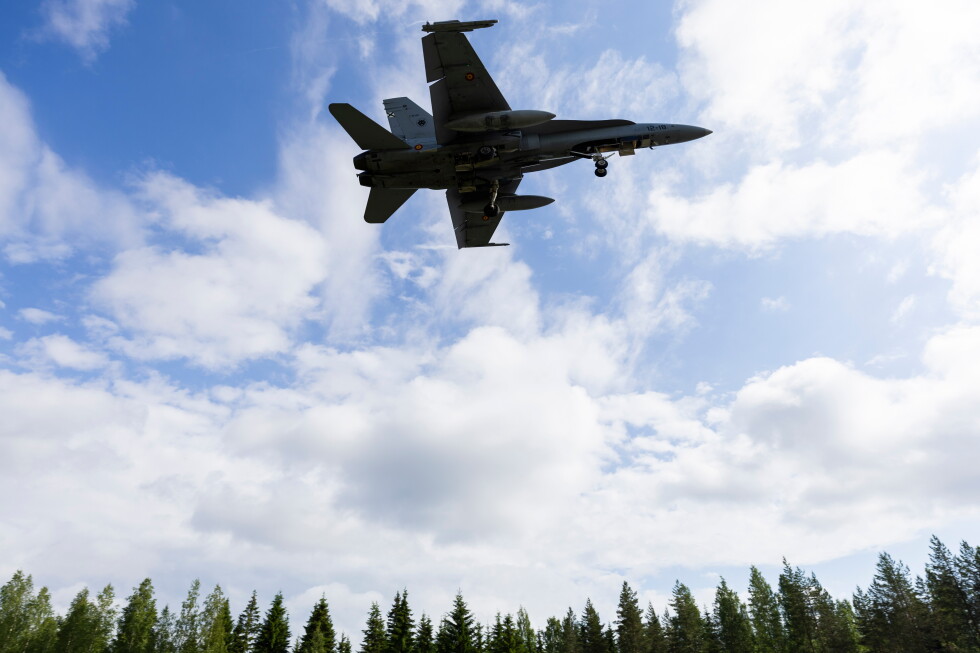
BRUSSELS — NATO’s top military leader is developing backup defense strategies for Europe in the event of a Russian attack, following a major announcement from the United States that it will reduce the number of aircraft and warships it makes available to the alliance during security crises. The alliance’s longstanding core deployment framework, known as the NATO Force Model, has served as the primary plan for coordinating military assets from 32 member states across peacetime, crisis, and full conflict, outlining what resources commanders can draw on in phases during the first six months of any armed confrontation. But last month, the Pentagon notified its NATO partners that it would scale back its European theater commitments to reorient its military posture toward growing strategic threats in the Indo-Pacific, primarily from China.
This announcement capped more than a year of anxious waiting among European allies and Canada, after the Trump administration first flagged that Europe would no longer be counted as the United States’ top security priority. While allies have known for months that defense cuts were coming, they have remained in the dark about the scale, speed, and specific scope of the reductions. U.S. General Alex Grynkewich, NATO’s Supreme Allied Commander, emphasized in comments at the ILA Berlin Air Show Thursday that the U.S. still remains committed to providing limited, but strategically critical, capabilities to the alliance.
“Our priority right now is focusing on capabilities that we can acquire rapidly, deploy quickly, scale at pace, and sustain over extended periods of time – that applies to long-range fires systems as well as unmanned aerial systems,” Grynkewich said. “These types of assets will help us offset near-term defense risks if we are called on to deter aggression and defend alliance territory.”
Following a June 2-3 meeting of alliance defense leaders to assess capability gaps created by the U.S. drawdown, Grynkewich called on European NATO members and Canada to fill these gaps by contributing additional manned combat aircraft, unmanned drones, and naval vessels to the alliance’s crisis stockpile, saying the contributions are needed “now and in the immediate near term.” While the exact details of the U.S. cuts remain classified, independent media reports in Germany and the United States indicate the drawdown will remove an entire aircraft carrier strike group, including its accompanying warships and air wing, plus a nuclear-powered submarine from the European theater. The cuts are also expected to eliminate access to dozens of fighter jets and multiple aerial refueling tankers, assets that are already in critically short supply across European armed forces, leaving alliance leaders uncertain where they can source these capabilities on short notice. The White House has demanded that allies present detailed backfill plans ahead of the NATO summit scheduled for July 7-8 in Turkey, where President Donald Trump will meet with alliance heads of state and government.
In a separate development announced Friday, NATO military headquarters confirmed it will implement additional cuts to its Kosovo peacekeeping force, withdrawing an unspecified number of troops and pieces of equipment. The Kosovo Force, better known as KFOR, has been deployed to the region since 1999, with a mandate to maintain peace between Kosovo and neighboring Serbia. At the height of its deployment, KFOR numbered 50,000 troops, but it has been gradually scaled back over decades as regional tensions cooled. A 1,000-strong reinforcement was deployed to the region in 2023, however, after a new wave of violent ethnic unrest broke out.
Grynkewich noted that current security conditions in Kosovo allow NATO to further adjust the force’s size and operational posture. His office declined to specify which units would be withdrawn, or whether any U.S. troops would be part of the drawdown. “This adjustment is not about raw troop numbers, it is about optimizing the force to better guarantee safety and security for all people living in Kosovo and across the wider Balkan region,” a spokesman for Grynkewich explained. Currently, the U.S. deploys 590 troops to KFOR, making it the second-largest contributing nation after Italy, which has 907 personnel in the theater. The U.S. also stations a fleet of Black Hawk helicopters at Camp Bondsteel, the large U.S. military base that has operated in Kosovo since the 1999 intervention.
For all the ongoing adjustments to NATO’s defense posture, Grynkewich stressed that there is no immediate threat of a Russian attack on alliance territory. Current intelligence assessments and observations of Russian force movements indicate “Russia is not seeking a direct armed conflict with NATO,” he said. Russia remains heavily committed to its full-scale invasion of Ukraine and continues to face significant challenges recruiting enough troops to sustain its current operations. Even so, European governments and intelligence services have warned that Russian President Vladimir Putin could have the capacity to launch an attack on other parts of Europe within three to five years, particularly if he succeeds in securing his territorial aims in Ukraine.
Associated Press correspondents Kirsten Grieshaber in Berlin and Zana Cimili in Pristina, Kosovo contributed reporting to this article.
-

Families mark a year since Air India crash with vigils and prayers
It has been 12 months since one of India’s deadliest aviation disasters unfolded, and on Friday, families of the 260 victims of Air India Flight 171 gathered across the country to honor their lost loved ones, clinging to faded memories while still waiting for clear answers about what caused the crash.
The flight, bound for London from Ahmedabad’s international airport, crashed just seconds after lifting off from the runway on June 12 last year. The jet plowed into the campus of BJ Medical College, leaving no survivors among the 241 passengers and crew on board except one. Nineteen more people on the ground were also killed, bringing the total death toll to 260.
To date, the exact cause of the disaster remains undetermined. On the first anniversary of the crash, Indian investigative authorities released their latest update, confirming that all collected evidence is currently undergoing “comprehensive and integrated analysis”. Officials confirmed a full public report will be released once the probe is completed.
India’s Civil Aviation Minister Ram Mohan Naidu reaffirmed the commitment to a full, unbiased inquiry earlier this year. “We remain committed to a thorough and objective determination of the causes of the accident and to further enhancing aviation safety,” he wrote on social media platform X, alongside renewed condolences for all bereaved families.
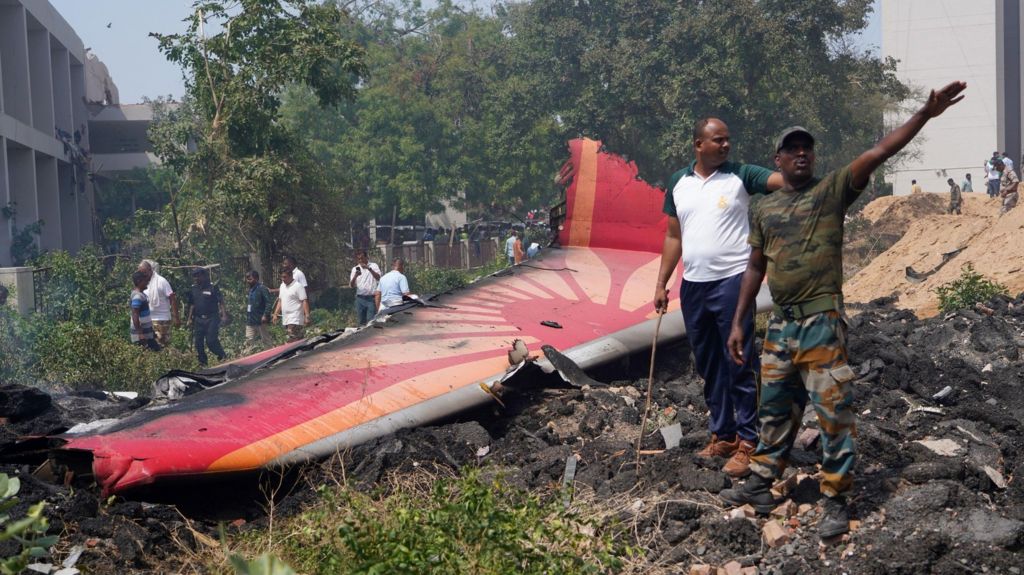
In Ahmedabad, the site of the crash, visible scars of the disaster still remain. The impact zone remains cordoned off, with blackened, damaged building structures still standing behind safety barriers. Relatives have transformed the perimeter of the site into an informal public memorial, covering the ground with flower garlands, handwritten condolence messages, and framed portraits of those who died.
On Friday, dozens of families travelled to the site to pray and grieve together. Among them was the family of 12-year-old Akash Patni, who was killed when the plane crashed into the tea stall where he was helping his family work that day. Akash’s mother, Sitaben, suffered severe burn injuries in the crash and spent weeks recovering in hospital; Friday marked her first return to the site since the disaster. As she recited Hindu hymns beside her son’s garlanded portrait, she repeatedly broke down in tears, comforted by surrounding relatives.
Fifty-three British citizens were among those killed in the crash. On Thursday, British High Commissioner to India Lindy Cameron laid wreaths to pay her respects to the victims, and a separate formal memorial service will be held in Leicester, UK, this weekend.
At BJ Medical College itself, staff, students and family members gathered for a campus memorial event, and organizers also held a mass blood donation drive to honor the lives lost one year prior.
For many families, private remembrance events were held far from the crash site, in family homes and local places of worship. In a small Ahmedabad home, the Thakur family prepared to honor Sarlaben Thakur and her two-year-old granddaughter Aadhya, who both died when the plane crashed into the college’s hostel building. The family marked the anniversary with a prayer meeting at a local temple, after their home proved too small to accommodate the 200 expected guests.
The Thakur family have described June 12 as a permanent “black day” in their family history. Their grief remains so raw that they have removed all clocks from their home; even a quick glance at the time triggers painful memories of the frantic hours after the crash, when they searched every local hospital and mortuary for any sign of Sarlaben and Aadhya. For generations, the family has run a small tiffin service catering to doctors and medical staff at BJ Medical College, and Sarlaben spent decades cooking for the community. Despite their limited income, the family prepared a full meal for all mourners, including one of Aadhya’s favorite dishes — crunchy noodles and Manchurian. “In this way, they continue to occupy a place in our home,” said Uma Thakur, Sarlaben’s daughter. “We hope this will bring us all some peace, at least for some time.”
In Maharashtra, memorial services were held in Mumbai, where the flight’s two pilots and several cabin crew members lived. In Nhava village, Navi Mumbai, relatives of cabin crew member Maithili Patil gathered for a private prayer service. Nine months after the crash, Maithili’s personal luggage was finally returned to her family; on Friday, the bag was displayed alongside her other favorite belongings as friends and family paid their respects. Like many other families, the Patils still wait for clarity on what caused the disaster. “My daughter will never come back to me. I only want the truth about what caused this accident,” Maithili’s mother Pramila told local reporters.
The crash left just one survivor: Vishwash Kumar Ramesh, who lost his brother in the disaster. In a statement released for the first anniversary, Ramesh said he still lives with severe long-term psychological trauma from the event. “More than anything, people need honesty, transparency and answers. Nothing will ever change what happened, but families deserve clarity,” he said.
For all bereaved families, the first anniversary has served as a painful reminder that one full year has passed, but their unresolved grief and hunger for answers remain as sharp as the day the disaster occurred.
-
Investigation into cause of Air India crash ongoing, officials say
June 12, 2026 marks exactly one year since the deadliest aviation disaster in recent Indian history, when Air India flight AI171, a Boeing 787 Dreamliner bound for London, crashed moments after departing Ahmedabad, leaving 260 people dead. All but one passenger and crew on board were killed, and another 19 people on the ground also lost their lives in the impact. On the anniversary of the tragedy, India’s official Aircraft Accident Investigation Bureau (AAIB) has confirmed that the probe into the crash remains active, with the final public report only scheduled for release once the investigation reaches a conclusive outcome.
In an official statement marking the anniversary, the AAIB said investigators have made “significant progress” across multiple core areas of the inquiry. This includes detailed forensic examinations and technical analysis of the crashed aircraft’s systems, data extracted from both the flight data recorder and cockpit voice recorder, physical inspections of engine components, and full reviews of the plane’s maintenance history and pre-departure operational records. However, the bureau declined to share any fixed timeline for when the investigation will be wrapped up, leaving families of the victims and the global aviation community still waiting for a definitive answer on what caused the crash.
Since the disaster struck on June 12, 2025, the exact root cause of the crash has been the subject of intense public speculation. A preliminary report released by the AAIB one month after the crash, in July 2025, already revealed a critical anomaly that occurred mere seconds after takeoff: the plane’s fuel-control switches unexpectedly shifted to the “cut-off” position, cutting off all fuel supply to both engines and causing a complete total loss of power that left the aircraft unable to stay aloft.
Cockpit audio recordings recovered from the crash site captured a striking exchange between the two pilots, with one asking the other why he had moved the switches, and the second responding that he had not done so. Investigators have not publicly confirmed which pilot made each statement in the exchange.
Weeks after the preliminary report was published, two major international media outlets — The Wall Street Journal and Reuters — published reports citing anonymous investigation sources that pointed new scrutiny to the flight’s senior commander, Captain Sabharwal. Reuters specifically reported that the cockpit recording supported the theory that the captain had intentionally cut fuel flow to the aircraft’s engines.
These media reports sparked immediate widespread pushback from Indian aviation industry groups, including national pilots’ associations. The associations criticized the unconfirmed leaks to media, rejected outright the claims that the senior pilot caused the crash, and also pushed back against what they called premature reporting by the outlets. To date, the AAIB has not endorsed the unconfirmed claims shared by the media, and has not publicly named any individual as a party at fault for the disaster. As the world marks one year since the crash, the investigation continues with no clarity on when families will get a final, official answer.
-

London council takes possession of property linked to Sierra Leone’s First Lady
After a year-long probe into tenancy eligibility, Southwark Council in south London has formally taken control of a subsidized council property connected to Fatima Bio, the First Lady of Sierra Leone. This development comes just weeks after Bio publicly addressed the housing arrangement in an interview with BBC Global Women, sparking widespread public debate on both sides of the Atlantic.
During that interview, Bio opened up about her life journey: from fleeing a forced child marriage as a young person to seeking asylum in the United Kingdom, and eventually rising to become one of the most influential female figures in Sierra Leone. When questioned about her continued hold on the Walworth-area council flat, she defended her right to keep the property, noting that all her children hold British citizenship, and stating firmly, “I’m paying for my council house myself. I have not committed any crime.”
The case has thrown a spotlight on the deep affordable housing crisis facing Southwark, where more than 18,000 qualified applicants are currently stuck on the waiting list for social housing. Council policy openly acknowledges that even vulnerable applicants with the most urgent needs can wait multiple years to secure a subsidized home, making the allocation of every available property a high-stakes issue for local authorities and residents alike.
In an official statement shared with the BBC, Reginald Popoola, Southwark Council’s executive member for council housing, outlined the authority’s next steps for the recovered property. “We can confirm we have taken possession of a property in Walworth following a 12-month investigation by our Housing Investigations Team,” he said. “I look forward to bringing this council property back to its original purpose which is to provide a safe and secure home for people with legitimate housing need on the council’s waiting list. This property will be swiftly allocated to a local family in genuine housing need.”
Crucially, the council has pushed back against inaccurate circulating reports: it has not formally evicted Fatima Bio, nor has it levelled any accusations of criminal wrongdoing against her, aligning with the council’s ongoing crackdown on improper tenancy arrangements across the borough. Over the past two years, Southwark has recovered 107 council properties through similar eligibility investigations as part of its campaign against tenancy fraud and unauthorized occupation.
The wider context of this case underscores the chronic pressure on social housing across London. Almost every borough in the capital reports growing waiting lists for affordable units, as demand for low-cost, secure housing continues to outstrip supply amid the city’s ongoing cost-of-living and housing crises.
After the council’s public announcement, BBC Global Women reached out to Fatima Bio’s office to request her response to the development. A spokesperson for the First Lady told the outlet that she had no knowledge of the report and was unable to offer a comment at this time. Bio, a prominent advocate for gender equality who has attended high-profile global events including a 2022 Buckingham Palace reception on ending violence against women hosted by Queen Camilla, has not yet addressed the council’s action publicly.
-

Patagonia is suing Pattie Gonia, a drag queen performer with an environmental message
A high-profile trademark dispute between legendary sustainable outdoor apparel brand Patagonia and popular drag queen and climate activist Pattie Gonia has ignited fierce debate across social media, splitting public opinion just ahead of annual LGBTQ+ Pride Month celebrations in June.
In a viral video posted on May 27, Pattie Gonia — whose legal name is Wyn Wiley, a Bend, Oregon-based creator with nearly 3 million combined followers across TikTok and Instagram — leveled a sharp public accusation against Patagonia, claiming the multinational brand was attempting to erase a queer climate activist through legal action. The drag performer, who first rose to viral fame in 2018 for a camping clip featuring high-heeled footwear, has built a platform focused on climate education, organizing the touring “Save Her! Environmental Drag Show” to mobilize activists and raise funds for environmental nonprofits.
Patagonia filed its original trademark infringement complaint in federal court on January 21, months before Gonia’s public announcement. The brand alleges Gonia infringed on its registered trademark by selling apparel and branded merchandise under the name “Pattie Gonia,” arguing the phonetic and orthographic similarity creates a likelihood of consumer confusion. The suit only seeks $1 in statutory damages, but legal experts note that total litigation costs for both sides could easily exceed $1 million. The four-month gap between the filing and Gonia’s public announcement initially led many social media users to incorrectly assume Patagonia had launched the suit to coincide with Pride Month; Gonia has declined to comment on whether her announcement timing was intentional.
Legal records show Patagonia first raised concerns about Gonia’s brand use back in 2022, during a planned fundraising collaboration between the creator and outdoor accessory brand Hydro Flask. At that time, company representatives asked Gonia in a phone call and follow-up email to stop using Patagonia’s logo, font, and the name “Pattie Gonia” on commercial merchandise. Patagonia reached out again in early 2025, after Gonia filed a federal trademark application for “Pattie Gonia” to cover apparel sales, and requested a meeting to resolve outstanding disagreements. Gonia has pushed back against Patagonia’s claims, calling the complaint one-sided and arguing it misrepresents both the facts of the case and her personal integrity.
Trademark law experts note that this type of brand protection action is far from unusual for major consumer brands. Major companies including McDonald’s and Starbucks have previously filed suits against small businesses using similar names, and Patagonia itself has previously defended its trademark against copycat brands including “Catagonia” and “Fratagonia.” Intellectual property attorneys explain that brands routinely pursue such claims to protect their long-term trademark rights: allowing a similar name for related goods could set a precedent that weakens the brand’s ability to fend off future infringement. “I get rejections for trademarks for my clients that are way less similar than these brand names,” noted Carmel Imani, a trademark lawyer who specializes in representing small creators and independent brands. Even geographic-based names, such as Patagonia — taken from the iconic wilderness region spanning southern Chile and Argentina that has long been home to Indigenous Mapuche and Tehuelche peoples — are fully eligible for strong federal trademark protection, just like automotive nameplates such as Chevy Tahoe and GMC Denali, or beverage brands like Arizona Tea, trademark attorney Josh Gerben explained.
The public reaction to Gonia’s announcement has been divided and swift. Thousands of social media users expressed outrage that a brand long celebrated for its progressive sustainability commitments would target a beloved queer climate activist, with some organizing boycotts and even dropping off Patagonia apparel at donation centers to protest the action. “I think that you just completely wrecked your company, at least from my demographic, the LGBTQ demographic,” Jim Gregory, one protestor, said in a viral TikTok video filmed outside a Goodwill donation center. However, other observers have pushed back against the narrative that Patagonia is attempting to silence Gonia, arguing the creator has not shared the full context of the brand’s efforts to resolve the dispute before filing suit. “Saying that Patagonia was trying to silence a drag queen or a queer activist … it just felt inaccurate,” said Cleo Schroer, a Brooklyn-based researcher of queer politics and culture who initially opposed Patagonia’s action before reviewing the full court complaint.
In recent weeks, both sides have signaled openness to a negotiated resolution, avoiding a prolonged and costly court battle. Gonia has offered to withdraw her federal trademark application if Patagonia drops the suit, while Patagonia has issued a public statement acknowledging “any hurt (the lawsuit) has caused, especially in the LGBTQ+ community” but has conditioned dismissal of the suit on Gonia agreeing to stop using its logo, font, and the “Pattie Gonia” name for commercial merchandise. Gonia has agreed to the first two conditions but has refused to stop selling merchandise branded with her stage name; her official merchandise site has already quietly been changed from www.pattiegoniamerch.com to www.pattieacherch.com, a shift Gonia has not addressed publicly. Legal experts agree that an out-of-court settlement would be the best outcome for both parties, providing certainty without the unpredictable outcome of a jury trial.
Corley Kenna, Patagonia’s chief impact and communications officer, confirmed the brand remains open to finding a mutually acceptable resolution, but declined to share further details on ongoing discussions.