作者: admin

  • US will provide dollar loan to UAE if economy is jolted by war on Iran, US official says

    US will provide dollar loan to UAE if economy is jolted by war on Iran, US official says

    Amid ongoing financial volatility spurred by the US-Israeli war on Iran, a top White House economic advisor has confirmed that Washington stands ready to offer financial support to the United Arab Emirates should the Gulf ally require economic stabilization. National Economic Council Director Kevin Hassett made the commitment in comments to CNBC on Monday, noting that the UAE has served as a critical partner in the regional military campaign.”The UAE has been an incredibly valuable ally throughout this effort, and I’m sure the treasury secretary will make every effort to help them out, should that be necessary,” Hassett stated. He also added that former President Donald Trump had characterized diplomatic efforts to end the conflict as moving forward at a promising pace.Hassett’s comments came in direct response to a Wall Street Journal report revealing that UAE Central Bank Governor Khaled Mohamed Balama privately raised the prospect of a US dollar currency-swap line with Treasury Secretary Scott Bessent and Federal Reserve officials during a closed-door meeting the prior week. While Hassett noted that a currency-swap arrangement would likely not be necessary to stabilize the Emirati economy, he reaffirmed Washington’s willingness to extend support if conditions worsen.To contextualize the proposal, currency swaps are bilateral agreements between central banks that allow participating institutions to access foreign currency at more favorable rates during periods of market stress. For global central banks, access to US dollars via swaps is particularly critical, as the greenback remains the world’s primary reserve currency, used widely for international debt repayment and import purchases. The Emirati dirham has long been pegged to the US dollar at a fixed exchange rate, making stable access to greenbacks a core priority for Emirati monetary policy. Per the WSJ’s reporting, the UAE’s inquiry was framed as preliminary and precautionary, not an immediate request for aid.The remarks have already stirred internal backlash within pro-Trump conservative circles, with prominent right-wing commentator Steve Bannon lambasting the potential aid during an episode of his *War Room* podcast Monday. Bannon launched an angry tirade against the proposal, framing it as an unfair burden on working-class American citizens while wealthy Emirati elites and global influencers benefit from the arrangement. “What are you doing you stupid working American? Paying for it,” Bannon said. “You’re not in that club. You’re just a working stiff out there to defend these scum.”Behind the precautionary request lies a subtle signal from Abu Dhabi: if the US fails to buffer the UAE from the economic fallout of the war, the Gulf state could shift oil trading and other key international transactions away from the US dollar to the Chinese yuan or other alternative currencies. For decades, the UAE and other major Gulf oil producers have priced their crude exports exclusively in US dollars, creating the global petrodollar system that generates consistent demand for greenbacks and supports the dollar’s status as the world’s dominant reserve currency. Petrodollar revenues are routinely reinvested into US Treasury bonds, domestic stocks, and other dollar-denominated assets, cementing the currency’s global position.Some geopolitical analysts have warned that the war on Iran could accelerate a global shift away from the petrodollar system, as Gulf states increasingly distance themselves from Washington’s regional policy and Iran already encourages energy trade settled in yuan. Yet experts who spoke with Middle East Eye note that the US dollar will almost certainly remain the dominant currency for Gulf oil exports for the foreseeable future, even amid the instability caused by the ongoing conflict.The US has deployed currency swap lines as emergency economic lifelines multiple times in recent decades, most notably during the 2008 global financial crisis and the 2020 COVID-19 pandemic, when the Federal Reserve extended access to the program to central banks across Europe, Latin America, and other regions. Even so, the UAE’s inquiry has caught many independent analysts off guard: the country is one of the wealthiest nations in the Middle East, with massive sovereign reserves anchored by its consistent oil export revenues. The Abu Dhabi Investment Authority, the UAE’s largest sovereign wealth fund, holds approximately $1 trillion in global assets, while the country’s central bank holds an estimated $270 billion in foreign currency reserves.Brad Setser, a former US Treasury economist and current fellow at the Council on Foreign Relations, called the UAE’s request “slightly strange” given the country’s substantial existing financial buffers. Setser added that the Trump administration is unlikely to approve the swap line request, arguing that it runs counter to the administration’s signature “America First” policy framework. “There isn’t anything obviously ‘America first’ about a financial lifeline to one of the richest oil sheikdoms (if not the richest) just so it doesn’t have to borrow in the market [or] sell assets,” Setser explained. At the same time, he acknowledged that the request highlights a core tension: “[it is] clear that parts of the UAE aren’t happy about being asked to absorb the full financial costs of Trump’s bombing campaign.”As the closest Gulf ally to Israel, the UAE has faced sustained retaliation from Iran, including thousands of ballistic missile and drone attacks targeting Emirati infrastructure. The ongoing conflict has severely damaged Dubai’s core luxury tourism sector, once one of the emirate’s largest economic drivers, and slowed critical oil export volumes to a fraction of pre-war levels.While some neighboring Gulf states have pushed for diplomatic negotiation to de-escalate tensions with Iran, the UAE has taken a firmly hawkish stance, publicly supporting the continuation of US military action. Analysts attribute this position to the UAE’s heavy dependence on the Strait of Hormuz, the strategic chokepoint through which nearly a fifth of global oil supplies pass each day, as well as elite opposition to allowing Iran to expand its regional influence across the Gulf.

  • Japan takes more revenue from Aussie gas than Australian government, inquiry told

    Japan takes more revenue from Aussie gas than Australian government, inquiry told

    A heated debate over Australia’s fossil fuel taxation regime has moved into the Senate inquiry stage, with policy analysts and activists arguing that a new 25 percent tax on gas exports could unlock billions in annual public revenue and fix a long-running inequity in how the country values its natural resources.

    The inquiry was convened to examine Australia’s existing gas tax frameworks, amid growing cross-political pressure to either introduce the new export tax or raise the Petroleum Resource Rent Tax (PRRT) on extraordinary windfall profits earned by gas producers. Industry groups have pushed back hard against these proposals, warning that higher taxes would threaten domestic energy security and damage long-standing trade relationships with key Asian customers.

    Speaking to the inquiry this week, Richard Denniss, executive director of progressive think tank the Australia Institute, laid out a striking new finding from the organization’s research: the Japanese government collects more annual tax revenue from imported Australian gas than the entire Australian government collects from exporting the same resource. Denniss noted that the Japanese government pulls in roughly $8 billion annually in combined taxes from imported coal and gas, a large share of which comes from Australia, one of Japan’s largest energy suppliers.

    Denniss framed the proposed 25 percent export tax as a once-in-a-generation chance to correct this imbalance, arguing that parliament has a rare opportunity to bridge partisan divides on an issue that has resonated across the political spectrum. He stressed that the tax would not drive up energy costs for Japan or other export customers, pointing to Norway’s heavily taxed gas sector as evidence that global market pricing insulates buyers from exporting nation tax changes. “There’s no Norway premium for Norwegian gas, which is heavily taxed. All of the gas is selling at the same world price,” Denniss explained. He added that if Japan were concerned about domestic energy prices, it could simply lower its own import tariffs to offset any impact. Beyond revenue, Denniss argued the tax would boost domestic gas supply by incentivizing exporters to sell more domestically, driving down local gas prices for Australian households and businesses.

    The Australia Institute estimates the 25 percent export tax would generate as much as $17 billion in new annual government revenue. Denniss also pushed back on industry claims that the gas sector is a major driver of Australian employment, noting that the industry directly employs only around 18,000 people – far fewer than the 100,000 Australians working at McDonald’s. He added that nurses collectively pay more in annual income tax than the entire gas industry pays in corporate taxes.

    Adam Bandt, former leader of the Australian Greens and current chief executive of the Australian Conservation Foundation, who is also appearing before the inquiry, laid out one potential use for the new revenue: permanently free public transport across Australia. Bandt argued that forcing gas corporations to pay their fair share of tax would be wildly popular, saying “They would be erecting statues in every town square for the first prime minister that makes the gas corporations pay their fair share of tax and uses it to fund free public transport, grow the industries of the future or pay for the clean up after cyclones and floods.” He noted that there is broad public support for a full review of Australia’s outdated gas tax rules.

    Konrad Benjamin, a former schoolteacher and founder of grassroots advocacy group Punters Politics, told the inquiry that many ordinary Australian voters feel they are being exploited by the current low-tax regime for gas producers. “We, millions of regular Aussies, are now paying attention, and we understand a few things that we might not have understood before,” Benjamin said. “We understand that Australia’s gas is incredibly valuable. We understand that we’re giving most of it away for free to foreign corporations. We understand that those same foreign corporations pay close to bugger-all tax.” He questioned why, as a major resource holder, Australia is failing to capture the economic benefits of its own natural gas, especially as governments constantly claim they cannot afford to increase funding for public services like schools amid global economic volatility.

    Opponents of the new tax have raised a number of concerns, warning that the policy could jeopardize Australia’s critical trade relationships with major Asian gas importers, which are key economic partners for Australia. Industry groups also reaffirm their position that higher taxes would undermine investment in domestic energy production and threaten long-term national energy security.

  • Japan approves scrapping a ban on lethal weapons exports in a change of its postwar pacifist policy

    Japan approves scrapping a ban on lethal weapons exports in a change of its postwar pacifist policy

    In a landmark shift that upends seven decades of postwar pacifist governance, Japan’s Cabinet led by Prime Minister Sanae Takaichi gave formal approval Tuesday to eliminate long-standing restrictions on lethal weapons exports, clearing the last regulatory barriers for the country to expand its international arms trade.

  • Elijah Hollands’ father pens emotional tribute after son admitted to hospital

    Elijah Hollands’ father pens emotional tribute after son admitted to hospital

    AFL community has rallied around Carlton rising star Elijah Hollands after the young player’s recent hospital admission triggered widespread concern for his wellbeing, with his father Ben sharing a heartfelt public message of unconditional support and leading football figures offering messages of solidarity.

    Elijah Hollands first experienced a troubling medical incident during Carlton’s match against Collingwood last Thursday, a struggle that quickly unfolded under the glare of public attention. On Monday night, Carlton Football Club issued an official statement confirming the young athlete had been admitted to hospital for care, intensifying worries across the league about his recovery.

    In the wake of this difficult stretch for the Hollands family, Ben Hollands turned to Instagram to speak out publicly, sharing a moving portrait of his son alongside an inspiring message that extended beyond his own family to anyone navigating mental or physical healing. “This is my beautiful boy,” Ben wrote. “For anyone in the midst of healing … You are loved. You have a unique and defined purpose. You are seen whole. I know who my son is — and I will lift him up until he is restored in full.”

    Beyond his support for Elijah, Ben also offered guidance to others standing beside loved ones facing hardship, urging: “For those supporting someone who is struggling: encourage them, affirm them, and love them. Go to them, remind them of who they truly are.”

    Western Bulldogs head coach Luke Beveridge became one of the most prominent voices in the AFL to extend well wishes to Hollands this Thursday, while also opening up about the growing pressures that modern football players face from public criticism. Beveridge noted that the scrutiny modern athletes endure is far more intense than in previous eras, with contemporary commentary and speculation increasingly taking on personal, unkind tones that lack empathy.

    “I have got no doubt what our players are exposed to, have to deal with and have to manage from a critique point of view is a lot more challenging than it ever has been,” Beveridge told reporters. “It seems to be some of the assessment and innuendos are a lot more personal than it ever has been. Everyone is trying to work out what that means, there seems to be no conscience in a lot of it.”

    Beveridge added that it would be inappropriate for outsiders to speculate on the details of Hollands’ situation, emphasizing that no one outside the Carlton setup can fully understand the severity of what the club and the Hollands family are navigating. He extended empathy to every person connected to Carlton Football Club, not just the young injured player, noting that the incident has been traumatic and confronting for everyone involved.

    “It’s just a hugely challenging situation and I feel for them, everyone feels for Elijah and his family. But I feel for everyone who’s involved in the Blues,” he said. “You talk about trauma and things that are confronting, and it’s been confronting. Everyone at that football club needs support to help them through it, definitely Elijah … hopefully he’s going to be OK but I just hope everyone who works at the Carlton Football Club are fine as well.”

  • New Zealand Prime Minister Luxon survives party leadership vote months before election

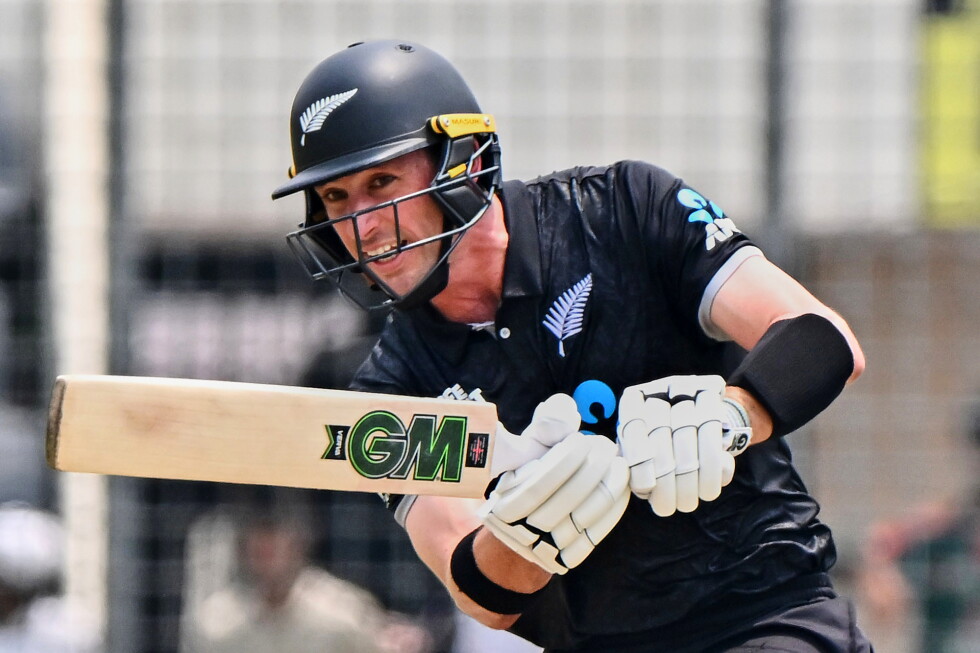
    New Zealand Prime Minister Luxon survives party leadership vote months before election

    WELLINGTON, New Zealand — In a dramatic move to end swirling speculation about his political future, New Zealand Prime Minister Christopher Luxon announced Tuesday he has emerged victorious from a secret confidence vote held by his own National Party caucus. The leadership challenge was triggered by weeks of sliding poll ratings for the center-right party, which fueled widespread rumors that Luxon could be removed from his post months ahead of the country’s scheduled general election.

    The confidence ballot was held during an extended meeting of National Party parliamentarians at Wellington’s Parliament House. Originally scheduled as a routine one-hour caucus gathering, the meeting stretched to two and a half hours as lawmakers debated Luxon’s leadership. Speaking to reporters after the closed-door session, Luxon confirmed he had personally called for the confidence vote to put an end to persistent media speculation about internal unrest within the party.

    “The past week has been dominated by constant media speculation about my position as leader,” Luxon told reporters. “I called this vote to lay that speculation to rest once and for all.” The prime minister declined to release the exact breakdown of votes, nor would he confirm whether the result was unanimous, before leaving without taking questions from the press.

    Luxon, a former airline chief executive who entered Parliament in 2020 and has led the National Party since 2021, has governed New Zealand as head of a right-wing coalition government since the 2023 general election. The country’s next national election is set for November 7 this year, putting the leadership vote roughly six months before voters head to the polls.

    Recent polling had made discussion of a leadership challenge unavoidable, even as ousting a sitting prime minister mid-term remains an extremely rare occurrence in New Zealand’s modern political history. The most recent 1News-Verian poll showed a notable slump in support for both Luxon personally and the National Party, projecting that if an election were held immediately, the right-wing bloc led by National would trail the left-wing opposition bloc headed by the Labour Party.

    Luxon pinned the spread of rumors about internal party division on media coverage, saying he would not continue to engage with unsubstantiated speculation. “If the media want to keep focusing on speculation and rumor, I am not going to engage,” he said. New Zealand’s recent political history has seen two prime ministers — National’s John Key and Labour’s Jacinda Ardern — voluntarily step down from the role, but no sitting prime minister has been forced out by their own party in modern times.

  • Formula One makes rule changes after drivers’ criticism

    Formula One makes rule changes after drivers’ criticism

    In a decisive move responding to weeks of fierce backlash from top drivers including four-time world champion Max Verstappen, Formula One governing bodies and team principals have unanimously agreed to targeted rule changes that will take effect as early as next month’s Miami Grand Prix. The 2025 season’s sweeping regulatory overhaul, which introduced a revised hybrid power unit system with strict battery management requirements, sparked unprecedented public criticism that even put Verstappen’s long-term future in the sport in question.

    Under the original rules, drivers were forced to conserve battery charge throughout qualifying laps, forcing them to lift off the throttle and slow down artificially to manage energy reserves, while a manual boost button granted extra power for overtaking maneuvers. After the Chinese Grand Prix, Verstappen delivered a scathing rebuke of the new racing format, calling it “a joke” and hinting he would step away from F1 when his current contract ends in 2027 if meaningful adjustments were not made. The Red Bull driver’s criticism was echoed by multiple other competitors on the grid, while fans across the globe voiced frustration that the regulations had diluted the on-track spectacle that defines top-tier open-wheel racing.

    Held via online call on Monday, the meeting brought together Formula One management, the Fédération Internationale de l’Automobile (FIA), and all team principals to hash out adjustments. Stakeholders finalised a set of targeted tweaks that will roll out for the Miami Grand Prix scheduled for May 3. This race will mark the end of a five-week enforced break in the 2025 calendar, which came after the cancellation of the opening Bahrain and Saudi Arabian rounds due to ongoing armed conflict in the Middle East.

    The most impactful changes center on the hybrid power system that drew the most driver complaints. Energy harvesting capacity, which controls how much kinetic energy drivers can recover to charge the on-board battery during a race, will be lowered from eight megajoules to seven megajoules. Meanwhile, the maximum power output of the hybrid power unit will be increased from 250 kilowatts to 350 kilowatts. The FIA says the combination of these two adjustments will allow drivers to push at full speed for longer stretches during qualifying sessions, eliminating the need for artificial slowing to save battery.

    A second key change addresses safety concerns related to the boost button, which came under scrutiny after British rookie Ollie Bearman’s high-speed crash during the most recent round in Japan. Investigators partially attributed the incident to dangerous differences in closing speeds caused by drivers activating their boost buttons at different times. Going forward, the maximum power output from the boost button will be capped at 150 kilowatts, a change the FIA says will “limit sudden performance differentials” that create unsafe on-track conditions.

    Not all stakeholders are pushing for dramatic, wholesale changes to the rulebook, however. Mercedes team principal Toto Wolff, whose drivers Kimi Antonelli and George Russell have gotten off to a strong start to the 2025 season with Antonelli holding a nine-point lead over Russell in the driver standings after three completed races, advocated for incremental, careful adjustments rather than sweeping overhauls.

    Speaking ahead of Monday’s vote, Wolff noted that ongoing discussions between drivers, the FIA, F1 management and team principals had remained constructive, with all parties aligned on the core goal of improving the racing product. “It’s how can we improve the product, make it out-and-out racing, and look at what can improve in terms of safety, but act with a scalpel and not with a baseball bat,” Wolff said. He added that the sport would benefit from testing small adjustments after just three completed races, rather than making rash, far-reaching changes that could create new unforeseen problems. “We are custodians of the sport and we have many hundreds of thousands of fans that love F1,” he said. “In order to protect this huge opportunity that the sport gives us, we shouldn’t badmouth in public our own sport.”

    Further negotiations and reviews of the 2025 rules are scheduled to take place after the Miami Grand Prix as stakeholders continue to refine the regulations for future races.

  • Gun battle traps more than 200 tourists at Rio viewpoint

    Gun battle traps more than 200 tourists at Rio viewpoint

    On a bustling Monday morning at one of Rio de Janeiro’s most photographed scenic overlooks, a sudden outbreak of armed conflict between Brazilian law enforcement and a major criminal gang left more than 200 tourists stranded for hours, in an incident that has raised fresh concerns about safety for the city’s vital tourism industry.\n\nThe incident unfolded at Morro Dois Irmaos, a 533-meter (1,750-foot) hill that draws thousands of weekly visitors with its sweeping panoramic views of Rio’s world-famous Ipanema and Leblon beaches. As crowds of sightseers explored the hilltop, a gunfight erupted between police officers and members of Comando Vermelho, one of Brazil’s largest and most well-established drug trafficking organizations, on the lower slopes of the hill adjacent to the Vidigal favela.\n\nTour operator Renan Monteiro, whose company Favela Turismo organized many of the tours on the hill that morning, confirmed that more than 200 people were caught in the lockdown, with around 70% of those trapped being international visitors. For roughly two hours, visitors were confined to the hilltop as shooting raged in the area below, before police secured the zone and gave the all-clear for groups to descend safely.\n\nIn an official statement, police noted that officers came under immediate gunfire from drug traffickers when they entered the Vidigal favela as part of the operation. By the end of the security action, three suspects were taken into custody, and no injuries were reported among either tourists, officers, or local residents.\n\nThe incident comes at a time when Rio’s tourism sector is celebrating a major post-pandemic recovery milestone: official data shows the city welcomed more than 2.1 million international visitors in 2025, hitting an all-time record for inbound tourism. Monteiro, however, warned that high-profile incidents of gang-related violence close to major tourist attractions risk undermining that progress. “Incidents like this erode visitor confidence, and that damage can take years to reverse,” he said in comments to Agence France-Presse.

  • Canadian tourist killed in Mexico archaeological site shooting

    Canadian tourist killed in Mexico archaeological site shooting

    On a Monday at one of Mexico’s most visited cultural landmarks, the ancient Teotihuacan archaeological site, a deadly shooting left one Canadian woman dead and five other people wounded, according to official Mexican authorities. The gunman responsible for the attack took his own life immediately after opening fire at the pre-Aztecan pyramid complex, confirmed Cristobal Castañeda, security secretary for Mexico State, where the UNESCO-recognized site is located.

    Unverified social media footage circulating after the incident shows the gunman firing repeated shots from a handgun from a position halfway up the Pyramid of the Moon, one of the site’s largest and most famous structures. In the footage, tourists can be seen scrambling for cover behind stone staircases or fleeing the area in panic, with one visitor’s voice captured shouting, “A person is opening fire on us, take care friends, send security.”

    Responding state law enforcement secured the scene, seizing a pistol, a knife, and unused ammunition, before coordinating a full evacuation of all visitors from the archaeological park. Many tourists and vendors on site told reporters they did not immediately grasp the severity of the emergency. Anna Durmont, a 37-year-old American art historian on vacation, told AFP she was walking toward the pyramid when she encountered a wall of emergency vehicles and police officers. “It actually felt extremely calm,” Durmont said. “It was very measured. The park is full of souvenir sellers and they hadn’t left. It wasn’t clear to us until we got closer that there was a serious emergency.”

    Mexico’s national health institute reported that seven people were ultimately transported to nearby hospitals for care. Four patients were treated for direct gunshot wounds, while others were admitted for anxiety attacks or injuries sustained while falling down the Pyramid of the Moon’s steep 47-step staircase during the chaotic evacuation. Among the injured are two Colombians, a second Canadian citizen, and one Russian national, including one minor, Castañeda confirmed.

    Mexican President Claudia Sheinbaum quickly issued a public statement on her X social media account confirming that combined federal and state security forces had been deployed to the site, and that her administration had established communication with Canadian government officials to coordinate support. “What happened today in Teotihuacan hurts us deeply,” Sheinbaum wrote. “I express my sincerest solidarity to the people affected and their families.”

    While Mexico has long faced persistent challenges with organized crime and drug-related violence, large-scale indiscriminate attacks on public tourist sites remain relatively rare, especially when compared to gun violence rates in the neighboring United States. After the shooting, local journalists shared footage of a cordoned-off crime scene, where forensic investigators in protective suits worked atop the empty pyramid to collect evidence.

    Teotihuacan, a 2,000-year-old abandoned pyramid city, is counted among Mexico’s most significant archaeological treasures and draws millions of international visitors annually, with tourism officials reporting more than 1.8 million visits to the site in 2025. The attack comes at a sensitive time for Mexico’s tourism sector: the country is preparing to co-host the 2026 FIFA World Cup alongside the United States and Canada this June, with officials projecting more than 5.5 million international visitors will travel to Mexico for the global tournament.

  • Israel PM vows ‘harsh action’ against soldier vandalising Jesus statue in Lebanon

    Israel PM vows ‘harsh action’ against soldier vandalising Jesus statue in Lebanon

    A fresh controversy has erupted amid the fragile recent ceasefire between Israel and Lebanese militant group Hezbollah, after an image of an Israeli soldier destroying a Christian statue of Jesus Christ in southern Lebanon spread widely across social media. The incident, which has drawn sharp condemnation from religious leaders and top Israeli officials alike, has inflamed religious tensions in an already war-torn region.

    On Monday, Israeli Prime Minister Benjamin Netanyahu publicly addressed the incident, vowing that the soldier responsible would face stiff consequences. The verified image shows a uniformed IDF soldier using a sledgehammer to repeatedly strike the decapitated head of a crucified Jesus statue, which stood in the majority-Christian border village of Debl in southern Lebanon. Both the Israeli military and independent verification by Agence France-Presse (AFP) have confirmed the photograph’s authenticity, though multiple edited versions of the image have circulated online. Local municipal officials in Debl confirmed the statue was located in their village, but have not been able to fully assess the extent of damage due to restricted access to the area, which remains under Israeli military presence following the recent escalation of conflict.

    In a post to the social platform X, Netanyahu stated, “I was stunned and saddened to learn that an IDF soldier damaged a Catholic religious icon in southern Lebanon. I condemn the act in the strongest terms. Military authorities are conducting a criminal probe of the matter and will take appropriately harsh disciplinary action against the offender.”

    The context of this incident is rooted in the latest round of the decades-long Israeli-Lebanese conflict. On March 2, Hezbollah entered the broader ongoing Middle East war in support of its primary backer Iran, launching cross-border attacks that prompted massive Israeli retaliation: widespread airstrikes across Lebanon and a ground incursion into southern Lebanon. Before a ceasefire took effect last week, the fighting had killed nearly 2,300 people across Lebanon, displaced more than 1 million Lebanese civilians, and claimed the lives of 15 Israeli soldiers. Despite the ceasefire agreement, Israeli troops still maintain a presence in large swathes of southern Lebanon.

    Following the spread of the image, the IDF released an official statement echoing Netanyahu’s condemnation, noting that the incident was viewed with “great severity” and that the soldier’s actions are “wholly inconsistent with the values expected of its troops.” The military confirmed that it would take unspecified “appropriate measures” against those involved, and added that it is collaborating with local Christian communities to restore the damaged statue to its original location.

    Christian religious authorities have issued scathing condemnation of the act. The Assembly of Catholic Ordinaries of the Holy Land, in a statement released by the Latin Patriarchate of Jerusalem, expressed “its profound indignation and unreserved condemnation.” The group emphasized that this act is not an isolated incident, noting that it “constitutes a grave affront to the Christian faith and adds to other reported incidents of desecration of Christian symbols by IDF soldiers in southern Lebanon.” The Assembly called for immediate, decisive disciplinary action, formal accountability for the incident, and guarantees that such vandalism will not occur again. It also used the moment to renew its urgent call for an end to the war that has devastated the region for months.

    Top Israeli political figures have joined in condemning the soldier’s actions. Israeli Foreign Minister Gideon Saar labeled the conduct “shameful and disgraceful” in his own X post, writing, “I am confident that necessary severe measures will be taken against whoever committed this ugly act. We apologise for this incident and to every Christian whose feelings were hurt.”

    This controversy comes just one month after Netanyahu was already engulfed in a separate public row over religious commentary, when he drew widespread backlash for claiming that Jesus Christ held “no advantage” over Mongolian conqueror Genghis Khan, forcing him to defend his remarks amid global outcry from Christian leaders.

  • ‘I don’t know how many more years I’ve got’: Kurt Mann keen to sign new Bulldogs deal

    ‘I don’t know how many more years I’ve got’: Kurt Mann keen to sign new Bulldogs deal

    As the Canterbury Bulldogs enter a critical off-season period that will force the club’s leadership to make several high-stakes decisions about player contracts, 33-year-old utility Kurt Mann has left no ambiguity about his next goal: he wants to extend his tenure at the Belmore-based club beyond the 2026 NRL season. A well-traveled veteran closing out a 13-year top-flight career that has included stints at the Melbourne Storm, St George Illawarra Dragons, and Newcastle Knights before joining the Bulldogs, Mann has established a reputation as one of the league’s most versatile and reliable role players — a trait that has already drawn quiet interest from other Sydney-based clubs should a new deal with the Bulldogs not come to fruition. A move to a Western Australian franchise has been ruled out as a potential option for the experienced playmaker. Mann’s current contract, a one-year extension signed in March 2025, is set to expire at the end of the upcoming season, leaving his playing future after that point still unconfirmed. In a recent press interview, the veteran opened up about his approach to contract talks and his desire to remain in blue and white. “I haven’t really looked into it too much,” Mann said. “I’m 33 this year, so I’m sort of just playing it by ear and really focusing on how I’m playing at the moment. The rest of that will take care of itself. I’d love to stay at the Dogs, or if that doesn’t eventuate then I don’t know how many more years I’ve got left in me at the moment. I’m really enjoying playing footy at the moment and I’m still loving it. I’m still competing, so I’m still really enjoying it.” Mann’s on-field form this season has backed up his claim that he still has plenty to offer at the top level, with a recent standout play against the Parramatta Eels — where he outran young Eels fullback Joash Papalii to secure a kick — serving as proof he can still match the pace of the league’s younger generation. Now, Mann and the Bulldogs are looking to rebound from an unexpected upset loss to the Eels this weekend, when they face off against an injury-depleted Brisbane Broncos squad on Friday night. Beyond his club commitments, Mann is also quietly gunning for a second call-up to Queensland’s State of Origin side, after a dream debut run in 2024 helped the Maroons pull off a stunning series comeback from a 1-0 deficit to claim the Origin shield. Mann came off the interchange bench in games two and three of last year’s series, and the introduction of new expanded six-man benches for 2025 makes his versatility as a utility an even more ideal fit for the Maroons’ game plan. He already met with Queensland head coach Billy Slater earlier this year at a Maroons training camp, and remains a leading contender to retain his spot in the squad when selections are announced. “He keeps his cards pretty close to his chest until it gets pretty close to selection time, so you never hear too much from him until then,” Mann said of Slater. “Any time you get the chance to pull on the Maroons jersey, you grab it with both hands. It’s something you dream of as a little kid and you get to represent your family, your community where you’re from, and everyone in Queensland. It’s a lifetime memory I’ll have now. I thought all that sort of stuff was past me at my age, and to get the call-up was definitely a dream come true.”