作者: admin

  • Palestine Action defendant wounded by taser and sledgehammer in raid, court hears

    Palestine Action defendant wounded by taser and sledgehammer in raid, court hears

    A high-profile trial of six Palestine Action activists opened this week at London’s Woolwich Crown Court, with shocking testimony about police use of force and violent confrontations during an August 2024 raid on an Israeli-owned arms factory near Bristol.

    On the first day of witness testimony Thursday, the court heard detailed accounts of the injuries sustained by 30-year-old Leona Kamio, a nursery school teacher from Swansea and one of the six defendants facing joint criminal damage charges linked to the break-in at Elbit Systems’ Filton facility. A medical examination following her arrest documented multiple injuries: taser burns to her right arm and right hip, a bruise to her chin, a small scratch, and a distinct wound to her right hand inflicted by a sledgehammer. Kamio told the court she cannot identify who caused the sledgehammer wound.

    Body-worn camera footage from arresting officer PC Peter Adams played in court shows Adams deploying his taser against Kamio during the raid. After being stunned, Kamio was tackled to the ground, where she hit her chin on the floor and went rigid. Kamio described the experience of being tasered as “not good, very painful”, adding that Adams twisted her arm behind her back and attempted to drag her up by her wrist while she screamed in pain. The footage captures Kamio shouting “you’re fucking hitting me” as Adams attempted to place her in handcuffs, calling the officer an “idiot” in response to his own verbal provocation. Kamio emphasized she was not faking her pain or resisting arrest, joking to the court “I failed drama” to underscore the authenticity of her reaction.

    Alongside Kamio, the other defendants facing criminal damage charges are Charlotte Head, 29, Jordan Devlin, 31, Fatema Rajwani, 21, Zoe Rogers, 22, and 23-year-old Samuel Corner. Corner faces an additional charge of intentionally causing grievous bodily harm, for allegedly striking two police officers with a sledgehammer during the confrontation.

    Testifying earlier on Thursday, Corner – an autistic Oxford graduate with an ADHD diagnosis – explained his actions as a reaction to the panic and disorientation caused by Pava, a synthetic incapacitant pepper spray sprayed at him by PC Aaron Buxton. Corner told the court the spray produced an “all consuming” stinging and burning effect that left him unable to see or focus clearly. He added that he did not initially recognize the approaching responders as police officers, and believed they were aggressive security guards intent on harming him and his fellow activists.

    “I was scared about what they were going to do to us, especially the women,” Corner told the court. He explained that when he heard screaming and saw what he believed was a large male security guard attacking a fellow female activist, he acted instinctively. He has since acknowledged the person he struck was Sergeant Kate Evans, a female police officer who was not attacking Rogers, the activist he thought was in danger.

    Corner admitted he raised his sledgehammer and struck Evans twice, but said he had no intent to cause her serious harm. When pressed by prosecutor Deanna Heer KC on whether attacking a police officer with a sledgehammer was unreasonable, he responded: “it seemed reasonable to do something and I had to act quite quickly. If I had thought about what it was going to do to her, I agree it would have been unreasonable.” When asked if he understood the severity of harm he could have caused, he replied “I genuinely didn’t.” Footage also shows Corner striking PC Buxton twice with the sledgehammer, though Corner says he has no memory of the encounter.

    Multiple character witnesses have described Corner as a gentle, compassionate person with a strong commitment to justice who finds any form of violence abhorrent. The court heard he has even helped fellow prisoners improve their literacy skills while in pre-trial detention.

    Kamio, for her part, told the court how she joined Palestine Action in March 2024, after receiving an email from the direct action group about its campaign to close Elbit Systems facilities across the UK. She was soon added to a Signal messaging group to plan the Filton raid, which the group identified as Elbit’s most important UK site, opened in July 2023 by the Israeli ambassador to the United Kingdom.

    The activists’ stated goal, Kamio told the court, was to remain inside the facility for as long as possible to destroy as many weapons components as possible. Organizers had told the group security would not enter the facility, but head of security Nigel Shaw burst into the area within the first five minutes, an encounter that left Kamio frightened. “He looked so angry. Everything about his body language and face was just rage. He was charging towards us,” she said, adding that she believed Shaw was holding his umbrella in a position to strike her. She said she shouted at him to “fuck off” and told him confronting activists was “above your paygrade” – that stopping them was a job for police, not private security. She only later realized Shaw had been injured and was bleeding.

    Kamio added that a second security guard, Angelo Volante, appeared extremely unpredictable, swinging an angle grinder and holding a hammer. “I panicked because I’m at Elbit, this is a very evil company, the people that work there describe themselves as being the backbone of the Israeli military,” she explained. She stressed she never intended to harm anyone, and had the sledgehammer taken from her before she could use it against anyone. She also reaffirmed her belief that the action was necessary: “I came here to do something to stop people from suffering. Working with children, I would put one of their lives before any property.”

    Kamio’s employer at the Swansea nursery where she works submitted a character reference confirming that her extended pretrial detention has “upset and confused” the children in her care, and that “I cannot imagine her ever hurting anyone.”

    The trial, which is being closely watched by activists on both sides of the Israeli-Palestinian conflict, is set to continue in the coming days.

  • Stuffed toys in US capital symbolize displaced Ukrainian children

    Stuffed toys in US capital symbolize displaced Ukrainian children

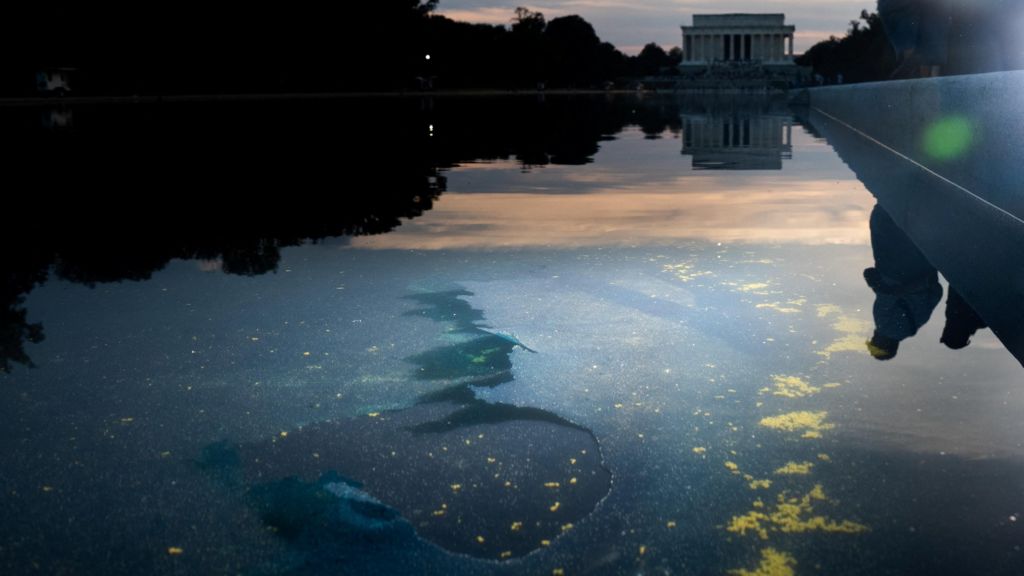
    In a striking, somber display just steps from the U.S. Capitol in Washington D.C., 20,000 stuffed teddy bears line a National Mall fence, each one standing in for a Ukrainian child Kyiv accuses Russia of abducting since the full-scale invasion began in 2022. On Thursday, Ukrainian activists and U.S. lawmakers gathered at the installation to draw global attention to the missing children, uniting under the urgent rallying cry: “Bring Them Home.”

    For 24-year-old Ukrainian activist Mariia Hlyten, the sheer number of toys on display underscores the scale of the crisis unfolding while world powers work toward diplomatic resolution. “When you see the scale… you then start to understand how terrifying this is, and that all this time, while we are waiting for some kind of negotiations, there are children’s lives at stake,” Hlyten said, emphasizing that the abducted children must be repatriated without delay.

    The event was organized by Razom for Ukraine, in partnership with the American Coalition for Ukraine. Three senior U.S. lawmakers addressed the crowd, each condemning the alleged abductions as a deliberate act of cultural erasure and a violation of international law. Senate Democrat Richard Blumenthal argued that Russian President Vladimir Putin’s campaign extends far beyond territorial conquest. “What Vladimir Putin is doing here is not trying to take territory alone. He’s not trying to defeat a nation alone,” Blumenthal said. “He’s trying to destroy the people, that is the purpose of abducting children, changing their names, re-education. Killing their identity, if not the children themselves — making sure that they never grow up speaking their own language, knowing their own religion and culture.”

    House Democrat Jamie Raskin echoed Blumenthal’s criticism, calling the forced removals a blatant violation of international humanitarian standards and the laws of war. “It’s a war crime and if it’s done intentionally… it is part of the proof of genocide,” Raskin said.

    Standing nearby draped in Ukraine’s blue-and-yellow national flag, 28-year-old Arkady Dolina, a Ukrainian and relative of Hlyten, described the mass abductions from Russian-occupied Ukrainian territories as “absolutely horrible.” He framed the campaign as the latest chapter in a long-running Russian policy of forced indoctrination, saying: “This is the continuation of a centuries long Russian policy to abduct, indoctrinate kids and then send them as their cannon fodder to fight their stupid, useless, brutal wars.”

    Moscow has repeatedly denied all accusations of forcibly abducting Ukrainian children. Still, claims from Kyiv have gained traction from international bodies and world governments. In February, Ukrainian President Volodymyr Zelensky announced that roughly 2,000 children had been successfully returned to Ukraine from Russia and Russian-held territories, but thousands more remain held captive. In March, the U.S. government launched a $25 million fund to support efforts to reunite displaced Ukrainian children with their families, a cause that former U.S. First Lady Melania Trump has also publicly backed. In 2023, the International Criminal Court issued arrest warrants for Putin and his children’s rights commissioner, charging the pair with the war crime of unlawful deportation of Ukrainian children.

    Kyiv alleges that Russia has systematically worked to erase the Ukrainian identity of abducted children, forcing them to undergo pro-Russian indoctrination, compelling many to take Russian citizenship. These claims have been corroborated by firsthand testimony from Ukrainians who have escaped Russian occupation.

  • Lebanon leaders accuse Israel of war crime after journalist killed

    Lebanon leaders accuse Israel of war crime after journalist killed

    A fragile 10-day ceasefire between Israel and Hezbollah in southern Lebanon has been thrown into new controversy after an Israeli airstrike killed a seasoned Lebanese journalist and left another injured, triggering sharp accusations of deliberate war crimes from Beirut and condemnation from global human rights and United Nations officials.

    On Wednesday, civil defense forces and Amal Khalil’s employer, Lebanese daily newspaper Al-Akhbar, confirmed the 42-year-old correspondent’s death. According to Lebanon’s National News Agency (NNA), Khalil and fellow journalist Zeinab Faraj had fled to a residential home in the border village of Al-Tiri after Israeli forces targeted a car traveling immediately ahead of them. That initial strike killed two people inside the vehicle: the mayor of Bint Jbeil, a nearby town under Israeli occupation, and his companion.

    Moments after the pair took shelter, a second Israeli airstrike hit the house they were hiding in. Faraj was evacuated to a local hospital with non-life-threatening wounds, but Khalil was left trapped under rubble. The Lebanese Red Cross confirmed its teams were able to extract Faraj, but were forced to retreat from the area after receiving an imminent strike warning, leaving them unable to reach Khalil. Rescue operations could only resume several hours later after Lebanese authorities coordinated with UN peacekeepers deployed to the southern border region to regain access, with Khalil’s body eventually recovered from the rubble.

    Lebanese President Joseph Aoun issued a formal statement Thursday accusing Israel of deliberately targeting journalists to cover up its military actions against Lebanese civilians, calling the killing an unambiguous war crime. Prime Minister Nawaf Salam echoed the condemnation in a post on X, noting that both targeting journalists and blocking access for emergency rescue teams violate international war norms, and confirmed his administration would formally bring the case to international judicial and human rights bodies. Lebanon’s health ministry additionally accused Israeli forces of targeting an ambulance clearly marked with the Red Cross emblem during the incident, a charge the Israeli military has denied.

    The Israeli military offered a different account of the incident in its own statements, saying it had targeted two vehicles that departed from a Hezbollah military facility in southern Lebanon. It claimed the vehicles carried individuals classified as terrorists who had crossed the so-called “forward defense line” that Israeli forces established in southern Lebanon and were moving toward Israeli troop positions. An Israeli military spokesperson told Agence France-Presse Thursday that the incident remains under internal review, and denied that Israeli forces had blocked rescue teams from accessing the strike site.

    Since the resumption of hostilities between Israel and the Iran-aligned militant group Hezbollah in October 2023, more than 2,400 people have been killed in Lebanon, a majority of them civilians. The 10-day ceasefire that went into effect last Friday was intended to open space for diplomatic negotiations to de-escalate the year-long cross-border conflict, which has displaced hundreds of thousands of Lebanese residents from the southern border region. Israel has maintained a forward presence in southern Lebanon and enforced a “yellow line” that bars displaced residents from returning to their homes in the area.

    On Thursday, dozens of colleagues, family members, and supporters gathered in Khalil’s southern hometown of Baysariyeh for her funeral. Her coffin was draped in the Lebanese flag, decorated with flowers, and topped with her press helmet and vest, symbols of her work reporting from the front lines of the conflict. Hundreds more joined a protest in the capital Beirut to demand accountability for her death.

    Global and regional rights groups have joined Lebanon’s leadership in condemning the killing, noting that Khalil is at least the fourth Lebanese journalist killed by Israeli strikes in southern Lebanon since the start of the current conflict. Reporters Without Borders (RSF) Middle East head Jonathan Dagher said the sequence of strikes that killed Khalil – the initial attack on the car, followed by the strike on the house where journalists had taken shelter, followed by the delay in rescue access – strongly indicates deliberate targeting of press workers and obstruction of emergency aid, both defined as war crimes under international law. Ramzi Kaiss, Lebanon researcher for Human Rights Watch, called for an independent, credible investigation into the killing, emphasizing that intentional strikes against civilians, including journalists, meet the legal definition of a war crime.

    United Nations officials also weighed in on the incident. Stephane Dujarric, spokesperson for UN Secretary-General António Guterres, reaffirmed that targeting civilians and blocking humanitarian and emergency access are clear violations of international humanitarian law. Dujarric added that Guterres has repeatedly stressed that journalists must be allowed to carry out their critical work of documenting conflict without fear of harassment, attack, or death. Back in March, an earlier Israeli airstrike killed three other journalists in southern Lebanon, prompting UN human rights experts to call for a full international investigation into that incident.

    Speaking from the Beirut protest honoring Khalil, local journalist Inas Sherri told AFP that international accountability is the only way to end the pattern of press killings. “If we were holding people accountable, Israel would not have continued killing journalists one after another,” Sherri said.

  • From scientist to silk farmer: India’s silk industry renewal

    From scientist to silk farmer: India’s silk industry renewal

    Six years ago, Dr. Jolapuram Umamaheswari made a life-altering career choice: she left her position as a research scientist in Singapore and returned to her home country of India, ready to forge an independent path as her own boss.

    After months of exploring niche agricultural opportunities, she settled on sericulture — the centuries-old practice of raising silkworms to harvest raw silk from their cocoons. For Umamaheswari, the career shift was not a departure from her scientific roots, but a new application of them. “Silk farming sits at a rare intersection of biology, precision, and business,” she explained. “It didn’t feel like I was leaving science, it felt like I was applying it differently.”

    The early days of operating her sericulture farm in Andhra Pradesh, India’s eastern coastal state, came with steep challenges. Frequent disease outbreaks wiped out entire batches of silkworms, crop yields fluctuated wildly, and managing the delicate living organisms required a complete re-learning of traditional practices. Drawing on her formal scientific training, Umamaheswari began testing incremental adjustments to farm operations: refining hygiene protocols, adjusting feeding schedules, and controlling growing environment conditions. Over time, these small changes compounded to deliver dramatic improvements, boosting silkworm survival rates and raising the overall quality of harvested cocoons.

    Today, her hard work has paid off. Umamaheswari produces 10 annual crops of raw silk, with each 25 to 30-day growing cycle delivering a consistent, reliable income. She earns roughly $1,000 per month, a steady, salary-like return that sets sericulture apart from many seasonal agricultural ventures. “If managed well, it gives you regular returns, not just seasonal income,” she noted. Looking ahead, she plans to expand her farm with a small cow shed, adding a new revenue stream from milk sales while using cow manure to naturally fertilize her mulberry crops — the primary food source for her silkworms.

    Umamaheswari’s data-driven approach to small-scale sericulture reflects a broader transformation sweeping through India’s silk industry, where traditional farming is merging with cutting-edge digital and biotechnological innovation. Krishna Tomala, founder of Asho Farms, is at the forefront of this tech-driven shift, integrating advanced automation and artificial intelligence across every stage of his silk production operation, from egg production to larval rearing and cocoon harvesting.

    Tomala explains that silkworms experience nearly 1,000-fold growth in just 25 days, and their survival and quality depend entirely on strict control of temperature, humidity, and feed quality. Silkworms are extremely sensitive to even minor environmental fluctuations, and historically, growers relied on manual monitoring that often missed issues before it was too late. Today, connected sensors and automated systems adjust fans, heaters, and humidifiers in real time to maintain optimal growing conditions. At Asho Farms, artificial intelligence and computer vision detect early signs of silkworm disease with more than 99% accuracy, allowing workers to remove infected larvae before outbreaks can spread to entire batches.

    As the second-largest silk producer in the world, trailing only market-dominating China, India holds a unique position in the global silk market. Unlike any other nation, India produces all four commercially relevant varieties of silk: Mulberry, Tasar, Eri, and Muga. Muga silk, in particular, is exclusive to India’s northeastern states of Assam and Meghalaya, giving the country an unrivaled product diversity that sets it apart from global competitors.

    India’s national Central Silk Board is now driving next-generation innovation for the industry, focusing on genome editing to develop more resilient silkworm strains. Working in international collaboration with research partners in Japan, the board has already created new silkworm varieties that are resistant to common devastating diseases. Researchers are also unlocking new value from sericulture byproducts: for every kilogram of raw silk produced, approximately 2 kilograms of nutrient-dense dried silkworm pupae are left over, which are now being repurposed as high-protein feed for poultry and fish farming.

    Further down the supply chain, technology is also transforming the final stage of silk production: reeling, the process of extracting silk fibers from cocoons and spinning them into strong raw yarn. Satheesh Kannur, who runs a reeling operation, says modern machinery has converted what was once a slow, labor-intensive craft into a fast, precision-focused industry. The adoption of solar power has also made reeling far more environmentally sustainable. Even with these advances, however, Kannur warns of a looming bottleneck: he fears that Indian sericulture farmers will not be able to produce enough cocoons to meet growing demand from reeling operations. Many second-generation farmers are leaving the industry for urban work, and most existing silk farms are made up of small, scattered land holdings that cannot support large-scale production. “Without cocoons, there is no silk. The entire industry depends on farmers,” Kannur said. “For this industry to grow we need huge lands.”

    The Central Silk Board pushes back on this concern, noting that while the total number of sericulture farmers has declined, total national cocoon production continues to rise thanks to modern scientific farming techniques. “With advancements in rearing techniques, disease control, and scientific support to farmers, yield per acre has gone up significantly,” the board said in a statement.

    For small-scale growers like Umamaheswari, the future of Indian sericulture is already clear. Even incremental, practical improvements to growing practices can boost both yield and quality, creating a rewarding, profitable venture for entrepreneurs willing to combine traditional farming with modern scientific knowledge.

  • Claim Rebel Wilson’s wife ‘mocking’ young star online as defamation trial continues

    Claim Rebel Wilson’s wife ‘mocking’ young star online as defamation trial continues

    A high-profile Hollywood defamation trial has taken an unexpected turn, as the up-and-coming actor suing A-lister Rebel Wilson has alleged that Wilson’s wife launched a subtle online attack mocking her testimony in open court. Australian emerging performer Charlotte MacInnes launched the legal case against Wilson over a string of social media posts, in which Wilson is accused of implying MacInnes backtracked on a sexual harassment complaint against Amanda Ghost, a producer on Wilson’s first directorial feature *The Deb*.

    As the trial unfolded Friday, MacInnes told the court that an Instagram Story posted by Wilson’s wife, Ramona Agruma, was a clear jab at the testimony she delivered during cross-examination the previous day. The public Story featured the iconic character Dory from Pixar’s *Finding Nemo*, paired with a caption that read: “I suffer from short-term memory loss … or do I? I can’t remember.”

    The meme-style post came after MacInnes faced intense questioning Thursday from the opposing legal team about details of who covered the cost of multiple work-related flights, where she was unable to recall specific details of the transaction records. When called for re-examination by her lead counsel Sue Chrysanthou SC Friday morning, MacInnes was able to provide full clarification on the flight payment question. She told the court that Agruma’s *Finding Nemo* post left her with the clear impression that it was intended to mock the evidence she had given under oath.

    The core of the legal dispute dates back to September 2023, when an incident occurred between MacInnes and Ghost during an event at Sydney’s iconic Bondi Beach. According to case documents, Ghost experienced a sudden medical episode after a sunset swim, and the pair subsequently shared a bath. Wilson’s defense argues that MacInnes originally told Wilson the shared bath made her feel uncomfortable, lodging a formal sexual harassment complaint, before withdrawing the allegation to secure a high-value recording contract and a sought-after role in Ghost’s stage production *Gatsby*.

    MacInnes has repeatedly and forcefully rejected this narrative under oath, telling the court she “never” claimed the interaction left her feeling uncomfortable, and never made any formal sexual harassment complaint against Ghost. Wilson traveled from her current base in the United States to attend the trial proceedings in person, and the case is still ongoing with new developments expected as more testimony is presented.

  • Not so Api days: Wests Tigers hooker Api Koroisau facing three-match ban for hip-drop tackle

    Not so Api days: Wests Tigers hooker Api Koroisau facing three-match ban for hip-drop tackle

    One of the National Rugby League’s most in-form players has had his dream of a State of Origin recall derailed by a significant suspension stemming from a dangerous tackle in a top-of-the-table clash. Api Koroisau, inspirational co-captain of the resurgent Wests Tigers, has been hit with a grade 2 dangerous contact charge from the NRL Match Review Committee for a hip-drop tackle on Canberra Raiders forward Noah Martin during the Tigers’ Round 8 victory on Thursday.

    The incident unfolded in the 25th minute of the tight contest, which saw the Tigers climb into a share of first place on the NRL ladder alongside defending premiers Penrith Panthers. Koroisau was sin-binned immediately for the tackle, and while Martin managed to play through the initial discomfort, the Raiders forward was forced out of the game early in the second half and did not return.

    The suspension carries particularly harsh consequences for the veteran dummy-half, who had emerged as a leading contender for a recall to the New South Wales Blues State of Origin squad ahead of the 2026 series opening match on May 27. Under NRL charging rules, Koroisau will serve a three-match ban if he accepts the early guilty plea, which would see him miss upcoming critical fixtures against the Cronulla Sharks, Melbourne Storm and Manly Sea Eagles. If he chooses to challenge the charge at the NRL Judiciary and loses, that ban will stretch to four matches. The Blues squad for the series opener will be announced just two days after the Tigers’ clash with Manly, ruling Koroisau out of contention for selection regardless of his decision.

    The setback is a particularly cruel one for the Wests Tigers, who have staged a stunning early-season resurgence under new head coach Benji Marshall, with Koroisau widely cited as the locker room and on-field leader driving the team’s unexpected climb up the ladder. After the match, Marshall publicly slammed the NRL’s officiating for inconsistency, defending his star player and questioning how the tackle should have been executed under current rules.

    “Yeah, look, it’s probably not a good time, but who cares?” Marshall told reporters after the win. “The inconsistency of the referees is annoying me at the moment to be honest. I know we won but some of the calls … it’s hard to understand. In Api’s case with the sin bin, I don’t know what he’s supposed to do in that situation. He’s making a cover tackle from behind, of course he’s going to land on his legs. There are heaps of things that didn’t go our way. I just think the fans deserve some consistency around the interpretations of the rules, and we’re not getting it.”

    With Koroisau set to miss the next three weeks, the Tigers have already begun planning for life without their starting hooker. Reserve hooker Tristan Hope is the frontrunner to step into the starting line-up, while in-form playmaker Jock Madden – who has recently filled in for injured half Jarome Luai in the halves – is also an option to shift into the dummy-half role. Two other players from the Round 8 clash received minor penalties: the Tigers’ Fonua Pole and the Raiders’ Corey Horsburgh accepted small fines for grade 1 offenses from the match. Koroisau has a history of four appearances for the NSW Blues, last representing his state in the opening match of the 2023 State of Origin series.

  • A rumour, a lynching in India and a long wait for justice

    A rumour, a lynching in India and a long wait for justice

    In the humid heat of a June 2018 afternoon, two young residents of Guwahati, India, set off on a casual road trip through the rolling hills of Assam’s Karbi Anglong region. Abijeet Nath, a 30-year-old local businessman, and Nilotpal Das, a 29-year-old musician, never made it back to their homes. Nearly eight years after their brutal killing at the hands of a mob falsely accusing them of child abduction, an Assam court has finally issued a long-awaited verdict – one that has left the victims’ grieving families far from satisfied.

    On Monday, the district sessions court delivered its ruling in the high-profile case: 20 of the 45 adult accused were found guilty on charges of murder and participation in an unlawful assembly, while 25 others were acquitted due to insufficient evidence that met the “beyond reasonable doubt” standard required for conviction. The court will announce the length of the defendants’ sentences on Friday. All convicted individuals have already denied wrongdoing, and retain the right to file an appeal with a higher regional court.

    In its written judgment, the court emphasized the scale of the violence that unfolded that evening, noting “this is not a simple case of murder. The involvement of the entire locality is established from the evidence on record.” Court testimony and police records reconstruct the chaotic sequence of events: after stopping in Panjuri Kachari village to ask for directions, an unsubstantiated rumor that the pair were child kidnappers spread rapidly through the community. A spontaneous crowd of 150 to 200 villagers gathered at the site, with at least 50 people directly joining the fatal attack using sticks and other crude weapons. While the exact motivation for their trip to Karbi Anglong, roughly 112 miles from Guwahati, was not confirmed in court, the victims’ parents testified that the two were avid travelers who often explored remote areas of the state together.

    The first confirmation of the tragedy reached Nath’s family when he failed to return calls: a stranger answered Nath’s phone and told his father that his son was dead, and the news would soon air on television. Families rushed to the region immediately, while local police, alerted to reports of an assault, also deployed to the village. By the time emergency responders arrived, the two men had already been pronounced dead at a local hospital. In the aftermath of the killings, dozens of arrests were carried out, and a formal chargesheet was filed against 48 people in 2024. Three of the accused were confirmed to be minors at the time of the attack, so their cases were transferred to the juvenile justice system, leaving 45 adults to stand trial.

    The verdict has returned this shocking case to national headlines, and reignited long-simmering conversations about the deadly consequences of viral misinformation that first gripped India in the late 2010s. The 2018 lynching of Nath and Das was not an isolated incident: at the time, a nationwide wave of mob attacks was being fueled by false rumors of child abduction gangs that spread exponentially across WhatsApp, a massively popular messaging platform in India. Viral text posts and videos stoked widespread panic and deep suspicion of unfamiliar outsiders, leading to similar lynchings across Tamil Nadu, Karnataka, Telangana, Maharashtra, Tripura and other states. Law enforcement struggled for months to curb the rapid spread of the false claims across encrypted social platforms.

    At the height of the violence, the case sparked national outrage, particularly after the federal government claimed there was no proven connection between the online rumors and the mob attacks. India’s Supreme Court publicly urged the central government to draft and pass a dedicated anti-lynching law, while lawmakers raised alarms about the growing threat of unregulated “fake news” on private messaging platforms. Pressure also mounted on WhatsApp, which the Indian government warned could face legal liability if it continued to act as a “mute spectator” to deadly misinformation. In response, the platform implemented sweeping changes: it introduced limits on how many times a single message could be forwarded, added clear labels for all forwarded content, and launched national public awareness campaigns to teach users how to identify false claims.

    Years later, the case remains a defining example of the complex challenges of containing harmful viral misinformation, a problem that continues to frustrate policymakers and tech companies alike. A 2021 UNICEF study confirmed what the 2018 attacks made clear: false information spreads far faster and reaches wider audiences than verified factual reporting, especially when the content preys on public fear and anger, making it extremely difficult to halt mid-spread.

    Prateek Waghre, a New Delhi-based researcher focused on technology policy, argues that the root of the problem extends far beyond platform design. “Technology companies alone cannot address problems rooted in society,” he explained. While limiting message forwarding can slow the spread of misinformation, Waghre noted, the measure can also restrict the flow of legitimate, valuable information to users. On platforms like WhatsApp, which uses end-to-end encryption that only allows senders and recipients to read message content, direct content moderation is inherently complicated. Any attempt to increase monitoring of private messages, Waghre added, would require weakening encryption protections, which would in turn raise serious, widespread concerns about user privacy.

    For law enforcement agencies in Assam, the 2018 lynching marked a major turning point in how authorities approach rumor-fueled violence. Kuladhar Saikia, Assam’s former top police official, told reporters that response strategies have shifted dramatically in the years since the attack. Early responses, such as temporary suspensions of local internet service, only offered short-term disruption of misinformation and did nothing to address the underlying social conditions that allowed rumors to take root, he explained. “Instead, we focused on grassroots outreach, working with community leaders to verify information and discourage rumors,” Saikia said.

    But for the families of Nath and Das, these broader policy discussions feel distant from their years-long fight for justice. The acquittal of more than half of the accused has left their demands for full accountability unmet. Gopal Das, father of Nilotpal Das, told reporters after the verdict that his family was “not satisfied” with the ruling. They plan to meet with their legal team to review their options for further legal action, and are pushing for the maximum possible sentence for the 20 convicted defendants. Nath’s family has echoed those concerns, noting they are also evaluating legal challenges to the acquittals and have called on the state government to provide support for their case.

    For the grieving families, Monday’s ruling is only one more incremental step in a legal process that has stretched on for nearly eight years. It cannot bring back the two young men who left home for a casual trip and never returned, nor can it undo the permanent loss that has shaped their lives every day since that summer afternoon in 2018.

  • US says Iran players welcome at World Cup amid Italy uproar

    US says Iran players welcome at World Cup amid Italy uproar

    A controversial idea to swap Iran out of the 2026 World Cup and give their spot to Italy has been firmly rejected by both the U.S. government and Italian authorities, bringing clarity to months of uncertainty around Iran’s participation in the co-hosted tournament. Addressing reporters in the Oval Office on Thursday, U.S. Secretary of State Marco Rubio explicitly stated that Iran’s national football team will be welcomed to the competition, drawing a clear line between Washington’s official policy and the unsolicited proposal put forward by Italian-American envoy Paolo Zampolli.

    Rubio pushed back against widespread speculation that the U.S. had pushed for Iran’s expulsion from the tournament, emphasizing that no official from the U.S. government had moved to bar the country’s athletes from entering. He did, however, note that entry restrictions could apply to other members of the Iranian delegation who are alleged to have links to the Islamic Revolutionary Guard Corps (IRGC), a group labeled a terrorist organization by the U.S. and multiple other governments. “The problem with Iran, it would be not their athletes, it would be some of the other people (they) would want to bring with them, some of whom have ties to the IRGC. We may not be able to let them in, but not the athletes themselves,” Rubio clarified.

    The unapproved proposal originated from Zampolli, a businessman and socialite who claims to have introduced former U.S. President Donald Trump to his wife Melania. Zampolli told the Financial Times he had pitched the idea of Italy taking Iran’s spot to Trump and FIFA, saying it would be a “dream” to see the four-time World Cup champions compete in the 2026 tournament co-hosted by the U.S., Mexico and Canada. Italy failed to qualify for the event, falling to Bosnia and Herzegovina in a penalty shootout in their qualifying playoff final, marking the third consecutive World Cup the side has missed out on.

    Italian officials quickly dismissed the proposal out of hand on Thursday. Sports Minister Andrea Abodi told local news agencies ANSA and AGI that the idea “first, is not possible; second, is not appropriate, you qualify on the pitch.” That stance was echoed by Luciano Buonfiglio, president of Italy’s Olympic Committee, who added: “I would feel offended. You have to earn your place in the World Cup.” The Iranian embassy in Rome also condemned the suggestion, calling it evidence of U.S. “moral bankruptcy” and noting Italy does not need “political privileges” to prove its footballing standing.

    Iran’s participation in the 2026 World Cup has been clouded by geopolitical unrest following the outbreak of open conflict between Iran, the U.S. and Israel in late February. Earlier this year, the Iranian Football Federation confirmed it was in negotiations with FIFA to move the country’s scheduled group stage matches out of the U.S. and into Mexico. But FIFA President Gianni Infantino has repeatedly reaffirmed that Iran will remain in the tournament and play their matches at the venues assigned in the original draw, a position the governing body stood by Thursday when contacted by AFP, pointing to Infantino’s recent public comments. This is not the first time Zampolli has pushed this type of proposal: in 2022, he made an identical push to have Italy replace Iran at the Qatar World Cup amid protests in Iran, a suggestion that was ignored entirely by global football officials.

  • Ringo Starr: ‘I made all my mistakes on stage’

    Ringo Starr: ‘I made all my mistakes on stage’

    At 85 years old, the iconic former Beatles drummer remains as laid-back and approachable as ever, greeting an interviewer at West Hollywood’s legendary Sunset Marquis Hotel — a longstanding luxury retreat for rock icons tucked just off the Sunset Strip — with one simple request: Call me Ringo. Though he received a knighthood in 2018 for his decades of contributions to global music, the man legally knighted as Sir Richard Starkey brushes off formal honorifics with a laugh. For him, there is no need for stuffy titles; the only thing that matters is talking music.

    Long a Los Angeles transplant who has owned a home in the city since the 1970s, Starr says he has always fallen for the laid-back, welcoming energy that defines the city. “I love the heat and the light, it’s just been a good place for me,” he notes, his signature catchphrase “Peace and love” coming naturally as he puts his interviewer at ease. A lifelong collaborative musician, Starr says he has never been one to practice alone — a habit born from childhood, when his early solo drumming sessions drew noise complaints from his Liverpool neighbors. He now shares that lesson with his grandchildren: instead of holing up to practice alone, get together with other people and play. “If you play piano, bass, saxophone, I will play with you all night,” he says. “Get with people.”

    That collaborative spirit takes center stage on his brand-new country album, *Long Long Road*, recorded alongside revered producer T Bone Burnett — best known for his 1970s work as a guitarist for Bob Dylan — marking their second joint project in less than two years. The pair co-wrote the full album, splitting recording sessions between Los Angeles and Nashville, with A-list guest artists including Sheryl Crow, Billy Strings, and St. Anthony stepping in to contribute. Starr says Burnett’s deep connections to Nashville’s tight-knit music community meant top-tier musicians could drop in spontaneously to lay down tracks, creating a loose, organic energy that runs through the entire record.

    Starr’s love of country music is not a new, trendy pivot; it stretches all the way back to his 1950s childhood in Liverpool, which he describes as “the capital of country music in England” at the time. Merchant sailors bringing records into the busy port city exposed him to genres from across the globe, including hundreds of country records shipped up from Texas. After finishing secondary school, he even came close to moving to Texas at 18 to live near his blues hero Lightnin’ Hopkins — a plan he abandoned only after growing frustrated with the endless immigration paperwork. Even during his time in the Beatles, his self-penned tracks carried country flair: he only wrote two tracks for the band, 1968’s *Don’t Pass Me By* and *Octopus’s Garden*, and the former was recorded with an explicitly country sound. “I think it would be more country now if we did it with T Bone,” he jokes.

    Starr reflects that his early songwriting attempts with the Beatles drew gentle teasing from bandmates John Lennon, Paul McCartney, and George Harrison, who laughed that he was often just rewriting existing tracks. It took him time to find his own voice as a songwriter, but today his work has earned the respect of his surviving bandmate: McCartney and Starr recently recorded a duet called *Home to US* for McCartney’s upcoming album *The Boys Of Dungeon Lane*, set to drop next month.

    When he hits the road for a West Coast U.S. tour this May and June to support *Long Long Road*, Starr will pull double duty as lead vocalist and drummer. The stage will hold two kits: when he moves to the front to sing, longtime collaborator Gregg Bissonette takes over drums, a setup Starr says keeps the energy loose and fun for the whole band.

    The interview also touches on the decades of headlines that have followed Starr through his career, clearing up some long-circulated bits of Beatles lore: he confirms he was the one who coined the phrase *A Hard Day’s Night*, which went on to become the title of the band’s debut film, hit single, and first studio album. He also admits he was the first Beatle to try marijuana, and stands by his longstanding dietary rule: he has never eaten pizza or curry in his life.

    Looking ahead, one of the most highly anticipated Beatles projects in recent memory is on the horizon: director Sam Mendes will release four standalone Beatles films, one focused on each band member, in 2028, with Irish actor Barry Keoghan tapped to play Starr. Keoghan recently met up with Starr in Los Angeles for a casual hangout, not a formal method acting deep dive. “It wasn’t like one of those in-depth things,” Starr says, joking that the actor never grilled him on trivial details like “which hand do you use to pick your nose. It was just hanging out and saying ‘hi’.”

    Starr notes he initially struggled to wrap his head around the project, assuming it would be a documentary, but has adjusted to the idea of a fictionalized retelling. He brushes off concerns about box office performance or whether his film will outdraw the other three, instead suggesting fans marathon all four back-to-back. “Put us all on,” he says. “That would be cool to sit there. Bring sandwiches.”

    Starr also praised the recent wave of mainstream country music success, including Beyoncé’s Grammy-winning album *Cowboy Carter*, calling the project a great work that continues a long tradition of cross-genre collaboration in country that he has long been part of.

  • Images of dead Maradona rock trial of medical team

    Images of dead Maradona rock trial of medical team

    The long-awaited wrongful death trial of seven medical workers connected to Diego Maradona’s 2020 passing took a jarring turn this week, when graphic video and firsthand testimony detailing the football legend’s physical state after death were presented to the court. Widely celebrated as one of the most gifted athletes to ever play soccer, Maradona died at age 60 just two weeks after undergoing emergency brain surgery to remove a blood clot, while he was completing his at-home recovery. An official post-mortem examination determined his cause of death was acute heart failure paired with pulmonary edema, a dangerous buildup of fluid in the lungs. On Thursday, emergency room physician Juan Carlos Pinto, the first medical responder to arrive at Maradona’s rented home after his death, took the stand to share his observation of the star’s body. “He had widespread edema across his body—his face was severely swollen, his limbs held excess fluid, and his abdomen was distended into a round, balloon-like shape,” Pinto told the court. Attendees were then shown a 17-minute forensic video recorded by police, which captures Maradona on his deathbed wearing athletic shorts and a t-shirt pulled up to expose his severely distended abdomen. Pinto explained the abnormal swelling stemmed from a combination of excess body fat and ascites, a buildup of abdominal fluid that is commonly tied to advanced liver cirrhosis, a condition Maradona battled for years linked to his long history of substance addiction. Maradona’s daughter Gianinna, who was in attendance for the day’s proceedings, broke down in tears during Pinto’s testimony and hid her face when the graphic video was played for the court. The seven defendants on trial include a neurosurgeon, a psychiatrist, and a nurse, all charged with homicide with possible intent for the substandard care they provided to Maradona in his final days. If convicted, each could face between 8 and 25 years in prison. Both Pinto and a responding law enforcement officer confirmed critical gaps in medical infrastructure at the home where Maradona was recovering, noting no life-saving equipment was on hand to address a potential cardiac event. “There was no defibrillator, no oxygen supply, nothing at all,” Pinto said. “Nothing in the room indicated this patient was receiving formal at-home hospital care.” The accused have all flatly denied any wrongdoing, arguing Maradona—who publicly struggled with cocaine and alcohol addiction for decades—died from entirely natural causes unrelated to their care. This retrial comes after the first legal proceeding over Maradona’s death was thrown out last year, when it was revealed one of the presiding judges had secretly participated in a unauthorized documentary about the high-profile case. A new panel of judges was appointed to oversee the second trial, which opened last week and is projected to run for a minimum of three months as more witnesses and evidence are presented.