作者: admin

  • Trilateral links will boost growth

    Trilateral links will boost growth

    A powerful economic corridor is rapidly emerging between China, the Association of Southeast Asian Nations (ASEAN), and the Gulf Cooperation Council (GCC), creating unprecedented opportunities for trilateral collaboration and growth. This strategic partnership is reshaping global economic dynamics and establishing new benchmarks for cross-regional cooperation.

    Andre Kwok, a Hong Kong-based venture capitalist, exemplifies this trend through his monthly travels between these regions. His work spans diverse sectors including food and agriculture, banking, and financial technologies. “We’re witnessing significant capital movement, particularly from Middle East family offices expanding through Singapore and into markets like Indonesia and Malaysia,” noted Kwok, Director of Rainmaker Ventures and Tomorrow City Co-Investment Ltd.

    The economic statistics reveal substantial commercial engagement. In 2024, ASEAN-GCC trade reached $63 billion, positioning GCC as ASEAN’s fifth-largest external trading partner. Simultaneously, China-GCC trade exceeded $288 billion, while China-ASEAN merchandise trade approached the trillion-dollar mark at $982.34 billion.

    According to Muath Seyam, Senior Fellow at the Asia Middle East Center for Research and Dialogue, these relationships have entered “a new phase of strategic depth and institutionalization.” Seyam emphasizes China’s “dual and catalytic role as both a shared partner and competitive motivator” in this evolving dynamic.

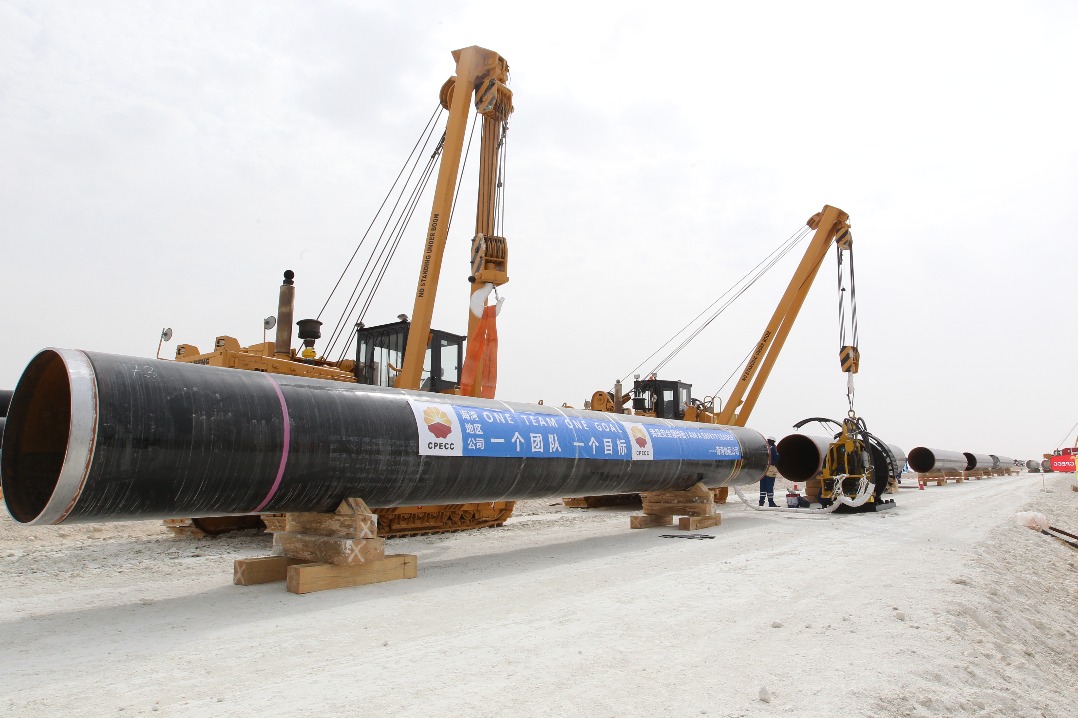
    The convergence of China’s Belt and Road Initiative with ASEAN’s Connectivity Master Plan 2025 and various GCC Vision 2030 reforms creates synergistic opportunities in infrastructure financing, maritime logistics, and digital corridors. This alignment is driving coordinated development across the regions.

    Educational and cultural exchanges represent another growing dimension. Abdullah Al-Hashem, former GCC Assistant Secretary-General, highlights the need for enhanced educational ties, noting the absence of ASEAN universities in GCC nations. “Knowledge sharing and technology transfer are crucial for strengthening relations,” stated Al-Hashem, currently a professor at Kuwait University.

    Abdulrahim Naqi, former Secretary-General of the Federation of GCC Chambers, identifies infrastructure, electricity, water management, and transportation as prime sectors for collaboration. He particularly emphasizes ASEAN’s agricultural expertise as vital for GCC food security initiatives.

    The private sector is positioned to drive this trilateral cooperation forward, with chambers of commerce, Islamic banks, and industrial groups facilitating dialogue and partnership development. As these economic corridors continue to develop, they promise to redefine global trade patterns and create new centers of economic influence.
  • Fossils reveal UAE’s lush grasslands, giant rivers from millions of years ago

    Fossils reveal UAE’s lush grasslands, giant rivers from millions of years ago

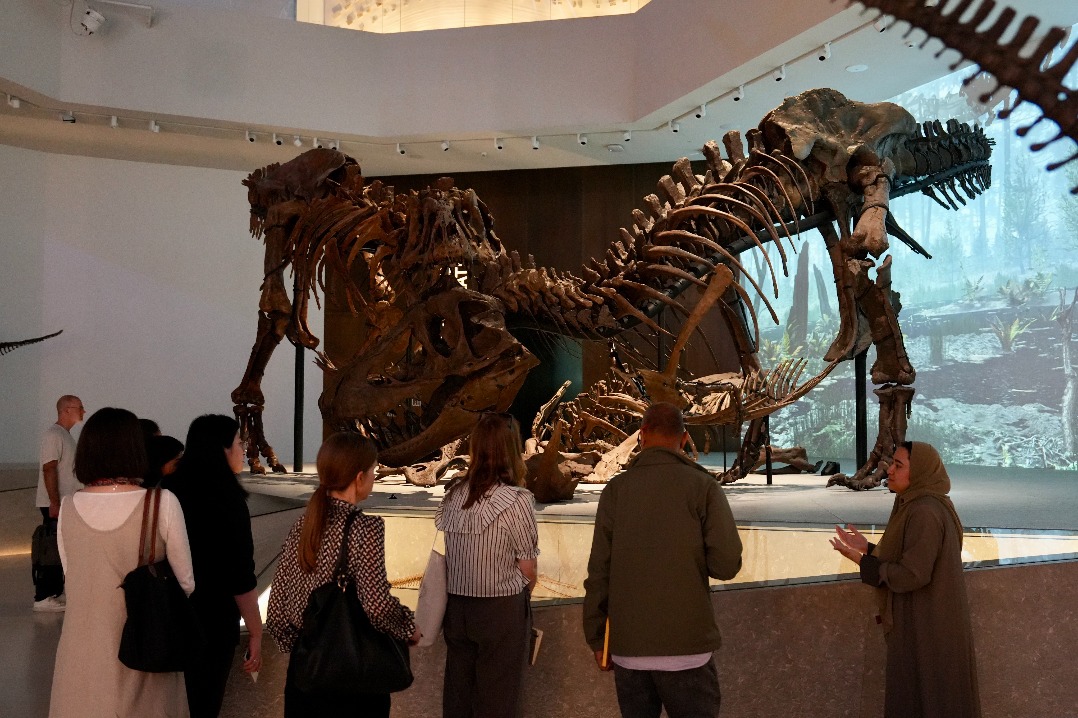
    The Natural History Museum Abu Dhabi is transporting visitors through 13.8 billion years of Earth’s history, with its most compelling exhibits revealing a startling transformation in the United Arab Emirates’ landscape. Fossil evidence demonstrates that the region now characterized by golden sand dunes and rocky mountains once hosted vast savannahs, grasslands, and massive river systems teeming with diverse wildlife.

    According to Dr. Mark Jonathan Beech, acting geoscience section head at the museum, discoveries in Al Dhafra present incontrovertible evidence that Arabia was not always desert terrain. “Few would imagine Abu Dhabi’s western region once featured giant rivers, savannahs, grasslands, and trees,” Beech stated, noting that these fossils completely reshape our understanding of the region’s ecological history.

    The geological timeline reveals even more dramatic changes. Approximately 100 million years ago, the UAE was submerged underwater, with marine remains still being discovered in mountain regions including Sharjah. The Hajar mountains formed mainly between 95-70 million years ago, with subsequent uplift events shaping Jebel Hafit as recently as 25-15 million years ago.

    By 7 million years ago, Al Dhafra supported extensive river ecosystems that sustained elephants, giraffes, antelopes, crocodiles, turtles, and catfish. “It was like being on safari in East Africa,” Beech remarked, emphasizing the remarkable biodiversity that once flourished in what is now desert.

    These fossil records provide more than historical curiosity—they serve as direct evidence of climate change and its devastating impact on species survival. “It shows that when the climate changes, animals become extinct,” Beech explained, highlighting the instructional value of paleontological findings for understanding contemporary environmental challenges.

    The museum utilizes various visual tools, including climate spirals and an Arabia Climate journey, to illustrate climatic oscillations across millennia while documenting the accelerating global warming trend of the past 150-200 years.

    Reflecting on the institution’s broader mission, Beech emphasized: “Our goal is to educate people to become better ambassadors of the future. We need to care for our planet and nature.” The museum’s fossil collections thus serve dual purposes—illuminating a forgotten green past while providing crucial insights for addressing current environmental crises.

  • Japan’s Takaichi plans to dissolve lower house to set up an early snap election

    Japan’s Takaichi plans to dissolve lower house to set up an early snap election

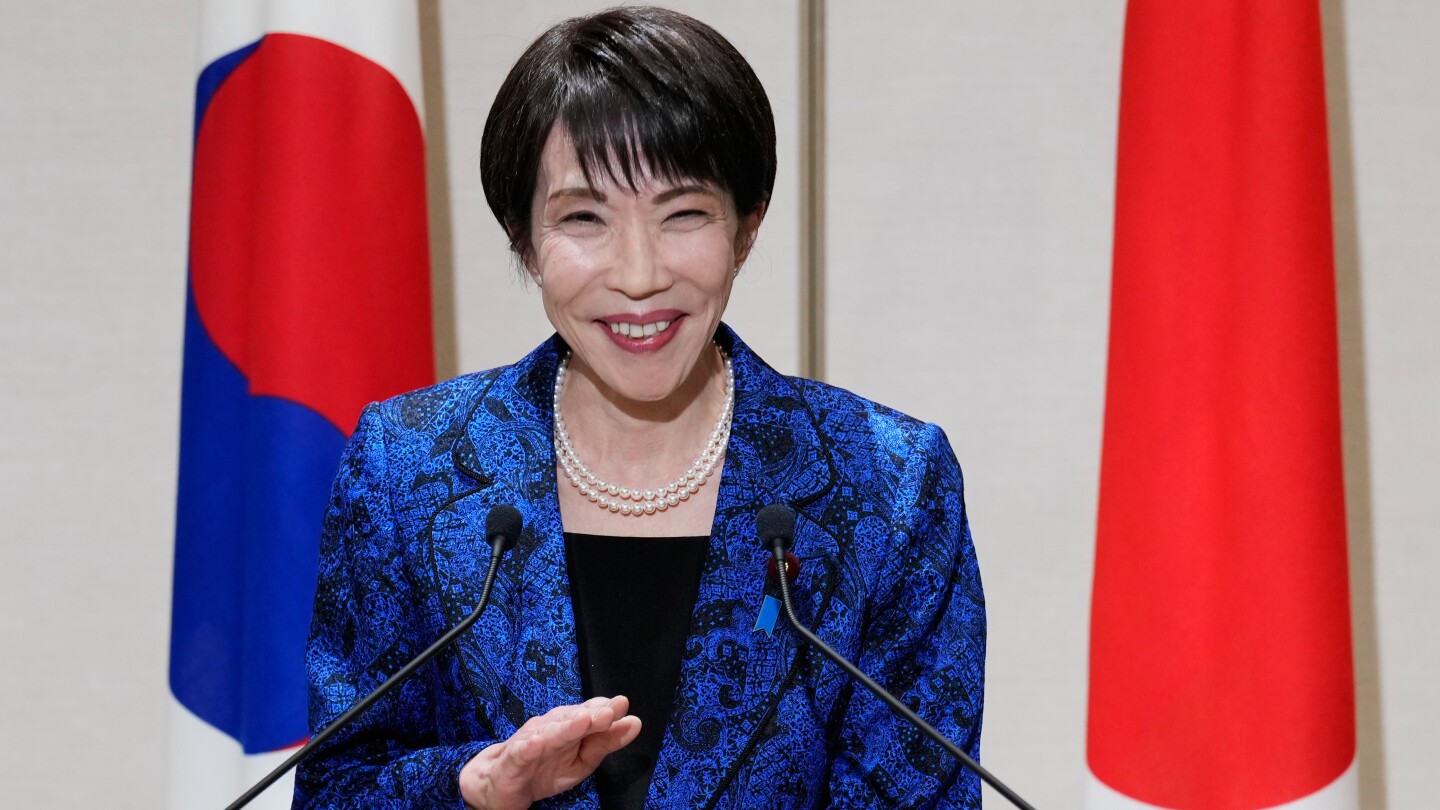
    TOKYO — Japanese Prime Minister Sanae Takaichi is preparing to dissolve the lower house of Parliament imminently, setting the stage for a snap general election aimed at securing public endorsement for her policy agenda. The announcement came from Shunichi Suzuki, secretary general of the ruling Liberal Democratic Party (LDP), following high-level consultations on Wednesday.

    Takaichi, who made history as Japan’s first female premier in October 2023, currently maintains robust approval ratings approaching 70%. Political analysts suggest this strategic move represents an effort to leverage her personal popularity to strengthen the LDP’s parliamentary position. The governing coalition, recently reconfigured following the departure of centrist partner Komeito, currently maintains a fragile majority in the powerful lower chamber.

    The dissolution is expected to occur shortly after Parliament convenes on January 23, with media projections indicating a potential election date as early as February 8. This timeline has drawn criticism from opposition legislators who argue the move would disrupt crucial budget deliberations needed before the new fiscal year begins in April.

    Prime Minister Takaichi seeks electoral validation for several key initiatives, including expansive fiscal stimulus measures to address inflation and support low-income households, alongside accelerated military expansion. The recently approved record 122.3 trillion yen ($770 billion) national budget awaits parliamentary authorization, with the election outcome significantly impacting its passage.

    The governing coalition now incorporates the conservative Japan Innovation Party as its new junior partner, reflecting Takaichi’s hawkish geopolitical stance and socially conservative values. This political realignment aims to recapture conservative voters who have recently supported emerging populist alternatives. Despite these adjustments, the ruling bloc remains a minority in Japan’s upper legislative house.

    The electoral decision coincides with intensified regional diplomacy, coming immediately after Takaichi’s summit with South Korean President Lee Jae Myung in Nara. This foreign policy engagement occurs against a backdrop of heightened tensions with China following controversial remarks about Taiwan early in Takaichi’s administration.

  • Xi on Party self-governance and anti-graft

    Xi on Party self-governance and anti-graft

    China Daily Information Co (CDIC) has established stringent copyright protection protocols governing all content published across its digital platforms. The comprehensive policy explicitly prohibits unauthorized republication or utilization of any materials—including text, photographs, and multimedia information—without obtaining prior written consent from CDIC.

    The company specifies technical requirements for optimal user experience, recommending display resolutions of 1024*768 or higher for accessing its digital properties. CDIC maintains multiple official licensing credentials, including Publishing Multimedia Online License 0108263 and Registration Number 130349, underscoring its formal operational status.

    Beyond content protection measures, the organization provides clear channels for external engagement through dedicated sections for advertising inquiries, general communications, and employment opportunities—including specific provisions for expatriate recruitment. The policy framework also encourages audience connection through official social media channels, facilitating ongoing dialogue with its readership base.

  • Minnesota sues federal govt over immigration crackdown

    Minnesota sues federal govt over immigration crackdown

    The State of Minnesota, alongside its two largest metropolitan centers, has initiated legal proceedings against the Trump administration’s immigration enforcement operations. This unprecedented lawsuit follows a fatal shooting incident involving a federal officer and a Minneapolis resident, which has ignited nationwide protests and constitutional concerns.

    State Attorney General Keith Ellison characterized the federal operation as a ‘invasion of the Twin Cities,’ alleging that poorly trained, aggressive armed agents have engaged in widespread unlawful conduct that terrorizes communities. The litigation specifically targets the Department of Homeland Security, accusing it of violating First Amendment protections and other constitutional guarantees.

    The legal action seeks immediate judicial intervention through a temporary restraining order to either suspend or substantially curtail the ongoing enforcement surge. Homeland Security officials have confirmed the deployment of over 2,000 immigration officers to Minnesota, resulting in more than 2,000 arrests since December—what Immigration and Customs Enforcement describes as its largest enforcement operation in history.

    Tensions reached a critical point following the death of Renee Good, a 37-year-old mother of three who was fatally shot by an ICE officer while in her vehicle. The tragedy has sparked massive school walkouts, emotional memorial gatherings, and confrontations between protesters and federal agents employing tear gas for crowd dispersal.

    Simultaneously, ICE reported four migrant fatalities in custody during the first ten days of January, involving individuals from Honduras, Cuba, and Cambodia. These deaths occurred amid a documented detention population of 69,000 people as of January 7th, with expectations of further increases following substantial congressional funding allocations for immigration enforcement operations.

  • Inter-Korean relations will not change: senior DPRK official

    Inter-Korean relations will not change: senior DPRK official

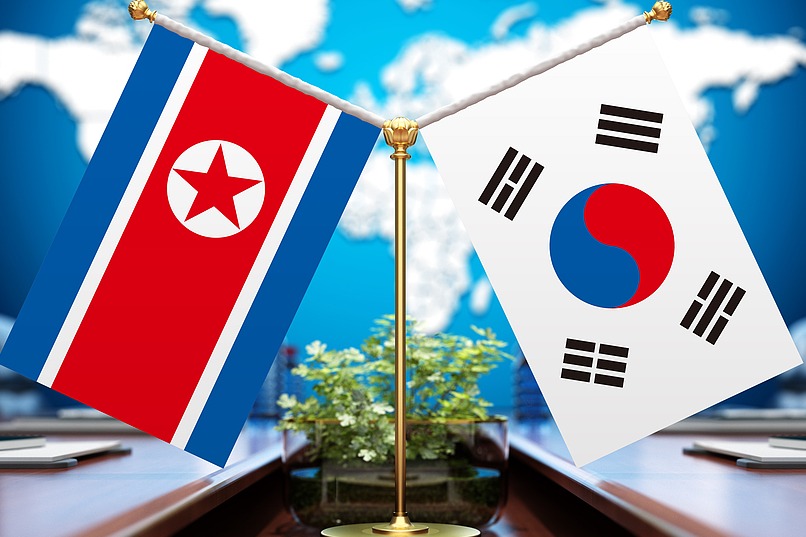
    In a definitive statement from Pyongyang, senior North Korean official Kim Yo-jong has emphatically declared that inter-Korean relations will remain unchanged, dashing hopes for diplomatic thaw between the two nations. The announcement, reported by the official Korean Central News Agency (KCNA), comes as a direct rebuttal to South Korea’s Ministry of Unification which had previously suggested potential openings for communication and detente.

    Kim, who serves as vice department director of the Central Committee of the Workers’ Party of Korea, characterized Seoul’s aspirations for improved relations as “hope-filled wild dreams” that would never materialize. The high-ranking official accused South Korea of committing “grave provocation by infringing upon the sovereignty of the DPRK” through repeated drone incursions into North Korean airspace.

    The diplomatic confrontation centers on allegations that South Korea dispatched surveillance drones over Pyongyang in October 2024 and again at the beginning of the new year. Kim demanded that Seoul authorities “admit and apologize” for these violations and implement measures to prevent recurrence, positioning these actions as prerequisites for any potential dialogue.

    This hardening position represents a significant setback for inter-Korean diplomacy, which had shown tentative signs of possible engagement following Kim’s earlier statement that left room for interpretation regarding communication channels. The latest remarks eliminate any ambiguity about North Korea’s current stance, indicating a return to confrontational rhetoric and emphasizing sovereignty violations as a non-negotiable barrier to relations.

  • Investigation of Fed chair threatens financial stability

    Investigation of Fed chair threatens financial stability

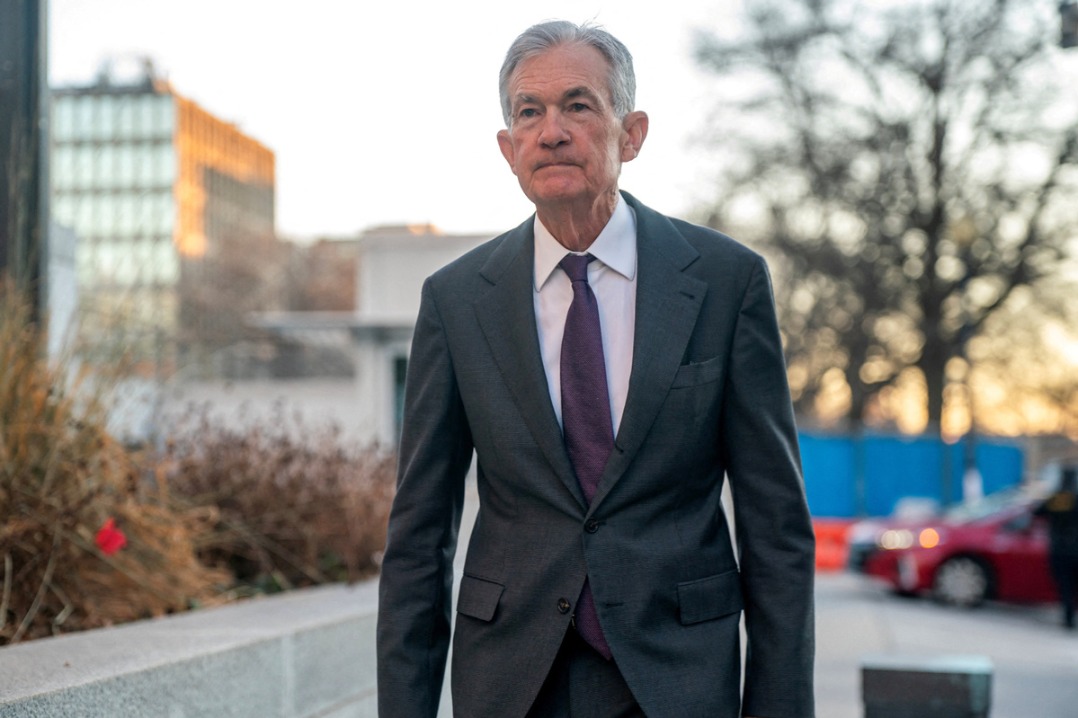
    A unprecedented criminal investigation by the U.S. Department of Justice into Federal Reserve Chair Jerome Powell has triggered widespread concern among economists and policymakers, raising alarms about potential threats to the central bank’s independence and global financial stability.

    The probe, initiated on January 13, 2026, focuses on the Federal Reserve’s headquarters renovation project in Washington and allegations that Powell may have provided misleading statements to Congress regarding the project’s escalating costs, which have surged to $2.5 billion—significantly exceeding initial budget projections.

    Former Fed Chair Janet Yellen has emerged as a vocal critic of the investigation, characterizing it as an extraordinary measure against a sitting central bank leader that could undermine the institution’s operational autonomy. Yellen expressed grave concerns to The New York Times, stating that the action suggests a willingness to intimidate Federal Reserve officials to influence monetary policy decisions.

    The investigation has prompted a rare public response from Powell himself, who released a two-minute video statement on Sunday connecting the Justice Department’s inquiry to ongoing political pressure surrounding interest rate policy. His response came after the Fed received grand jury subpoenas on Friday.

    Notably, every living former Federal Reserve chair has united in condemning the DOJ’s actions, issuing a joint statement that frames the investigation as an assault on the central bank’s institutional independence. Congressional architects designed the Fed’s independent structure specifically to ensure monetary policy decisions remain insulated from political interference and presidential preferences.

    The situation represents a critical juncture in the relationship between the Trump administration and the Federal Reserve. President Trump has repeatedly criticized Powell’s approach to interest rates, maintaining a target range of 3.5% to 3.75% rather than the 1% rate preferred by the administration. Trump’s previous attempts to influence Fed composition included efforts to remove board member Lisa Cook, with the Supreme Court set to rule on her case January 21.

    Republican lawmakers and Treasury Secretary Scott Bessent have joined the chorus of concern, warning that the investigation could create market instability and affect financial markets. Senate Banking Committee member Thom Tillis has vowed to oppose confirmation of any Fed nominees until the legal matter is fully resolved.

  • When does the Nasa Moon mission launch and who are the Artemis II crew?

    When does the Nasa Moon mission launch and who are the Artemis II crew?

    NASA is preparing to launch humanity’s first crewed lunar mission in over half a century as early as February 6th, 2026. The Artemis II expedition represents a monumental leap in space exploration, aiming to send astronauts farther into space than any previous human mission.

    The space agency’s ambitious timeline begins with the meticulous rollout of its colossal Space Launch System (SLS) rocket and Orion spacecraft from the Vehicle Assembly Building to Launch Pad 39B. This four-mile journey aboard the crawler-transporter-2, scheduled for January 17th, will require up to twelve hours. Following placement, engineers will initiate comprehensive pad preparations, establishing critical connections for electrical systems, fuel environmental controls, and cryogenic propellant feeds.

    A crucial wet dress rehearsal scheduled for late January will test the rocket’s fueling procedures. Should technical issues emerge, NASA may return the spacecraft to the VAB for additional work. If all systems perform optimally, the mission will target one of multiple launch windows in February, March, or April 2026, carefully synchronized with lunar orbital mechanics.

    The diverse four-member crew comprises NASA astronauts Reid Wiseman (commander), Victor Glover (pilot), and Christina Koch (mission specialist), alongside Canadian Space Agency astronaut Jeremy Hansen. Their ten-day journey will mark the inaugural crewed flight of both SLS and Orion, featuring extensive testing of spacecraft systems beyond Earth orbit.

    Artemis II serves as the critical precursor to Artemis III, which aims to land astronauts on the lunar surface no earlier than 2027-2028. The mission faces several unresolved elements, including the final selection of a lunar lander—either SpaceX’s Starship or Blue Origin’s craft—and the completion of new Axiom spacesuits.

    This renewed lunar initiative contrasts sharply with the Apollo program’s Cold War motivations. Artemis embodies an international effort focused on establishing sustainable human presence, with future missions planning construction of the Gateway lunar space station and involving astronauts from Europe and Japan.

    The global space race intensifies as China targets a 2030 south pole landing, Russia discusses lunar ambitions despite technical challenges, and India aims for crewed missions by 2040 following its successful Chandrayaan-3 landing.

  • LA to open ticket draw for 2028 Olympics – with seats starting at $28

    LA to open ticket draw for 2028 Olympics – with seats starting at $28

    Los Angeles 2028 Olympic organizers have unveiled an equitable ticketing system centered on accessibility, with registration opening Wednesday for a global random draw. The process, designed to prioritize fairness over financial advantage, will offer one million tickets priced at just $28 alongside numerous options under $100.

    Starting at 07:00 PST (15:00 GMT), sports enthusiasts worldwide can register through mid-March for the opportunity to purchase event admissions. Selected participants will receive April time slots for ticket acquisition, though organizers emphasize that slot assignment doesn’t guarantee availability. The initial purchasing window runs April 9-19, including access to opening and closing ceremonies.

    LA28 chief Allison Katz-Mayfield defended the randomized approach as “the fairest way to ensure that the broadest number of people can get access to tickets,” noting that registration timing provides no competitive advantage. The announcement follows recent criticism of 2026 World Cup pricing, with LA 2028 chairman Casey Wasserman stressing these “Games belong to everyone” and must remain “affordable and inclusive.”

    While most events will occur across Southern California venues, Oklahoma City will host canoeing and softball competitions, with residents of both regions receiving special early purchasing opportunities. The Los Angeles Memorial Coliseum—site of previous Olympic events and ceremonial cauldron lighting—will co-host the 2028 opening ceremony alongside track competitions.

    This marks the first U.S.-hosted Olympics since Atlanta 1996, with Los Angeles leveraging existing infrastructure from its 1932 and 1984 Games. Ticket registration remains open through March 18, maintaining the Paris 2024 benchmark of approximately $28 entry pricing while implementing unprecedented equity measures.

  • Slowdown in Dubai? Property data from 2025 proves analysts wrong

    Slowdown in Dubai? Property data from 2025 proves analysts wrong

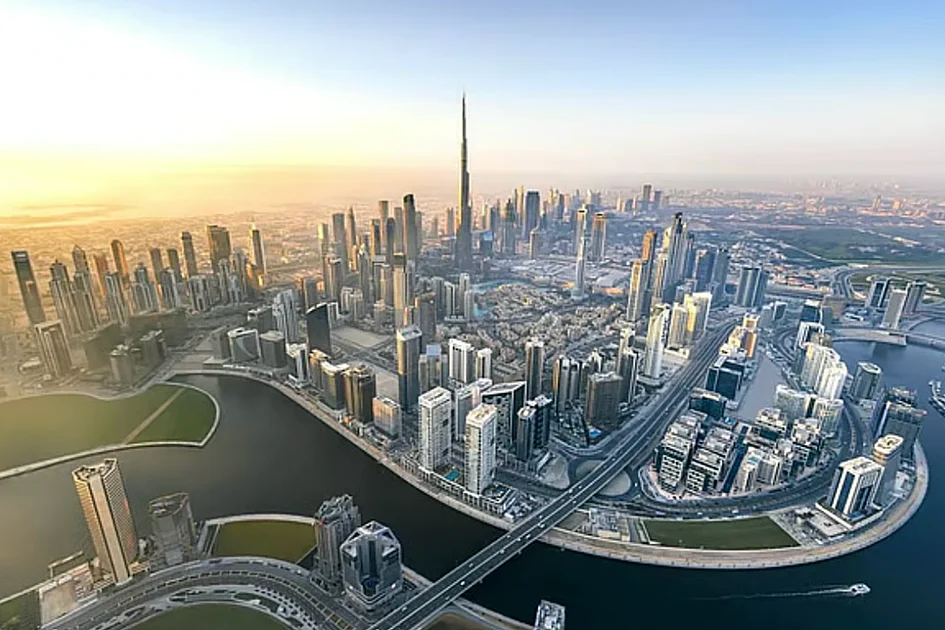
    Dubai’s property market has delivered a stunning rebuttal to pessimistic forecasts, achieving unprecedented growth throughout 2025 that has fundamentally reshaped market expectations. According to official data released by the Dubai Land Department, the emirate recorded over 270,000 real estate transactions valued at Dh917 billion, representing a remarkable 20 percent year-on-year increase in volume.

    This exceptional performance directly contradicts projections made by global ratings agency Fitch in 2024, which had anticipated price corrections of up to 15 percent across 2025 due to anticipated supply increases. Instead, the market demonstrated robust growth across all key metrics, with average prices increasing by approximately 7 percent according to DLD figures, while internal data from major agencies showed even stronger appreciation trends.

    Industry leaders emphasize that Dubai’s real estate expansion is fundamentally driven rather than speculative. Lewis Allsopp, Chairman of Allsopp & Allsopp, stated: “All key metrics—transaction volume, pricing, and average prices—show consistent growth. The narrative of a slowdown simply doesn’t align with the actual data.”

    The market’s strength stems from multiple structural factors including sustained population growth, continued inflow of high-net-worth individuals, long-term residency initiatives, and comprehensive infrastructure development. Real estate investments during 2025 exceeded Dh680 billion across 258,600 deals, representing a 29 percent value increase and 20 percent growth in transaction numbers. The investor base expanded significantly to approximately 193,100 participants, including 129,600 new entrants.

    Humaira Vaqqas, Senior Consultant at Range International Properties, noted: “The record transaction volumes demonstrate sustained end-user demand alongside institutional and international investor confidence. The market has evolved into a more transparent and regulated ecosystem, maintaining momentum while avoiding extreme volatility.”

    Looking toward 2026, industry executives express even greater optimism based on sustained demand drivers, affordable project launches, and Dubai’s positioning as a global real estate hub. The market’s performance aligns with the objectives of the Dubai Real Estate Sector Strategy 2033, which aims to increase transaction volume by 70 percent to reach Dh1 trillion.