作者: admin

  • UAE minister says details unclear, still assessing Trump’s Iran trade tariff plan

    UAE minister says details unclear, still assessing Trump’s Iran trade tariff plan

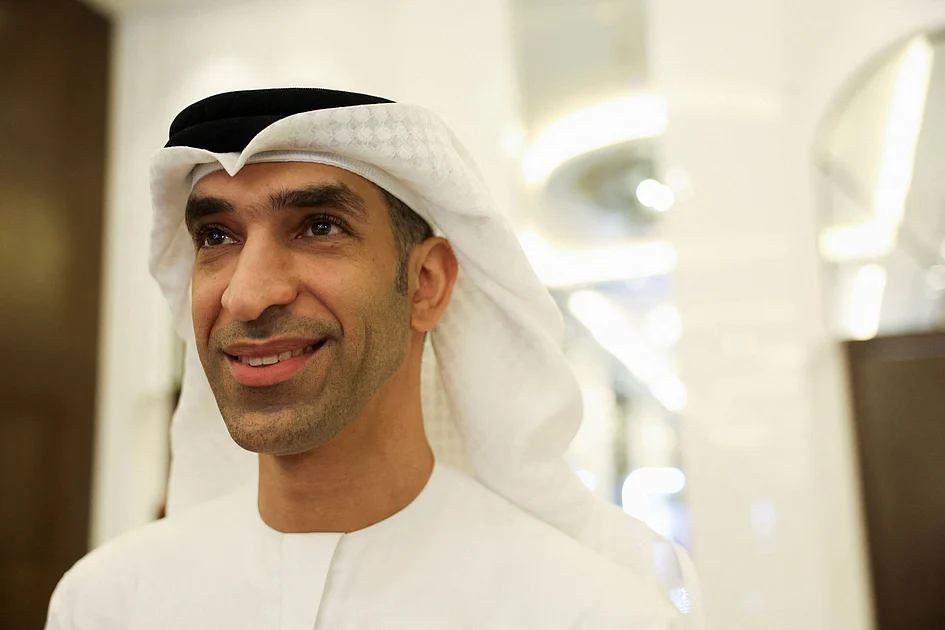
    United Arab Emirates Foreign Trade Minister Thani Al Zeyoudi expressed uncertainty regarding the implementation specifics of former US President Donald Trump’s recently announced trade tariffs targeting nations conducting business with Iran. The declaration came during a public address where the minister acknowledged ongoing assessments of the potential ramifications.

    This development follows Trump’s proclamation on his Truth Social platform imposing an immediate 25% tariff on all countries engaging in commercial relations with Iran. The measure represents an escalation of pressure tactics against Tehran concerning its handling of widespread domestic protests.

    Minister Al Zeyoudi emphasized the current lack of clarity surrounding the tariff structure and its potential application to UAE food imports. The UAE maintains significant trade relations with both the United States and Iran, creating a complex economic balancing act. The Emirates exports substantial quantities of aluminum and gold to American markets, with aluminum already subject to existing 50% duties. Additional tariffs could further inflate prices for this essential industrial metal.

    As Iran’s second-largest trading partner after China, the UAE maintains substantial commercial ties with its neighbor. Food and agricultural products constitute major import commodities from Iran, making supply chain security a primary governmental concern. Al Zeyoudi indicated that once formal details emerge, authorities will prioritize evaluating impacts on food product availability, pricing structures, and overall market stability.

    The minister further noted the interconnected nature of trade and diplomatic relations with neighboring Iran, suggesting that soft power considerations would factor into comprehensive impact assessments. While private enterprises would conduct independent risk analyses, the government’s focus remains on ensuring commodity availability and affordability for domestic markets regardless of corporate decisions regarding continued Iranian trade.

    Al Zeyoudi confirmed the administration’s commitment to developing alternative supply solutions to maintain market stability amid the evolving trade policy landscape.
  • Nasa astronauts begin ‘bittersweet’ medical evacuation from space station

    Nasa astronauts begin ‘bittersweet’ medical evacuation from space station

    In an unprecedented event in space exploration history, NASA’s Crew 11 has initiated an early return from the International Space Station due to medical concerns involving one crew member. This marks the first medical evacuation since the ISS commenced orbital operations in 1998.

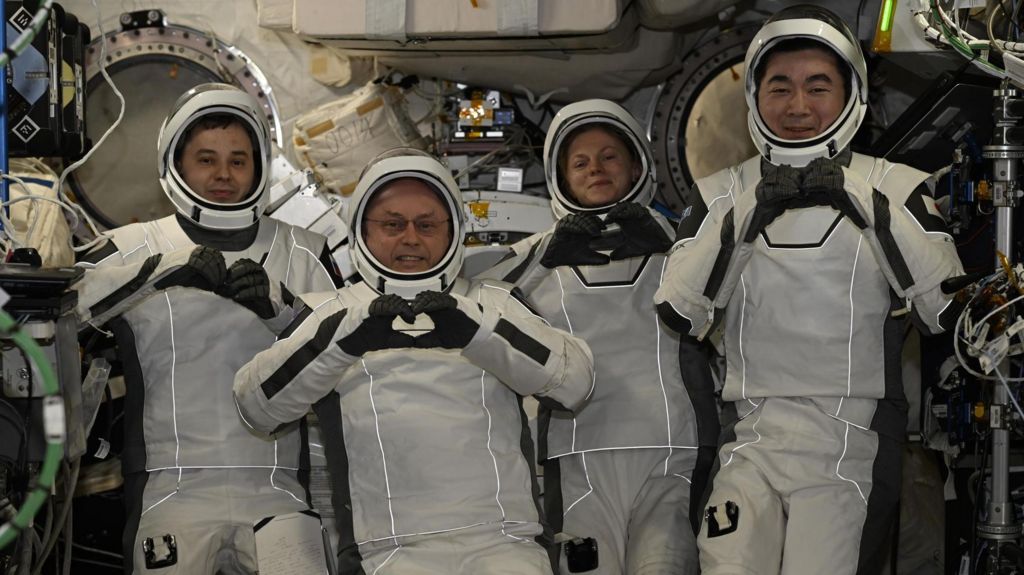
    The four-person team—comprising NASA astronauts Mike Fincke and Zena Cardman, Japan’s Kimiya Yui, and Russian cosmonaut Oleg Platonov—undocked from the station months ahead of their scheduled mid-February return. They are projected to splash down near California’s coastline in the early hours of Thursday local time.

    While NASA confirmed the affected crew member remains in stable condition, the agency maintained confidentiality regarding both the individual’s identity and specific medical details. The situation developed rapidly following last week’s abrupt cancellation of a scheduled spacewalk by Fincke and Cardman, which preceded NASA’s announcement of a crew health emergency.

    Command of the orbital laboratory has been transferred to Russian cosmonaut Sergey Kud-Sverchkov, who now leads a skeleton crew of three astronauts—including NASA’s Chris Williams and cosmonaut Sergei Mikaev—until reinforcements arrive in February. Despite operational challenges, Kud-Sverchkov affirmed the remaining team’s commitment to maintaining scientific and maintenance operations.

    This incident highlights the inherent medical vulnerabilities of space missions. Although ISS astronauts receive extensive medical training and the station carries emergency equipment, it operates without onboard physician support. The early departure necessitates scaling back research activities aboard the $150 billion facility, which orbits Earth at 17,500 mph while conducting vital microgravity studies.

    Historical context reveals only two comparable medical evacuations in space history: Soviet cosmonaut Vladimir Vasyutin’s 1985 early return from Salyut 7 due to urological complications, and Aleksandr Laveykin’s 1987 departure from Mir station following cardiac arrhythmia. Space experts emphasize that as human presence expands toward lunar and Martian exploration, incorporating medical professionals into crews will become increasingly critical.

  • UK grants asylum to Palestinian citizen of Israel over fear of persecution

    UK grants asylum to Palestinian citizen of Israel over fear of persecution

    In an unprecedented legal decision, a Palestinian citizen of Israel has been granted refugee status in the United Kingdom after British courts determined he would face credible persecution in Israel for publicly describing the state as an “apartheid regime.

    The individual, identified pseudonymously as Hasan to protect his anonymity, represents the first documented case of a Palestinian holding Israeli citizenship receiving UK asylum protection. The 26-year-old’s case culminated in December 2024 when the Home Office formally recognized his refugee status following a protracted legal battle that reached the Court of Appeal.

    Hasan’s extraordinary journey began when he arrived in the UK as an infant with his family, maintaining legal residence until age 14 when he temporarily returned to Israel with his father. A subsequent change in UK immigration policy voided his leave to remain status upon departure. He later reentered Britain on a visitor visa and formally sought asylum in 2019, arguing he would face discrimination as both a Palestinian and Muslim in Israel.

    The case took dramatic turns when the Home Office initially approved his refugee claim in March 2024, with caseworkers documenting concerns about “arbitrary arrest, detention, and elevated discriminatory administrative process” he might face in Israel. However, following media attention, then-Home Secretary James Cleverly personally intervened to pressure officials to revoke the approval.

    Hasan’s legal team from the Joint Council for the Welfare of Immigrants successfully pursued judicial review, ultimately compelling the Home Office to confirm his status after the Court of Appeal refused the government’s attempt to challenge the ruling. The official recognition document explicitly cites “well-founded fear of persecution” as preventing his return to Israel.

    Throughout the multi-year process, Hasan endured significant personal hardship under the UK’s asylum system, surviving on £49.18 weekly support while prohibited from working. His case establishes a notable precedent in international refugee law and UK-Israel relations.

  • Iran protests explained: 5 questions on nationwide unrest in the Islamic Republic

    Iran protests explained: 5 questions on nationwide unrest in the Islamic Republic

    A significant wave of civil unrest has swept across Iran since late December 2025, presenting one of the most substantial challenges to the country’s clerical establishment since the 1979 revolution. The protests originated in Tehran’s Grand Bazaar among merchants demonstrating against the rial’s drastic devaluation, which lost nearly half its value against the dollar throughout 2025, coupled with official inflation rates reaching 42.5% by December.

    The demonstrations have rapidly evolved from economic complaints to direct challenges against Iran’s governing system. Protesters have been documented burning images of Supreme Leader Ayatollah Ali Khamenei while chanting anti-government slogans, despite facing security forces equipped with tear gas, batons, and live ammunition. Iranian authorities have acknowledged economic difficulties while attributing the unrest to foreign interference from the United States and Israel.

    Government spokesperson Fatemeh Mohajerani stated on January 13 that authorities consider both security forces and protesters as ‘children’ of the state, claiming efforts to address legitimate grievances while condemning what they describe as terrorist elements hijacking the movement. Official reports now acknowledge approximately 2,000 fatalities, including security personnel, marking the first government recognition of the substantial human cost during the two-week crackdown.

    International response has been swift, with U.S. President Donald Trump warning Iran against suppressing protests and promising American support for demonstrators. The administration has announced 25% tariffs on nations trading with Iran and is exploring methods to restore internet access restricted by Tehran. White House Press Secretary Karoline Leavitt maintained that only President Trump knows what specific actions might follow, stating ‘the world can keep waiting and guessing.’

    Multiple countries have issued travel advisories for their citizens in Iran. India’s Ministry of External Affairs has recommended avoiding travel to Iran entirely, while Pakistan’s ambassador has urged nationals to keep immigration documents readily accessible. The U.S. State Department has advised immediate departure for American citizens, highlighting risks including kidnapping, arbitrary arrest, and wrongful detention.

    Regarding regional implications, UAE officials have expressed confidence that tensions will not significantly affect their nation. Sultan bin Sulayem, Chairman of DP World and Ports, Customs and Free Zone Corporation, characterized the UAE as a secure business environment, noting that previous regional crises had minimal impact. UAE Minister of Foreign Trade Thani Al Zeyoudi commented on the uncertainty surrounding U.S. tariff implementation and potential effects on food imports, given the UAE’s position as Iran’s second-largest trading partner after China.

  • Mane destroys Salah’s Afcon dream again – will he get another chance?

    Mane destroys Salah’s Afcon dream again – will he get another chance?

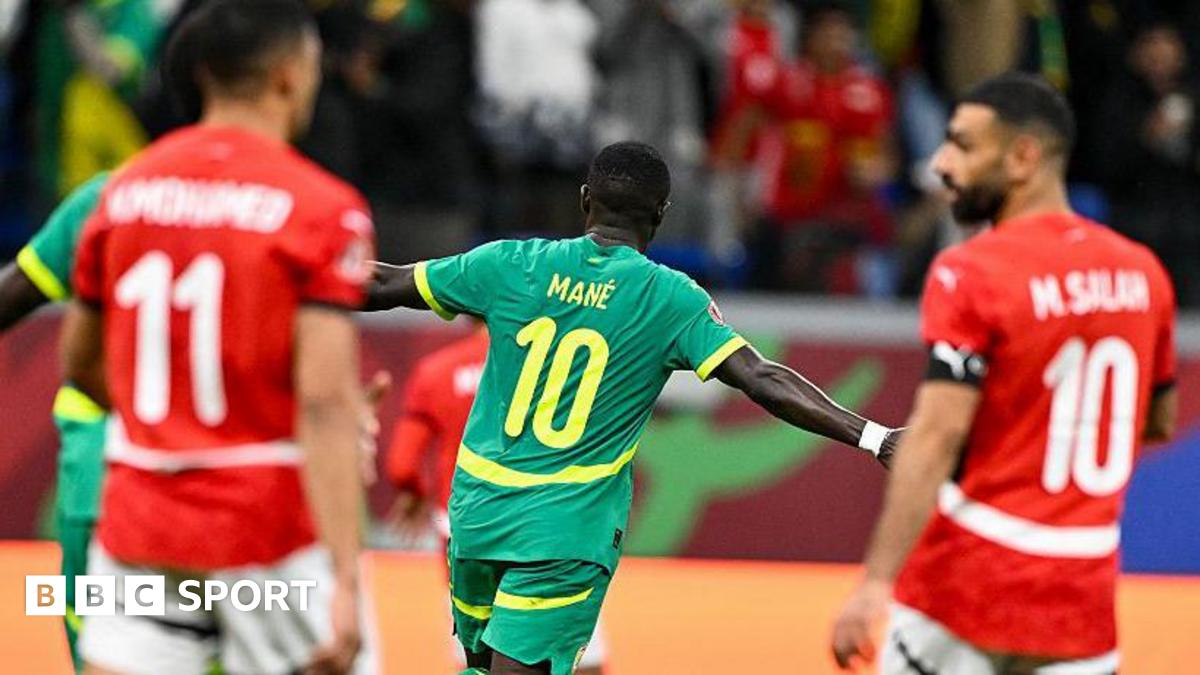
    In a dramatic semi-final clash at the Grand Stade de Tangier, Senegal secured a hard-fought 1-0 victory over Egypt in the 2025 Africa Cup of Nations, extending Sadio Mane’s dominance over former Liverpool teammate Mohamed Salah on the international stage. The decisive moment arrived in the 78th minute when Mane unleashed a powerful strike that shattered Egyptian hopes and propelled the Teranga Lions into Sunday’s championship final.

    The match, characterized by tactical caution and limited scoring opportunities, saw Egypt’s offensive efforts stifled by Senegal’s organized defense. For Salah, the defeat marks another painful chapter in his quest for continental glory, adding to previous heartbreaks against the same opponent in the 2021 AFCON final and 2022 World Cup qualification playoff.

    Speaking post-match, Mane acknowledged his rival’s efforts: ‘It’s never easy for him—he did everything to carry his team until now. Unfortunately, one of us had to lose. I’m happy to be in the final.’

    The loss raises questions about Salah’s future in the tournament despite his impressive four-goal performance throughout the competition. The 33-year-old forward, who has won every major club honor with Liverpool, has consistently identified AFCON victory as his primary career objective. ‘Nobody, even in Egypt, wants to win this trophy more than me,’ Salah had declared after Egypt’s quarter-final victory against Ivory Coast. ‘I have won almost every prize. This is the title I am waiting for.’

    Football analysts including former Nigeria international John Obi Mikel expressed sympathy for Salah’s continued continental disappointment: ‘He has won everything at club level but everyone wanted him to win this title.’ Former Morocco midfielder Hassan Kachloul added that time is becoming a factor: ‘He will try to concentrate on the next tournament and win the title—or else it will be the one that gets away.’

    Egypt will face Nigeria in Saturday’s third-place playoff before Salah returns to Liverpool, where his long-term future remains uncertain following recent public comments about his club situation. While Salah could theoretically feature in the 2027 and 2028 tournaments before AFCON transitions to a four-year cycle, this defeat represents another missed opportunity for African football’s most celebrated player to claim its most coveted prize.

  • Denmark warns of ‘fundamental disagreement’ after White House talks on Greenland

    Denmark warns of ‘fundamental disagreement’ after White House talks on Greenland

    A high-stakes diplomatic meeting at the White House has revealed profound divisions between the United States and Denmark regarding the future of Greenland, with Danish officials characterizing the disagreement as “fundamental” and “totally unacceptable.”

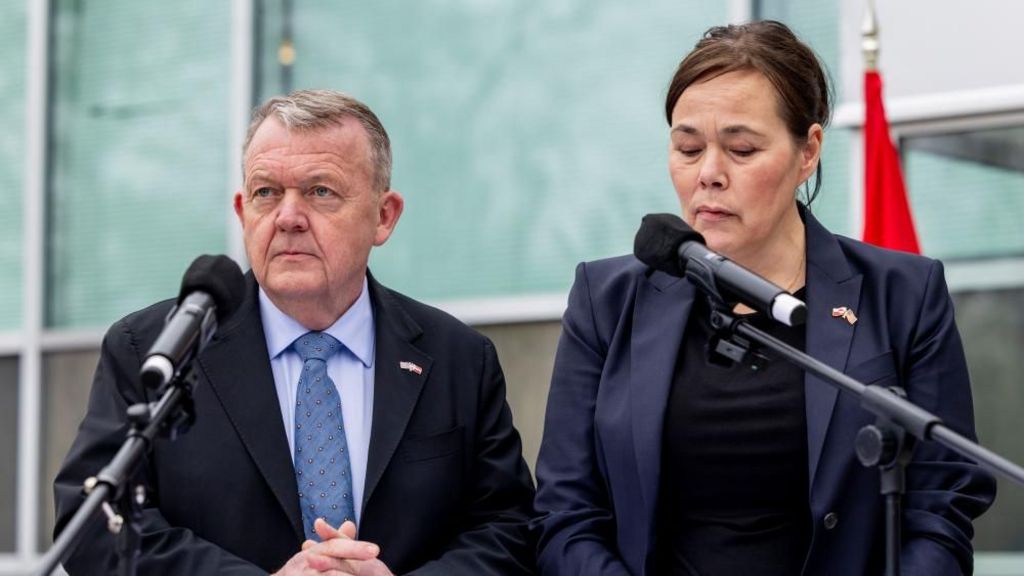
    Danish Foreign Minister Lars Lokke Rasmussen described Wednesday’s hour-long discussions with Vice President JD Vance and Secretary of State Marco Rubio as “frank but constructive,” though he emphasized that President Trump’s persistent interest in “conquering” the autonomous Danish territory remained a critical point of contention. The meeting concluded without significant resolution, though all parties agreed to establish a high-level working group to continue discussions in the coming weeks.

    “We made it very, very clear that this is not in the interest of [Denmark],” Rasmussen stated, noting the existence of “red lines” the United States cannot cross. While rejecting any notion of a takeover, Danish and Greenlandic officials indicated openness to expanded military cooperation, including potential additional US bases on the strategically vital island.

    The Trump administration’s pursuit of Greenland stems from its assessment of the territory’s crucial importance to national security. Located between North America and the Arctic, Greenland offers strategic advantages for early warning systems against missile attacks and monitoring regional vessel traffic. The US maintains approximately 100 permanent military personnel at its Pituffik base in northwestern Greenland, a facility operational since World War II under existing agreements with Denmark that permit unlimited troop deployment.

    Following the meeting, European allies demonstrated swift support for Denmark’s position. Sweden pledged to deploy armed forces to Greenland at Denmark’s request, while France announced plans to open a consulate on the island next month. Germany committed to sending a reconnaissance team to explore potential military contributions to regional security efforts.

    President Trump reiterated his position to reporters in the Oval Office, stating, “We need Greenland for national security.” He expressed skepticism about Denmark’s ability to defend the territory from potential Russian or Chinese influence, adding, “There’s not a thing that Denmark can do about it if Russia or China wants to occupy Greenland, but there’s everything we can do.”

    The administration’s focus on Greenland follows recent military actions against Venezuela and ISIS in Syria, alongside threats of intervention in Iran. Public opinion surveys indicate limited support for acquiring Greenland, with a Reuters/Ipsos poll showing only 17% of Americans favor seizing the territory, while 47% oppose Trump’s efforts.

  • Winter cherry blossoms create unexpected spectacles

    Winter cherry blossoms create unexpected spectacles

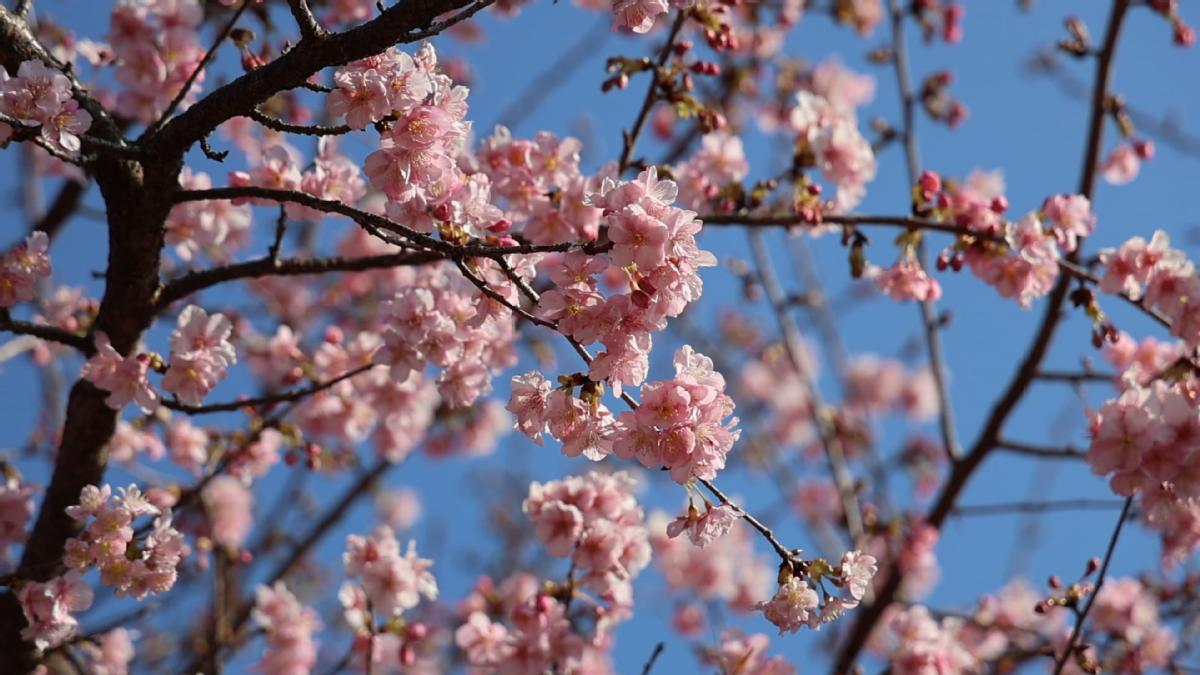
    Two remarkable natural phenomena featuring winter cherry blossoms have emerged simultaneously in different regions of China, creating unexpected visual spectacles and ecological interactions. In Central China’s Hunan province, Taifu Mountain in Linli county has experienced an unusual winter blooming of cherry blossoms, typically associated with spring. The phenomenon has drawn substantial visitor numbers to the area, with over 10,000 arrivals recorded in the past ten days, including weekend peaks exceeding 2,000 daily visitors. Experts attribute this atypical flowering pattern to recent unseasonably warm and dry weather conditions in the region. Approximately twenty percent of the mountain’s cherry trees have entered bloom, with projections suggesting the flowering period could extend for up to three months. The scenic area, noted for its exceptional 97.3% forest coverage rate, maintains a unique microclimate that supports diverse plant life, attracting more than 210,000 visitors throughout 2025. Meanwhile, in Southwest China’s Yunnan province, the Jingdong area within Wuliang Mountain National Nature Reserve has witnessed an equally captivating interaction between nature and wildlife. Winter cherry blossoms there have attracted groups of Indochinese gray langurs, national first-class protected animals, who have been observed feasting on the blossoms. Photography enthusiast Run Ning recently documented hundreds of these primates foraging together, capturing images of langurs lounging on branches, playing, grooming, and consuming petals amidst the floral backdrop. Conservation efforts have proven successful, with latest survey data indicating the Jingdong area now hosts over 3,000 Indochinese gray langurs distributed across 61 distinct groups—representing a significant increase of 18 groups and more than 1,000 individuals compared to population figures from a decade ago.

  • Chongqing park becomes stage for captivating natural phenomenon

    Chongqing park becomes stage for captivating natural phenomenon

    The Locajoy Theme Park in Chongqing’s Yongchuan district has emerged as an unexpected stage for one of nature’s most captivating seasonal spectacles. This urban recreational space has temporarily transformed into a vital winter sanctuary, hosting a remarkable convergence of resident and migratory bird species that has created a living tapestry of avian biodiversity.

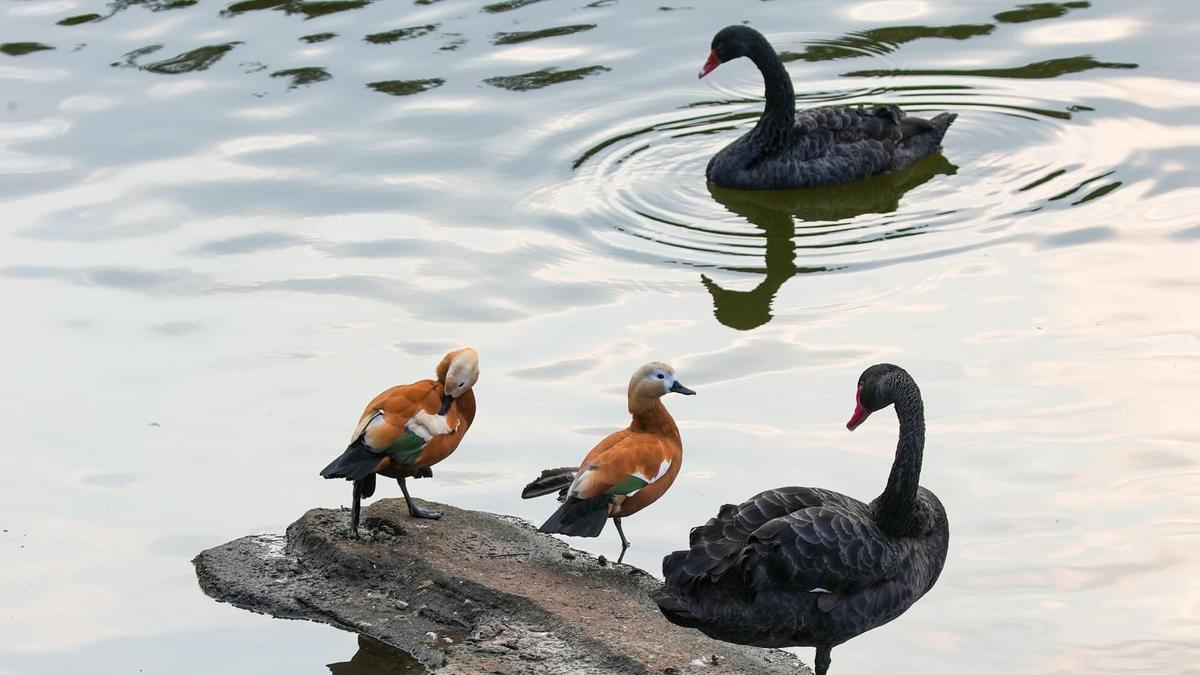
    Approximately 100 migratory waterfowl, including common pochards and ferruginous ducks, have completed their extensive journey from northern regions to settle at the park’s Waterfowl Lake. These seasonal visitors have joined nearly 300 resident birds, establishing a dynamic and diverse avian community. At an adjacent lake, an additional 300 cormorants have arrived, mingling with resident cormorants and pelicans to create a unique ecological display.

    Park naturalists report that these wild ducks initiate their southward migration as winter approaches, with January representing the peak congregation period. The park’s expansive water bodies, clear waters, abundant food resources, and the resident birds’ adaptation to human presence provide ideal wintering conditions for these migratory species. This environment facilitates harmonious coexistence between the seasonal visitors and permanent avian residents.

    Complementing this natural phenomenon, the park administration has implemented educational initiatives to raise public awareness about migratory patterns and conservation needs. Strategically placed information displays and specially designated observation areas offer visitors valuable insights into the fascinating world of migratory waterfowl while emphasizing the importance of protecting these seasonal guests and their habitats.

  • Public holiday, empty roads: How Dubai welcomed ex-US President George Bush 18 years ago

    Public holiday, empty roads: How Dubai welcomed ex-US President George Bush 18 years ago

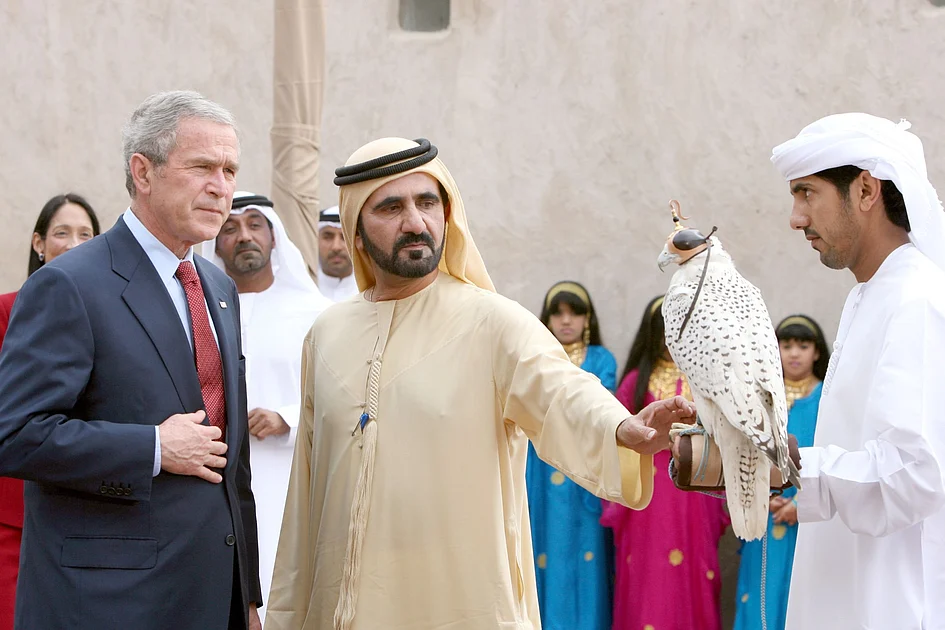
    Eighteen years ago, Dubai experienced a remarkable transformation from its characteristic bustle to unprecedented tranquility to host a distinguished American leader. On January 14, 2008, the emirate implemented extraordinary measures to welcome President George W. Bush, marking the first visit by an incumbent US president to the UAE.

    Authorities declared an unexpected public holiday, creating a surreal urban landscape where normally congested highways stood empty. From 6:00 AM until 4:00 PM, Dubai’s extensive road network underwent comprehensive closures as part of an elaborate security operation. Major transportation arteries including Garhoud Bridge, Maktoum Bridge, and Shindagha Tunnel were secured, while alternative routes were designated for essential travel.

    The presidential itinerary featured culturally significant engagements, beginning at the historic former residence of Dubai’s Ruler, now converted into a museum preserving the emirate’s heritage. President Bush experienced traditional performances and participated in an informal lunch with students at the Dubai School of Government, seated on cushions in a circle while dining from bowls placed on carpeted floors.

    At the iconic Burj Al Arab, the president addressed entrepreneurs, expressing particular admiration for Dubai’s ambitious spirit. “I am most impressed with what I’ve seen here,” Bush remarked, highlighting the city’s entrepreneurial dynamism and commitment to creating societal opportunities.

    While residents adapted creatively to the unexpected holiday—with children playing cricket in suddenly quiet streets and families enjoying mall visits—the transportation disruptions presented significant challenges. Airport arrivals faced extended stranding periods, with passengers from international flights like one family from Lahore reporting taxi services unavailable until road reopenings. Dubai Duty Free employees completed night shifts only to undertake long walks to residential areas like Satwa due to suspended public transport.

    Despite the logistical complexities, the day concluded without reported accidents or official complaints—a testament to both the comprehensive planning and public cooperation. The event remains etched in civic memory as a demonstration of Arabian hospitality that briefly but completely altered the rhythm of one of the world’s most dynamic cities.

  • Chongqing’s cat theme park draws visitors, aids rescues

    Chongqing’s cat theme park draws visitors, aids rescues

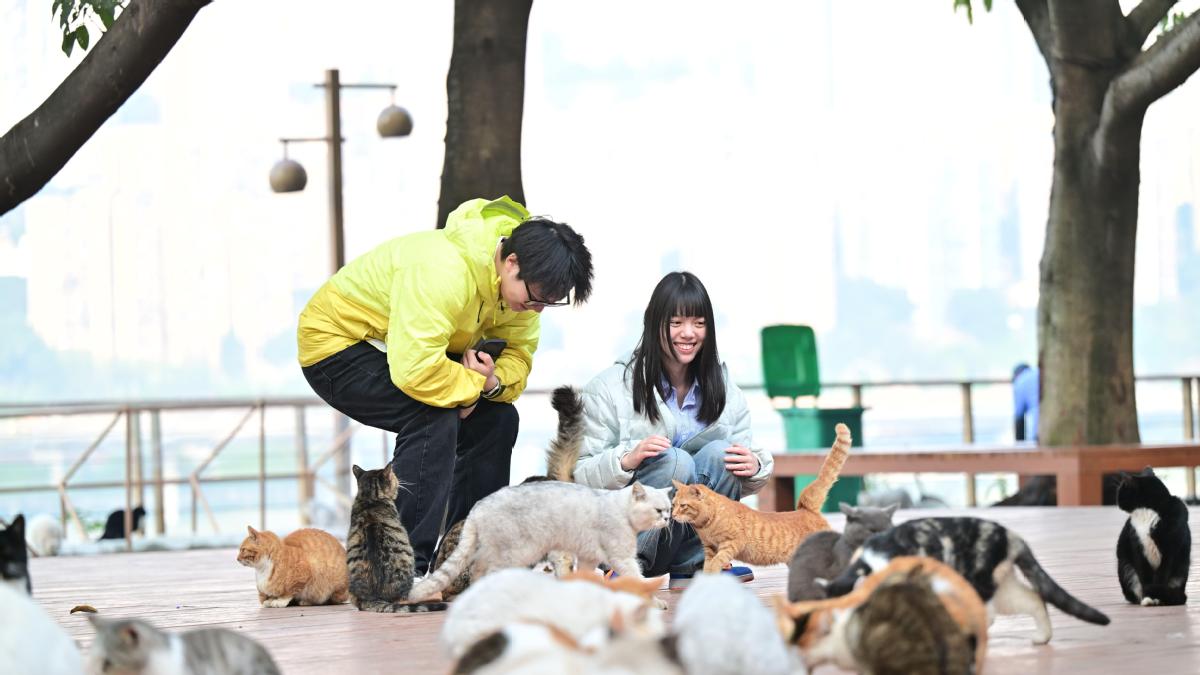
    A groundbreaking feline-themed recreational facility in Chongqing has emerged as a pioneering model for integrating animal welfare initiatives with sustainable tourism. Firefly Bay Cat Theme Park, situated along the Yangtze River’s southern bank in Nan’an district, has attracted significant public interest since its January 2026 opening through its unique dual mission of entertainment and animal advocacy.

    Spanning approximately 30,000 square meters—equivalent to four standard soccer fields—the establishment provides sanctuary to numerous rescued felines while offering visitors immersive educational experiences. For a modest admission fee of 19.9 yuan (approximately $2.85), which includes complimentary cat treats, guests gain access to specially designed interaction zones where they can engage with the animals in controlled environments.

    Beyond its primary feline facilities, the park boasts meticulously landscaped outdoor areas featuring panoramic river views and tranquil tea-serving spaces. The complex operates as both a recreational destination and a comprehensive rescue center, providing medical treatment, quarantine services, vaccinations, and sterilization procedures for abandoned, injured, and disabled cats.

    Peng Chen, the park’s director, revealed that approximately two-thirds of the facility is currently operational, with complete public access anticipated by April 1. This innovative approach to animal welfare tourism represents a significant advancement in how urban spaces can simultaneously support conservation efforts and public engagement, potentially establishing new standards for ethical entertainment venues across China.