作者: admin

  • Aussies urged to withdraw cash from ATMs in massive grassroots Cash Out Day protest

    Aussies urged to withdraw cash from ATMs in massive grassroots Cash Out Day protest

    On April 28, millions of Australian residents are expected to converge on ATMs and bank branches across every state and territory to withdraw cash, joining a coordinated grassroots movement pushing back against shrinking access to physical currency and pushing both the federal government and financial institutions to protect cash as a permanent payment option.

    Organized by the advocacy group Cash Welcome, the annual event dubbed National Cash Out Day aims to send a clear message to banks: Australian consumers demand the right to choose how they access and spend their own money in local communities. Jason Bryce, founder of Cash Welcome and a veteran financial journalist, explained that the first iteration of the campaign several years ago already delivered tangible policy results, forcing the government to commit to a formal cash access mandate. This year’s action builds on that early win, as declining ATM availability and the rise of contactless digital payments have steadily reduced public access to physical cash across the country.

    On a typical Australian business day, roughly 900,000 to one million people complete ATM withdrawals. Organizers are calling on participants to double that number to 1.8 million on April 28, with participation requiring nothing more than withdrawing as little as $20 from an ATM, bank branch, or EFTPOS-enabled retailer. Bryce emphasized that the campaign is not opposed to the convenience of contactless tap-and-go payments, which have become a staple of Australian commerce. Instead, it centers on protecting consumer choice: no single payment method should be forced out of common use, and all Australians deserve the option to transact with cash when they prefer.

    New data from the Reserve Bank of Australia (RBA) underscores just how vital this choice remains for millions of people. Contrary to widespread assumptions that cash use is in terminal decline, the RBA’s latest study shows physical currency usage is actually growing across the country. In 2025, 15% of all Australian transactions were completed with cash, a 2 percentage point increase from 2023. For in-person transactions alone, that share rises to nearly 20%, with half of all Australians reporting they use cash at least once per week.

    The data also confirms that cash access is a critical equity issue. Older Australians rely on cash far more heavily than younger generations, and lower-income households are more likely to prefer physical payments over digital alternatives. The RBA’s analysis warns that further cuts to cash access would cause severe harm for a large share of the population: approximately one-third of all Australians would face major hardship or significant daily inconvenience if cash becomes difficult to access or widely rejected by retailers. Many residents report carrying cash specifically to cover unexpected expenses or to have a backup when digital payment systems fail, and those who depend on cash regularly say they would face insurmountable difficulties if the payment option were significantly restricted.

    As the campaign gains momentum across the country, participants frame Cash Out Day as a simple, accessible way for ordinary consumers to stand up for their rights and ensure cash remains a viable, widely available option for all Australians.

  • India and New Zealand sign a free trade agreement to deepen economic ties

    India and New Zealand sign a free trade agreement to deepen economic ties

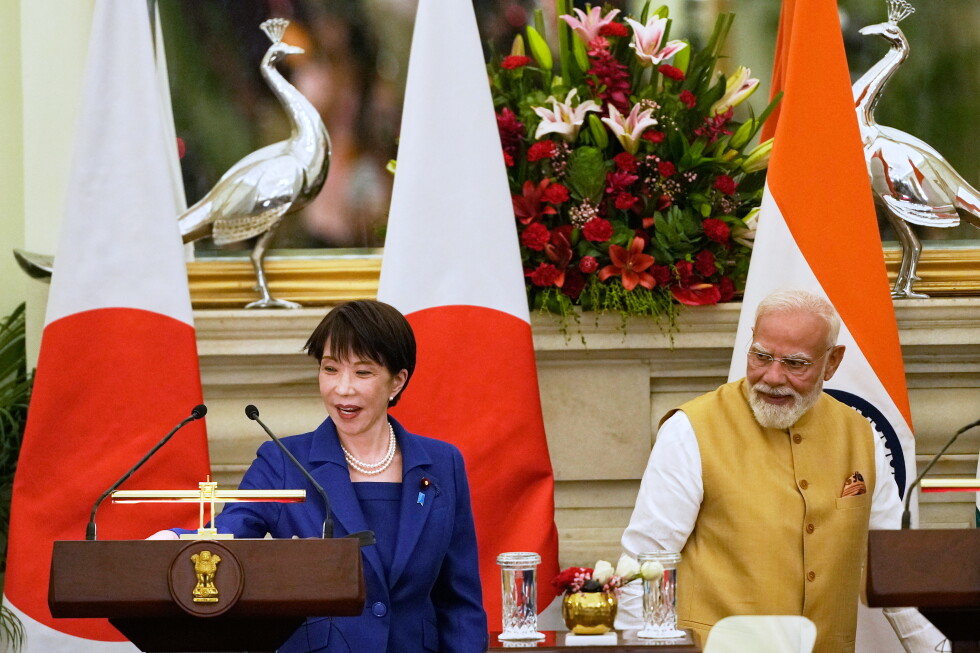
    Against a backdrop of rising global trade fragmentation and economic volatility, India and New Zealand formalized a transformative free trade agreement (FTA) in New Delhi on Monday, a deal designed to boost bilateral economic integration and open new reciprocal market access for both nations. The signing ceremony brought together India’s Minister of Commerce and Industry Piyush Goyal and New Zealand’s Minister of Trade and Investment Todd McClay, who was visiting the Indian capital for the event.

    After nine months of closed-door negotiations that concluded with a preliminary agreement in December, the deal delivers sweeping tariff changes: 95% of New Zealand’s goods exported to India will see tariffs cut or removed entirely, while every Indian product shipped to New Zealand will enter duty-free. In a supplementary commitment, New Zealand has pledged to channel $20 billion in investment into India over the coming 15 years.

    For both governments, the agreement comes as a strategic response to shifting global trade pressures. New Delhi has been actively pursuing alternative export markets to offset the economic strain of steep tariffs imposed by the United States on Indian goods, as well as growing disruptions to key shipping and energy routes linked to regional tensions. For New Zealand, the deal advances a long-running policy goal of reducing overreliance on China, its single largest trading partner, by diversifying its trade relationships across the Indo-Pacific.
    McClay framed the agreement as an unprecedented opportunity for long-term growth, noting that it comes at a moment of heightened global trade friction and policy uncertainty. Official trade data puts bilateral commerce between the two nations at $2.15 billion for the 12-month period ending June 2025, with India currently ranking as New Zealand’s 12th-largest export market. “This is a once-in-a-generation opportunity to deepen our economic ties at a time when the global order is shifting,” McClay said of the deal.
    Goyal echoed the significance of the moment, calling the FTA a “defining milestone” for both countries. “At a time when the world economy is being recast, India and New Zealand have chosen each other,” he stated, adding that the agreement establishes clear frameworks for cross-sector investment and regulatory cooperation that will benefit businesses on both sides.

    Key sectors set to gain expanded market access for Indian exporters include textiles and apparel, engineering goods, leather and footwear, and marine products. New Zealand exporters will see new openings for shipments of horticultural goods, timber, coal, wool and meat. To protect its large domestic farming community, India carved out exclusions for dairy products and a selection of other agricultural goods in the final text of the agreement.
    India’s export sector has faced mounting pressure since August last year, when the United States imposed steep new tariffs on a range of Indian goods, hitting labor-intensive sectors including textiles, auto components and metals particularly hard. New Delhi continues to hold separate bilateral trade negotiations with Washington even as it expands trade ties with other partners across the globe.

    In New Zealand, the FTA enjoys broad bipartisan support, a standard for the country’s major trade agreements. The deal now moves to parliamentary ratification, and it is widely expected to pass after the center-left opposition New Zealand Labour Party pledged its backing. The only notable opposition comes from New Zealand First, a small populist party that is part of the current governing coalition.
    Reporting for this story was contributed by Graham-McLay from Wellington, New Zealand.

  • A predawn Russian drone strike hits Ukraine’s Odesa, wounding 14; 2 killed in Russian-held Kherson

    A predawn Russian drone strike hits Ukraine’s Odesa, wounding 14; 2 killed in Russian-held Kherson

    KYIV, Ukraine – As Moscow’s full-scale invasion of Ukraine enters its third year, a pre-dawn Russian drone assault on the southern Ukrainian port city of Odesa left 14 people injured, including two minors, local officials confirmed Monday. The attack targeted residential blocks and key civilian infrastructure, according to Serhii Lysak, head of Odesa’s city military administration. As a strategically critical Black Sea export hub, Odesa has been repeatedly targeted by Russian strikes throughout the ongoing conflict.
    Oleh Kiper, governor of Odesa’s regional military administration, added that five of the wounded — all suffering from shrapnel injuries — were admitted to local hospitals for treatment. The assault marked the latest in a continuous wave of Russian attacks on populated civilian areas across Ukraine.
    In a parallel development reported by Russian-installed officials, a Ukrainian drone strike left two elderly civilians dead in Dnipriany, a village located in the Russian-occupied portion of Ukraine’s Kherson region. Moscow-appointed regional governor Vladimir Saldo confirmed that the deceased victims were a 70-year-old man and a 70-year-old woman.
    In an update posted to the social platform X on Monday, Ukrainian President Volodymyr Zelenskyy disclosed the staggering scale of Russian strikes over the previous seven days: approximately 1,900 attack drones, close to 1,400 heavy precision-guided aerial bombs, and around 60 missiles of multiple variants launched across Ukrainian territory. Zelenskyy noted that years of wartime innovation have allowed Ukraine to develop cutting-edge domestic air defense capabilities, enabling Ukrainian forces to intercept more than 90% of the Russian drones targeting the country. Even so, he emphasized that Ukraine still urgently requires additional American-made Patriot air defense systems to counter Russia’s ballistic missile threats, which current systems are not fully equipped to intercept at scale.
    Beyond developments on the frontline, Zelenskyy highlighted a series of recent diplomatic and economic wins for Kyiv. NATO member states outside the United States have finalized a funding framework to procure U.S.-manufactured weapons for Ukraine, the European Union has formally approved a €90 billion ($106 billion) lending package to support Ukraine’s wartime and reconstruction budget, and the bloc is preparing to roll out additional economic sanctions targeting Moscow. Separately, Norway became the latest European nation to formalize a joint drone production partnership with Ukraine, the Ukrainian Defense Ministry announced Monday. Zelenskyy also added that Ukraine is now sharing its anti-drone expertise with Middle Eastern and Gulf nations facing attacks from Iranian unmanned aerial vehicles amid regional tensions tied to the ongoing Iran conflict.
    On the offensive side, Ukraine has stepped up long-range drone and missile strikes against Russian energy infrastructure deep within Russian territory, targeting oil terminals and refineries to disrupt Moscow’s core energy export economy. The Institute for the Study of War, a Washington D.C.-based independent think tank, reported Sunday evening that it has verified geolocated evidence of at least 10 separate Ukrainian strikes against Russian oil and gas infrastructure over the past 14 days.
    This coverage is part of ongoing reporting on the Russia-Ukraine war from The Associated Press, with full updates available at https://apnews.com/hub/russia-ukraine.

  • China blocks Meta from acquiring AI startup Manus

    China blocks Meta from acquiring AI startup Manus

    In a high-profile move that highlights growing regulatory scrutiny of cross-border artificial intelligence deals, China’s top economic planning body has formally blocked Meta Platforms’ planned purchase of Manus, a Singapore-headquartered AI startup with founding origins in China. The announcement, made public on Monday, marks one of the most prominent restrictions on a major U.S. technology company’s acquisition of an AI-linked firm with Chinese connections in recent years.

    The official order came from the Office of the Working Mechanism for Security Review of Foreign Investment under the National Development and Reform Commission (NDRC), China’s leading planning agency. In its brief public statement, the NDRC confirmed it was prohibiting the foreign takeover of Manus and mandating all parties involved unwind the transaction completely. Notably, the agency did not explicitly name Meta, the American parent company of major social platforms Facebook and Instagram, in its public notification.

    This formal ban follows a preliminary investigation launched by Chinese regulators earlier this year, after the deal was first unveiled to the public. The NDRC did not release any additional details or expand on the specific justifications for blocking the acquisition in its public statement.

    The proposed deal was unusual from its inception: it represented a rare instance of a large U.S. technology group acquiring an artificial intelligence firm with deep founding ties to China. Manus has gained recognition in global AI circles for developing a general-purpose AI agent capable of completing multi-step, complex work tasks without continuous human input. For Meta, the acquisition was expected to accelerate the company’s development of advanced AI capabilities to enhance product offerings across its entire ecosystem of social and digital platforms.

    Even before the formal investigation was launched, Meta sought to address early regulatory concerns by confirming that after the acquisition closed, there would be no remaining Chinese ownership stakes in Manus, and the startup would end all its services and operations within mainland China. Still, Chinese regulatory bodies announced in January that they would launch a formal review to assess whether the deal aligned with the country’s existing laws and regulations governing foreign investment.

    At the time of that announcement, China’s Ministry of Commerce emphasized that all companies engaging in outward investment, technology transfers, cross-border data flows, and cross-border acquisition transactions are required to comply fully with all relevant Chinese legal requirements. Meta has repeatedly noted that the vast majority of Manus’ employees are based in Singapore, the startup’s official registered headquarters.

    In a written response to Monday’s ruling, Meta maintained that the proposed transaction had complied fully with all applicable laws. “We anticipate an appropriate resolution to the inquiry,” the California-headquartered company said in its statement, giving no further indication of what steps it might take moving forward. Industry analysts say the ruling underscores the increasing regulatory attention around the world to national security risks tied to AI and cross-border technology acquisitions, as global powers race to advance their own domestic artificial innovation ecosystems.

  • Wushu event fosters international fellowship

    Wushu event fosters international fellowship

    Fresh off the closing ceremony of the 10th World Youth Wushu Championships in Tianjin, an impromptu, unplanned game unfolded on a nearby outdoor basketball court. With no official equipment to hand, a ragtag group of teenage athletes drawn from four continents chased after nothing more than an empty plastic water bottle, laughing and competing with none of the formality of the tournament they had just exited.

    Just hours before, these same young competitors had stood opposite one another on the competition mat, locked in focused, disciplined combat for championship placement. Now, all tournament rivalry had melted away. This casual, joyful scene perfectly encapsulated the core philosophical paradox at the heart of wushu: it is a martial art that teaches practitioners how to strike, first and foremost to build the self-discipline to avoid unnecessary conflict.

    For 20-something Swiss competitor Leandro Gia-Hy Luong, who inherited his love of wushu from his father, the most valuable lesson the sport has taught him is not a powerful high kick or a lightning-quick palm strike. It is a simple two-word rule drilled into him by his coach: “Don’t fight.” For Luong, wushu is first and foremost an exercise in intentional self-restraint. It is defined as the art of “stopping conflict” — a philosophy that is even written into the etymology of the Chinese character for “martial” (wu), which combines the character radicals for “stop” and “spear”.

    Anthony Sims, a veteran American referee with more than two decades of experience officiating wushu competitions, echoed this perspective. “In almost every sanda match I officiate, I see the exact same pattern,” he shared. “After an intensely competitive bout on the platform, competitors walk off the mat and immediately embrace, or exchange warm shoulder pats to encourage one another.”

    When asked to sum up wushu in just three words, Sims did not select common descriptors of martial skill like “strength”, “speed” or “agility”. Instead, he chose “perseverance”, “humility” and “growth”. After 20 years on the job, Sims says he has seen firsthand that wushu delivers far more than physical fitness. It builds mental fortitude and instills core values such as self-restraint, regular self-reflection, and lifelong personal growth — and that mental development, he says, matters far more than any competition medal. For the hundreds of young international athletes who gathered in Tianjin for this year’s youth championships, the event proved less a fight for placement and more a gathering that built cross-cultural connections and life-changing personal lessons that will outlast any tournament result.

  • Coalition puts forward an $800m plan to double fuel reserves and provide more storage

    Coalition puts forward an $800m plan to double fuel reserves and provide more storage

    Against the backdrop of escalating global market disruption stemming from the ongoing Middle East conflict, Australia’s opposition Coalition has launched a targeted $800 million initiative to drastically strengthen the nation’s fuel resilience, expanding strategic reserves and adding 1 billion litres of new domestic storage capacity. The proposal, framed as a critical response to growing global energy supply uncertainty, calls for a sweeping overhaul of Australia’s existing fuel stockholding rules, with a specific focus on shoring up supplies of diesel, the fuel that powers most of the country’s freight, agriculture and regional sectors. At the core of the plan is a move to more than double the current Minimum Stockholding Obligation (MSO), requiring suppliers to maintain enough reserve fuel to cover 60 days of national demand — representing a more than 50% jump in total minimum reserves and a nearly 25% increase in critical stockholdings. The Coalition is also proposing the creation of a dedicated Australian Fuel Security Facility, backed by the full $800 million in government funding, that will support the construction of at least 1 billion litres of new onshore storage infrastructure, again prioritizing diesel storage to meet the needs of key domestic industries. Opposition leader Angus Taylor has urged Prime Minister Anthony Albanese’s government to adopt the plan immediately, warning that any delay leaves Australia exposed to catastrophic supply disruptions. “If fuel stops, Australia stops. It’s that simple. Trucks don’t move, supermarkets don’t stock, businesses shut their doors,” Taylor said in remarks announcing the policy. “We are putting forward a practical plan to make sure that never happens. More fuel in reserve, more storage on the ground, and a country that can stand on its own two feet. This is about protecting Australians’ way of life and restoring their standard of living. You don’t do that with talk. You do it with action.” The plan has received strong backing from the Nationals, the junior coalition partner that represents regional and rural Australia, where reliance on diesel for farming, freight and everyday transport is far higher than in major urban centers. Nationals leader Matt Canavan emphasized that increasing domestic stockpiles reduces Australia’s dangerous overreliance on vulnerable overseas supply chains that can be disrupted by global conflict or geopolitical tension almost overnight. “People in the regions know how serious this is. If the diesel doesn’t turn up, the farm doesn’t run and the shelves go empty,” Canavan said. “This plan is just common sense. Keep more fuel here in Australia so we are not relying on overseas supply lines that can be cut overnight. We cannot keep hoping for the best. We need to be ready, and this plan gets us there.” Under the current regulatory framework, fuel suppliers are already required to hold minimum reserve stocks, with the associated costs passed through to consumers at the fuel pump. The Coalition’s plan would require suppliers to build new storage capacity and acquire additional inventory, with government financial support offsetting much of the upfront cost. The opposition estimates that expanding the MSO would add only around 1 cent per litre to retail fuel prices, a modest increase that it argues is well worth the cost of enhanced national energy security. Shadow Energy Minister Dan Tehan added that the proposal offers a clear, actionable path to strengthening the country’s entire fuel supply chain against unforeseen global shocks. “This is a practical, achievable plan that strengthens our fuel supply chain and backs Australian industry,” Tehan said. “It works with industry, builds storage where it is needed, and makes sure we have the buffer to withstand global shocks.” The Coalition has committed that if the government adopts the plan immediately, it would deliver the full 60-day fuel security target by 2030, putting Australia in a far stronger position to weather ongoing global energy volatility linked to the Middle East conflict and other geopolitical risks.

  • War in the Middle East: latest developments

    War in the Middle East: latest developments

    Tensions across the Middle East have reignited in recent days, bringing new volatility to diplomatic efforts, regional security and global markets, following weeks of low-level conflict and stalled negotiations. Multiple breaking developments have deepened uncertainty over the prospects of de-escalation, just two months after open fighting erupted between Israel and Iran.

    The most significant shift came from Lebanon’s powerful Iran-aligned militant group Hezbollah, whose deputy leader Naim Qassem delivered a firm rejection of planned direct negotiations between Lebanese authorities and Israel. In an official statement released this week, Qassem slammed the proposed talks as a “grave sin” that risks plunging Lebanon into full-blown instability, warning that any push for direct dialogue would harm both the country and the political leaders pushing for the move. “We categorically reject direct negotiations with Israel, and those in power should know that their actions will not benefit Lebanon or themselves,” Qassem said, urging Lebanese governing bodies to immediately abandon the plan that he argues threatens to drag the nation into a dangerous spiral of unrest.

    Meanwhile, on the diplomatic front, Iran’s top diplomat placed full blame on the United States for the ongoing impasse in talks aimed at ending the conflict. Iranian Foreign Minister Abbas Araghchi made the comments while arriving in Moscow as part of a rapid, multi-stop international diplomatic tour. He argued that the latest round of negotiations, which had made limited incremental progress, collapsed entirely due to unreasonable and excessive demands put forward by Washington. Araghchi also highlighted the strategic importance of unimpeded maritime access through the Strait of Hormuz, a critical global chokepoint for energy supplies, noting that stable, safe passage through the waterway is a non-negotiable issue for the entire global community.

    The renewed volatility has already rippled through global energy markets. On Monday, benchmark crude oil prices jumped more than 2% as investors reacted to the growing risk of regional disruption to energy production and shipping, while global equity markets posted mixed results amid the heightened uncertainty, with no sign of a breakthrough to de-escalate the eight-week-old conflict between Israel and Iran.

    A separate security development further underscored the fragility of the existing truce in southern Lebanon. The Israeli military confirmed Monday that one of its soldiers was killed during active combat in the border region, where a ceasefire agreement has been nominally in place since mid-April. Both Israel and Hezbollah, which is backed by Iran, have repeatedly traded accusations of truce violations along the Lebanon-Israel border in recent weeks, raising fears that the low-level skirmishes could escalate into a wider conflict that draws in regional powers.

    Beyond the Middle East, the conflict is already shaping major central bank policy decisions in Europe. The European Central Bank is widely expected to keep interest rates unchanged at its upcoming policy meeting this week, as policymakers wait to assess whether the uptick in inflation driven by Middle East conflict-related energy price shocks will prove temporary, or if it will persist and start to drag on eurozone economic growth.

  • Michael Jackson biopic smashes box office record

    Michael Jackson biopic smashes box office record

    The highly anticipated Michael Jackson biopic *Michael* has roared onto the global box office landscape, securing its place in Hollywood history by posting the highest opening weekend gross ever recorded for any biographical film. Led by Jaafar Jackson, the late King of Pop’s own nephew in his breakout leading role, the musical biopic raked in a staggering $217 million (£160 million) worldwide during its opening five days, which launched globally last Wednesday.

    This record-breaking haul topples two long-standing benchmarks. Before *Michael*’s release, the top opening for a musical biopic belonged to 2018’s *Bohemian Rhapsody*, which launched with $124 million (£91 million) and earned star Rami Malek an Academy Award for his portrayal of Freddie Mercury. The new release even outpaced 2024’s *Oppenheimer*, which opened to $180 million (£133 million) to claim the all-biopic opening crown.

    Adam Fogelson, chair of *Michael*’s United States distribution partner Lionsgate, attributed the historic opening to broad cross-demographic appeal. “You don’t deliver this figure unless you’re seeing huge numbers across every conceivable demographic,” Fogelson noted. “Audiences are clearly having a blast.”

    Despite its massive commercial success, the film has sparked a sharp divide between critics and moviegoers. On review aggregator Rotten Tomatoes, critics have awarded *Michael* a lukewarm 38% average score, with many reviewers criticizing the film for presenting what they call a “sanitized” narrative of Jackson’s decades-long career. In stark contrast, audience ratings sit at an overwhelming 97%, with widespread praise directed at Jaafar Jackson’s uncanny portrayal of the pop icon.

    The omission of any reference to child sexual abuse allegations that dogged Jackson’s later career has been the core point of critical contention. Jackson consistently maintained his innocence and was acquitted of all child molestation charges in a 2005 criminal trial. Filmmakers initially planned to include a storyline centered on 1990s allegations made by Jordan Chandler, but the project was forced to undergo major changes after a long-forgotten non-disclosure agreement (NDA) was rediscovered. The confidential settlement Jackson reached with Chandler’s family included a permanent clause banning the singer’s estate from ever mentioning Chandler in any film production.

    Director Antoine Fuqua described the last-minute NDA discovery as a uniquely challenging hurdle for the production team. Speaking to *Deadline* over opening weekend, Fuqua explained, “The rediscovery of the NDA led to a tough period because the team had to rethink everything. All movies have different challenges, but this one was unique.” To work around the legal restriction, the team opted to refocus the narrative entirely on Jackson’s rise to legendary status in the music industry, ending the story in 1988 – years before the first public allegations emerged.

    The revised narrative centers heavily on meticulously recreated concert performances and explores the famously strained relationship between a young Jackson and his domineering father Joseph, portrayed by Oscar-nominated actor Colman Domingo. The extensive reshoots required to restructure the film pushed its total production budget to an estimated $200 million (£148 million), making *Michael* one of the most expensive biopics ever made. Financed by Jackson’s own estate, the film features the star’s original studio and live vocals for all its iconic musical numbers, from *Billie Jean* to *Beat It* and *Thriller*.

    *Michael* is just the latest entry in a decade-long boom of musical biopics in Hollywood, a genre that studios have come to rely on as consistent box office draws. In recent years, the lives of music icons including Queen, Elton John, Bob Dylan, Aretha Franklin, Elvis Presley, Bruce Springsteen, Bob Marley, Amy Winehouse, N.W.A, Robbie Williams, and Whitney Houston have all been adapted for the big screen.

    While *Michael* launched simultaneously across most major global markets last weekend, it has yet to reach Japanese cinemas, with a June release date scheduled by local distributors. The film’s blockbuster opening also adds to a recent positive upswing for the global cinema industry, coming on the heels of other major hits including *The Super Mario Galaxy Movie* and *Project Hail Mary*, with the highly anticipated *The Devil Wears Prada 2* set to premiere this coming weekend. For long-time fans of Jackson, whose 1982 album *Thriller* remains the best-selling album of all time, the film offers a deep dive into the early career of one of pop music’s most influential and recognizable performers.

  • China’s cross-border e-commerce offers opportunities

    China’s cross-border e-commerce offers opportunities

    At a 2026 Shanghai Forum sub-forum focused on digital economic connectivity across the Global South, industry experts and policy researchers have highlighted that China’s cross-border e-commerce sector has stepped into a new era of high-quality growth, creating wide-ranging, mutually beneficial collaborative opportunities for emerging economies across the Global South. Today, China’s cross-border e-commerce ecosystem is defined by three key transformative trends: diversified consumer and marketing traffic channels, end-to-end integrated trade operations, and access to an expanding network of diverse global markets. As Chinese domestic sellers actively pursue new market frontiers and expand their product portfolios, Global South partner nations are positioned to gain substantial long-term advantages from these shifting dynamics.\n\nLi Mingtao, chief e-commerce expert at the China International Electronic Commerce Center, explained that Global South countries can capitalize on China’s decades of refined e-commerce operational expertise to accelerate the launch of their unique, high-quality local goods into global consumer markets. Beyond exporting their own products, Li noted that Global South enterprises can also collaborate with Chinese firms on secondary product development, leveraging China’s open cross-border e-commerce import channels to tap into the massive, evolving demand of China’s domestic consumer base.\n\nTo maximize these shared benefits, experts have proposed advancing the development of a large interconnected e-commerce market under the framework of the Belt and Road Initiative. This collaborative framework would prioritize upgrading digital infrastructure in partner nations, while fostering greater operational synergy between Global South economies and China’s robust production and supply chains. Qi Xin, director of the Belt and Road Initiative Economic and Trade Cooperation Research Institute at the Ministry of Commerce’s Chinese Academy of International Trade and Economic Cooperation, added that China has a key role to play in shaping inclusive global digital governance. She emphasized that China should work to advance the creation of a mutually beneficial, open, and transparent international rules-based system for the digital economy, while deepening strategic partnerships with core Global South regions to lift cross-border e-commerce cooperation to new levels.\n\nA growing number of Chinese cross-border e-commerce enterprises have already laid the groundwork for this collaboration by building out localized service networks across Global South countries. One standout example is Kilimall, a Chinese-founded e-commerce platform launched in Kenya that has built localized operational hubs across multiple African nations. To date, the platform has created more than 10,000 local jobs across logistics, customer service, and retail sales, delivering tangible improvements to local employment and quality of life.\n\nShanghai, China’s frontier of reform and opening-up, has emerged as a key national hub for bridging China and Global South economies through digital trade empowerment. Zhou Lan, deputy director of the Shanghai Municipal Commission of Commerce, outlined the city’s ongoing efforts to facilitate these connections, pointing to Shanghai’s Hongqiao International Coffee Harbor as a successful model. The hub hosts roughly 100 online and offline enterprises, curates coffee products from 60 countries across the globe, and maintains a complete end-to-end industrial ecosystem that spans every stage from raw coffee bean production to retail consumer sales. Twenty-five Belt and Road partner countries including Ethiopia, Kenya, Vietnam, and Peru supply coffee beans to the harbor, and a growing volume of products from these regions enter China through Shanghai’s Silk Road e-commerce channels before being distributed across the country.\n\nGlobal South partners have already reported tangible economic gains from existing cross-border e-commerce collaborations with Chinese enterprises. Eldor Tulyakov, executive director of the Development Strategy Center of Uzbekistan, noted that his country’s ongoing digital transformation has delivered clear commercial progress in recent years, with partnerships with Chinese platforms including Alibaba laying the foundation for Uzbekistan’s modern online retail ecosystem and opening access to hundreds of millions of global consumers. Last year, an Alibaba capacity-building initiative gave 100 local Uzbek small and medium-sized enterprises direct access to the global e-commerce market, integrating these local businesses into global value chains for the first time. Tulyakov added that Uzbekistan has recently produced its first domestic technology unicorn, valued at more than $2 billion, which now serves more than half of the country’s population and stands as a successful benchmark for inclusive digital transformation.\n\nWhile the opportunities are significant, stakeholders have noted that realizing inclusive, mutually beneficial cross-border e-commerce growth requires deeper, more balanced collaborative partnerships between China and Global South nations. Siwage Dharma Negara, a senior fellow with the Indonesia Studies Programme at Singapore’s ISEAS-Yusof Ishak Institute, explained that Indonesia is working to strike a careful balance between short-term market regulation and long-term development targets. Over the long term, the country aims to strengthen its overall economic resilience while protecting consumer interests enabled by expanded digital trade, he said.

  • Need for speed fuels mini-car race craze

    Need for speed fuels mini-car race craze

    For generations of Chinese people born between the 1980s and 1990s, mini four-wheel-drive (4WD) toy cars hold far more than nostalgic value. Far from being just simple playthings, these tiny speed machines were childhood portals to adventure, sparking boundless imagination and forging lasting friendships between like-minded hobbyists. Now, decades after their first boom in popularity, that long-dormant childhood passion is roaring back to life across the country, driven by a retro hobby craze centered on the thrill of speed.

    On April 12, one of the largest recent amateur mini 4WD events brought nearly 300 enthusiasts from across China to Beijing’s Wenyuhe Park, where a purpose-built track has become an unlikely hub for the resurgent hobby. The action-packed day of competition kicked off in the morning with 60 teams going head-to-head in a timed group challenge that tested both assembly speed and on-track performance. In the afternoon, the tournament shifted to a high-stakes one-on-one knockout format, featuring 160 individual racers vying for the top title.

    The Wenyuhe Park track, which first opened in 2022, was originally conceived as a public art installation designed around China’s traditional xiangyun (auspicious cloud) pattern. Planners later made subtle modifications to the layout to meet the strict dimensional requirements of official mini 4WD racing courses, but the space remained relatively unknown to the broader hobby community until late 2025, when it went viral across Chinese social media platforms. Today, the 88-meter track — which includes a complex overpass section — is open to the public completely free of charge, and has grown into a thriving social gathering spot for retro culture lovers, drawing hobbyists from every profession and age group.

    For many enthusiasts, the Wenyuhe track has already achieved near-legendary status. Among the participants at the April 12 event was 33-year-old Zou Chenyang, who traveled more than 1,000 kilometers from his home in Harbin, Heilongjiang province, to join the race. A full-time livestreamer and professional custom mini 4WD builder, Zou describes the park as a “pilgrimage site” for anyone passionate about the hobby. “I came here just to race and have fun,” he explained. “The atmosphere is incredible, there are so many kids and parents here enjoying the day. I really hope more families will give it a try and join the community.”

    The winner of the inaugural one-on-one ultimate battle, An Ruifeng, a middle-aged working professional, downplayed his victory, attributing his win to good fortune rather than raw skill. An first fell in love with mini 4WD cars when he was just 8 or 9 years old, and took up the hobby again as an adult to decompress from the stress of his daily work. Before the event, he even turned down his family’s offer to come cheer him on, worried he would be embarrassed if he crashed out early. “My only real goal was to pass the pre-race technical inspection and finish just one lap,” he said. “That would have made me happy enough. Getting all the way to the win is unbelievable… I just love these cars.” Holding the winner’s flag, he shared advice for future participants: “Don’t put too much pressure on yourself. This is just for fun — don’t let it get in the way of your work, family or daily life. As long as you cross the finish line, we’re all champions.”

    All competing cars are required to meet strict technical regulations to keep competition fair and accessible. Liu Han, one of the event’s technical inspection judges, outlined key rules for the afternoon knockout race, including a 40,000 revolution per minute limit on motors and a ban on metal chassis. “As a long-time mini 4WD enthusiast, I didn’t get to compete this time around, but volunteering as a judge let me stay involved with the community while making sure all racers follow the rules,” Liu explained.

    The mini 4WD craze is not limited to Beijing, with new tracks opening and hobby communities growing across the entire country. Earlier this month, Shanghai’s Jiabei Country Park launched trial operations for a new 228-meter professional-grade track, which offers greater challenges for experienced racers with a layout that includes long straightaways, sharp curves and gentle sloped sections. Like the Wenyuhe Park venue, the Shanghai track is free for public use, and also offers dedicated spaces for car maintenance and customization, plus on-site sales of starter cars for new enthusiasts looking to join the hobby.