作者: admin

  • AFL 2026: Hawthorn, Collingwood coaches ‘unsure how to feel’ after dramatic draw

    AFL 2026: Hawthorn, Collingwood coaches ‘unsure how to feel’ after dramatic draw

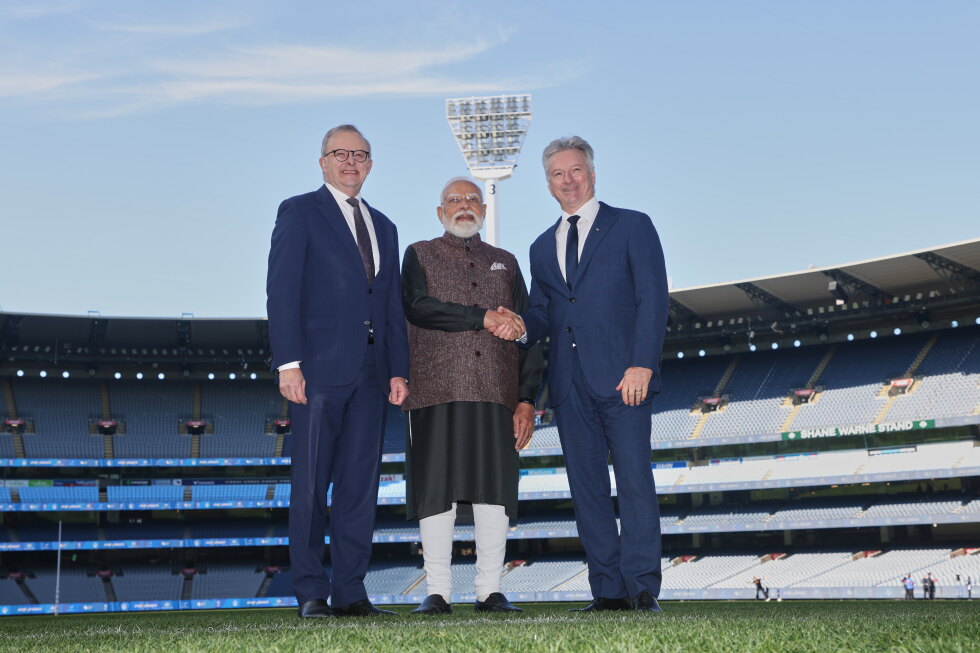
    In a nail-biting Australian Football League clash at the Melbourne Cricket Ground on Thursday night, Collingwood and Hawthorn battled to a thrilling draw that left both coaches with conflicting emotions after the final siren.

    The Hawks, who had trailed by as much as 23 points midway through the second quarter and were still seven points down with just 60 seconds left on the clock, pulled off a stunning late equalizer. Forward Dylan Moore nailed a difficult goal right after the final siren sounded, locking in the two-point split for both sides that capped off a rollercoaster 90 minutes of play.

    For Sam Mitchell, the encounter marked his first draw as Hawthorn’s head coach, and he admitted post-match that he could not pinpoint exactly how he felt about the result. The Hawks dominated key statistical categories throughout the game, outpacing Collingwood 62-34 in forward 50 entries and 39-23 in total clearances, with a particularly dramatic 19-5 win in centre bounce clearances — an area the club has invested heavily in improving over recent weeks. But that on-field dominance failed to translate to scoreboard points, thanks to persistent inaccuracy in front of goal. Hawthorn managed just 5.10 (goals-behinds) in the first half, and finished the full game with a underwhelming 13.15 total that wasted their plentiful attacking opportunities.

    “I don’t know how to give a name to the emotion,” Mitchell told reporters after the match. “There is a part of me that thinks, you look at the numbers and go, ‘How did we only come away with two points’ and then with two minutes to go, ‘How did we get two points’, so I’m unsure how to feel.”

    Mitchell acknowledged that Collingwood’s tight defensive structure and clinical attacking efficiency made the result tough to crack, adding that his squad still needs holistic improvement to turn their territorial dominance into wins. While the club’s work on centre bounce clearances paid off, other reliable areas of Hawthorn’s game fell flat on Thursday, leaving Mitchell frustrated by the missed chance to claim a full four competition points. “But then to not be able to maximise it in the front half, you get frustrated with that. So the glass is exactly in the middle for me which is why it’s a difficult feeling,” he said.

    For Collingwood coach Craig McRae, the result also left room for reflection, particularly around his side’s tendency to concede late goals in every quarter. The Magpies conceded goals on the siren at half-time, three-quarter time, and full time, a pattern McRae flagged as a key area for improvement heading into future rounds. “When you’re in front by a goal with 40 seconds to go, you’d think you would hang onto those,” McRae said. “I think we got some work to do with our late-quarter decision-making.”

    Even with the late collapse that cost Collingwood a win, McRae struck a measured tone with his squad after the match, framing the draw as a credible performance against one of the league’s top contenders. “But fundamentally, I said to the boys, ‘We didn’t win tonight, but we definitely didn’t lose’,” he said. “It’s important to acknowledge that we played some really good footy against arguably the best team in the competition. We come here tonight to see how our game stacks up and I think most of our fans would have been pretty happy.”

  • China scraps tariffs for all but one African nation

    China scraps tariffs for all but one African nation

    Starting this Friday, China will roll out a sweeping unilateral zero-tariff policy that covers 53 African countries — all but the landlocked southern African nation of Eswatini, which retains official diplomatic ties with Taiwan. Prior to this expansion, as of December 2024, China had already eliminated tariffs on imports from 33 least-developed African economies; the updated framework will remain in effect through April 30, 2028, with no clarification yet on terms beyond that date.

    Beijing has positioned the policy as a landmark milestone, framing itself as the first major global economy to extend full unilateral duty-free treatment to nearly the entire African continent. While the move is widely recognized as a strategic step to boost China’s soft power across Africa, industry analysts and economists note that tariff barriers are rarely the primary challenge holding back African exporters, even as the region struggles with a rapidly widening trade deficit with China.

    Lauren Johnston, senior research fellow at the AustChina Institute, points out that this initiative also creates a clear contrast between China’s self-styled image as an Africa-friendly advocate of trade liberalization and the trade policies pursued by former U.S. President Donald Trump. Just last August, the U.S. imposed tariffs as high as 30% on goods from several African nations; most of those duties were later struck down by the U.S. Supreme Court, leaving a 10% tariff in place for most affected imports.

    Johnston argues that the expanded zero-tariff regime holds tangible potential to boost African agricultural exports, which could in turn raise rural household incomes, lift agricultural productivity, and make incremental progress toward reducing hunger and poverty across the continent. However, the core structural challenge of Sino-African trade remains the growing imbalance heavily tilted in China’s favor: Chinese exports to Africa far outpace African shipments to China, and that gap is accelerating at a rapid pace. In 2025 alone, Africa’s trade deficit with China surged 65% to reach approximately $102 billion.

    Currently, African exports to China are overwhelmingly dominated by unprocessed minerals and raw commodities, including crude oil and metallic ores. China’s top three trading partners on the continent are Angola, whose bilateral trade is driven almost entirely by oil exports, the Democratic Republic of Congo, a major source of critical minerals, and South Africa, the region’s most industrialized economy.

    Johnston cautions that uniform zero-tariff access across the economically diverse African continent will not deliver equal benefits. More developed, diversified economies such as South Africa and Morocco already have the export capacity and infrastructure to take advantage of expanded market access, while smaller, less developed nations will struggle to compete. Other experts echo this view, noting that tariff elimination alone cannot address the widespread structural barriers holding back African economic transformation.

    “Many African economies still face deep structural constraints, such as limited industrial capacity, underdeveloped logistics networks, and an overreliance on raw commodity exports, which tariff reductions alone cannot fix,” explained Jervin Naidoo, a political analyst at Oxford Economics Africa.

    Alfred Schipke, director of the East Asian Institute in Singapore, shares this assessment, noting that the short-term economic impact of the policy “will likely be modest and concentrated in African countries that already have established export capacity.” Still, he adds, the long-term potential could be far more significant if African governments use this opening to expand domestic production, diversify their export portfolios, and move up global value chains.

    Other analysts point to shifting consumer demand in China as an underrecognized opportunity for African producers. Amit Jain, a Singapore-based expert on China-Africa relations, notes that Chinese consumer demand for high-value agricultural goods such as coffee and tree nuts has grown dramatically over the past two decades, creating new, untapped markets for African exporters.

    Ken Gichinga, an economist based in East Africa, echoed that optimism, telling reporters that “these new measures will improve access to Chinese markets, help close that trade deficit and expand opportunities for African companies to prosper. For Kenya, it will be a big boost to certain subsectors such as avocado. The agriculture sector will benefit the most — macadamia nuts, coffee, tea and leather.”

    Wangari Kebuchi, an Africa fiscal policy economist, welcomed the short-term benefits of the policy, including potential gains in foreign exchange earnings and a modest lift to the agriculture, mining and logistics sectors, but warned that medium and long-term fiscal growth cannot be achieved through expanded market access alone. “The structural problem has not changed. Africa continues to export raw materials and import manufactured goods. That asymmetry drives persistent trade deficits, constrains domestic revenue mobilization, and limits the jobs and tax base that governments need to fund public services,” Kebuchi explained. “Zero tariffs on commodities that have already left our shores unprocessed do not solve that problem. They can entrench it. African governments must now ask the harder questions: How do we use improved market access as leverage for industrial policy?”

    Turning to the exclusion of Eswatini, analysts broadly agree that the move is a deliberate political gesture with minimal direct economic impact. In fact, Jain suggests that the exclusion may even backhandedly benefit Eswatini by prompting Taiwan to offer additional economic concessions to maintain the diplomatic relationship.

    Eswatini is one of only 12 countries worldwide that still maintain official diplomatic relations with Taiwan. Beijing claims Taiwan as an inalienable part of Chinese territory, while Taiwan’s self-governing authorities widely view the island as a sovereign independent state. The issue made headlines just last month, when Taiwanese leader Lai Ching-te was forced to cancel a planned trip to Eswatini after three other African nations — Seychelles, Mauritius and Madagascar — denied his aircraft permission to fly through their airspace. Taiwan has accused the three countries of acting under intense economic and political pressure from Beijing.

    Wen-Ti Sung, a political scientist at the Australian National University’s Taiwan Centre, argues that the exclusion of Eswatini from the zero-tariff policy sends a deliberate political message. By sidelining Eswatini, China is “weaponising its ties with African countries, and showing how relations with China comes up with strings attached,” Sung said. “China wants to show the world how it treats its friends, versus Taiwan’s friends.”

  • It’s not just oil: Iran war also threatens Asia’s food security

    It’s not just oil: Iran war also threatens Asia’s food security

    As the annual rice planting season gets underway across Southeast Asia’s vast agricultural expanses, thousands of smallholder farmers are facing an impossible choice that could reshape global food security for the year ahead. Among them is 60-year-old Suchart Piamsomboon, a third-generation rice farmer based in Thailand’s Chachoengsao province, who traveled to his local agricultural supply shop earlier this spring ready to stock up on fertiliser for the new growing cycle. What he found there changed his entire planting plan. No fertiliser shipment had arrived, and the shop owner warned it might not come at all. Even if a shipment turned up, the cost would exceed 1,100 Thai baht per 50-kilogram sack – a steep jump from the 800 to 900 baht price tag just five weeks prior. By the time Piamsomboon returned to his small farm, rumors were already spreading that prices could climb as high as 1,200 baht per sack.

    Faced with runaway input costs that far outpace the revenue he can earn selling his harvested rice, Piamsomboon made the difficult decision to walk away from planting this season. “Farming only leads to financial losses now,” he explained. “I’d rather work as a day laborer, earning 100 to 200 baht a day just to get by. My everyday expenses don’t go down, but my farming income keeps falling year after year.”

    Piamsomboon is far from alone in this choice. From Thailand’s central rice belt to Vietnam’s fertile Mekong Delta, rice producers across the Asia-Pacific are running the same financial calculations and landing on the same grim outcome: the planting season is here, but affordable fertiliser is not. The decisions these farmers make over the coming weeks will directly shape the size of the year-end global rice harvest, a staple that feeds half the world’s population.

    The root of this unfolding crisis traces back to a conflict thousands of miles away, one that most Asian smallholders never expected to impact their daily lives. In late February, military strikes on Iran by the United States and Israel effectively closed the Strait of Hormuz, the narrow strategic waterway that carries roughly one-third of all globally traded seaborne fertiliser. With exports through the strait halted completely, global fertiliser markets erupted: within weeks, the price of urea, the world’s most widely used nitrogen fertiliser, surged by more than 40%.

    As major importers scrambled to replace lost Gulf supply, the global community turned its attention to China, the world’s single largest fertiliser producer. In 2025, China accounted for 25% of total global fertiliser output and exported more than $13 billion worth of the product to markets worldwide. But Beijing closed its export doors in early March, implementing an immediate ban on several key fertiliser varieties critical to rice and staple crop production. This latest move builds on a series of incremental export restrictions China has rolled out since 2021. A Reuters analysis of Chinese customs data finds that between 50% and 80% of China’s total fertiliser exports are now restricted under the new rules.

    One fertiliser exporter based in China’s Shandong province, who requested anonymity to avoid government repercussions, described the sudden order to halt all shipments to international clients. His firm has supplied fertilisers to Asia-Pacific markets including Thailand, Indonesia, and New Zealand for nearly a decade, and had already signed contracts and confirmed shipping dates for shipments to at least five countries before the ban was announced. “We already had the orders in hand, and our clients were waiting for the cargo to arrive,” he said. “But now we’ve been ordered not to ship anything. Of course we’re worried about our business, but we understand the government’s reasoning: they need to guarantee enough supply for domestic farmers first, so we will follow the regulations.”

    The only major fertiliser product China still exports in large volumes is ammonium sulfate, a low-grade industrial byproduct that cannot serve as an effective replacement for the more nutrient-dense fertilisers required to produce high-yield rice harvests.

    Joseph Glauber, Research Fellow Emeritus at the Washington-based International Food Policy Research Institute, warned that the dual shocks of the Strait of Hormuz closure and China’s export ban will inevitably send shockwaves through global fertiliser markets and put worldwide food security at severe risk.

    For the Chinese government, guaranteeing domestic food security has become a core political priority. A national food security law passed in 2023 requires all local governments to embed mandatory grain production targets directly into their regional economic plans. Allowing fertiliser exports to continue amid global price spikes would drive up domestic fertiliser costs in China, squeezing the same domestic farmers the policy is designed to protect. Paul Teng, a senior food security fellow based in Singapore, explained: “In China, food security is a non-negotiable political issue. The government is not willing to compromise on ensuring there is enough grain for the domestic population, no matter the global impact.”

    Compounding the issue, China’s own access to liquefied natural gas – the key feedstock for manufacturing nitrogen fertilisers – is now threatened by the closure of the Strait of Hormuz, leaving Beijing with even less incentive to release domestic supply to global markets.

    For Southeast Asia, a region that is structurally dependent on Chinese fertiliser imports, Beijing’s export halt has triggered an immediate crisis. Vietnam, one of the world’s top rice exporters that supplies much of the Philippines and parts of Africa, sourced more than half of its total fertiliser imports by volume from China in the first quarter of 2026 – totaling more than 480,000 tonnes. Put simply: the country that feeds much of Southeast Asia cannot grow its rice without Chinese fertiliser inputs.

    The Philippines faces an even more precarious situation. The island nation relies on China for 75% of its total fertiliser supply, with almost no domestic fertiliser production to fall back on. To make matters worse, the Philippines sources roughly 80% of its imported rice from Vietnam, creating a tightly interconnected supply chain of dependencies: Filipino consumers depend on Vietnamese rice, and Vietnamese farmers depend on Chinese fertiliser. Break just one link in this chain, and the entire system could collapse.

    Thailand, another regional agricultural powerhouse whose rice exports feed much of Asia, faced a dual supply shock: in 2024, it sourced 20% of its fertiliser from China and 32% of imports from the Persian Gulf. Both supply routes are now blocked at the same time.

    Analysts emphasize that the full impact of this crisis will not show up in global food prices immediately. The consequences will only become visible at the end of 2026, when this spring’s planted harvests come in far smaller than expected – or fail to materialize entirely. Teng noted: “Many countries do have enough fertiliser stockpiled to get through the immediate planting season, but if the crisis stretches on for months, we will see severe production shortfalls for rice and other staple crops in the second half of the year.”

    The United Nations World Food Programme estimates that the combined fallout from the Middle East conflict and resulting fertiliser crisis could push an additional 45 million people into acute hunger by the end of 2026. Across Asia and the Pacific, the prevalence of food insecurity is projected to rise by 24% – the largest relative increase of any region in the world.

    For smallholder farmers already on the edge of financial ruin, the hardship is already overwhelming. “Sometimes I wish every rice farmer across the country would stop planting altogether, so that government officials would have no rice to eat and finally understand what we’re going through,” said Pratheuang Piamsomboon, a 48-year-old rice farmer in Bangkok’s Nong Chok district. “This hardship is impossible to put into words.”

  • US may deploy new hypersonic missile against Iran as Trump weighs fresh strikes: Report

    US may deploy new hypersonic missile against Iran as Trump weighs fresh strikes: Report

    On Thursday, Bloomberg News reported that U.S. Central Command (Centcom) has formally requested authorization from the U.S. Department of Defense to deploy the U.S. military’s highly classified Dark Eagle hypersonic missile system to the Middle East. The request comes amid shifting military positioning from Iran that has outmaneuvered existing American strike capabilities, opening the door for a potential first-ever operational use of the long-delayed advanced weapon against targets deep within Iranian territory, while keeping U.S. deployment platforms well outside the range of Iran’s existing air defense networks.

    The impetus for Centcom’s request traces to new intelligence confirming Iran has relocated its ballistic missile launch facilities beyond the strike range of the U.S. Precision Strike Missile, a supersonic surface-to-surface weapon fired from the Army’s High Mobility Artillery Rocket System (HIMARS). With these assets now out of reach of current conventional strike options, U.S. military leaders have turned to the untested Dark Eagle system, which boasts an officially cited range of more than 2,776 kilometers—more than enough to hit targets across Iran from regional deployment positions.

    If the request gains approval, this deployment would mark the first operational fielding of the Dark Eagle, a program that has faced years of development delays. The weapon could see active combat use if the Trump administration moves forward with new offensive strikes against Iran. Parallel reporting from Axios on Thursday confirmed that President Donald Trump has already received briefings from Centcom outlining plans for a new round of attacks on Iranian targets. According to Axios’ sources, U.S. military planners have drafted proposals for “short and powerful” strikes focused on key Iranian infrastructure, a move shaped by the ongoing deadlock in diplomatic peace talks between the two sides.

    The proposed deployment of the $15 million-per-unit Dark Eagle has already drawn skepticism from defense analysts. Originally designed to counter advanced integrated air defense systems operated by nuclear-armed major powers China and Russia, the weapon is vastly overengineered for the Iranian threat environment, experts note. This mismatch has raised questions about the strategic and financial wisdom of expending one of the U.S.’s limited stockpiles—currently only eight completed Dark Eagle missiles exist, per Bloomberg’s reporting—against a country President Trump has repeatedly publicly described as already militarily defeated.

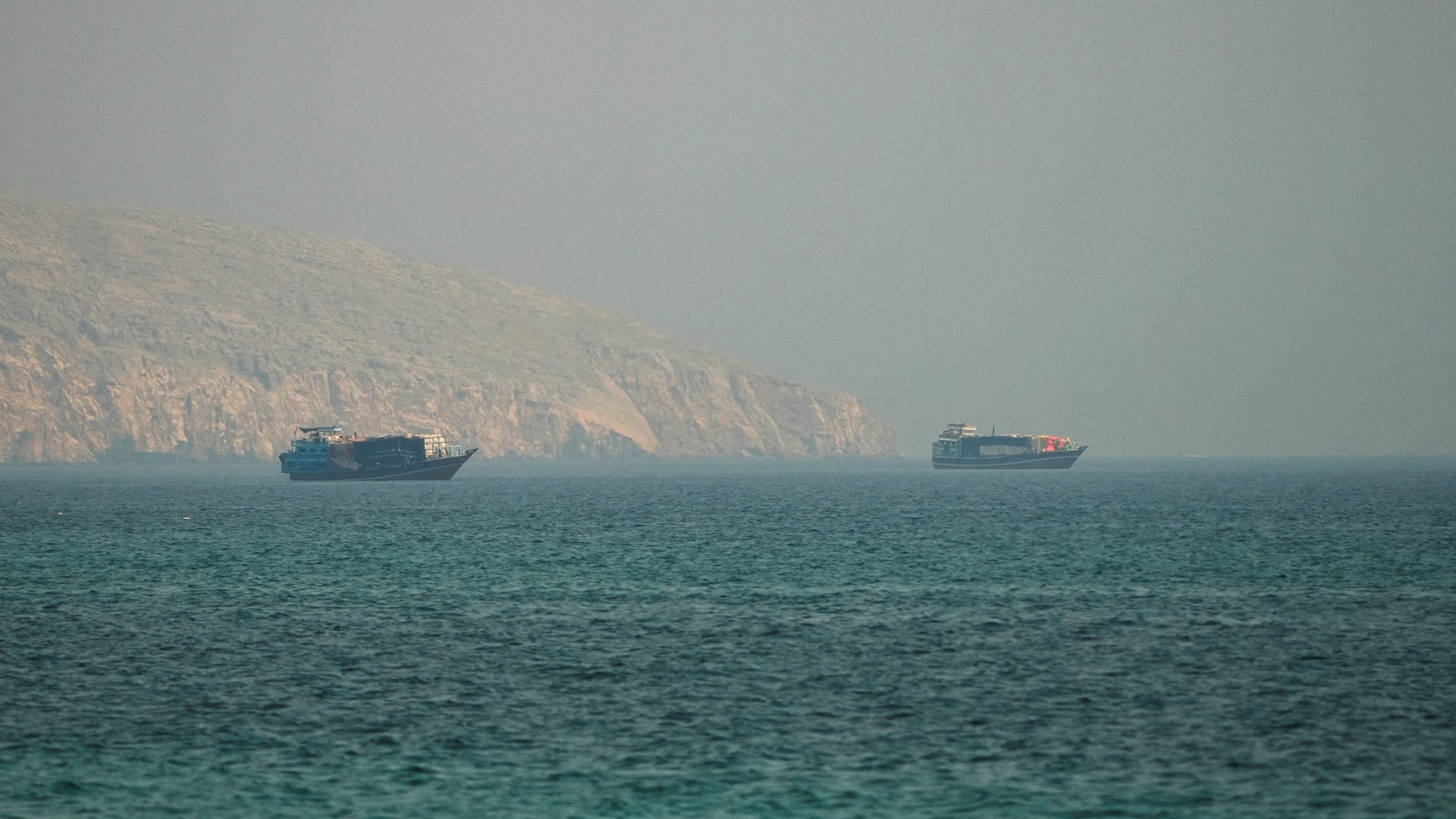
    Despite longstanding claims from the Trump administration that the U.S. maintains unchallenged air superiority across Iranian airspace, a recent incident underscores Iran’s still-functional defensive capabilities: earlier this month, Iranian air defenses successfully shot down a U.S. F-15E Strike Eagle fighter jet. At present, direct large-scale combat between U.S. and Iranian forces has paused under a fragile, informal ceasefire, with both sides shifting their focus to maritime pressure campaigns in strategic waterways. The U.S. and Iran have each seized commercial vessels in the Gulf of Oman and Indian Ocean in recent weeks as both seek to assert dominance over the Strait of Hormuz, the critical chokepoint through which roughly 20% of the world’s global oil supplies pass.

    Military analysts widely agree that both powers are using the current ceasefire window to rearm, regroup, and reposition their forces for potential future conflict, as diplomatic efforts to reach a permanent end to hostilities remain completely deadlocked. In recent weeks, new reporting has shed light on external military support to Iran: Middle East Eye was the first outlet to confirm that Iran has received advanced air defense systems from China, and a subsequent New York Times report added that Beijing may also have shipped shoulder-fired anti-air missiles to Tehran.

    The three-month-long conflict has already taken a significant toll on U.S. military capabilities, multiple official and media reports confirm. The New York Times reported earlier this month that sustained combat operations have drastically depleted U.S. global ammunition stockpiles, forcing the Pentagon to reallocate critical military stockpiles originally positioned for deterrence missions in Asia and Europe to the Middle East. Both offensive and defensive weapons systems have been drawn down, including the same Precision Strike missiles now rendered less effective by Iran’s relocation, as well as Patriot air defense interceptor missiles. On Wednesday, the Pentagon confirmed that direct war costs to the U.S. have already reached $25 billion.

    This week, President Trump rejected a proposed peace deal put forward by Tehran that would have addressed non-nuclear disputes first while deferring negotiations over Iran’s nuclear program. As the conflict enters its third month, multiple diplomats and analysts speaking to Middle East Eye warn that a lasting negotiated resolution may be out of reach, largely due to the Trump administration’s refusal to offer the sanctions relief that Iran has made a core requirement for any final agreement.

  • UK law professors set out why they signed open letter in support of Palestine Action

    UK law professors set out why they signed open letter in support of Palestine Action

    A high-stakes legal battle over the UK government’s effort to reinstate a terror ban on direct action group Palestine Action has drawn public support from more than 1,000 academics, activists and public intellectuals, led by over 100 UK-based law professors who have openly defended their solidarity with the group. When the Court of Appeal opened hearings on the government’s appeal this week, activists delivered a concise seven-word open letter signed by the group to the court: “We oppose genocide, we support Palestine Action.” Lady Chief Justice Sue Carr confirmed receipt of the correspondence and read its text aloud in open court.

    In a joint statement emailed to independent news outlet Middle East Eye, seven of the signing law professors laid out their reasoning for the unprecedented public show of support. Coming of age in the decades following the Second World War, the academics emphasized that the post-Holocaust promise of “never again” must carry tangible meaning. As legal scholars, they added, they are bound to defend core principles of the UK judicial tradition: specifically, the long-held right of juries to hear the full facts of a case and deliver acquittals based on independent judgment and conscience, a right they argue is threatened by the blanket ban on the group.

    The professors stressed that their support is limited to nonviolent action, framing their backing of Palestine Action as rooted in opposition to what they describe as genocide in Gaza. They noted that the group targets UK-based weapons manufacturers that supply components used in Israeli military operations, and called on all people of conscience to join their stand against the ban.

    Beyond the 100+ law academics, the letter counts high-profile public figures among its signatories, including veteran leftist commentator Tariq Ali, philosopher Judith Butler, Irish author Sally Rooney, and climate activist Greta Thunberg.

    The legal clash dates back to July 2024, when the UK Labour government designated Palestine Action as a proscribed terrorist organization. The designation criminalizes membership in the group and public expressions of support, with penalties reaching up to 14 years of prison time. In February of this year, a lower court ruled the initial ban unlawful, prompting the government to file the current appeal to reverse that ruling.

    Since the ban first took effect, more than 3,000 people have been arrested for challenging the designation, with pensioners making up the overwhelming majority of those detained. Legal representatives for Palestine Action co-founder Huda Ammori argued this week that the ban has had a disproportionate discriminatory impact on British Palestinians who organize against Israeli military actions in Gaza. They also criticized the Home Office for failing to provide the group with advance notice of its proscription, a step required under the UK’s 2000 Terrorism Act.

    James Eadie KC, the barrister representing the Home Office, pushed back against the criticism, arguing that prior notification was unnecessary in this case. He told the court that Palestine Action is a loose, decentralized grouping, creating practical barriers to identifying who should receive formal notice ahead of a ban, and that the court should accept these practical constraints as justification for skipping the requirement.

    The proceedings include a controversial closed-door session held this Thursday, during which government lawyers will present classified evidence to judges that will not be made accessible to Palestine Action’s full legal team. While a security-cleared special advocate hired by the group will attend the session to argue on Palestine Action’s behalf, the advocate is barred from sharing any details of the classified evidence or discussion with the rest of the group’s legal team, even though they are employed by the organization.

    The Court of Appeal is expected to deliver its final ruling on the government’s appeal in the coming weeks. The outcome of the case will carry major implications for the future of pro-Palestinian advocacy in the UK, as well as for the scope of government authority to designate activist groups as terrorist organizations under counter-terrorism law.

  • Venice Biennale jury resigns days before start of exhibition

    Venice Biennale jury resigns days before start of exhibition

    Nine days before the launch of one of the global art world’s most prestigious annual events, the Venice Biennale has been thrown into unprecedented chaos after its entire five-person jury stepped down in protest over the decision to allow Russia and Israel to participate in the 2026 exhibition. The sudden mass resignation caps weeks of escalating tension sparked by the Biennale’s choice to welcome Russia back to the event for the first time since Moscow launched its full-scale invasion of Ukraine in 2022.

    In a short public statement announcing their departure, the jury clarified that their resignation aligned with a prior position they had taken: they would refuse to award any official prizes to participating nations whose leaders face active charges of crimes against humanity before the International Criminal Court (ICC). That standard covers both Russia, whose President Vladimir Putin has an open ICC arrest warrant alleging responsibility for war crimes in Ukraine, and Israel, whose Prime Minister Benjamin Netanyahu and former Defense Minister Yoav Gallant are also the subject of ICC arrest warrants connected to alleged crimes against humanity in the ongoing Gaza conflict. Moscow and Jerusalem have both uniformly rejected the ICC’s charges as illegitimate and baseless.

    The controversy over Russia’s return has roiled European political and cultural circles for months. Italy’s right-wing Prime Minister Giorgia Meloni acknowledged publicly that her government does not support the decision to allow Russia to participate, but stopped short of forcing a reversal, noting the Venice Biennale operates as an autonomous cultural institution with an independent leadership. A day before the jury’s resignation, a delegation from Italy’s culture ministry traveled to Venice to conduct an on-site review of arrangements for the reactivated Russian pavilion. Culture Minister Alessandro Giuli had already announced he would boycott the entire Biennale opening in protest of Russia’s participation, and Italian authorities are currently investigating whether the country’s readmission violates existing EU sanctions against Moscow.

    The European Union had already pulled a €2 million grant earmarked for the Biennale in April over the Russian participation decision, calling the move morally unacceptable at a time when Russia continues to target and erase Ukrainian cultural heritage amid its ongoing invasion. Over the course of the full-scale war, Ukrainian authorities have documented the destruction of more than 1,000 cultural sites, including hundreds of museums and galleries, the looting of tens of thousands of artworks, and the deaths of nearly 100 Ukrainian artists amid combat operations. For the Kremlin, returning to the Venice Biennale is viewed as a key step toward rebuilding the international diplomatic and cultural normalization it has actively pursued since 2022, even as daily fighting continues to claim civilian and military lives in Ukraine.

    The Biennale’s leadership has defended its decision to keep Russia in the line-up on two core grounds. The institution has long framed itself as an open space for global art that rejects censorship and exclusion of any participant. It has also noted that Russia holds full legal ownership of its dedicated pavilion in the Biennale Gardens, the main exhibition site, giving the institution no legal mechanism to bar the country from using the space. This is not the first time the Russian pavilion has seen disruption since the invasion: in 2022, the appointed Russian curator and all participating artists withdrew in protest of Putin’s war, leaving the space empty. For the 2024 edition, Russia allowed Bolivia to host its exhibition in the pavilion instead.

    This year’s Russian exhibition is scheduled to be a sound-based performance work titled *The Tree is Rooted in the Sky*, though multiple unconfirmed reports have suggested Italian authorities may restrict public access to the pavilion once the Biennale opens. Israel’s foreign ministry has already condemned the jury’s initial position excluding it from prizes, calling the move an example of dangerous political contamination of the international art community.

    In the wake of the jury’s mass resignation, Biennale organizers have canceled the traditional prize awarding ceremony scheduled for the May 9 inauguration. Instead of a jury-selected set of awards, the public will now get the opportunity to vote for their favorite national pavilions to receive popular recognition for the 2026 edition.

  • Qantas and Jetstar extend flight schedule changes into first quarter FY27 amid fuel price pressures

    Qantas and Jetstar extend flight schedule changes into first quarter FY27 amid fuel price pressures

    The global aviation sector is facing mounting systemic pressures that are forcing major carriers to reshuffle their operational plans well into the next financial year, and Australia’s Qantas Group — which owns both Qantas and budget subsidiary Jetstar — is the latest airline to extend network adjustments to navigate ongoing headwinds. The two biggest challenges driving the changes are persistently sky-high jet fuel prices and ongoing travel market disruption stemming from conflict in the Middle East, which have combined to reshape international travel demand across the Asia-Pacific region.

    In an official statement, Qantas Group confirmed it is continuing to reconfigure its route network to two key ends: first, to mitigate the financial and operational fallout of Middle East tensions and sustained elevated fuel costs, and second, to capitalize on the unbroken strong consumer demand for travel between Australia and Europe.

    The carrier group has chosen to extend the network adjustments it first announced earlier, rolling the changes through the July-to-September period of 2026 and into the first quarter of fiscal year 2027. A core part of the international reshuffle is the redeployment of existing aircraft to boost capacity on Australian-European routes, an adjustment that also gives customers booked with Qantas’ partner airlines greater flexibility to rebook onto alternative services if their original plans are disrupted.

    A key addition to the expanded capacity is the extension of extra Perth-Rome return services through the end of October 2026. By contrast, Sydney-to-Paris services will scale back to three weekly return trips starting in August 2026, as previously scheduled; all Paris services will continue to operate out of Sydney with a stopover in Singapore. Overall, the combined adjustments add approximately 2,000 additional seats per week for travel between Australia and Europe, matching the ongoing robust demand on the corridor.

    Not all routes are seeing growth, however. Qantas will temporarily suspend its direct Sydney-Bengaluru service starting in August 2026, with a planned resumption of operations at the end of October. Both Qantas and Jetstar have also cut available capacity on trans-Tasman routes connecting Australia and New Zealand. Altogether, the changes reduce the Qantas Group’s previously planned international capacity by 2% for the first quarter of FY27.

    On the domestic front, the group is extending a previously announced 5% cut to overall domestic capacity through the end of September 2026, with the reductions largely concentrated on high-volume routes between major Australian capital cities. Qantas Group noted that all customers whose bookings are affected by the schedule changes are being contacted directly, with options to rebook onto alternative flights or receive a full refund for their tickets.

    Industry analysts note that this latest round of extended schedule adjustments underscores how the lingering impacts of post-pandemic supply chain disruptions, combined with new geopolitical and commodity price shocks, continue to create uncertainty for airline profitability and planning across the globe.

  • New footage shows how Trump dinner gunman charged through security in four seconds

    New footage shows how Trump dinner gunman charged through security in four seconds

    Prosecutors have made public never-before-seen closed-circuit security footage that captures the chaotic four-second encounter of an alleged assassination attempt targeting former President Donald Trump during a high-profile Washington press gala. The incident unfolded Saturday at the Washington Hilton, where Trump was in attendance at the annual White House Correspondents’ Association dinner. The newly released video shows 31-year-old Cole Tomas Allen, the accused attacker, bursting out of a hotel doorway and charging straight through a secured checkpoint while carrying a long-barrelled weapon. The footage captures a responding security agent opening fire on the sprinting suspect as Allen raises his firearm. The short clip does not clarify whether Allen successfully discharged his weapon, nor does it include the sequence investigators previously described where the suspect was tackled and taken into custody. Prosecutors additionally confirmed that the CCTV footage also captured Allen conducting pre-attack surveillance of the venue one day before the dinner, which was hosted in the hotel’s basement ballroom. Court documents and official statements outline that Allen checked into the Washington Hilton as a paying guest 24 hours before he attempted to carry out the attack. Acting U.S. Attorney Todd Blanche explained that the suspect managed to run roughly 60 feet (18 meters) down the hotel corridor before law enforcement officers stopped and subdued him. Per official charging documents, one responding officer was struck by a single bullet fired from Allen’s weapon, though the round was stopped by the officer’s ballistic vest, preventing serious injury or death. Immediately after being hit, that same officer drew his service weapon and returned fire, shooting multiple rounds at Allen. Remarkably, none of the officer’s bullets struck Allen, Blanche confirmed. Allen has formally entered a plea of not guilty to the charge of attempted assassination of the former U.S. president. The release of the new footage comes as the legal process moves forward, offering new public context for the botched attack that unfolded near one of the nation’s most prominent sitting political leaders.

  • AFL 2026: Michael Voss backs Luke Beveridge’s rule change criticism

    AFL 2026: Michael Voss backs Luke Beveridge’s rule change criticism

    Ahead of a highly anticipated Saturday night fixture against St Kilda at Marvel Stadium, Carlton Football Club senior coach Michael Voss has added his voice to growing criticism of the Australian Football League’s (AFL) current approach to rule enforcement and in-game officiating, aligning with recent remarks from Western Bulldogs head coach Luke Beveridge.

    Last week, Beveridge drew widespread attention when he delivered a three-minute monologue slamming the state of the modern AFL, arguing the current rule set has turned the competition into a “ping pong” style of play prioritizing broadcast revenue over natural, flowing game action. Voss, a long-time respected figure across the league, has echoed that critique, calling on the governing body to adopt clearer, less ambiguous standards for simple calls and cut back on excessive reviews by the AFL Review Centre (ARC).

    Voss specifically called out inconsistencies around the new last-disposal rule for balls kicked out of bounds. Under current protocols, any close call triggers a lengthy ARC review to determine which player touched the ball last before it went out of play. Voss argued that this process directly undermines the AFL’s stated goal of speeding up match play. He insisted that for any unclear last-touch calls, the straightforward solution of a boundary throw-in should be used immediately, eliminating the 25-second delays caused by constant reviews.

    “I think the less we use the ARC, the better we are,” Voss told reporters this week. “The ball goes out of bounds and it takes us 25 seconds to review. Please don’t do that. If you’re unsure, throw it in. Our intention was to quicken up the game and we’re slowing it down by continually reviewing everything. For that part, if the intention is to make the game faster, let’s go down that path, but let’s not slow it down by analysing whether the ball came off my foot or my hand. I think we can be better than that, we can be much more black and white on the simple things.”

    On the topic of recent draft adjustments that force Carlton to pay a higher selection price to secure father-son recruit prospect Cody Walker at the end of the current season, Voss played down the impact of the mid-season change, acknowledging that rule and system adjustments naturally bring discomfort but that the core demand from coaching staff is simply greater clarity around the league’s decisions.

    Beyond rule discussions, Voss turned his focus to Saturday’s upcoming match, which holds extra narrative weight as it marks the first time Carlton will face St Kilda following the off-season off-field player moves that saw Tom De Koning and Jack Silvagni switch clubs. De Koning, who will suit up against his former side for the first time this weekend, is already expected to be a focal point of the matchup. Voss admitted that friendly banter between former teammates is likely inevitable in the lead-up, but said he expects both sides to set personal friendships aside when the ball is bounced.

    “Not that I’ve heard but I am not going to pretend there probably hasn’t been a little bit of banter that’s been exchanged,” Voss said. “I am really not too sure what Cotts (Matthew Cottrell) gets up to, so he’s the quiet assassin in all of this. It’s a bit of wait and see but look, I hope for whatever it’s worth that we walk out as competitors, really. They put the friendships aside. We’ve got jobs to do and our boys have a job to do for our team and clearly they’re going to be locked in on what they need to be able to get done. But maybe turn the microphones up (because) there might be a bit of banter between the two.”

    For Carlton, the match comes after a far less turbulent week than the club experienced in the previous round, with the Blues still chasing a much-needed victory to boost their position in the 2025 AFL ladder.

  • New CCTV footage appears to show Washington press dinner suspect shoot at agent

    New CCTV footage appears to show Washington press dinner suspect shoot at agent

    Freshly uncovered closed-circuit television footage has emerged that seemingly documents the moment a suspect opened fire on a United States Secret Service agent connected to a high-profile incident at a Washington press dinner. The release of this visual evidence comes directly on the heels of circulating claims that the agent’s injuries were not caused by the suspect, but rather by an accidental case of friendly fire from fellow law enforcement personnel.

    The incident, which unfolded at one of the capital’s prominent annual media gatherings, sparked immediate confusion over the sequence of events and who bore responsibility for the agent being wounded. Prior to the CCTV footage being made public, speculation had grown around the friendly fire narrative, with multiple sources suggesting that miscommunication between responding officers led to the agent being struck by a round from a fellow agent’s weapon. Now, this new video material offers what appears to be clearer evidence of the suspect’s actions, potentially upending the earlier claims that have dominated discussions of the incident.

    Law enforcement officials have not yet issued an official formal comment confirming the authenticity of the footage or addressing how it may alter the ongoing investigation into the shooting. The incident has already drawn significant public and political attention, given its location at a major Washington press event that typically draws high-level government officials and leading journalists from across the country.