作者: admin

  • Rand Paul presses Mullin on past assault remarks

    Rand Paul presses Mullin on past assault remarks

    In a striking Capitol Hill exchange, Senator Rand Paul (R-KY) publicly challenged Senator Markwayne Mullin (R-OK) regarding past remarks that appeared to trivialize political violence. The confrontation emerged during a Senate committee hearing focused on domestic security threats.

    The Kentucky lawmaker referenced his own traumatic experience in November 2017, when a neighbor tackled him in his Bowling Green yard, resulting in multiple broken ribs and life-threatening pneumonia. Paul emphasized the seriousness of physical assault, stating that ‘violence against political figures creates dangerous precedents that undermine our democratic foundations.’

    The discussion gained additional significance given Mullin’s previous comments before a 2022 Oklahoma debate, where the former mixed martial artist stated he wouldn’t ‘rule out’ physically confronting his opponent if provoked. Paul’s remarks served as both a personal testimony and a broader warning about normalizing political violence in increasingly polarized times.

    Security experts testified that rhetoric minimizing physical confrontations contributes to heightened risks for public officials. The hearing occurred amid ongoing concerns about the safety of elected representatives and their families, with congressional security officials reporting increased threats in recent years.

  • Chengdu rapeseed maze draws spring crowds with living plant labyrinth

    Chengdu rapeseed maze draws spring crowds with living plant labyrinth

    A spectacular living labyrinth crafted from vibrant rapeseed flowers has become the latest spring attraction captivating visitors in Chengdu, Sichuan province. The massive 10,000-square-meter maze, located at the China Tianfu Agricultural Expo Park, has transformed the suburban landscape into an immersive botanical experience that combines natural beauty with recreational adventure.

    The innovative agricultural tourism project demonstrates how traditional farming elements can be reimagined for modern entertainment. The brilliant yellow blooms create a visually stunning pattern when viewed from above, while at ground level, visitors navigate through the winding pathways surrounded by the sweet fragrance of flowering rapeseed.

    Local tourism authorities report unprecedented visitor numbers since the maze opened, with families, photography enthusiasts, and nature lovers flocking to experience this unique blend of agriculture and recreation. The attraction represents a growing trend in China’s tourism sector where agricultural spaces are being transformed into multifaceted destinations that educate while they entertain.

    The timing coincides with peak spring bloom season, when rapeseed flowers typically reach their most vibrant coloration. Organizers have incorporated educational elements throughout the maze, providing information about rapeseed cultivation, its agricultural significance, and the ecological benefits of the crop.

    Tourism experts note that such innovative attractions are becoming increasingly important as domestic travelers seek novel experiences that combine natural settings with interactive elements. The maze’s success demonstrates the potential for agricultural tourism to boost local economies while promoting environmental awareness and appreciation for China’s agricultural heritage.

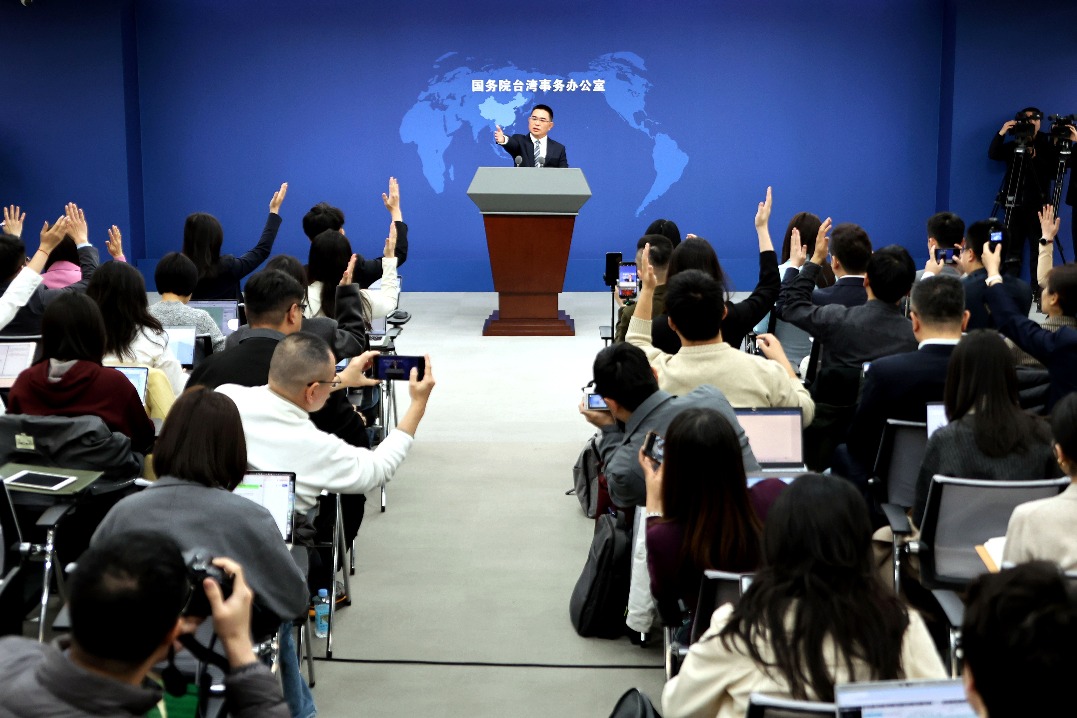
  • Mainland willing to provide Taiwan with reliable energy supplies after reunification: spokesman

    Mainland willing to provide Taiwan with reliable energy supplies after reunification: spokesman

    BEIJING – In a significant diplomatic overture, Chinese authorities have articulated a comprehensive energy security proposal for Taiwan contingent upon peaceful reunification. Chen Binhua, spokesperson for the Taiwan Affairs Office of the State Council, articulated this position during Wednesday’s regular press briefing in response to growing concerns about Taiwan’s energy resilience amid Middle Eastern geopolitical instability.

    The spokesman addressed specific anxieties regarding potential disruptions to Taiwan’s oil and gas supply chains, emphasizing that cross-strait reunification would fundamentally transform Taiwan’s energy landscape. Chen outlined how full integration would enable the complete resolution of Taiwan’s chronic shortages in electricity generation, natural gas availability, and crude oil supplies through enhanced connectivity infrastructure.

    Beyond mere adequacy, the proposal promises qualitative improvements to Taiwan’s energy ecosystem. Chen guaranteed that post-reunification energy provisions would not only be reliable but also more economically accessible, environmentally sustainable, and operationally stable than current arrangements. The spokesperson framed this energy security commitment as part of broader socioeconomic benefits that would accrue to Taiwanese citizens following peaceful reunification, positioning energy cooperation as a cornerstone of integrated development.

    This energy proposal emerges against the backdrop of ongoing regional volatility that has exposed vulnerabilities in Taiwan’s resource supply chains, presenting Beijing’s vision as a comprehensive solution to both immediate and long-term energy challenges.

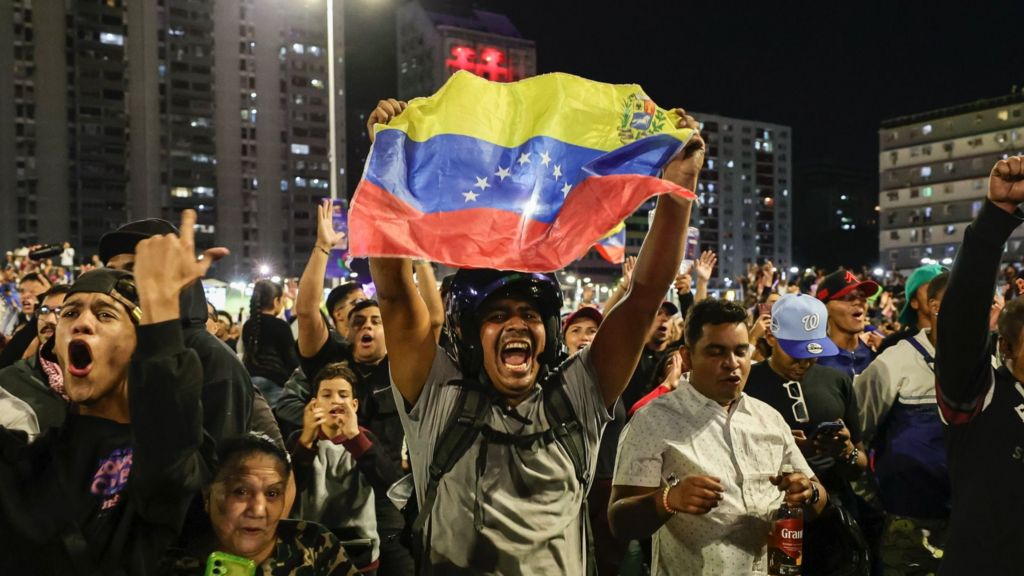
  • Venezuelans in Miami and Caracas celebrate historic WBC victory over USA

    Venezuelans in Miami and Caracas celebrate historic WBC victory over USA

    In an unprecedented triumph that captivated baseball fans worldwide, Venezuela secured its maiden World Baseball Classic championship with a nail-biting 3-2 victory over the United States. The monumental win sparked jubilant celebrations that transcended geographical boundaries, with Venezuelan communities from Miami to Caracas erupting in spontaneous festivities.

    The championship game evolved into a masterclass of tactical pitching and defensive excellence, with both teams demonstrating world-class athleticism throughout the nine innings. Venezuela’s strategic gameplay and remarkable composure under pressure ultimately proved decisive against the tournament hosts and defending champions.

    This historic achievement represents far more than just a sporting accomplishment for the Venezuelan people. Amid ongoing political and economic challenges facing the nation, this victory serves as a powerful symbol of national pride and unity. The team’s remarkable journey through the tournament showcased exceptional talent and unwavering determination, capturing the imagination of baseball enthusiasts globally.

    The victory celebrations created poignant scenes of cultural solidarity, with Venezuelans across the diaspora finding common ground in their shared triumph. From the streets of Caracas to neighborhoods in South Florida, the win provided a moment of collective joy and national pride that temporarily overshadowed political divisions.

    This championship victory not only establishes Venezuela as a new powerhouse in international baseball but also demonstrates the sport’s unique ability to unite communities across political and geographical boundaries. The team’s success story will undoubtedly inspire a new generation of Venezuelan athletes and baseball enthusiasts worldwide.

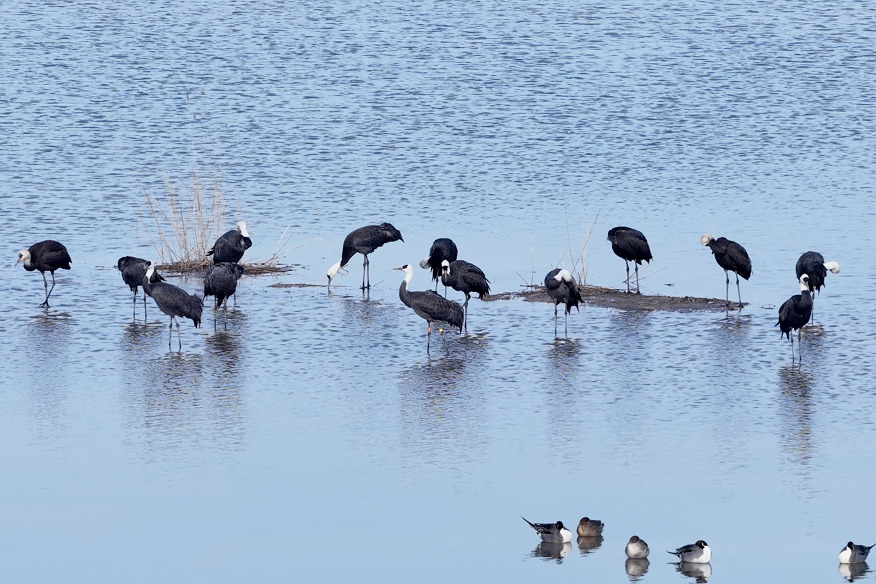
  • Hebei wetland welcomes peak season for spring migratory birds

    Hebei wetland welcomes peak season for spring migratory birds

    The Nandagang Wetland in Cangzhou, Hebei province, has transformed into a breathtaking avian spectacle as it enters the peak season for spring migratory birds. This ecological haven is currently hosting an extraordinary gathering of five nationally protected bird species, creating the most impressive avian assembly witnessed in the wetland in recent years.

    Among the shimmering mudflats and waterways, rare and protected species including the Siberian white crane, hooded crane, red-crowned crane, Oriental stork, and white-naped crane have converged in unprecedented numbers. The remarkable congregation represents a significant ecological event that highlights the wetland’s crucial role as a migratory stopover and habitat.

    The presence of these first-class protected species demonstrates the wetland’s improving environmental conditions and conservation value. Bird enthusiasts and conservationists have reported that the current gathering surpasses previous years in both diversity and numbers, offering a rare opportunity to observe these magnificent birds in their natural habitat.

    The wetland’s management has implemented measures to protect the visiting species while allowing for responsible observation. This spring migration period not only provides a visual feast for nature lovers but also serves as an important indicator of regional biodiversity health and conservation success in Hebei province.

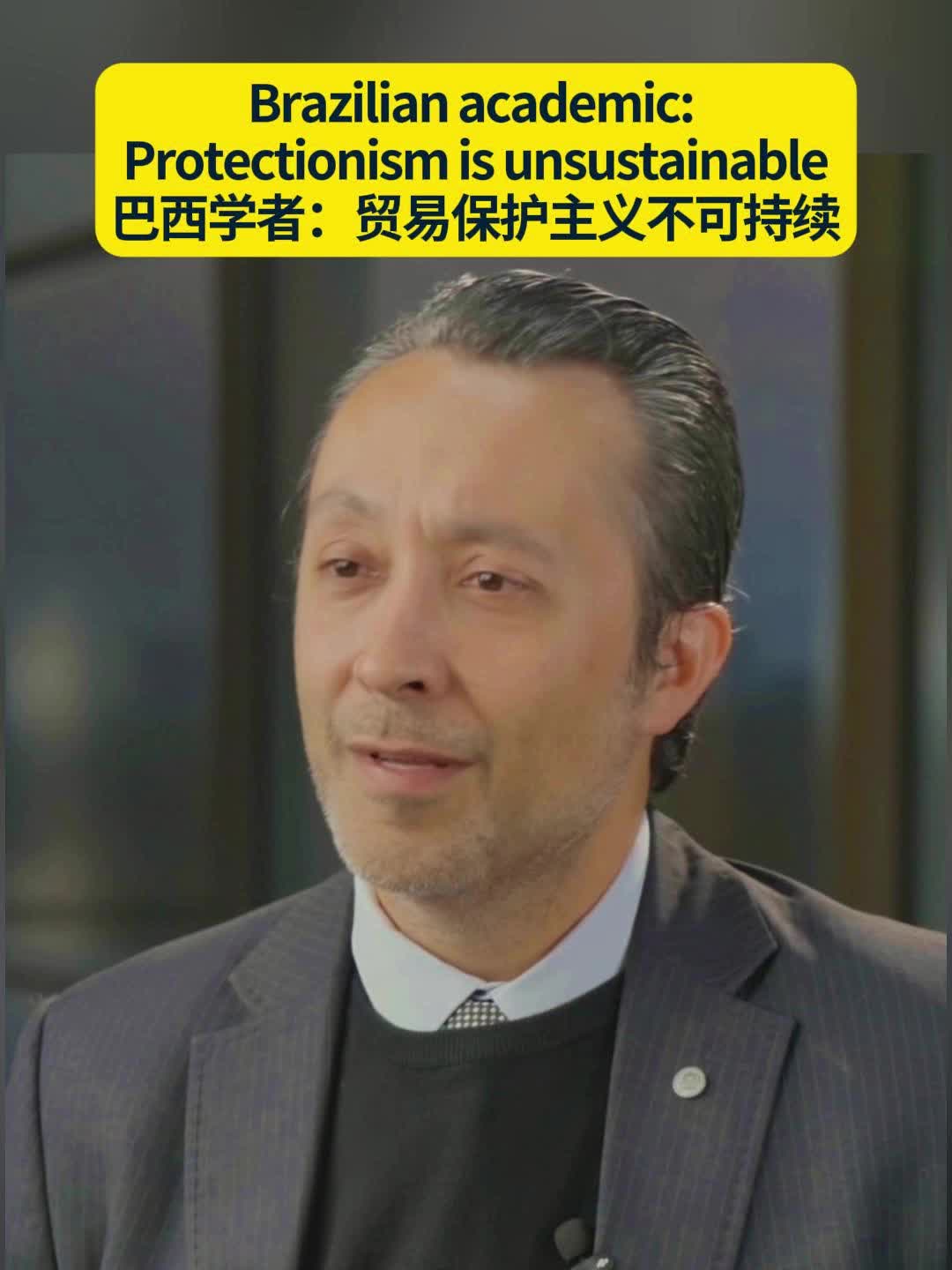
  • Brazilian academic: Protectionism is unsustainable

    Brazilian academic: Protectionism is unsustainable

    In a striking critique of contemporary economic trends, prominent Brazilian political scientist Dawisson Belém Lopes has declared protectionism fundamentally unsustainable for long-term global prosperity. The professor of international and comparative politics at Brazil’s Federal University of Minas Gerais identified a paradoxical shift among nations that previously championed free-market principles but are now embracing restrictive trade measures.

    Lopes presented his analysis against the backdrop of increasing trade barriers implemented by several developed economies. He argued that such protectionist approaches ultimately hinder worldwide economic advancement and create artificial constraints on international cooperation. The academic emphasized that historical evidence consistently demonstrates how isolationist policies lead to market inefficiencies, reduced innovation, and ultimately lower living standards across both developed and developing nations.

    Highlighting China’s economic trajectory as a compelling case study, Lopes pointed to the tangible benefits of maintaining open markets and committing to free trade principles. He noted that nations embracing globalization and international exchange have demonstrated stronger resilience during economic downturns and more sustainable development patterns.

    The professor’s comments arrive during a period of significant reevaluation of global trade relationships, with multiple nations reconsidering their strategic economic positioning. Lopes concluded that the temporary advantages gained through protectionist measures inevitably give way to long-term disadvantages, making cooperation and open exchange the only viable path forward for truly sustainable global development.

  • Trump’s failed strong-arming of allies on Iran shows that pressure is losing its effect

    Trump’s failed strong-arming of allies on Iran shows that pressure is losing its effect

    PARIS (AP) — In a stark demonstration of deteriorating transatlantic relations, U.S. President Donald Trump’s demands for military assistance in the Iran conflict have been met with resounding rejection from traditional allies. The president, adopting a transactional approach to international relations, has attempted to leverage decades of U.S. security guarantees to compel allied nations to contribute naval forces to secure the Strait of Hormuz—a critical maritime passageway for global oil transportation.

    The response from European powers has been notably unified in its opposition. The United Kingdom, historically America’s closest military partner, has explicitly refused involvement in what Prime Minister Keir Starmer characterized as a conflict ‘with no clear endgame.’ British officials have emphasized that any military deployment would require both international legal justification and a comprehensive strategic plan, neither of which they believe currently exists.

    France has adopted a similarly cautious position, with President Emmanuel Macron stating that while naval escorts might be considered feasible eventually, such operations would only be viable after active combat subsides. Germany’s Defense Minister Boris Pistorius echoed this sentiment, asserting that European nations seek diplomatic solutions rather than military escalation.

    The widespread refusal follows months of diplomatic strain between the Trump administration and European allies. Recent tensions have included trade disputes, controversial remarks about allied military contributions in Afghanistan, and renewed American interest in acquiring Greenland—all contributing to what analysts describe as historically low levels of goodwill toward the current U.S. administration.

    Retired Lt. Gen. Ben Hodges, former commanding general of the U.S. Army in Europe, observed that European leaders are increasingly recognizing that diplomatic appeasement strategies toward Trump yield limited benefits. This shift represents a fundamental transformation in how traditional allies perceive American leadership on the global stage.

    Despite possessing potential leverage through European dependence on Middle Eastern energy exports and need for continued U.S. support regarding Ukraine, Trump’s demands have thus far failed to generate the desired international coalition. The administration now faces the prospect of managing an escalated Middle Eastern conflict with notably limited international military support.

  • Hittler faces Zielinski as French town’s election contest goes viral

    Hittler faces Zielinski as French town’s election contest goes viral

    The tranquil French commune of Arcis-sur-Aube, with its modest population of 2,785 residents, has unexpectedly become the epicenter of international attention due to an extraordinary electoral coincidence involving its mayoral candidates’ surnames. Current mayor Charles Hittler, seeking re-election in Sunday’s municipal runoff, finds himself at the center of a viral storm simply because of his family name’s phonetic similarity to the notorious German dictator.

    The situation has escalated beyond occasional jokes that Hittler has endured throughout his life. Social media platforms have been inundated with satirical posts drawing parallels between the electoral contest and the historical conflict between Adolf Hitler and modern Ukrainian leader Volodymyr Zelensky—particularly since one of Hittler’s opponents bears the surname Zielinski.

    In an exclusive interview with the BBC, an exasperated Hittler revealed the personal toll of this unexpected fame: ‘The situation has gone completely crazy. My wife is in tears. We’ve seen online articles falsely claiming that 37% of Arcis residents are Hitlerites. People should be discussing our town’s policies, not our names.’

    The mayor’s family history reveals why he never changed his controversial surname. His father, a shepherd from Alsace near the German border, was conscripted into Nazi Germany’s forced labor program during World War II. Despite recommendations to change the name in 1949, the administrative complexity and financial burden prevented the alteration. Today, only a few Hittlers remain in France, with most family members either altering pronunciation to ‘Hit-lay’ or adopting maternal surnames to avoid embarrassment.

    Remarkably, Hittler’s daughter and daughter-in-law—both retaining the surname—are concurrently running for municipal council positions in other French towns. ‘Once you establish your reputation, the name becomes secondary. People eventually see the person behind the name,’ Hittler explained.

    The electoral dynamics extend beyond nominal coincidences. While Hittler represents center-right policies, his opponent Antoine Renault-Zielinski belongs to the far-right Patriot movement—a significant detail in a region where the National Rally party traditionally performs strongly. The 28-year-old customs officer, whose Polish mother contributed the latter part of his hyphenated surname, maintains philosophical perspective: ‘I understand why people find this amusing, though personally it doesn’t make me laugh. At least our town is on the map now.’

    Historical ironies abound: Arcis-sur-Aube’s name was adopted by a town near Odesa in Ukraine after German immigrants named their settlement Artsyz following Napoleon’s 1814 battle against Austrian, Prussian, and Russian armies. The French town also happens to be the birthplace of revolutionary leader Georges Jacques Danton.

    As Sunday’s runoff approaches with Hittler maintaining a narrow lead over Zielinski and third candidate Annie Soucat, the world watches a municipal election that has transcended local politics through the unpredictable power of onomastic coincidence.

  • Celebrations in Morocco but devastation in Senegal after Afcon decision

    Celebrations in Morocco but devastation in Senegal after Afcon decision

    African football has been plunged into unprecedented controversy after the Confederation of African Football (CAF) stripped Senegal of their Africa Cup of Nations title and awarded the championship to tournament hosts Morocco. The dramatic decision comes two months after the contentious final in Rabat that ended with Senegal’s controversial pitch walkout.

    The governing body ruled that Senegal’s national team violated competition regulations by abandoning the field in protest of a refereeing decision during the final match. Although the match eventually resumed and Senegal secured a 1-0 victory, CAF determined the walkout constituted an automatic forfeiture under tournament rules.

    The announcement triggered diametrically opposite reactions across both nations. Moroccan cities erupted in spontaneous celebrations as ecstatic supporters flooded streets waving national flags, sounding car horns, and igniting flares in triumphant displays. Local media captured scenes of jubilant fans in Tangier and other cities experiencing what journalist Jalal Bounour described as “a sleepless night of great excitement and joy.”

    Many Moroccans expressed a profound sense of justice restored, with one woman telling sports channels: “The entire Moroccan people are out in every city happy with our cup. The cup has returned to us, the cup that was denied to us.” Another supporter admitted to being in “complete shock” at the unexpected reversal.

    Meanwhile, Senegal responded with outrage and accusations of institutional corruption. In the capital Dakar, the news landed like a bombshell, with young fan Daouda Seck telling AFP: “I’m stunned. Football no longer exists. This is not football. No-one here understands or accepts this decision.”

    The Senegalese government announced it would formally appeal the decision, warning that the ruling “undermined CAF’s credibility” and calling for an “independent international investigation into suspected corruption within CAF’s governing bodies.” This sentiment was echoed by student Ralf Nonga, who insisted that “the best team won on the pitch, and that should be respected off it.”

    Local media reflected the national mood, with one Senegalese newspaper leading with the headline: “The inside story of an unprecedented scandal.” The controversy has raised fundamental questions about sports governance, competitive integrity, and the balance between regulatory enforcement and competitive fairness in African football.

  • South Lebanon residents flee death and destruction

    South Lebanon residents flee death and destruction

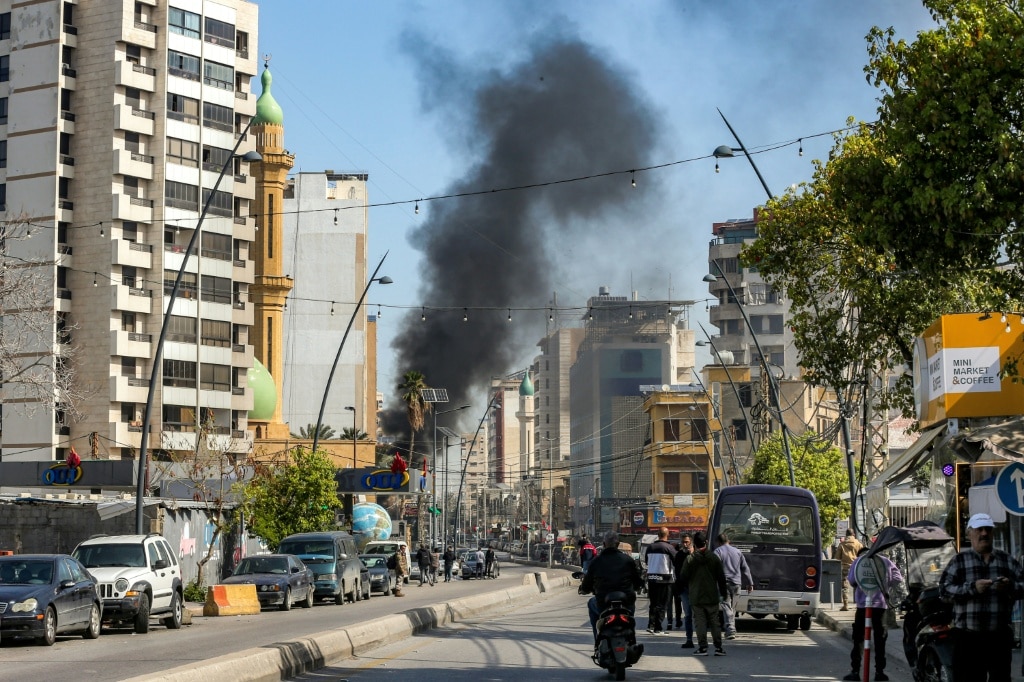
    A relentless stream of vehicles extends along Lebanon’s southern coastline, carrying thousands of displaced civilians seeking refuge from escalating hostilities between Israeli forces and Hezbollah militants. The ancient port city of Sidon has become an unexpected sanctuary for those fleeing what Israel has designated as a red zone—a 14 percent segment of Lebanese territory south of the Zahrani River under urgent evacuation orders.

    The humanitarian situation has reached critical levels with over one million Lebanese citizens forcibly displaced from their homes. Reception centers have exceeded capacity, forcing families to sleep in vehicles or along the seafront. Nidal Ahmad Chokr, a 55-year-old from Jibchit village, described his harrowing escape: “Bakers died while making bread in the village square and municipal workers were martyred while using bulldozers.” He fled with minimal possessions—only a towel, underwear, and essential medications.

    Jihan Kaisi, director of an NGO assisting displaced persons, reported that Sidon’s schools are sheltering three times their intended capacity. “Families arrive with terrified eyes in the middle of the night,” she stated, visibly distressed about turning people away due to lack of space.

    Safaa al-Tabl, a 37-year-old mother of five from Kharayeb village, recounted three days of continuous drone surveillance and attacks before her family’s escape. “They were targeting people, houses. It was all happening right in front of our eyes. I saw bodies,” she recalled emotionally, speaking about her tulip-filled home that represented her childhood memories and national identity.

    The current conflict evokes traumatic memories of Israel’s 22-year occupation of southern Lebanon (1978-2000) and the destructive 2006 war. While Israel describes its ground operations as “limited,” many evacuees fear expanded military actions.

    Mustafa Khairallah, an elderly man using canes, emphasized the unprecedented nature of this conflict: “In the south, we’re very resilient, we’re used to bombardments… Now they’re targeting civilians more and more.” His statement was punctuated by the sound of distant explosions near Sidon.

    Economic realities prevent complete evacuation. Haidar Bitar, a 28-year-old entrepreneur from Nabatiyeh, explained that years of economic crisis have left many without resources to flee. “Before, rent was $100 or $200. Now, you have to pay $1,000 and three months upfront,” he noted, describing how the conflict has driven prices exponentially higher.

    Despite the overwhelming force, Bitar expressed conviction that Israel cannot easily defeat Hezbollah: “They fight night and day. They know where to hide above and below ground.” The militant group, though weakened, has signaled preparedness for prolonged confrontation, maintaining significant support among its base.