作者: admin

  • ‘Border 2’ star Ahan Shetty opens up on patriotism and carrying forward dad Suniel Shetty’s legacy

    ‘Border 2’ star Ahan Shetty opens up on patriotism and carrying forward dad Suniel Shetty’s legacy

    Bollywood actor Ahan Shetty has revealed how his portrayal in the anticipated sequel ‘Border 2’ profoundly deepened his admiration for India’s armed forces. The son of veteran actor Suniel Shetty, who starred in the original 1997 war epic, Ahan reflects on the circular journey from childhood inspiration to professional tribute.

    Shetty disclosed that watching his father’s character sacrifice in the first film moved him to tears as a toddler. Now starring in the sequel, he describes the experience as fulfilling a childhood aspiration to honor military personnel. ‘Through my role in Border 2, I can pay tribute to the Indian armed forces,’ Shetty stated, noting how actors live multiple lives through their characters.

    During production, Shetty engaged extensively with officers across all military branches—army, navy, air force, and Border Security Forces. He gained extraordinary insights into submariners’ realities, who endure months underwater with limited oxygen and extreme atmospheric pressure. ‘They sleep wherever space allows—next to torpedo shafts or missile stacks,’ Shetty recounted. ‘Comfort is their last priority.’

    These interactions fostered immense respect for personnel who serve without expectation of fame. ‘These are real heroes who live and die unsung,’ Shetty emphasized, vowing to continue honoring them beyond this project.

    The actor addressed his career trajectory following his 2021 debut in ‘Tadap,’ which underperformed commercially. He credited family support during challenging periods, particularly his father’s advice about ‘that one Friday that changes your destiny.’ For Shetty, ‘Border 2’ represented that turning point.

    Looking ahead, Shetty confirmed multiple projects: an action-romance based on real events with director Shaad Ali, a spy thriller with Ribhu Dasgupta, and a horror film. Despite his action heritage, he expressed particular affection for romantic comedies like ‘Zindagi Na Milegi Dobara’ and openness to South Indian cinema collaborations.

    Shetty also praised contemporaries like Ahaan Panday and celebrated Ranveer Singh’s successful comeback in ‘Dhurandhar’ as inspiration for navigating industry volatility.


  • UAE-based Kalpana Iyer on going viral again with ‘Ramba Ho’ after 40 years

    UAE-based Kalpana Iyer on going viral again with ‘Ramba Ho’ after 40 years

    Dubai-based Bollywood veteran Kalpana Iyer has experienced an unexpected digital renaissance as her 1981 disco hit ‘Ramba Ho’ from the film ‘Armaan’ surges back into viral popularity four decades after its original release. The renewed attention began when footage of Iyer performing the iconic dance at a wedding sangeet in Siliguri spread rapidly across social media platforms, catching the seasoned performer completely by surprise.

    The viral moment emerged from a personal celebration—the wedding of a friend’s son—where Iyer’s spontaneous performance was captured on video. Unaware of her burgeoning internet fame, the actress learned of her viral status the following morning when her nephew alerted her to the growing online attention. This triggered an influx of interview requests and social media features from across India.

    Reflecting on the unexpected phenomenon, Iyer describes the experience as ‘serendipitous,’ expressing gratitude for the attention arriving at a stage in life when she least anticipated it. The song’s resurgence coincides with its featured placement in Aditya Dhar’s upcoming film ‘Dhurandhar,’ introducing the classic track to a new generation of audiences.

    The original 1981 production of ‘Ramba Ho’ featured distinctive creative elements that contributed to its enduring appeal. Iyer reveals the costume inspiration came from her personal collection of skirts acquired from Fijian flea markets, which designer Allan Gill enhanced with rose-themed blouses. Despite the song’s elaborate carnival aesthetic, the entire sequence was filmed not in Goa but on an extensive set constructed at Natraj Studios in Mumbai, blending artificial carnival elements with authentic Goan atmosphere.

    Iyer recalls the intensive working conditions of 1980s Bollywood, where she frequently worked double shifts and 24-hour schedules to accommodate producer demands. Many of her disco numbers were filmed within strict time constraints, often between 7 AM and 7 PM to allow nightclub venues to resume normal operations. This dedication to professional commitment sometimes came at personal cost, with Iyer acknowledging that her ‘over-giving’ work ethic impacted her long-term health.

    The viral revival has prompted reflection on changing industry practices and self-care priorities. While embracing her unexpected digital fame, Iyer acknowledges the importance of balancing professional dedication with personal wellbeing—a perspective shaped by decades of experience in the demanding entertainment industry.

  • Indian expat wins Dh20 million in Big Ticket weeks after baby’s birth; yet to see child

    Indian expat wins Dh20 million in Big Ticket weeks after baby’s birth; yet to see child

    In an extraordinary twist of fate, Indian expatriate Shantanu Shettigar has claimed the Dh20 million Big Ticket jackpot just weeks after welcoming his first child into the world. The 34-year-old shop supervisor based in Muscat received the life-altering news during an ordinary workday, marking what he describes as a ‘double blessing’ following the birth of his daughter on December 27th.

    The emotional significance of the win is magnified by the fact that Shettigar has yet to physically meet his newborn child. ‘I think my daughter came into this world with luck,’ the overwhelmed father told Khaleej Times, expressing his belief that her arrival precipitated his unprecedented fortune. The new father missed the initial notification calls during the live draw due to work commitments, only discovering his windfall upon answering the third attempt by show organizers.

    Having participated in the Big Ticket lottery for approximately five years with consistent regularity over the past three, Shettigar typically shared ticket purchases with a compatriot from his hometown of Udupi in Karnataka. Despite knowing numerous long-term participants who have pursued the jackpot for over a decade without success, Shettigar maintained his participation without expectations of winning.

    The winner remains remarkably grounded despite his sudden multimillionaire status, confirming he will continue his current employment while carefully considering how to manage his newfound wealth. His immediate priorities focus on family reunification—he plans to travel to Abu Dhabi next month to complete prize formalities before bringing his wife and daughter to join him in Oman. ‘Family is the most important thing for me now,’ Shettigar emphasized, highlighting his intention to use the winnings to secure his family’s future.

    This remarkable sequence of events—becoming a father and winning one of the region’s most substantial lottery prizes within weeks—has left Shettigar processing what he characterizes as overwhelmingly positive life transformations. His story joins numerous other expatriate success narratives within the UAE’s popular Big Ticket lottery system, though few have experienced such perfectly timed fortune alongside personal milestones.

  • ‘Faithful servant’: Gospel music legend Ron Kenoly dies at 81, tributes pour in

    ‘Faithful servant’: Gospel music legend Ron Kenoly dies at 81, tributes pour in

    The global Christian music community is grieving the loss of Ronald ‘Ron’ Kenoly, the groundbreaking gospel artist who revolutionized contemporary worship music, who passed away on February 3rd at age 81. His death was formally announced through an emotional Instagram post by his longtime collaborator and music director, Bruno Miranda, who had worked alongside the legendary worship leader for over two decades.

    Kenoly’s distinctive approach transformed Christian worship services worldwide through his vibrant, big-band influenced style that encouraged congregational participation rather than passive listening. His philosophy centered on worship leadership as a sacred calling rather than musical performance—a distinction he consistently emphasized throughout his ministry. Miranda’s tribute highlighted this fundamental principle, noting Kenoly dedicated significant time to explaining that a worship leader’s purpose is “not to perform songs, but to lead people into true worship in the presence of a King; the King of Kings, Jesus Christ.

    The announcement triggered an outpouring of tributes from across the international Christian community. Integrity Music, Kenoly’s recording label, honored him as “a pioneering voice in praise and worship, and a faithful servant,” acknowledging his unparalleled influence across nations and generations. His catalog of iconic worship anthems—including ‘Ancient of Days,’ ‘Lift Him Up,’ ‘Jesus Is Alive,’ and ‘Let There Be Praise’—became foundational components of modern Christian worship services across denominational boundaries.

    Fellow gospel artist Martha Munizzi remembered Kenoly as both a personal friend and musical legend, noting how his “voice and iconic songs helped us sing through our hardest and happiest days” while praising his humility and Christ-centered focus. The comment sections across social media platforms filled with testimonies from pastors, worship leaders, and congregants whose spiritual lives were profoundly impacted by Kenoly’s ministry.

    Kenoly is survived by his wife Diana, their three sons, and several grandchildren. Miranda concluded his tribute with a note of theological hope, writing: “Today we grieve deeply but not without hope. The worship he lived is now the worship he beholds,” reflecting the Christian belief in eternal life that characterized Kenoly’s own lyrical themes.

  • Egyptian man explores 460-year-old fair in Tianjin

    Egyptian man explores 460-year-old fair in Tianjin

    In the Ninghe district of Tianjin, the historic Lutai Fair—a cornerstone of northern Chinese cultural heritage for approximately 460 years—continues to thrive as a vibrant hub of tradition and community exchange. This year’s event attracted widespread attention, including Egyptian national Ahmed Mohamed Saleh, who embarked on an immersive journey through the fair’s bustling lanes and rich cultural offerings.

    The fairgrounds featured hundreds of stalls showcasing local culinary specialties, traditional Spring Festival decorations, and regional agricultural products. Visitors were enveloped in a sensory experience characterized by the aromatic scents of local delicacies, the dynamic calls of vendors, and the lively social interactions emblematic of China’s rural market culture.

    A notable highlight was the innovative 100-yuan (approximately $14) New Year shopping challenge, where participants curated selections of food and festive items within a strict budget. Ahmed navigated the marketplace with enthusiasm, acquiring strawberries, spicy crayfish, pickled cabbage, and traditional Spring Festival couplets while sampling flavors and discovering cultural artifacts.

    Beyond commercial activities, the fair served as a platform for preserving intangible cultural heritage through demonstrations of traditional craftsmanship and local skills. The event also hosted a competitive village chef championship where culinary experts from surrounding towns prepared distinctive northern Chinese dishes.

    This convergence of historical preservation and contemporary engagement illustrates how traditional rural markets maintain relevance in modern society. The Lutai Fair functions as both a cultural exchange conduit and a window into northern China’s agricultural heritage, drawing urban dwellers and international visitors alike to experience its unique blend of tradition and community spirit.

  • Review into UK protest laws failed to invite Palestine march organisers for consultation

    Review into UK protest laws failed to invite Palestine march organisers for consultation

    A UK government review into contentious new protest legislation has ignited controversy for its apparent exclusion of key stakeholders. The Palestine Coalition, the organizing body behind 33 national pro-Palestine marches, was initially omitted from consultation despite its central role in the demonstrations under scrutiny.

    Home Secretary Shabana Mahmood initiated the independent review in November, tasking Lord Ken Macdonald KC with examining whether recent amendments to public order and hate crime laws were being implemented effectively. The review emerged following government concerns about protest timing after a tragic antisemitic attack on a Manchester synagogue.

    The oversight has raised serious questions about the review’s comprehensiveness and impartiality. The coalition, whose largest member organization (Palestine Solidarity Campaign) represents over 15,000 members across nearly 100 UK branches, had to proactively request participation after discovering their initial exclusion.

    Further concerns emerged regarding transparency, as the review’s terms of reference were not initially made public, and consulted organizations were reportedly given limited time for submissions to meet the February 2026 deadline.

    The controversy deepens when examining Lord Macdonald’s previous public positions. He co-authored a letter to The Times in October 2023 defending Israel’s siege of Gaza as self-defense and later signed a UK Lawyers for Israel letter arguing against weapons sale suspensions to Israel.

    The Palestine Coalition’s submission vigorously challenges the government’s narrative, rejecting attempts to connect the Manchester synagogue attack with peaceful protests and highlighting the demonstrations’ overwhelmingly peaceful character with lower arrest rates than typical football matches or festivals.

    The review occurs alongside broader concerns from 40 civil society organizations, including Amnesty International UK and Liberty, who have denounced the government’s proposed legal changes as a “draconian crackdown” on fundamental democratic rights.

  • Pep Guardiola speaks out against genocide in Gaza and ICE killings

    Pep Guardiola speaks out against genocide in Gaza and ICE killings

    Manchester City manager Pep Guardiola has intensified his humanitarian advocacy, delivering powerful condemnations of global conflicts during a recent press conference. The decorated football coach articulated profound distress over violence in Gaza, Ukraine, Sudan, and lethal incidents involving U.S. immigration enforcement.

    Guardiola’s remarks followed his appearance at a Barcelona charity event where he wore a Palestinian keffiyeh and criticized international silence regarding Palestinian children’s suffering. When questioned about his political stance before the Carabao Cup match against Newcastle United, Guardiola responded with emotional intensity.

    “Never in human history have we possessed such clear visibility of global atrocities,” Guardiola told journalists. “The genocide in Palestine, the tragedies in Ukraine and Russia, the carnage in Sudan—these are fundamental human problems that demand our attention.”

    The Spanish tactician described how visual evidence from conflict zones affects him personally: “Watching innocent civilians perish wounds me profoundly. Advocating ideologies that require mass slaughter is indefensible. I will consistently oppose such violence.”

    Guardiola specifically referenced the killings of U.S. citizens Renee Good and Alex Pretti by law enforcement, posing rhetorical questions about similar incidents occurring in Britain. His humanitarian concerns extend beyond recent comments, having addressed Gaza’s situation last year while receiving an honorary degree from the University of Manchester.

    This advocacy creates complex dynamics for Manchester City, owned by UAE Vice President Mansour bin Zayed Al Nahyan. Extensive reporting indicates the UAE government supplies weapons to Sudan’s Rapid Support Forces through multinational networks, with intercepted communications suggesting Mansour’s direct involvement with paramilitary leader Hemedti. Activist group Manchester4Sudan notes the apparent contradiction between Guardiola’s condemnations and the club’s ownership connections.

  • 10,000-ton electric container ship tests off Jiangxi province

    10,000-ton electric container ship tests off Jiangxi province

    China has achieved a groundbreaking milestone in maritime transportation with the commencement of sea trials for Ningyuan Diankun, the world’s first 10,000-ton intelligent oceangoing vessel powered exclusively by electricity. The revolutionary container ship embarked from Hukou county in Jiujiang city, Jiangxi province on February 1st after successfully completing outfitting and mooring tests.

    Constructed by Jiangxi Jiangxin Shipbuilding, this pioneering vessel represents the largest pure electric ship of its kind globally. Measuring 127.8 meters in length, the container ship boasts a substantial capacity of 740 TEU (twenty-foot equivalent units) containers, featuring an innovative open-top design that enhances loading efficiency.

    The current sea trials constitute a comprehensive evaluation phase focusing on multiple critical systems. Engineers are testing the advanced battery power supply infrastructure, propulsion performance metrics, hull operational capabilities, and cutting-edge autonomous navigation technologies. The testing itinerary includes navigation to a designated trial zone near Shanghai, with arrival expected by February 6th and completion scheduled for February 13th.

    This technological achievement positions China at the forefront of sustainable maritime innovation, demonstrating significant progress in electrifying commercial shipping—a sector traditionally dominated by fossil fuels. The successful implementation of such large-scale electric propulsion systems could potentially transform global shipping standards and contribute substantially to reducing maritime carbon emissions.

  • UAE official calls for investing in water amid $7-trillion financing gap

    UAE official calls for investing in water amid $7-trillion financing gap

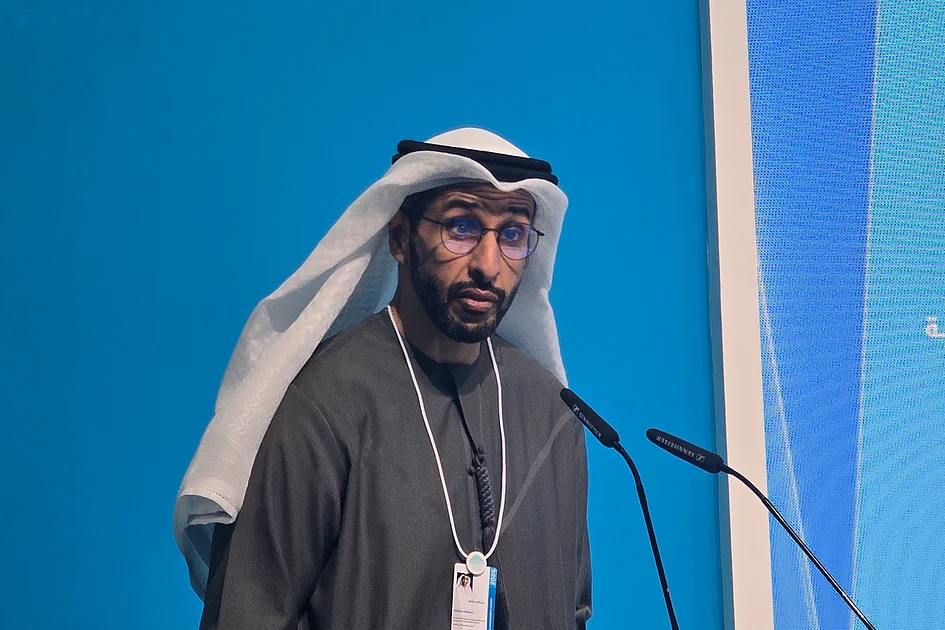
    A senior UAE official has issued a compelling call for increased private investment in global water infrastructure, highlighting a critical $7 trillion financing gap that threatens water security worldwide. Abdulla Balalaa, Assistant Minister for Energy and Sustainability at the UAE Ministry of Foreign Affairs, addressed the pressing issue during the World Governments Summit, emphasizing that international financial institutions have consistently overlooked water as a profitable investment opportunity.

    Balalaa presented a stark reality: while water represents an essential lifeline and reliable investment vehicle, more than 90% of current funding originates from public sources. This creates an unsustainable model for addressing the world’s growing water infrastructure needs. According to a December 2025 World Economic Forum report, this massive financing shortfall could leave billions vulnerable to outdated water systems by 2040.

    The UAE official positioned this challenge as a significant opportunity for sovereign wealth funds and private investors. He highlighted the UAE’s business-friendly policies, transparent regulatory processes, and expanding market as ideal conditions for water sector investments. Balalaa made these remarks during a panel discussion previewing the upcoming UN Water Conference, which the UAE will co-host with Senegal in Abu Dhabi from December 2-4, 2026.

    This third edition of the UN Water Conference will address Sustainable Development Goals related to water security, climate challenges, and infrastructure development. The UAE’s active role in hosting this international gathering underscores its strategic pivot toward positioning water security as both an economic opportunity and global priority, particularly for nations facing water scarcity challenges.

  • China’s construction sector sees drop in energy use, emissions during build phase, rise in operations

    China’s construction sector sees drop in energy use, emissions during build phase, rise in operations

    China’s construction industry demonstrated a complex energy consumption pattern in 2024, with new data revealing contrasting trends between building construction and operational phases. According to a comprehensive report jointly compiled by the China Association of Building Energy Efficiency and Chongqing University, the sector witnessed significant environmental improvements during construction activities despite increased energy demands from existing building operations.

    The detailed analysis, unveiled Wednesday in Beijing, indicates that energy consumption during construction processes declined to 1.25 billion metric tons of standard coal, representing a reduction of 20 million tons compared to previous year figures. Correspondingly, carbon dioxide equivalent emissions during construction dropped substantially to 2.78 billion tons, marking a decrease of 60 million tons year-on-year. The report attributes the majority of these consumption and emission metrics to the production and utilization of construction materials.

    Conversely, operational energy consumption across China’s civil building portfolio increased by 40 million tons to reach 1.3 billion tons of standard coal. Despite this absolute increase, the proportion of operational energy use within China’s total energy consumption profile actually decreased marginally by 0.1 percentage points to 21.8 percent. Operational carbon emissions reached 2.47 billion tons of carbon dioxide equivalent, reflecting an increase of 60 million tons.

    The report highlights a crucial finding: while operational metrics showed absolute increases, the growth rate has significantly decelerated. Historical data from 2000 to 2024 shows operational energy use increased by 1.02 billion tons of standard coal with average annual growth of 6.5 percent, but the 2024 increase was only 3.2 percent year-on-year. Similarly, operational carbon emissions grew by 1.81 billion tons of CO2 equivalent over the period with average annual growth of 5.7 percent, compared to just 2.5 percent in 2024 alone.

    This divergence suggests China’s enhanced focus on construction phase efficiency and sustainable building materials is yielding measurable results, even as the challenge of managing operational energy consumption in existing buildings continues to evolve. The data provides critical insights for policymakers and industry stakeholders working toward China’s broader carbon neutrality goals.