作者: admin

  • Nigeria church attackers demand ransoms as search intensifies for over 150 hostages

    Nigeria church attackers demand ransoms as search intensifies for over 150 hostages

    ABUJA, Nigeria — In a brazen assault highlighting Nigeria’s escalating security crisis, armed militants have demanded 17 motorcycles as ransom payment for over 150 Christian worshippers abducted during coordinated church attacks in northwestern Kaduna state. The mass kidnapping occurred Sunday when gunmen raided three separate churches in Kajuru district, initially seizing 177 congregants before 11 managed to escape during the operation.

    Local authorities confirmed tactical security teams have been deployed to track the kidnappers, believed to be part of rogue criminal gangs exploiting limited state presence in remote communities. The motorcycle ransom demand—estimated at approximately $17,000 total—represents both a practical and symbolic request, as these vehicles serve as primary transportation for militants operating throughout Nigeria’s conflict zones.

    Village head Ishaku Dan’azumi reported the captors explicitly requested motorcycle replacements rather than monetary compensation, a detail corroborated by Sebastine Barde of the Adara Development Association. The abduction methodology reflects broader patterns in regional violence, where attackers utilize forest reserves as hideouts and motorcycles for rapid movement between communities.

    Kaduna Governor Uba Sani visited affected communities Wednesday, pledging coordinated efforts between state and security agencies to secure hostage release. “Our administration will continue to pursue peace, security, and inclusive development,” Sani stated during his assessment of the crisis.

    The incident occurs amid deteriorating diplomatic relations between Nigeria and the United States, following U.S. accusations that Nigerian authorities have failed to protect Christian communities during the nation’s prolonged security emergency. While attacks affect both religious groups, the targeting of worship centers has drawn international concern and complicated bilateral counterterrorism cooperation.
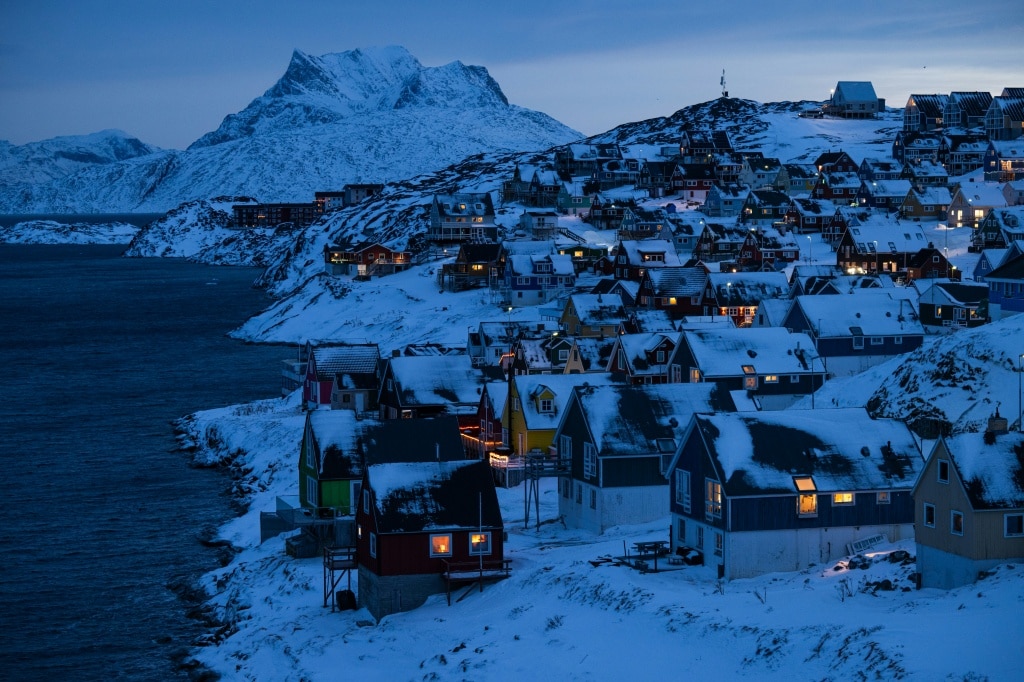

  • In Greenland, locals fed up with deals done over their heads

    In Greenland, locals fed up with deals done over their heads

    Residents of Greenland have expressed profound frustration following reports that high-level discussions about their territory’s future occurred without their inclusion. This outcry emerged after U.S. President Donald Trump and NATO Secretary-General Mark Rutte reportedly established a preliminary agreement concerning Greenland during the World Economic Forum in Davos, Switzerland.

    In Nuuk, Greenland’s capital, locals voiced strong objections to being sidelined in diplomatic negotiations that directly impact their autonomous region. Niels Berthelsen, a 49-year-old maritime captain, articulated the prevailing sentiment: “If they want to make deals about Greenland, they have to invite Greenland to the negotiating table.” His statement, “Nothing about Greenland without Greenland,” has become a rallying cry for those feeling marginalized by international power dynamics.

    While President Trump has retreated from earlier suggestions of forcibly acquiring Greenland, the vague nature of the purported agreement has stirred concerns among the territory’s 57,000 inhabitants. Greenland, which transitioned from Danish colonial status to autonomous governance in the late 20th century, maintains control over most domestic affairs while Denmark handles foreign and defense policies.

    The historical context amplifies current tensions. Greenland’s colonial past included oppressive assimilation policies such as suppression of the Inuit language and forced sterilizations, creating lasting grievances. Deputy Prime Minister Mute Egede reinforced Greenland’s stance on self-determination, declaring on social media: “Whatever pressure others may exert, our country will neither be given away, nor will our future be gambled with.”

    Elder residents like 80-year-old Arkalo Abelsen question the validity of the alleged agreement, suggesting President Trump may have misinterpreted diplomatic conversations. The ongoing uncertainty has disrupted the traditionally tranquil existence of Greenlanders, with many expressing nostalgia for more predictable times before recent geopolitical interest in their strategically significant territory.

    Travel agency employee Susan Gudmundsdottir Johnsen echoed this desire for stability: “From now on, we need peace and quiet,” capturing the collective yearning for resolution that respects Greenland’s autonomy and includes its people in decisions determining their future.

  • Fiber chip thinner than a hair

    Fiber chip thinner than a hair

    Researchers at Shanghai’s Fudan University have achieved a groundbreaking advancement in electronic technology by developing ultra-thin fiber chips capable of housing over 100,000 transistors per centimeter. This innovation, detailed in the January 22 publication in the prestigious journal Nature, represents a significant departure from conventional chip manufacturing methodologies.

    The newly developed ‘fiber chip’ technology enables the creation of complex electronic circuits within exceptionally thin, pliable fibers that maintain flexibility despite their computational capabilities. These advanced fibers can be stretched, twisted, and seamlessly integrated into conventional textiles without compromising their electronic functionality.

    This technological breakthrough fundamentally transforms ordinary fabrics into smart materials capable of sophisticated information processing. The integration of computational power directly into clothing materials opens unprecedented possibilities for wearable technology, allowing everyday garments to perform computer-like functions while maintaining complete wearability and comfort.

    The research challenges established paradigms in semiconductor manufacturing, potentially revolutionizing how electronic devices are conceived and produced. By embedding computational capacity within flexible fibers, the technology bridges the gap between rigid electronics and soft materials, creating new horizons for smart textiles and wearable computing applications.

    The development marks a significant milestone in materials science and electronic engineering, offering transformative potential for numerous industries including fashion, healthcare monitoring, and human-computer interaction technologies.

  • Colombia imposes tariffs and halts energy sales to Ecuador as trade feud escalates

    Colombia imposes tariffs and halts energy sales to Ecuador as trade feud escalates

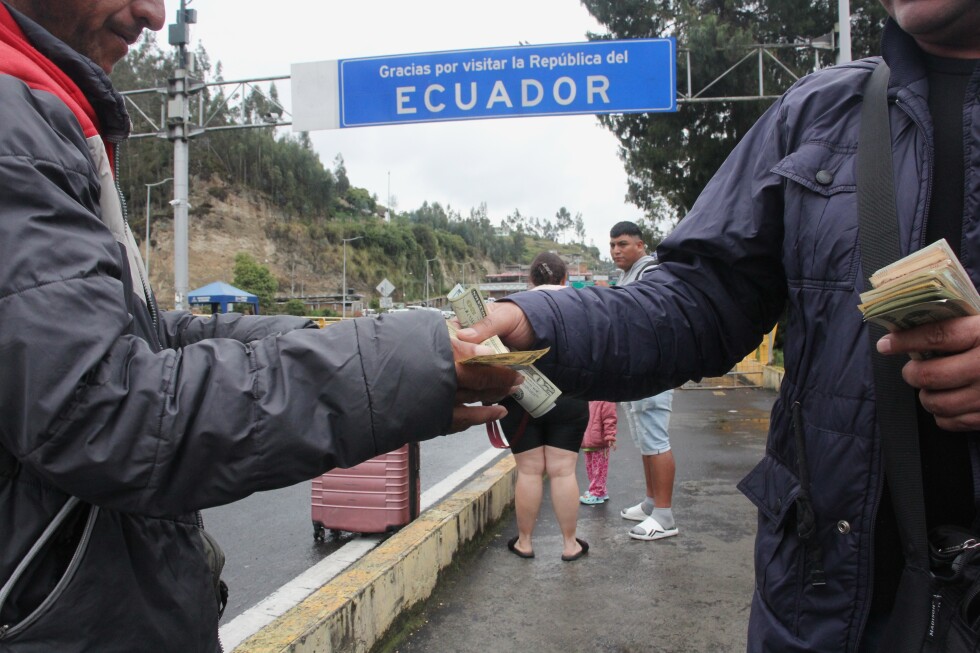
    In a significant escalation of cross-border tensions, Colombia has declared immediate economic countermeasures against Ecuador, implementing a 30% tariff on select Ecuadorian imports and suspending all electricity exports to its neighbor. This decisive action comes as a direct response to Ecuador’s previous imposition of similar trade barriers, marking a rapid deterioration in bilateral relations between the two Andean nations.

    The trade dispute originated from Ecuadorian President Daniel Noboa’s public statements highlighting an $852 million trade deficit with Colombia and expressing concerns about inadequate security cooperation along their shared border—a region notorious for criminal organizations and international drug trafficking operations.

    Colombian authorities expressed astonishment at Ecuador’s unilateral trade measures, emphasizing that bilateral cooperation continues through established joint mechanisms including military and anti-narcotics operations. Official trade data reveals a substantial imbalance: from January to November 2024, Ecuador exported $760 million worth of goods to Colombia while importing $1.8 billion in Colombian products.

    Colombia’s new tariff structure affects 20 specific Ecuadorian products representing approximately $250 million in annual trade. Commerce Minister Diana Marcela Morales characterized the measures as temporary while reaffirming Colombia’s commitment to seeking diplomatic resolution through negotiation.

    Simultaneously, Colombia’s Ministry of Mines and Energy announced an indefinite suspension of electricity exports to Ecuador, framing the decision as a necessary precaution to protect national energy security. Energy Minister Edwin Palma condemned Ecuador’s initial tariffs as “economic aggression” while highlighting Colombia’s previous energy assistance—during Ecuador’s severe power crisis in late 2024, Colombia supplied roughly 90% of its exportable capacity (approximately 450 megawatts) to stabilize Ecuador’s grid.

    Business communities in both nations have expressed grave concerns about immediate economic consequences. Oliva Diazgranados, executive director of the Colombian-Ecuadorian Chamber of Commerce, reported widespread alarm among member companies regarding potential impacts on corporate development, sales projections, and employment stability. Diazgranados noted that while businesses bear the immediate brunt, the underlying tensions stem primarily from security rather than trade issues.

  • Bangladesh players want to play the World Cup, says BCB president

    Bangladesh players want to play the World Cup, says BCB president

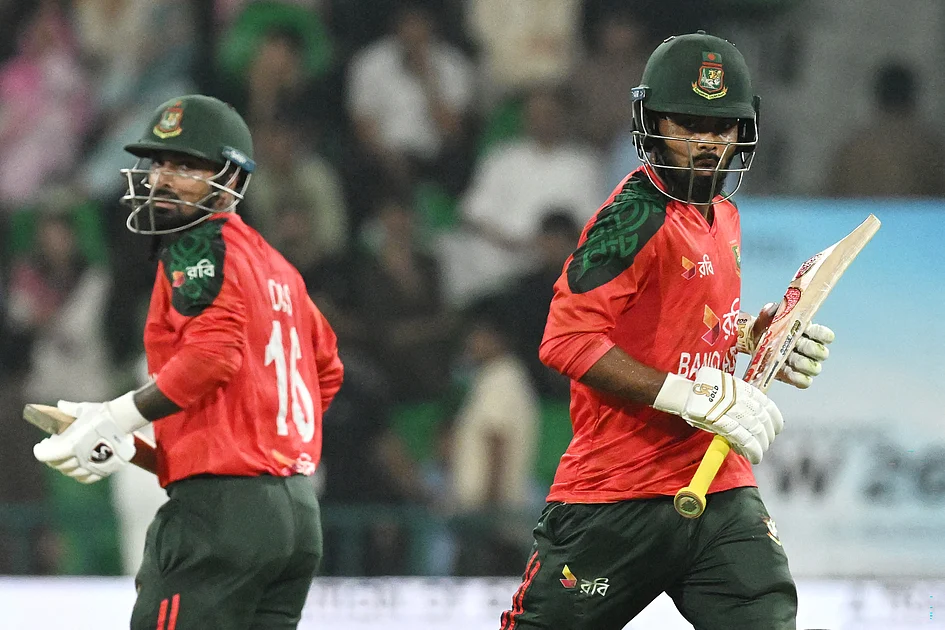
    The International Cricket Council has formally dismissed Bangladesh’s appeal to relocate their Twenty20 World Cup matches from India, creating a diplomatic standoff just weeks before the tournament’s February 7 commencement. Despite expressing grave concerns about player and fan safety amid heightened political tensions between the South Asian neighbors, the Bangladesh Cricket Board saw its proposal to shift matches to Sri Lanka rejected by cricket’s global governing body.

    BCB President Aminul Islam revealed the board will make a final appeal to Bangladesh’s interim government before determining their participation fate. ‘I requested the ICC board for additional time to consult my government one last time,’ Islam stated following the decision. ‘They acknowledged this as a valid concern and granted me 24 to 48 hours to respond.’

    The president maintained that India remains ‘not secure for us’ despite the ICC’s security assurances, emphasizing that Bangladesh’s preference to compete in Sri Lanka remains unchanged. This diplomatic impasse stems from deteriorating political relations that recently spilled into cricket when Bangladeshi pace bowler Mustafizur Rahman was unexpectedly dropped from the Indian Premier League after signing with Kolkata’s franchise.

    Bangladesh retaliated by banning IPL broadcasts domestically and initiating the World Cup venue change request. With the ICC maintaining its position, Bangladesh now faces the critical choice of either participating under current arrangements or potentially being replaced by another team in the global tournament. Islam acknowledged the players’ strong desire to compete, stating ‘Bangladesh players want to play the World Cup,’ while simultaneously expressing hope for ‘a miracle from the ICC’ regarding venue security concerns.

  • Ariana snubbed and Chalamet supreme? Five Oscars takeaways

    Ariana snubbed and Chalamet supreme? Five Oscars takeaways

    The Academy of Motion Picture Arts and Sciences unveiled its nominations for the 97th Oscars on Thursday, delivering a mix of expected accolades, startling omissions, and historic milestones. Leading the pack is the psychological drama ‘Sinners,’ which shattered records with an extraordinary 16 nominations, positioning it as the undeniable frontrunner for the upcoming ceremony on March 15.

    Among the most discussed surprises was the complete shutout of the musical sequel ‘Wicked: For Good,’ which failed to secure a single nomination. This was particularly shocking for its star, pop icon Ariana Grande, who had earned a Best Supporting Actress nod for the first installment but was overlooked this year despite her expanded role. Other notable snubs included Chase Infiniti for ‘One Battle After Another’ and Paul Mescal for ‘Hamnet.’

    In a landmark moment for international cinema, a record four non-English language performances received acting nominations. The Norwegian dramedy ‘Sentimental Value’ propelled three of its stars—Renate Reinsve, Stellan Skarsgard, and Inga Ibsdotter Lilleaas—into the spotlight, while Brazil’s Wagner Moura was recognized for ‘The Secret Agent.’

    The nominations also heralded a potential swansong for Warner Bros. as an independent studio. The century-old distributor dominated the field with its two flagship productions: ‘Sinners’ (16 noms) and the epic ‘One Battle After Another’ (13 noms). This triumph comes amid a fierce acquisition battle between Paramount Skydance and Netflix for the studio.

    A new category, Best Casting, made its debut, with nominations mirroring the Best Picture race and including ‘Hamnet,’ ‘Marty Supreme,’ ‘One Battle after Another,’ ‘The Secret Agent,’ and ‘Sinners.’

    Actor Timothée Chalamet, at just 30 years old, secured his third Best Actor nomination for his leading role in the ping-pong drama ‘Marty Supreme,’ which garnered an impressive nine nominations overall. His performance as a hustling player in 1950s New York and Japan, coupled with his credit as a producer on the film, solidifies his status as a generational talent, though he faces stiff competition from Leonardo DiCaprio.

  • Is holding Afcon every four years ‘totally wrong’ or ‘good call’?

    Is holding Afcon every four years ‘totally wrong’ or ‘good call’?

    The Confederation of African Football (CAF) has announced revolutionary structural changes to its competition calendar, headlined by transitioning the Africa Cup of Nations (AFCON) from a biennial to a quadrennial event starting after the 2028 edition. The seismic shift, confirmed by CAF President Patrice Motsepe, coincides with the creation of an annual African Nations League set to debut in 2029.

    The decision, finalized after extensive consultation with FIFA, concludes the tournament’s 67-year history as a primarily two-year event. Motsepe defended the controversial move as essential for synchronizing with the global football calendar and serving “the best interests of African football.” The announcement has sparked vigorous debate across the continent’s football community, revealing sharp divisions between stakeholders.

    Mali coach Tom Saintfiet emerged as an early critic, labeling the change “totally wrong” and accusing CAF of prioritizing European club interests. This perspective finds support among active players, including Senegal captain Kalidou Koulibaly, who noted the biennial schedule had been “amazing for continental development.”

    Conversely, Ivory Coast manager Emerse Fae suggested the extended interval might benefit African football’s growth, while Burkina Faso captain Bertrand Traore acknowledged mixed reactions from players depending on career stages. The transition also signals the termination of the African Nations Championship (CHAN), which Motsepe described as a “spectacular money-loser” despite its role in developing local talent.

    Financial considerations appear central to CAF’s calculus. The organization reported substantial revenue growth from recent AFCON tournaments, with the 2025 edition forecast to generate $114 million—a significant increase from previous cycles. Motsepe indicated the Nations League would outperform AFCON financially, though specific projections remain undisclosed.

    The restructured calendar aims to address persistent scheduling conflicts with European leagues while creating more competitive opportunities through regionally-based Nations League divisions. This format promises to revive historic rivalries like Ghana-Nigeria, who’ve met only five times competitively in twenty years.

  • Emirates International School Jumeirah celebrates Winter Wonderland

    Emirates International School Jumeirah celebrates Winter Wonderland

    Emirates International School Jumeirah (EIS) is set to transform its campus into an enchanting Winter Wonderland on Saturday, January 31st at 4:00 PM, offering a complimentary afternoon of festive activities designed for families with young children aged 2-5 years. The event promises an immersive experience combining entertainment with educational insight.

    Beyond the seasonal festivities, the celebration serves as an open platform for prospective parents to explore the school’s educational philosophy and facilities. Attendees will have the opportunity to tour the campus, interact with faculty members, and gain comprehensive understanding of EIS’s internationally-focused early years program that emphasizes play-based learning, creativity, and confidence development.

    The Winter Wonderland experience features an array of engaging activities including bouncy castles, creative face painting stations, interactive games, and craft workshops specifically designed to stimulate young minds and bodies. Culinary offerings and refreshments will be available throughout the event, ensuring a complete family experience.

    This community-oriented event represents EIS’s commitment to fostering connections between educators, parents, and children while demonstrating their approach to nurturing lifelong learning habits from early childhood. The school emphasizes creating a stimulating environment that balances academic foundation with creative exploration.

    Whether families are evaluating educational options or simply seeking a memorable winter outing, the event promises an afternoon of joyful discovery and community engagement at no cost to participants.

  • UAE has updated 90% of laws, thousands of articles in 4 years, says minister

    UAE has updated 90% of laws, thousands of articles in 4 years, says minister

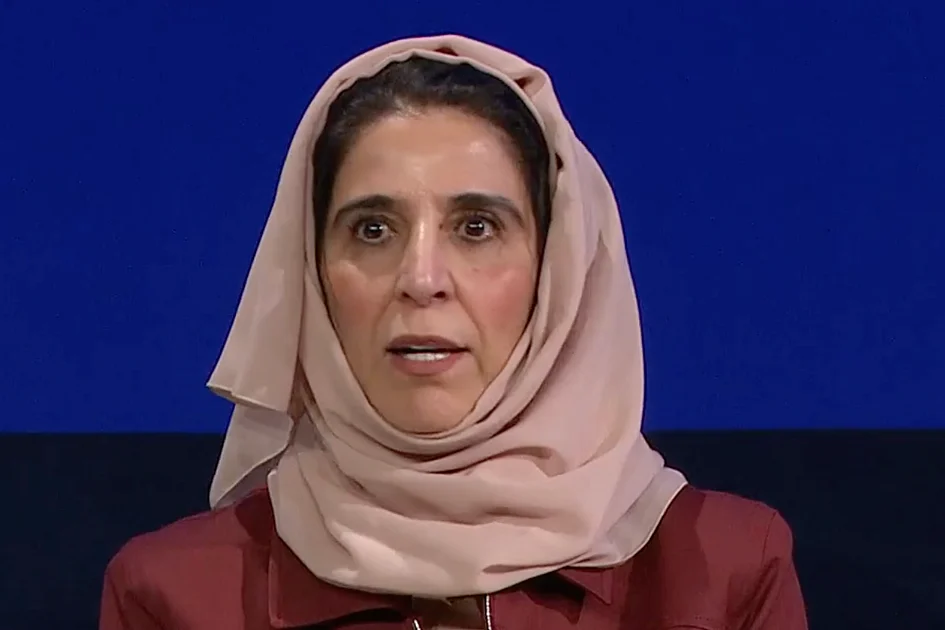
    In a landmark declaration at the World Economic Forum, UAE Minister of State and Cabinet Secretary General Maryam bint Ahmed Al Hammadi revealed the nation has comprehensively overhauled its legal framework, updating approximately 90% of its laws and modifying thousands of legal articles over the past four years. This unprecedented regulatory revolution stems from a direct mandate by the UAE leadership to critically re-examine and modernize the nation’s entire body of legislation.

    The initiative represents one of the most ambitious legal modernization projects globally, involving a systematic review to identify obsolete regulations for repeal and outdated statutes requiring amendment. The objective is to establish a governance system operating on the most contemporary and efficient legal principles.

    A pivotal aspect of this transformation involves the strategic integration of artificial intelligence. The UAE is developing specialized AI systems to assist in legislative processes, though Minister Al Hammadi emphasized these tools won’t replace human judgment. “We don’t want only, for example, ChatGPT to draft for us a law,” she stated, outlining a more sophisticated approach where AI analyzes stakeholder feedback from social media and other channels to identify provisions requiring modification based on public sentiment.

    The AI model incorporates fundamental constitutional safeguards and rule-of-law principles that cannot be compromised. It features mechanisms to prevent biased or harmful outcomes, ensuring all AI-generated recommendations remain traceable to established legal foundations rather than mere statistical patterns. While AI can identify non-compliances and recommend changes, it cannot impose penalties—human oversight remains paramount in the decision-making process.

    The UAE is simultaneously preparing a new generation of legal professionals who blend expertise in law and technology. This includes developing regulatory data scientists capable of interpreting real-time legal performance metrics and engineers with regulatory knowledge who can translate complex legal text into publicly accessible language.

    Minister Al Hammadi concluded that governments must embrace technological transformation rather than resist it, positioning the UAE’s approach as a model for 21st-century governance that balances technological innovation with constitutional safeguards and human oversight.

  • Germany summons Russian envoy, expels alleged spy handler

    Germany summons Russian envoy, expels alleged spy handler

    In a significant diplomatic confrontation, Germany has declared a Russian military intelligence officer persona non grata and ordered his immediate expulsion from the country. The dramatic move follows the arrest of a German-Ukrainian businesswoman, identified as Ilona W., on charges of operating as a Russian spy.

    The German Foreign Ministry summoned Russia’s ambassador to Berlin on Thursday, delivering a firm protest against what it characterized as ‘a hostile act’ of espionage. The ministry explicitly stated that intelligence operations conducted under diplomatic cover are ‘completely unacceptable’ on German soil.

    The expelled individual, identified as Andrei M. and formally serving as deputy military attaché at the Russian embassy, was allegedly an operative of Russia’s GRU military intelligence service. According to intelligence assessments, he operated as the handler for Ilona W., coordinating her espionage activities targeting Germany’s military infrastructure and Ukraine support operations.

    Ilona W., who maintained extensive contacts within German political and business circles, stands accused of leveraging her connections with current and former Defense Ministry personnel to gather sensitive intelligence. Her activities reportedly focused on obtaining classified information regarding military aid channels to Ukraine, drone testing facilities, and Germany’s arms manufacturing capabilities. Additionally, prosecutors allege she facilitated her handler’s access to high-level political events in Berlin using false identification documents.

    The case emerges against the backdrop of severely deteriorated German-Russian relations following Moscow’s full-scale invasion of Ukraine in 2022. German authorities have increasingly expressed concern about Russian intelligence operations targeting Western military support for Kyiv, including suspected sabotage campaigns and disinformation operations.

    In a related development, German investigators continue examining the involvement of two former defense officials—a recently retired staff officer and a former senior civil servant—who are suspected of providing sensitive information to the alleged spy. The ongoing investigation seeks to determine whether these individuals were aware the intelligence was being channeled to Russian operatives.

    Russian diplomatic representatives have thus far declined to comment on the allegations or the expulsion order, maintaining silence amid the escalating diplomatic crisis.