作者: admin

  • Two men arrested over stunt at enclosure of famed monkey Punch

    Two men arrested over stunt at enclosure of famed monkey Punch

    An internet-famous baby macaque at a Japanese zoo has found himself at the center of an unexpected international incident, after two American men were arrested for trespassing into his enclosure earlier this week.

    Nine-month-old Punch, a baby Japanese macaque, won global hearts earlier this year after footage of him clinging to a stuffed orangutan toy went viral across social media. Abandoned by his mother shortly after birth, Punch relied on the soft toy for comfort while he struggled to bond with the other macaques in his troop at Ichikawa City Zoo, located just outside Tokyo. Recent updates from the zoo had brought good news, however: after months of gradual socialization, Punch is finally integrating with the rest of the group, even being spotted grooming other monkeys and returning hugs from his new companions.

    According to local Japanese police, the incident unfolded on Sunday morning. Authorities say a 24-year-old American college student climbed over a perimeter fence to enter Punch’s enclosed habitat, while a second 27-year-old American man, who identifies as a singer, filmed the reckless stunt. Clips of the incident captured by other visiting zoo guests and shared online show the trespasser wearing a full costume while carrying a stuffed toy, with the costume reportedly designed to promote a cryptocurrency project. Zoo staff quickly intercepted the intruder and escorted him out of the enclosure without any harm coming to Punch or the other macaques in the habitat.

    Both men have been taken into police custody on suspicion of forcible obstruction of the zoo’s lawful business operations, and both have denied the allegations against them. Ichikawa Police confirmed to AFP that the intruders never reached the area where the animals were housed and were apprehended within minutes, so no animals were injured during the incident.

    In a formal statement released on Monday, Ichikawa City Zoo officials confirmed they had filed an official damage report with local law enforcement and are already implementing new security measures to prevent similar reckless incidents from happening in the future. Planned upgrades include expanding the restricted public viewing zone around Punch’s enclosure and installing new anti-intrusion netting along the perimeter. The facility is also considering a total ban on personal filming around the enclosure and has temporarily paused all requests from content creators to film at the site.

    This is not the first time a viral animal celebrity has drawn unwanted trespassing from visitors seeking their own 15 minutes of fame. Just one month prior, a man was fined $300 for breaking into the enclosure of Moo Deng, the globally famous baby pygmy hippo at a Thai zoo, who also went viral for viral photos and clips of the young endangered animal. Wildlife and zoo officials have repeatedly warned that unauthorized entry into animal enclosures puts both visitors and animals at severe risk, and can disrupt the carefully managed social environments that captive animal populations rely on.

  • Prince William’s Duchy of Cornwall to sell 20% of property portfolio to fund housing, green projects

    Prince William’s Duchy of Cornwall to sell 20% of property portfolio to fund housing, green projects

    LONDON – In a strategic shift that aligns with growing public demands for greater accountability from Britain’s royal household, Prince William’s Duchy of Cornwall has announced plans to divest roughly 20% of its £1 billion ($1.3 billion) property portfolio over the next 10 years. The proceeds from the land sales will be redirected toward large-scale initiatives including the construction of thousands of new homes, expanded renewable energy generation, and targeted wildlife restoration projects across the region.

    The 14th-century estate, established specifically to generate independent income for the holder of the title Prince of Wales, currently holds more than 52,000 hectares of land spread across 19 English counties. Duchy Chief Executive Will Bax shared the details of the long-term plan in an interview with The Times of London, published Monday, confirming the move builds on a broader strategic direction first outlined in the duchy’s most recent annual report: consolidating its scattered, far-flung landholdings and refocusing investments on projects that deliver environmental and social public benefit.
    Bax emphasized that Prince William has guided a fundamental reorientation of the duchy’s core mission. “William has decided that the duchy shouldn’t just exist to own land,” Bax told the outlet. “It should first and foremost exist to have a positive impact on the world.”

    Under the new plan, the duchy will center its future holdings around five concentrated “heartland” regions: the Isles of Scilly, Cornwall, Dartmoor, the Bath area (all in southwest England), and London’s Kennington district. Bax confirmed that the sales are projected to free up roughly £500 million for targeted investment in the new priority projects: affordable and market housing development, expanded clean energy infrastructure, and ecological restoration work.

    The Duchy of Cornwall’s annual profits fund the public and private activities of the current Prince of Wales, his wife Princess Catherine, and their three children. In the 2024-2025 financial year ending March 31, the duchy reported a net profit of £22.9 million. While the sitting Prince of Wales receives the estate’s operating profits, strict governance rules prevent him from selling duchy assets for personal gain. A independent board of directors oversees all duchy activities, tasked with preserving the estate’s value for future holders of the title, and all large property transactions require formal approval from the UK government to protect the long-term integrity of the assets.

    This strategic overhaul comes at a time when the British monarchy as an institution, and the Duchy of Cornwall in particular, faces mounting public and political pressure to increase transparency around its finances and demonstrate clear public value for the privileges it holds under UK law.

  • Israel to build military ‘museum’ on ruins of Unrwa HQ in Jerusalem

    Israel to build military ‘museum’ on ruins of Unrwa HQ in Jerusalem

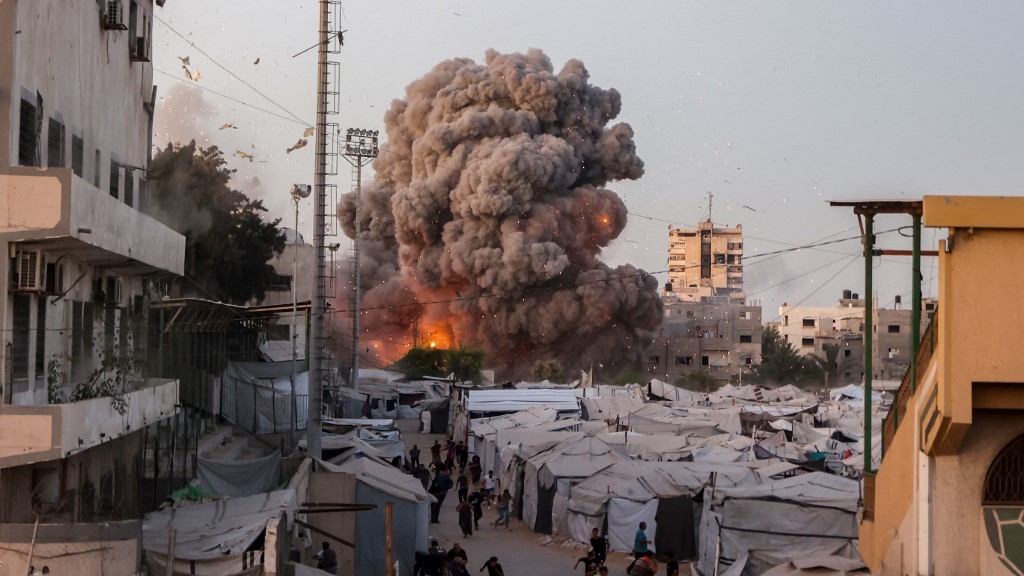
    In a decision timed to coincide with Jerusalem Day, the Israeli national holiday marking its 1967 seizure of East Jerusalem, Israeli authorities have greenlit construction of a new government military complex on the plot that once held the headquarters of the United Nations Relief and Works Agency for Palestine Refugees (UNRWA) in Jerusalem.

    Under the approved plan, nearly 8.9 acres (36 dunams) of the cleared land will be repurposed to host three key Israeli defense installations: a national military museum, a centralized military recruitment center, and an official office for Israel’s defense minister.

    Israeli Defense Minister Israel Katz publicly confirmed the decision in a May 17, 2025 post to X, framing the move as a deliberate assertion of Israeli sovereignty over occupied East Jerusalem. “We outlawed this terror-supporting UN organisation and took the land, and now on its ruins we are building and strengthening Jerusalem – the eternal capital of the Jewish people,” Katz wrote. The project was advanced under the current government led by Prime Minister Benjamin Netanyahu, per the Hebrew-language statement Katz shared alongside his announcement.

    This development is the latest escalation in a years-long Israeli campaign to eliminate UNRWA’s presence in East Jerusalem. Israeli bulldozers already demolished the UNRWA compound in the Sheikh Jarrah neighborhood of East Jerusalem back in late January 2025, after months of increasing pressure on the agency.

    Israel’s long-standing hostility toward UNRWA stems in large part from the agency’s core mandate: it maintains the official refugee status of hundreds of thousands of Palestinians displaced from their homes during the 1948 Nakba, along with their descendants, a status the Israeli government rejects outright. Tensions escalated further in early 2024, when Israeli officials leveled allegations that 12 UNRWA staff had participated in the October 7, 2023 attacks led by Hamas, claiming the workers helped distribute ammunition and abduct civilian hostages. A independent UN review of the accusations, published in April 2024, found no credible evidence of wrongdoing by any UNRWA employees. The report also noted that Israeli officials failed to provide requested identifying information or evidence to support their claims, and had not raised any specific, concrete concerns about UNRWA staff with the agency since 2011. This pattern of unsubstantiated accusations linking UNRWA to terrorist activity has been repeated by Israeli officials for years, with no verifiable evidence ever made public to back the claims.

    The plan to relocate the military recruitment center from its current location in Jerusalem’s Romema neighborhood to the former UNRWA site is also directly tied to ongoing domestic political friction within Israel. For years, Israel’s ultra-Orthodox community has held widespread protests against mandatory military conscription, creating persistent tension at the existing Romema induction facility that officials now seek to avoid by moving the center.

    Human rights organizations and international policy experts have repeatedly warned that eliminating UNRWA’s operations would leave millions of vulnerable Palestinian refugees across the occupied territories without critical support. UNRWA currently serves as the primary humanitarian lifeline for an estimated 5.9 million Palestinian refugees across the West Bank, East Jerusalem, Gaza, and neighboring neighboring Lebanon, Jordan, and Syria. The agency provides core essential services including primary and secondary education, food assistance, primary medical care, and emergency fuel distributions during crises. Humanitarian groups warn that a full collapse of UNRWA would eliminate the main source of support for millions of Palestinians, triggering a widespread humanitarian catastrophe.

    The Jerusalem Governorate, the administrative body governing the occupied Palestinian territory of East Jerusalem, condemned the new military complex plan as a “serious escalation and a blatant violation of international law.” The office added that the project violates both the Fourth Geneva Convention, which governs protections for populations under military occupation, and the 1946 UN Convention on Privileges and Immunities, which protects UN property and operations from unilateral seizure by member states. The governorate’s statement characterized the decision as part of an accelerating colonial campaign to impose new Judaizing demographic and territorial realities on occupied East Jerusalem, noting that the project advances Israel’s narrative of exclusive sovereignty over the city while effectively erasing documented Palestinian historical presence and claims to the land.

    International law has long held that Israel’s decades-long occupation of Palestinian territory captured in the 1967 war is unlawful, due to its permanent nature and the Israeli government’s de facto policy of annexing occupied Palestinian land, including East Jerusalem.

  • Former Google CEO Eric Schmidt booed by graduates at mention of AI

    Former Google CEO Eric Schmidt booed by graduates at mention of AI

    When former Google chief executive officer Eric Schmidt stepped to the podium at the University of Arizona’s 2026 commencement ceremony to address the fast-growing ascent of artificial intelligence, he was met not with polite applause, but with resounding boos from hundreds of graduating students. The public rebuke has thrown a bright spotlight on the simmering anxiety spreading across U.S. college campuses over AI’s looming impact on the future of work and higher education.

    As jeers echoed through the graduation venue, Schmidt acknowledged the crowd’s frustration directly, telling students: “I know what many of you are feeling about that. I can hear you.” During his remarks, the former tech executive drew a parallel between today’s generative AI boom and the mass adoption of personal computing four decades ago, a shift that upended entire industries and redefined the global workforce. Schmidt conceded that students’ widespread fears about AI are not unfounded, calling those concerns “rational” even as he urged the soon-to-be graduates to embrace adaptation. “AI will shape the world,” he told the crowd, adding that the onus is now on the younger generation to steer the technology’s development: “The future is not yet finished. It is now your turn to shape it.”

    Schmidt is far from the only public speaker to face student backlash over AI in recent commencement cycles. Earlier this month, real estate industry executive Gloria Caulfield drew a similar hostile reception when she referenced AI’s growth during her address at the University of Central Florida. After she described AI as “the next industrial revolution,” boos erupted across the crowd. At Middle Tennessee State University’s commencement, Big Machine Records CEO Scott Borchetta also faced jeers when he brought up AI during his speech. His blunt response to the crowd: “Deal with it, like I said, it’s a tool.”

    These repeated confrontations are not isolated incidents, but rather a reflection of a deep-seated unease that has taken root among young Americans preparing to enter an AI-transformed workforce. Data from the 2026 Lumina Foundation-Gallup State of Higher Education Study confirms that widespread anxiety over AI-driven automation is already shifting career and academic choices for large numbers of undergrads and new graduates. Fearing their skills will be made obsolete by AI automation, many students are abandoning degree paths focused on entry-level technology roles and statistical analysis, instead redirecting their studies toward fields that prioritize uniquely human skills: critical thinking, interpersonal communication, and human-centric service work.

    This generational anxiety aligns with broader public sentiment across the United States. A recent Pew Research Center survey found that half of all U.S. adults (50%) report feeling “more concerned than excited” about the growing integration of AI into daily life, while only 10 percent say they are more excited than concerned about the technology’s spread. Industry analysts note that fears are most acute in sectors where AI can easily replicate existing white-collar information technology work, a shift that is already reshaping talent demand and long-term career outlooks for millions of workers across the country.

  • Negotiators reach a deal to end strike on North America’s busiest commuter rail system

    Negotiators reach a deal to end strike on North America’s busiest commuter rail system

    After three days of disruptive work stoppage that upended daily commutes for hundreds of thousands of travelers, negotiators announced a tentative deal on Monday to end the strike against the Long Island Rail Road (LIRR), North America’s busiest commuter rail network. Full service is scheduled to resume by Tuesday noon, bringing relief to commuters who had scrambled to find alternate travel routes since the strike began early Saturday.\n\nNew York Governor Kathy Hochul confirmed the breakthrough in a post on X, framing the agreement as a balanced compromise that delivers meaningful wage increases for LIRR workers while avoiding unfair cost burdens for riders and taxpayers. The deal caps off years of stalled contract talks between the railroad’s operator, the Metropolitan Transportation Authority (MTA), and five labor unions representing roughly half of the LIRR’s total workforce.\n\nThe unions launched their strike at 12:01 a.m. Saturday after months of failed negotiations over salary adjustments and healthcare premium contributions. Contract discussions first began in 2023, but talks deadlocked over the unions’ core demand: pay hikes large enough to help working employees keep pace with soaring inflation and rising living costs across the New York metropolitan region. The MTA had repeatedly warned that the unions’ initial wage demands would force the agency to raise ticket fares for regular commuters.\n\nA 2024 intervention by the Trump administration temporarily averted a work stoppage back in September, after the unions requested the appointment of a federal expert mediation panel. But even with federal involvement, the two sides failed to bridge their differences over succeeding months, leading unions to ultimately walk off the job earlier this week. It marked the first LIRR strike in 30 years, with the last major work stoppage taking place in 1994.\n\nMore than 250,000 daily weekday commuters rely on the LIRR to travel between New York City’s five boroughs and the eastern Long Island suburbs, a 118-mile route that serves nearly 3 million residents across Nassau and Suffolk counties, and also carries leisure travelers to popular summer destinations like the Hamptons. The shutdown immediately rippled across regional transportation and public events: over the weekend, baseball fans attending the highly anticipated New York Yankees-New York Mets crosstown matchup at Queens’ Citi Field were forced to find alternate travel, and officials warned that a prolonged strike would have disrupted travel for New York Knicks playoff fans heading to Manhattan’s Madison Square Garden, which sits directly above the LIRR’s central Penn Station hub.\n\nOver the weekend, hundreds of LIRR workers including locomotive engineers, machinists, and signal maintenance staff picketed at stations across the route. To ease disruptions, the MTA launched limited free shuttle bus service between key Long Island locations and New York City subway stations starting Monday, and Governor Hochul urged all able LIRR riders to work from home if possible to avoid transportation gridlock. Commute data from Monday morning showed far lower ridership on the shuttle service than officials projected: only around 2,000 riders used the service, compared to the MTA’s pre-planned capacity for 13,000, reflecting widespread compliance with work-from-home guidance.\n\nThe breakthrough in talks came after intensive negotiations that stretched from Sunday afternoon into the early hours of Monday, with prodding from the National Mediation Board, the independent federal agency that oversees labor relations for U.S. railroad and airline industries. With the deal now finalized, commuters can expect a full return to regular scheduled service by midday Tuesday, ending one of the most disruptive regional transportation shutdowns in recent New York history.\n\nThis reporting includes contributions from Associated Press correspondents based in New York and Concord, New Hampshire, and corrects an earlier typo confirming the LIRR’s governing body is the Metropolitan Transportation Authority.

  • Watch: Strike grinds America’s busiest commuter rail line to a halt

    Watch: Strike grinds America’s busiest commuter rail line to a halt

    A work stoppage by employees of the Long Island Rail Road has thrown New York City’s regional transportation network into disarray, bringing the nation’s busiest commuter rail service to a complete standstill. The industrial action, which marks the first strike the LIRR has faced in more than three decades, has left hundreds of thousands of daily commuters scrambling to find alternative ways to reach their workplaces, schools, and daily appointments.

    As the primary rail provider connecting Long Island’s suburban communities to Manhattan and other parts of New York City, the LIRR carries hundreds of thousands of riders on a typical weekday. The sudden shutdown of service has created cascading disruptions across alternate transit routes, with overcrowded buses and subway lines seeing far higher demand than usual. Many commuters have faced hour-long delays to their trips, while others have been forced to work from home entirely after being unable to secure viable transportation into the city.

    The strike ends a 31-year period of uninterrupted service for the rail line, a stretch that had many New Yorkers unprepared for the widespread chaos that has followed. Transportation officials have urged commuters to avoid non-essential travel into the city and to plan for extended travel times if movement is necessary, as negotiations between union leadership and rail management continue to resolve the dispute behind the scenes.

  • What is Ebola and why is stopping this outbreak so difficult?

    What is Ebola and why is stopping this outbreak so difficult?

    The World Health Organization (WHO) has formally designated an ongoing Ebola outbreak in the eastern region of the Democratic Republic of Congo (DRC) as a Public Health Emergency of International Concern (PHEIC), marking a major escalation of global response to a dangerous and uniquely challenging public health crisis.

    Unlike more common Ebola variants that global health systems have experience addressing, this outbreak is driven by the Bundibugyo strain – an extremely rare subtype that has not triggered a major outbreak in more than 10 years. Only two previous Bundibugyo outbreaks have ever been recorded, with the virus claiming the lives of roughly one-third of all confirmed cases in those events. This rarity has created multiple layers of barriers to containment and treatment: standard initial Ebola diagnostic tests are calibrated to detect more common strains, leading to initial false negatives that delayed detection, and no officially approved vaccine or targeted antiviral treatment exists for this specific variant. While experimental vaccines are currently in development, researchers note that existing vaccines for the Zaire Ebola strain may offer partial cross-protection, though this has not been formally confirmed for widespread use.

    Compounding these biological challenges is the outbreak’s location in an unstable conflict zone. Over a quarter of a million people have been displaced from their homes in the affected Ituri province, and porous, poorly monitored borders with neighboring countries have created constant risk of cross-border spread. The outbreak was not detected early after its initial emergence: the first documented case was a nurse who first developed symptoms on April 24, meaning the virus circulated undetected for multiple weeks before authorities were alerted. That nurse later died in Bunia, Ituri’s capital, and her body was transported back to Mongwalu – one of two gold-mining towns that have recorded the majority of confirmed cases. Congolese Health Minister Samuel Roger Kamba explained that widespread community transmission accelerated after the nurse’s funeral, where dozens of people were exposed to the infected body during traditional mourning practices. This mirrors patterns seen in past Ebola outbreaks across Africa, where funeral customs have repeatedly fueled spread.

    Delayed reporting also stemmed from widespread misinformation in affected communities: many residents initially attributed the mysterious illness to witchcraft or a supernatural curse, leading sick people to seek care from traditional healers and prayer centers instead of formal medical facilities. This allowed transmission to continue uninterrupted for weeks. As of current reports, cases have been confirmed across three Ituri locations (Mongwalu, Rwampara, and Bunia) as well as Goma – the largest city in eastern DRC, home to 850,000 people and currently under the control of AFC-M23 rebel forces. The Goma case involves a woman who traveled to the city after her husband died of Ebola in Bunia. Alarmingly, two Congolese travelers who entered Uganda from the DRC have already died of Ebola in Kampala, Uganda’s capital, marking the first cross-border fatalities linked to the outbreak.

    Contrary to widespread public speculation, WHO officials stress that this PHEIC declaration does not signal an impending COVID-19-style global pandemic. The overall risk of Ebola spread outside of East Africa remains categorized as minimal, with the greatest danger concentrated in the Great Lakes region of central Africa. Still, global health bodies are sounding the alarm about significant regional spread risks. The Africa Centres for Disease Control and Prevention (Africa CDC) has highlighted high risk of transmission to neighboring Uganda, Rwanda, and South Sudan, and is coordinating with officials from all four countries to strengthen cross-border surveillance and response capacity.

    Neighboring nations have already implemented urgent precautionary measures. Rwanda, which shares a border with Goma, has ramped up entry screening for all travelers coming from the DRC, and has restricted entry for non-resident Congolese nationals coming from affected areas. In Uganda, President Yoweri Museveni has postponed the annual Martyrs’ Day pilgrimage – a major Christian event that draws thousands of Congolese visitors each year – to prevent large-scale gathering that could fuel transmission.

    On the ground in the DRC, multiple response efforts are underway, but political fragmentation threatens to slow progress. The Congolese national government has deployed specialized health teams equipped with personal protective equipment to Bunia, and has launched a public awareness campaign alongside a toll-free hotline (151) for residents to report suspected symptoms. Public health officials have issued core guidance for residents: seek immediate medical care at the first sign of symptoms, avoid contact with bodies of people who died with suspected Ebola or dead wild animals, avoid eating raw or undercooked meat, and maintain physical distancing in public spaces. The WHO and medical humanitarian organization Médecins Sans Frontières (MSF) have also deployed personnel and resources to set up dedicated Ebola treatment centers and coordinate the overall response. In Goma, AFC-M23 rebel officials say they have activated their own response mechanisms in partnership with local health facilities to contain spread, but political tensions mean the Congolese national government is unlikely to collaborate with the rebel administration, creating a critical coordination gap that could hinder containment efforts.

    Africa CDC Director Dr. Jean Kaseya says current public outreach efforts are focused on addressing the key risk factors that have driven spread so far, including educating communities on safe funeral practices, universal basic hygiene, and proper sanitation, as well as ensuring frontline health workers have access to adequate protective equipment to avoid infection while caring for patients.

  • Ebola and hantavirus have Africa talking ‘health sovereignty’ as donor support fades

    Ebola and hantavirus have Africa talking ‘health sovereignty’ as donor support fades

    A new, lethal Ebola outbreak spanning the Democratic Republic of Congo and Uganda has laid bare the growing vulnerability of African health systems, as plummeting international donor assistance forces the continent to confront a long-deferred reckoning: ending decades of dependency on foreign aid for public health emergency response.

    According to the Africa Centers for Disease Control and Prevention (Africa CDC), the continent is grappling with an unprecedented health financing crisis. Official development assistance for health has been cut in half over just four years, plummeting from roughly $26 billion in 2021 to a projected $13 billion in 2025. Wealthy nations have redirected global health resources to prioritize geopolitical conflicts and domestic economic pressures, with sweeping cuts implemented during the Trump administration worsening the funding shortfall. The shrinking budget crisis arrives as Africa’s population has surpassed 1.5 billion and disease outbreaks are surging: the Africa CDC recorded a jump from 153 public health emergencies across the continent in 2022 to 242 in 2024, ranging from mpox and cholera to this latest Ebola strain, which has no approved vaccines or targeted treatments.

    For decades, African governments signed pledges promising to increase domestic investment in public health, but few have followed through on those commitments. In the 2001 Abuja Declaration, 54 African nations committed to allocate a minimum of 15% of their national budgets to the health sector. Today, only three countries — Rwanda, Botswana, and Cape Verde — are on track to meet that target. Dr. Jean Kaseya, director-general of the Africa CDC, framed the funding gap as a threat as dangerous as any emerging pathogen, noting that “every time we have an outbreak, many countries start to ask for partners because they don’t have in their budgets funding to respond, even to prepare for these outbreaks.”

    Dr. Alex Ajangba, a health financing expert and co-editor of the *African Journal of Health Economics, Systems and Policy*, explained that prior commitments to self-reliance remained theoretical as long as donor funding was available. “But now that cushion is gone,” he said, adding that the current drop in foreign assistance is not a temporary dip, but a permanent shift.

    Against this backdrop, the concept of “health sovereignty” has moved to the center of continental policy, with African governments accelerating efforts to build self-sufficient health systems that rely far less on external aid. Recent initiatives, including Ghana’s September 2024 Accra Reset and the continent-wide African Health Security and Sovereignty Agenda adopted by leaders in February 2025, aim to strengthen long-term public health resilience. Proposed domestic solutions include new targeted taxes on tobacco, alcohol, and sugary beverages to generate health revenue, pooled bulk procurement of medicines to cut costs, expanding local pharmaceutical and vaccine manufacturing, and eliminating systemic inefficiencies that drain limited budgets.

    Currently, Africa imports more than 90% of its critical health commodities, including vaccines and prescription drugs. The Africa CDC has set an ambitious target to produce 60% of the continent’s vaccines domestically by 2040. Still, experts warn that health sovereignty risks becoming little more than a empty policy slogan without meaningful structural and financial reform.

    A key barrier to expanding domestic health investment is the paradox of Africa’s natural resource wealth: the continent holds roughly 30% of the world’s total mineral reserves, including critical minerals essential for global technology and renewable energy development, but most of the economic value of these resources never reaches national governments or public budgets. Opaque and weak contracting, massive illicit financial flows, crippling national debt burdens, and the export of raw minerals with limited local value processing drain hundreds of billions of dollars from African economies annually. The United Nations Economic Commission for Africa estimates the continent loses roughly $40 billion each year to illicit financial flows alone in the extractive sector.

    To bridge the funding gap, global health bodies and African governments are increasingly turning to co-financing models, which require recipient nations to contribute a growing share of health funding alongside donor contributions. Gavi, the global vaccine alliance, reports that lower-income African nations contributed a record $302 million toward domestic vaccine purchases in 2025, and have contributed roughly $1 billion total over the past five years. “This creates predictability,” Gavi chief executive Sania Nishtar told the Associated Press. “Reliance on aid for basic services does not.”

    But the shift toward new financing models has become contentious, particularly as the Trump administration has made co-financing a non-negotiable condition for “America First” health agreements with nearly two dozen African nations. The deals restructure U.S. aid to require countries to increase domestic health spending within set deadlines, or lose all U.S. support entirely. Some nations have rejected the agreements outright, pushing back against U.S. demands for access to domestic health data with no guarantees that African nations will share in any commercial benefits derived from that data. Other critics have condemned proposals that would swap health aid commitments for access to African natural resources.

    While most African leaders agree that long-term self-sufficiency is a necessary goal, critics argue that many of the U.S. conditions place unfair, unrealistic pressure on economies already strained by debt and underdevelopment. “They are being set up to fail,” said Asia Russell, executive director of global health advocacy group Health GAP. “When an administration says, ‘If you don’t hit these numbers, you’re not going to get resources anymore,’ that is extremely serious.”

    Mounting national debt burdens already make dramatic increases in domestic health spending nearly impossible for many nations. Africa’s total sovereign debt has surged to roughly $1.2 trillion, according to the African Export-Import Bank, forcing governments to make devastating trade-offs between public health and debt repayment. For roughly 40% of African countries, annual debt servicing costs exceed total national health spending. The United Nations reports that debt repayment consumes an average of 19% of total government revenue across sub-Saharan Africa. Jen Kates, senior vice president of global health policy nonprofit KFF, noted that “at the end of the day, it’s going to be people who live in those countries who will feel the effects” of underfunded health systems. The Associated Press receives financial support from the Gates Foundation for coverage of global health and development in Africa, and maintains full editorial control over all content.

  • Man in 60s dies following tractor crash

    Man in 60s dies following tractor crash

    A fatal single-vehicle tractor crash in County Leitrim, Republic of Ireland, has claimed the life of a man in his 60s, local law enforcement confirmed. The tragic incident unfolded shortly before 11:00 p.m. local time on Sunday, close to the village of Drumcong on the L3355 route, near Mullaghycullen. First responders confirmed that the driver was pronounced dead at the crash site immediately after the accident. Gardaí, Ireland’s national police service, have implemented emergency traffic measures following the collision. The affected stretch of road has been shut down to all traffic, with clearly marked diversion routes put in place to redirect motorists around the closure. The area is now preserved as an active investigation scene, which will be thoroughly examined by specialist Gardaí forensic collision investigators to determine the exact cause of the crash. In a public appeal for information, Gardaí have asked any member of the public who was traveling in the area around the time of the incident and has relevant dash-cam or other security camera footage to come forward to assist with the investigation. No other vehicles are reported to have been involved in the collision, and no further injuries have been recorded as of the latest update.

  • Fermín López set to miss the World Cup for Spain after fracturing foot

    Fermín López set to miss the World Cup for Spain after fracturing foot

    BARCELONA, Spain – Emerging Spanish soccer star Fermín López will miss the upcoming June World Cup match after sustaining a fifth metatarsal fracture in his right foot during Barcelona’s Spanish league fixture over the weekend, the Catalan club confirmed Monday. The 23-year-old midfielder, who enjoyed a breakout 2024 with major international titles, picked up the injury during Sunday’s match against Real Betis. Per Barcelona’s official statement, López is scheduled to undergo surgical intervention to repair the broken bone, though the club has not released a formal timeline for his recovery and return to full training. While no official recovery projection was shared, multiple football sources confirm the rising talent will not be fit in time to join La Roja for their opening 2026 World Cup qualifying fixture against Cape Verde, slated for June 15 in Atlanta, Georgia. López’s absence comes as a major blow to Spanish soccer, just months after he enjoyed a historic run of success at the international level. The young midfielder was a key member of Spain’s senior squad that claimed the 2024 European Championship title, and later anchored the country’s under-23 Olympic side to a gold medal finish at the 2024 Paris Games. López delivered a stunning offensive performance at the Olympics, netting six total goals across the tournament – including a brace in the gold medal match against host nation France that cemented his status as one of the most exciting young prospects in European soccer.