作者: admin

  • Bluetongue virus found in herd in Wexford

    Bluetongue virus found in herd in Wexford

    Irish agricultural authorities have confirmed the presence of bluetongue virus (BTV-3) in a cattle herd located in County Wexford, marking the Republic of Ireland’s first documented case. This development follows previous detections in Northern Ireland during December 2023, indicating a concerning pattern of viral spread across the region.

    Minister for Agriculture Martin Heydon characterized the discovery as “unwelcome but unsurprising” given the virus’s progressive movement throughout Europe, Great Britain, and more recently Northern Ireland. The pathogen, transmitted primarily through midge bites, presents no direct risk to human health or food safety standards but poses significant threats to cloven-hoofed livestock including sheep, cattle, goats, deer, and camelids.

    Clinical manifestations of BTV-3 infection range from oral and facial ulcerations, swallowing and respiratory complications, pyrexia, and lameness to more severe outcomes including fetal abnormalities and stillbirths. The current outbreak trajectory originated in the Netherlands during 2023, where it decimated tens of thousands of sheep before wind-borne midges carried the virus to southeastern England.

    Minister Heydon noted that seasonal temperature declines may temporarily inhibit widespread transmission, but ongoing epidemiological investigations include enhanced sampling protocols to monitor viral dynamics. Agricultural representatives have expressed profound concern, with ICMSA President Denis Drennan describing the situation as “hugely worrying for the family concerned and the wider farming community.”

    Authorities strongly recommend livestock producers consult with veterinary professionals regarding vaccination strategies tailored to their specific operational circumstances. While infection severity appears geographically variable with some animals demonstrating resilience or full recovery, the agricultural sector remains on high alert for potential expansion of the outbreak.

  • How the old and new U.S. defense strategies differ on traditional priorities

    How the old and new U.S. defense strategies differ on traditional priorities

    The Trump administration has unveiled a fundamentally reconfigured National Defense Strategy that marks a dramatic departure from the 2022 framework established under President Biden. This comprehensive analysis examines the strategic recalibration across key global regions.

    In the Western Hemisphere, the 2026 doctrine adopts an assertive stance, vowing to ‘actively and fearlessly defend America’s interests’ while guaranteeing military and commercial access to critical territories including the Panama Canal, Gulf of America, and Greenland. The strategy explicitly commits to providing ‘credible military options against narco-terrorists’ while emphasizing conditional cooperation with neighbors from Canada through Central and South America.

    Regarding European security, the document characterizes Russia as a ‘persistent but manageable threat’ while noting NATO’s overwhelming economic and demographic advantages. The strategy contends that European NATO members, having committed to raising defense spending to 5% of GDP under Trump’s leadership, are now positioned to assume ‘primary responsibility for Europe’s conventional defense’ with more limited U.S. support. This includes taking the lead in supporting Ukraine’s defense efforts.

    The Indo-Pacific region receives heightened priority, with the strategy framing Chinese dominance as an existential economic threat that could ‘effectively veto Americans’ access to the world’s economic center of gravity.’ The document outlines a more focused objective than previous strategies: simply to prevent Chinese regional domination rather than pursuing regime change or existential struggle, aiming for a ‘decent peace’ acceptable to both nations.

    On the Korean Peninsula, the strategy designates South Korea as capable of taking ‘primary responsibility for deterring North Korea’ given its powerful military, robust defense industry, and mandatory conscription, requiring only ‘critical but more limited U.S. support.’

    In the Middle East, the Department of War will empower regional allies to counter Iran and its proxies, emphasizing strong support for Israel’s self-defense, deepened cooperation with Gulf partners, and enhanced integration between Israel and Gulf states through the Abraham Accords framework. The strategy maintains America’s right to take ‘focused, decisive action’ to defend U.S. interests when necessary.

  • Future of travel: GCC’s mega airports to handle 500 million passengers annually

    Future of travel: GCC’s mega airports to handle 500 million passengers annually

    The Gulf Cooperation Council (GCC) is poised to revolutionize global aviation infrastructure with unprecedented investments exceeding $100 billion in airport development projects. These strategic initiatives will enable the region’s airports to accommodate over 500 million passengers annually within the next decade, fundamentally reshaping international travel patterns and economic dynamics.

    According to aviation experts and industry analysts, this transformation is driven by massive fleet expansions and cutting-edge technological implementations that will enhance route networks, operational efficiency, and passenger experiences. The development includes mega-hubs in Dubai and Riyadh alongside significant expansions of secondary airports in Abu Dhabi, Sharjah, Jeddah, Doha, and Muscat.

    Recent data reveals remarkable growth trajectories, with the top ten Gulf airports recording an 11% year-on-year increase in passenger traffic, handling 327 million travelers in 2024 compared to 293 million in 2023. The aviation sector has evolved from merely supporting economic growth to becoming a primary engine of economic transformation across GCC nations, deeply integrated into national diversification strategies and labor markets.

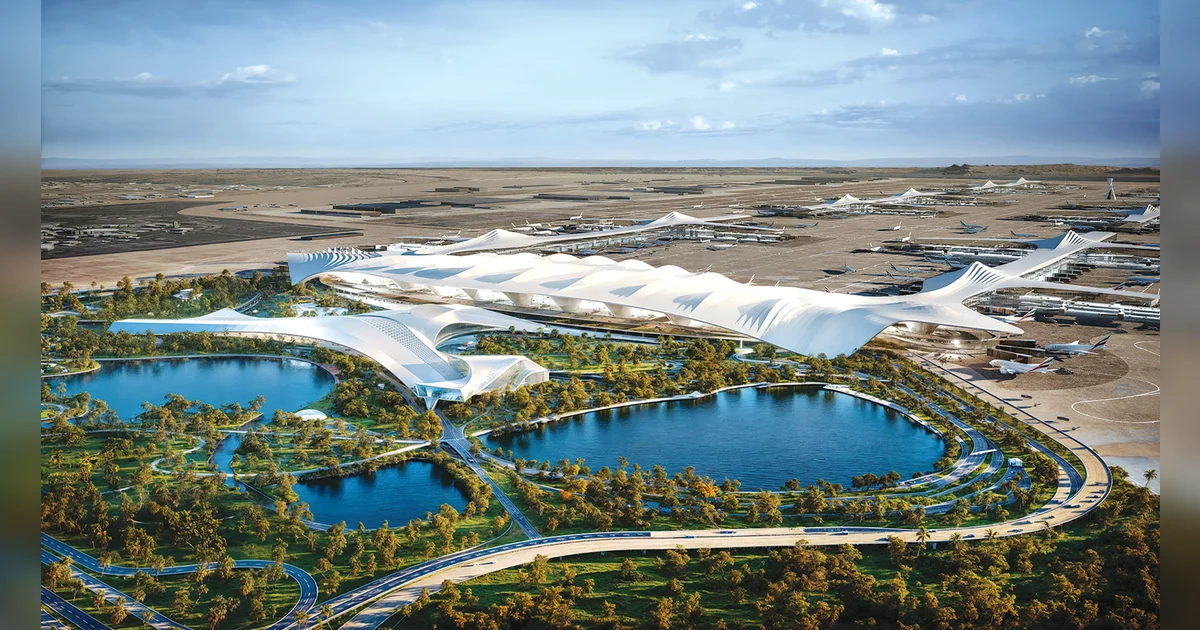
    Saudi Arabia has committed approximately $50 billion to aviation infrastructure, including the ambitious King Salman International Airport in Riyadh. Meanwhile, Dubai is developing the $35 billion Al Maktoum International Airport, which upon completion will be five times larger than Dubai International Airport (DXB) with capacity for 260 million passengers annually. DXB itself is projected to exceed 96 million passengers this year, approaching its maximum capacity.

    Smaller GCC states are pursuing specialized niches in cargo, multimodal logistics, and tourism connectivity. Oman has announced plans for six new airports by 2028-29, Kuwait’s Terminal 2 expansion will increase capacity to 25 million passengers, and Bahrain is planning a greenfield facility on a reclaimed island as current infrastructure reaches its limits.

    Technological innovation represents a cornerstone of this transformation. GCC airports are implementing facial recognition systems, AI-driven solutions, advanced biometric processing, and streamlined security protocols that will eliminate the need for removing liquids and laptops during screening. These developments promise to reduce processing times dramatically, potentially enabling passengers to move from airport entry to departure gates within minutes.

    Despite these advancements, significant challenges remain. The concentration of passenger demand within compressed timeframes intensifies competition for skilled professionals across multiple markets. The logistical complexity of transitioning operations from DXB to Al Maktoum International Airport presents substantial operational hurdles. Additionally, regional geopolitical tensions and infrastructure constraints at expanding airports pose ongoing concerns.

    The competitive landscape extends beyond the GCC, with developments in Turkey’s Istanbul airport and India’s new facilities in Delhi and Mumbai representing additional market pressures. Nevertheless, the GCC’s strategic investments in aviation infrastructure position the region to maintain its leadership in global aviation connectivity and economic diversification for decades to come.

  • Iran will treat any attack as ‘all-out war against us,’ says senior Iran official

    Iran will treat any attack as ‘all-out war against us,’ says senior Iran official

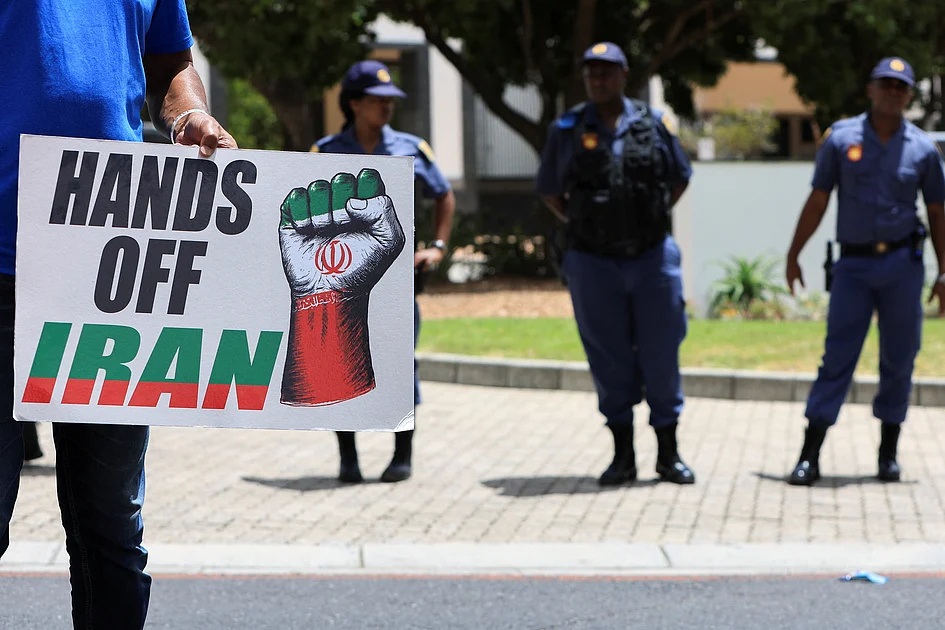
    Iran has declared it will interpret any form of military strike as a declaration of total war, according to a high-ranking official speaking anonymously on Friday. The warning comes amid escalating tensions as a US aircraft carrier strike group approaches the Middle East region.

    The senior Iranian official emphasized that the nation’s military remains on maximum alert, prepared for worst-case scenarios despite hopes that the American naval buildup isn’t intended for actual combat operations. “This time we will treat any attack—whether limited, unlimited, surgical, kinetic, or whatever terminology they employ—as comprehensive warfare against our sovereignty,” the official stated. “We will counter with the most severe measures available to resolve this confrontation.”

    The heightened rhetoric follows US President Donald Trump’s Thursday remarks about an American “armada” en route to the region, coupled with renewed warnings against Tehran regarding protest suppression and nuclear program advancement. The Iranian official maintained that any violation of Iran’s territorial integrity would prompt immediate retaliation, though specific response mechanisms remained unspecified.

    Historical context reveals the US military has previously augmented Middle Eastern presence during tense periods, typically for defensive purposes. However, last year’s significant force accumulation preceded June strikes targeting Iran’s nuclear facilities, indicating potential offensive capabilities.

    The anonymous official concluded that nations facing persistent military threats must utilize all available resources to deter aggression and reestablish strategic equilibrium against potential attackers.

  • Bangladesh’s fugitive ex-PM alleges elections will not be free

    Bangladesh’s fugitive ex-PM alleges elections will not be free

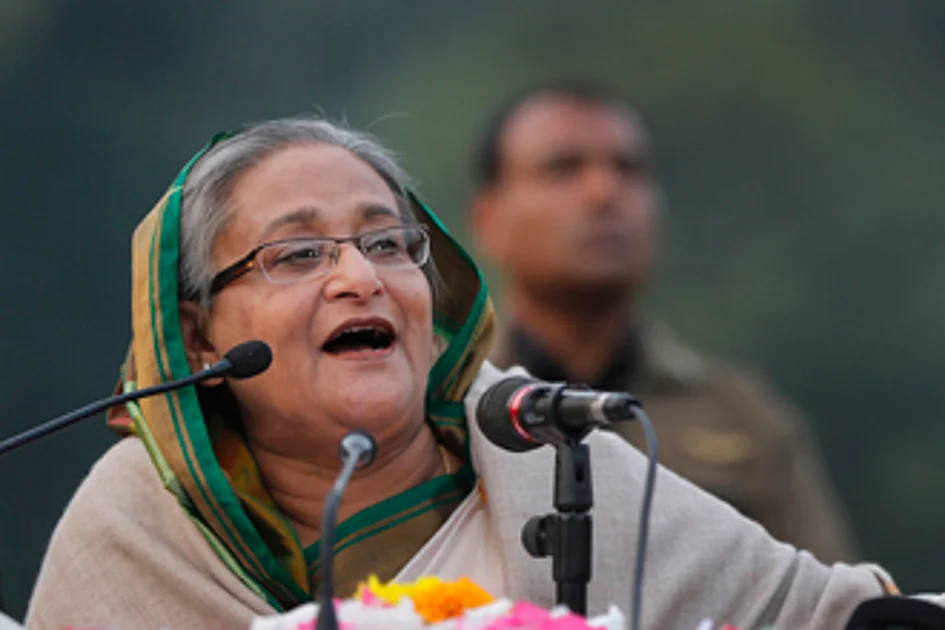
    In a dramatic audio address broadcast from undisclosed locations in India, Bangladesh’s deposed Prime Minister Sheikh Hasina has launched scathing criticisms against the upcoming February elections, declaring them fundamentally compromised. The 78-year-old leader, now living in exile since her August 2024 ousting following massive student-led protests, broke her prolonged public silence to challenge the legitimacy of the electoral process.

    Hasina’s forceful condemnation came during a panel discussion titled ‘Bangladesh at the Crossroads’ hosted in New Delhi, where she asserted that genuine democracy remains elusive under the current transitional government. Her message reached over 100,000 online viewers simultaneously, creating immediate political reverberations across South Asia.

    The former leader, who previously governed Bangladesh for fifteen consecutive years, faces a death sentence imposed in absentia by a Dhaka court last November. The conviction centered on charges of crimes against humanity, including incitement to violence and systematic failure to prevent atrocities during her administration.

    Current interim leader Muhammad Yunus, the Nobel Peace Prize laureate recalled from exile to helm the caretaker government, maintains that the February 12 vote will establish new benchmarks for electoral integrity. Official statements from Yunus’ office emphasize the administration’s commitment to transparent and credible elections.

    However, Hasina specifically targeted Yunus in her address, describing his influence as an oppressive shadow over Bangladeshi democracy. Her Awami League party, once the nation’s dominant political force, now operates under official prohibition with its activities criminalized.

    The escalating tension between these rival visions for Bangladesh’s future complicates already delicate diplomatic relations between India and Bangladesh. New Delhi’s decision to provide sanctuary to the deposed leader has generated sustained friction since the transfer of power.

  • Djokovic ‘hanging in there’ after landmark 400th Slam win

    Djokovic ‘hanging in there’ after landmark 400th Slam win

    Tennis legend Novak Djokovic reached an unprecedented milestone at the Australian Open on Saturday, becoming the first player in history to secure 400 Grand Slam match victories. The 38-year-old Serbian champion demonstrated his enduring prowess with a commanding 6-3, 6-4, 7-6 (7/4) triumph over Dutch competitor Botic van de Zandschulp during their third-round encounter.

    The record-shattering performance occurred before an enthusiastic center court audience, extending Djokovic’s existing record for major tournament wins. This achievement places him significantly ahead of tennis icons Roger Federer (369 wins) and Serena Williams (365 wins). Additionally, the victory marked Djokovic’s 102nd win at Melbourne Park, equaling Federer’s record for most Australian Open singles victories at the venue where he has claimed ten championships.

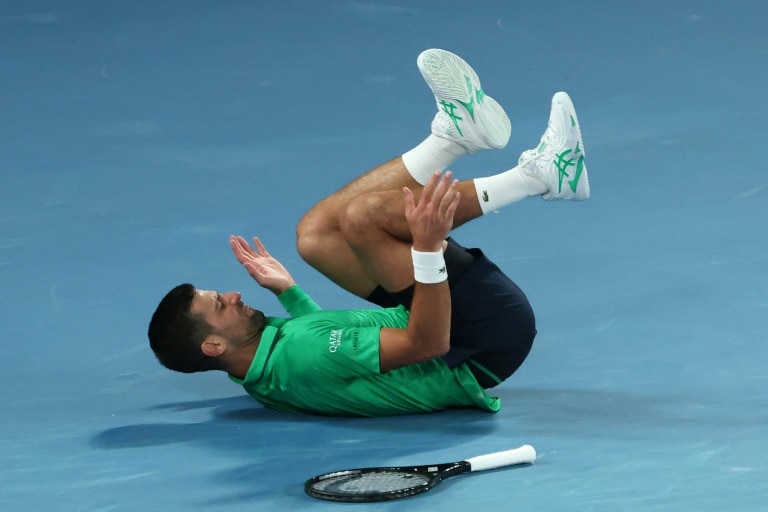
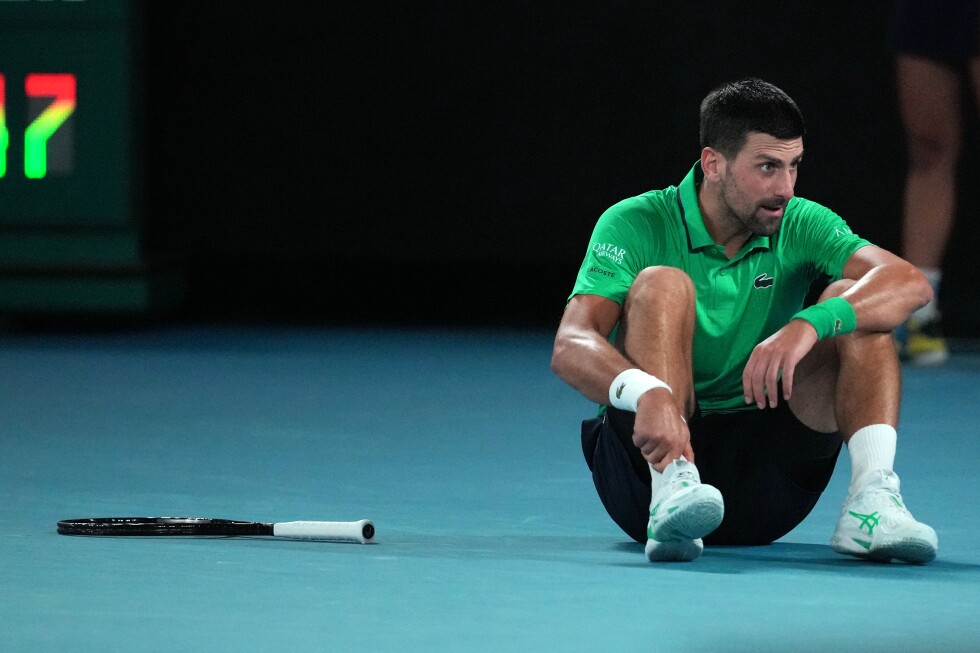
    Despite his dominant performance, Djokovic faced physical challenges during the match, including a concerning tumble that required medical attention for foot issues. The fourth-seeded player displayed moments of frustration but ultimately demonstrated his trademark resilience during the critical tiebreak.

    Reflecting on his continued competitiveness against younger opponents, Djokovic remarked: ‘I’m still trying to give these young guys a push for their money. I’m still around. I’m hanging in there.’ While acknowledging the exceptional current form of Jannik Sinner and Carlos Alcaraz, whom he identified as the world’s top two players, Djokovic maintained that ‘when you enter the court and the ball rolls, you always have a chance.’

    The 24-time Grand Slam champion, who has been tied with Margaret Court’s record since his 2023 US Open victory, advances to face either Czech rising star Jakub Mensik or American debutant Ethan Quinn in the fourth round. Djokovic emphasized a cautious approach moving forward, noting lessons learned from last year’s Grand Slam performances where excitement led to premature injuries.

  • Djokovic secures 400th Grand Slam match win to extend record, ties Federer’s Australian Open mark

    Djokovic secures 400th Grand Slam match win to extend record, ties Federer’s Australian Open mark

    MELBOURNE, Australia — Novak Djokovic continues to redefine tennis excellence, achieving yet another unprecedented milestone during Saturday night’s third-round match at the Australian Open. The 24-time Grand Slam champion secured his 400th victory in major tournaments with a commanding 6-3, 6-4, 7-6(4) performance against Dutch contender Botic van de Zandschulp.

    This triumph elevates Djokovic’s Australian Open record to 102-10, matching Roger Federer’s all-time match win tally at the season’s opening major. The 38-year-old Serbian icon, pursuing an unprecedented 11th Australian Open title and record-breaking 25th Grand Slam championship, demonstrated near-total dominance throughout the evening session.

    The match encountered minimal disruption until the third set when Djokovic experienced an on-court stumble during the third game, followed by facing two set points in the twelfth game. A strategic medical timeout allowed for taping of his right foot, while a precisely executed forehand winner down the line neutralized the immediate threat. Chair umpire John Blom repeatedly intervened to quiet the crowd during critical serving moments.

    An animated Djokovic captivated spectators by theatrically heading an imaginary soccer ball after saving the second set point, sparking enthusiastic “Nole, Nole, Nole” chants throughout Rod Laver Arena. He subsequently closed the match in a tiebreaker.

    Reflecting on his physical condition, Djokovic noted: “I managed to have a ‘good’ fall if you can say so. Things could have been pretty ugly.” He expressed satisfaction with his tournament progression while acknowledging lessons from last season: “I got too excited too early in some of the Grand Slams… getting injured three out of four.”

    The victory adds to Djokovic’s extraordinary record collection, having previously equaled two all-time marks by commencing his 21st Australian Open and 81st Grand Slam event. He now stands as the first male player to achieve 100+ wins on three different Grand Slam surfaces—102 at Wimbledon (grass), 101 at Roland Garros (clay), and 102 at Melbourne Park (hard court).

  • Air France suspends service to Dubai; KLM halts Middle East flights

    Air France suspends service to Dubai; KLM halts Middle East flights

    Two major European carriers have announced significant flight suspensions to Middle Eastern destinations as geopolitical tensions escalate in the region. Air France has temporarily halted all services to Dubai, while KLM Royal Dutch Airlines has suspended flights to multiple Middle Eastern cities and restricted airspace transit through several countries.

    Air France confirmed the suspension in an official statement, citing the ‘current situation in the Middle East’ as the primary reason for the decision. The French national carrier emphasized its continuous monitoring of geopolitical developments across its service routes and overflight territories to maintain the highest safety standards for its operations. The airline has committed to providing regular updates regarding schedule adjustments as the situation evolves.

    Meanwhile, KLM has implemented a broader suspension affecting services to Tel Aviv, Dubai, Dammam, and Riyadh until further notice. The Dutch carrier has additionally prohibited flights through the airspace of Iraq, Iran, Israel, and several Gulf nations. According to reports from Netherlands’ public broadcaster NOS, KLM is maintaining close coordination with Dutch authorities regarding these operational changes, though the airline has not explicitly detailed the specific reasons behind each route suspension.

    The flight disruptions coincide with heightened military posturing from the United States. President Donald Trump confirmed on Thursday that substantial naval forces are advancing toward the Gulf region, stating ‘We have a big force going toward Iran’ while simultaneously suggesting that Tehran appears interested in diplomatic discussions. This development follows weeks of tension regarding potential U.S. military action against Iran, which had appeared to diminish after reports that Iran halted planned executions of demonstrators involved in recent protests.

    The aviation industry’s response reflects growing concerns about regional stability and flight safety, with carriers taking precautionary measures despite the absence of immediate threats to civilian aircraft. The situation remains fluid, with airlines monitoring developments closely to determine when normal operations might resume.

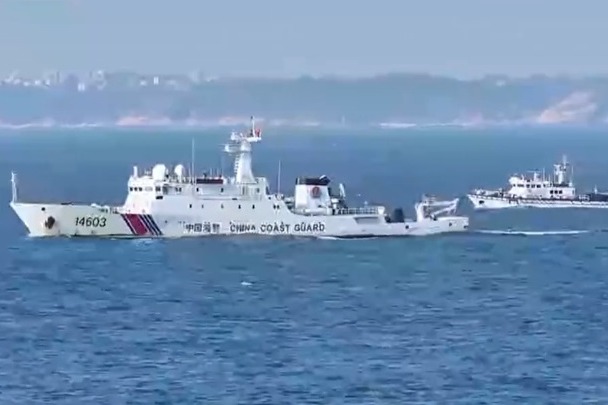
  • The Fujian Coast Guard conducts regular law enforcement patrol in the waters near Jinmen

    The Fujian Coast Guard conducts regular law enforcement patrol in the waters near Jinmen

    The Fujian Coast Guard has executed routine law enforcement operations in maritime territories adjacent to Jinmen, demonstrating China’s ongoing commitment to maintaining maritime security and sovereignty. These patrols, conducted as part of standardized procedures, represent the consistent implementation of China’s maritime governance policies.

    The operations follow established protocols for monitoring and regulating activities within China’s jurisdictional waters. The patrols serve multiple purposes including maritime safety oversight, illegal activity prevention, and border security maintenance. Such exercises reflect the continuous efforts by Chinese authorities to ensure stability and lawful order in regional waters.

    These maneuvers occur within the framework of China’s domestic laws and international maritime regulations. The Coast Guard’s presence in these waters constitutes normal practice for sovereign states exercising their legitimate rights to patrol territorial waters and exclusive economic zones. The operations align with China’s broader strategy of maintaining peaceful and regulated maritime environments through professional law enforcement capabilities.

    The timing of these patrols corresponds with increased regional attention to maritime security matters, though officials emphasize their routine nature. China maintains that such activities represent standard procedure rather than exceptional measures, consistent with how coastal nations worldwide administer their maritime territories.

  • UAE weather: Rains likely; temperatures to dip to 13°C in Abu Dhabi

    UAE weather: Rains likely; temperatures to dip to 13°C in Abu Dhabi

    Residents across the United Arab Emirates are preparing for a weekend marked by rainfall and cooler temperatures, according to the latest forecast from the National Centre of Meteorology (NCM). Meteorological data indicates fair to partly cloudy conditions will gradually give way to increased cloud cover by nighttime, particularly over maritime zones and northern coastal areas.

    Temperature readings are projected to remain within comfortable ranges, with Abu Dhabi anticipated to experience lows of 13°C while Dubai may see minimum temperatures of 14°C. Maximum temperatures across the emirates are not expected to exceed 26°C, creating pleasantly cool conditions for outdoor activities.

    Wind patterns will feature light to moderate southeasterly to northeasterly flows, maintaining speeds between 10-20 km/h with occasional intensification reaching 35 km/h. Maritime conditions present varying scenarios, with the Arabian Gulf expected to experience slight to moderate waves while the Oman Sea may develop rough waters by Sunday morning.

    The weather shift brings a refreshing change to the region’s typically arid climate, offering residents a reprieve from warmer conditions. The NCM continues to monitor atmospheric developments and advises citizens to stay updated through official channels for any weather advisories.