作者: admin

  • Irish foreign minister slams treatment of detainees by Israel

    Irish foreign minister slams treatment of detainees by Israel

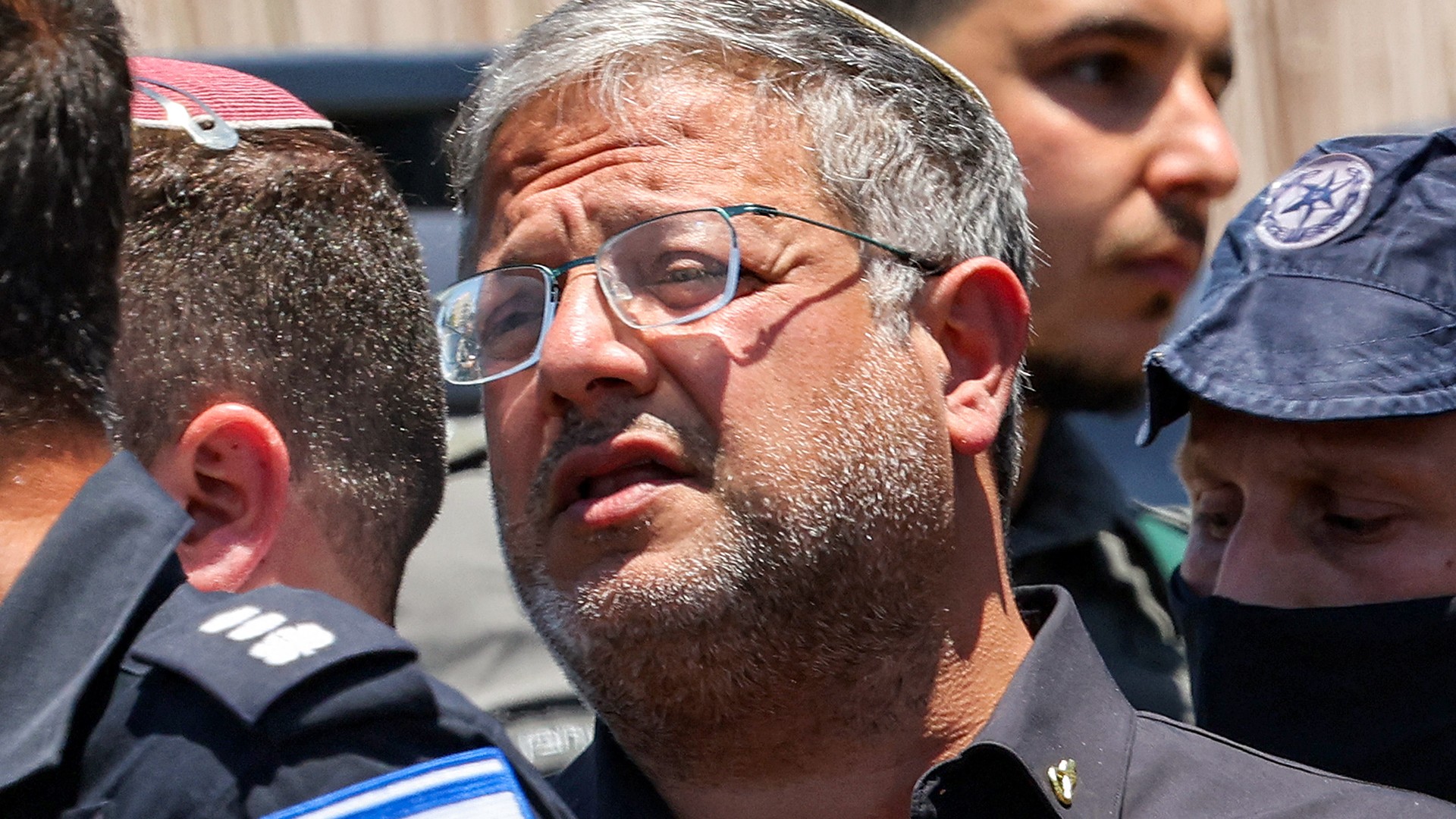
    A major international diplomatic row has erupted following Israel’s interception of the Global Sumud Flotilla, a mission carrying symbolic aid to blockaded Gaza that ended with dozens of activists detained, including more than a dozen Irish citizens. The crisis intensified after Israel’s far-right National Security Minister Itamar Ben-Gvir shared a video of himself confronting the bound detainees, triggering condemnation from world leaders and even rare public criticism from Israeli Prime Minister Benjamin Netanyahu.

    The video, posted to Ben-Gvir’s social media account, shows activists kneeling on the ground with their hands tied behind their backs. The Global Sumud Flotilla (GSF) confirmed that Irish citizen Catriona Graham, one of the detainees, can be heard shouting “free Palestine” at the opening of the footage. Ben-Gvir is seen waving an Israeli flag while taunting the captured activists, a gesture that has drawn widespread global rebuke.

    In an unusual break from his normally coalition-aligned position, Netanyahu publicly criticized Ben-Gvir’s conduct, saying the minister’s actions were “not in line with Israel’s values.” The prime minister added that he has ordered relevant government bodies to speed up deportation proceedings for all detained activists, framing them as “provocateurs.”

    Irish officials have led international calls for the immediate release of all detainees. Foreign Affairs Minister Helen McEntee confirmed that Ireland’s ambassador to Israel has already secured formal demands for guarantees that all Irish citizens in detention will have access to consular support and their welfare protected. “I have also demanded their immediate release,” McEntee said. Taoiseach Micheál Martin, Ireland’s prime minister, went further, saying he was “appalled at the shocking behaviour” of Ben-Gvir, adding that the Israeli government’s actions in intercepting the flotilla and detaining activists amount to a breach of international law. Martin announced he plans to raise the incident at the European Union level to coordinate a broader bloc response.

    Among the 12 detained Irish citizens is Dr. Margaret Connolly, sister of Irish President Catherine Connolly. In total, 430 participants from more than 40 countries joined the GSF mission, which departed Turkey last Thursday with over 50 boats. The flotilla carried only a token amount of humanitarian aid, with its core goal being to draw global attention to the catastrophic living conditions facing Palestinian civilians in war-ravaged Gaza, which has been under heavy Israeli military bombardment and blockade since the October 7 2023 Hamas attacks. Israeli officials have dismissed the mission as a “PR stunt at the service of Hamas.”

    The fallout from the incident has spread far beyond Israel and Ireland, with multiple world leaders condemning the treatment of detainees. Italian Prime Minister Giorgia Meloni called the activists’ treatment “intolerable,” noting that multiple Italian citizens are among the detained, and said the actions violate basic human dignity. French Foreign Minister Jean-Noël Barrot expressed France’s “indignation” at Ben-Gvir’s conduct and demanded a formal explanation from Israeli authorities. Canadian Foreign Minister Anita Anand described the video footage as “deeply troubling.”

    Domestic criticism of Ben-Gvir has also emerged in Israel. Former Israeli minister Alan Shatter, who currently sits on the board of the Israel Council on Foreign Relations, called for Ben-Gvir to be “unceremoniously dismissed from Israel’s cabinet and ministerial office.” Israeli legal rights group Adalah confirmed Wednesday that all activists were being held at Ashdod port after being brought into Israeli territory “entirely against their will.” The group announced its legal team would file challenges to the detentions in court and push for the immediate release of all flotilla participants. A GSF spokesperson has also joined international calls demanding the immediate release of all detained crew members.

  • An Israeli soldier posted an image of a Palestinian ‘for sale’. The Palestinian is missing

    An Israeli soldier posted an image of a Palestinian ‘for sale’. The Palestinian is missing

    Nearly 18 months after a 41-year-old Palestinian man with a chronic mental health condition vanished from his home in Gaza, a disturbing deleted social media post from an Israeli soldier has given his family the first clue to his fate — and left them with no clear answers about his whereabouts.

    On November 18 of last year, Israeli soldier Harel Amshika shared a nine-image photo carousel to his personal Instagram account, paired with reflective text about his combat deployment in the Gaza Strip.

    His years of frontline service “passed quickly, but left a big mark,” Amshika wrote. “Being a warrior in such a time is a privilege… Gratitude for sleepless nights… And a very long war. To friends who became family. To experiences that I never thought I would have, for better or worse.”

    Amshika went on to express gratitude to his unit, the Shaked Battalion, which operates under the Israeli military’s Givati Brigade. He also honored fallen soldiers he had served with, specifically highlighting combat medic Ido Zano in his account biography.

    Among the photos in the carousel was one particularly graphic image: a Palestinian man, clad in a full white hazmat suit with “B4” handwritten in black marker below his right shoulder, sits bound and blindfolded against a concrete block. The man has no shoes, with both his hands and ankles restrained. A green cloth or tape covers his eyes. Just above him, the lower half of a second bound man, whose hands and feet are secured with plastic zip ties, is visible on a neighboring block.

    Over the image, Amshika overlaid a short, chilling caption: “For sale”.

    Both the post and Amshika’s original Instagram account have since been taken down, though the soldier has created a new account with a nearly identical username and a one-line biography: “Just for fun”. Archived copies of the post and screengrabs of the dehumanizing photograph have nonetheless spread widely across social media platforms.

    According to a new report from the Global Legal Action Network (GLAN), a Gaza-based Palestinian woman named Zahra Shorrab recognized the bound man in the circulated image as her son, Mohammed Shorrab. She confirmed the identification through distinct features including his hands, hair, and feet.

    Mohammed, 41, requires ongoing care from his family for his mental health condition. He disappeared on August 20, 2024, after leaving his home to attend evening prayers; his family never saw him again after he stepped out.

    For nearly a year and a half, his relatives searched for any trace of Mohammed, with no success. It was only when Zahra encountered the Israeli soldier’s “for sale” post that the family gained any information about what may have happened to him.

    In an interview with journalist Ali Alasmer, Zahra Shorrab spoke out about the pain and outrage her family has endured. “Have the Palestinian people become so cheap that they are put up for sale? What is happening to us is cruel… It is unbearable that they are scattering us like this and that a Palestinian is being offered for sale,” she said.

    “Do human beings no longer have any worth?” Shorrab asked. “We are human beings. We are people… How can they reduce him to something worthless like that?”

    After the identification was confirmed, GLAN partnered with Hamoked, an Israeli human rights organization that provides free legal assistance to Palestinians living under Israeli occupation, to pursue answers on the family’s behalf.

    On February 26, Hamoked submitted an official written inquiry to the Israel Prison Service, requesting information about Mohammed’s location and status.

    The Israel Prison Service replied that after a full review of its detainee records, no evidence could be found that Mohammed Shorrab had ever been held in any of its facilities.

    Yet as GLAN points out, the basic facts of the case remain unambiguous: the photograph exists, the soldier who took it has been publicly named, his military unit has been identified, and the brigade was confirmed to be operating in the area where Mohammed disappeared at the time he went missing.

    Middle East Eye reached out to the Israel Defense Forces (IDF) with a series of questions about the case, covering both Mohammed Shorrab’s disappearance and Harel Amshika’s social media post.

    In an official response, an IDF spokesperson stated: “Based on the examinations conducted thus far, no individual by the name Muhammad Rabee Saed Shorrab was found to be currently held, or to have been held during the war, in an IDF detention facility.

    “Regarding the image presented, it is not possible to identify the individual depicted with certainty. The image was taken over two years ago, and the individuals involved have since been discharged and are no longer serving in the military. The image has been removed. Procedures regarding conduct toward detainees were reinforced to the forces throughout the war.”

    Middle East Eye also specifically asked whether any disciplinary action had been opened against Amshika in connection with the post. As of the time of this reporting, the IDF has not responded to that question.

    The revelation of the photograph comes as United Nations special rapporteurs released a new report this week documenting widespread allegations of torture and cruel treatment of Palestinian detainees. The report includes verified testimony describing abuses ranging from “repeated and serious physical assaults, setting dogs on detainees” to “handcuffing and blindfolding for extended periods, shackling to beds and feeding through straws.”

    The UN investigation also documented “the prolonged deprivation of food, sleep deprivation, water and medical attention, prolonged exposure to the cold, being forced to kneel on gravel, deliberate humiliation, blackmailing, electric shocks, being burnt with cigarettes, and being given hallucinogenic pills”, as well as “enforced disappearance and arbitrary detention of essential healthcare workers in Gaza.”

    This report is part of Middle East Eye’s independent, on-the-ground coverage of conflict and human rights issues across the Middle East and North Africa.

  • Sierra Leone becomes latest African country to receive deportees from US

    Sierra Leone becomes latest African country to receive deportees from US

    As U.S. President Donald Trump escalates his nationwide crackdown on unauthorized immigration, Sierra Leone has become the newest African nation to accept deported migrants sent from American territory. A chartered Boeing flight carrying nine West African migrants touched down at Freetown International Airport, located just outside Sierra Leone’s capital, on Wednesday morning, in a move that spotlights the expanding scope of the Trump administration’s third-country deportation policy.

    Witnesses from the BBC confirmed the details of the arrival: the group of seven men and two women were visibly dejected upon landing, with one individual physically resisting removal from the aircraft before being forced off by officials. Official breakdowns of the group show five of the deportees are from Ghana, two are from Guinea, and one each hails from Nigeria and Senegal. After exiting the terminal, the group was escorted away from the airport in a marked white van to temporary housing facilities run by private contractor Kenvah Solutions.

    Weeks ahead of the arrival, Sierra Leone’s Foreign Minister Timothy Musa Kabba confirmed to Reuters that the country had struck an agreement with Washington to accept up to 300 deportees annually. Under the terms of the deal, however, only migrants who hold citizenship from member states of the Economic Community of West African States (ECOWAS), West Africa’s regional economic and political bloc, are eligible to be accepted into the country. ECOWAS free movement rules allow citizens of any member nation to reside in another member state for up to 90 days without a visa, but Kenvah Solutions has stated the deportees will only be permitted to stay at its temporary facilities for a maximum of two weeks, leaving the long-term residency status of the group unclear.

    This deportation operation is part of a broader policy launched shortly after Trump took office for a second term in January 2025. Dozens of migrants have already been sent to so-called “third countries” – nations where the deportees did not reside before moving to the United States. To date, the U.S. has already processed third-country deportations to multiple African countries, including the Democratic Republic of Congo, Ghana, South Sudan, and Eswatini. Unlike Sierra Leone and Ghana, which have restricted acceptance to ECOWAS citizens, these other nations have received deportees from regions outside Africa, including Colombia, Cuba, Mexico, and Vietnam.

    The financial and human cost of this policy has come under increasing scrutiny from lawmakers and human rights groups. A minority report from the U.S. Senate Foreign Relations Committee estimates that, as of January 2026, the Trump administration has likely spent more than $40 million on third-country deportation operations, though the full total expenditure remains undisclosed. Sierra Leonean authorities have not publicly disclosed any financial compensation or policy concessions they received in exchange for agreeing to accept the deportees.

    Human rights advocates have repeatedly condemned the practice, arguing that it violates core international human rights standards and exposes already vulnerable migrants to unnecessary harm. In September last year, Human Rights Watch issued an open call for African nations to reject what it described as “opaque deals,” arguing the agreements are deliberately structured to weaponize human suffering for political and diplomatic gain. Ghana, which has also agreed to accept U.S. deportees, has echoed Sierra Leone’s policy of only accepting ECOWAS citizens, with President John Mahama noting in September that free movement rules already allow West African nationals to enter Ghana without visa requirements.

  • Tesla Cybertruck driver arrested after driving into lake to use ‘wade mode’, police say

    Tesla Cybertruck driver arrested after driving into lake to use ‘wade mode’, police say

    A bizarre incident at a popular North Texas recreation spot has resulted in an arrest after a man deliberately submerged his Tesla Cybertruck in Grapevine Lake to test the electric pickup’s advertised off-road wading capability. The Grapevine Police Department reported that first responders were dispatched to the lakeshore on Monday following reports of a submerged, abandoned vehicle that had become trapped after taking on significant water. The driver and any passengers had fled the scene before officers arrived, leaving the partially flooded Cybertruck stuck near the south shoreline.

    Tesla’s official owner documentation for the angular stainless-steel pickup explicitly names wade mode as a feature designed to let drivers traverse shallow bodies of water like creeks and small rivers, with a rated maximum depth of 32 inches (81.5 centimeters) measured from the base of the vehicle’s tires. According to police statements, the driver admitted to intentionally entering the lake solely to test out this factory-included feature, despite the area of the lake where he entered being closed to vehicle traffic. After the truck filled with water and became immobilized, he and his companions left it half-submerged for emergency crews to extract.

    The recovery operation required joint work between Grapevine police and the Grapevine Fire Department’s specialized water rescue team, who pulled the damaged electric vehicle from the shallow near-shore waters. In addition to the charge of operating a vehicle in a closed section of the lake, the driver faces multiple misdemeanor citations for violations of state water safety equipment regulations. Law enforcement has emphasized that even though the Cybertruck is engineered to handle limited shallow water crossings, testing that capability in a public lake carries both legal and life-safety risks under Texas state law.

    “We wouldn’t encourage willingly driving your vehicle into the water,” Grapevine Police Department spokesperson Katharina Gamboa told CBS News, the US partner of the BBC. “Not only that, it’s a safety concern, but it’s also a legal concern as well.”

    First unveiled to public fanfare in 2019, Tesla’s futuristic Cybertruck — built with ultra-hard 30X cold-rolled stainless steel marketed as bullet-resistant against small arms fire — only began full customer deliveries in 2023. Tesla’s owner manual includes clear warnings that go beyond just depth limits: the manufacturer explicitly warns drivers against attempting to cross deep, fast-moving water such as rapids or flood-swollen channels, and notes that it is the driver’s sole responsibility to confirm water depth before attempting any crossing. Critically, the automaker also specifies that any damage or water intrusion caused by driving the vehicle through bodies of water is not covered under the vehicle’s factory warranty, leaving owners liable for all repair costs if something goes wrong.

  • Bolivia says protesters trying to ‘disrupt democratic order’

    Bolivia says protesters trying to ‘disrupt democratic order’

    Bolivia is currently grappling with a deepening political crisis, as weeks of mass anti-government demonstrations have pushed the new center-right administration of President Rodrigo Paz into a defensive standoff with opposition groups and even neighboring nations. In an official address to the Organization of American States (OAS) on Wednesday, Bolivian Foreign Minister Fernando Aramayo issued a sharp rebuke of protesters demanding Paz’s resignation, claiming their coordinated actions — including widespread roadblocks and mass marches — are a deliberate attempt to destabilize the country’s democratic institutions.

    The unrest, which has stretched on for weeks, has drawn participation from thousands of farmers, unionized laborers, miners, and public school teachers across the Andean nation. Protesters have coalesced around a list of grievances: galloping inflation that has eroded household purchasing power, persistent fuel shortages that have crippled daily life, and widespread opposition to what they frame as Paz’s pro-business free-market policy agenda, a sharp departure from the 20 years of socialist rule that preceded his administration.

    Paz, who took office less than six months ago after winning a national election, campaigned on a pledge to pull Bolivia out of its worst economic crisis in four decades. In a controversial policy move aimed at shoring up the country’s plummeting dollar reserves, he eliminated long-standing, generous government fuel subsidies. To date, however, the reform has failed to deliver on its core promise of stabilizing fuel supplies — a key campaign issue that has become the most visible flashpoint of public anger.

    Tensions boiled over on Monday in the capital city of La Paz, where riot police clashed with thousands of demonstrators attempting to march on government buildings to demand the president step down. Running battles between officers and protesters stretched on for hours. While a fragile calm has returned to La Paz in the days since, the broader national situation remains deeply tense and unstable.

    The current crisis also carries the lingering shadow of former socialist president Evo Morales, the Indigenous coca farmer who launched Bolivia’s decades-long left-wing shift in the mid-2000s. Paz’s administration has directly accused Morales of fomenting a coup to overthrow the new government. Morales, 66, who served three terms in office before attempting an unsuccessful political comeback last year, currently lives as a fugitive in his coca-growing stronghold of Chapare, where he has hidden since late 2024. He is wanted by Bolivian authorities on charges of having a sexual relationship with a minor during his time in office, which he has denied. Morales has publicly expressed solidarity with the ongoing protests, and his supporters fear authorities are preparing imminently to move to arrest him.

    International tensions have also flared alongside the domestic unrest. The United States has thrown its full weight behind Paz, who is part of a growing wave of newly elected right-wing leaders across Latin America, and has echoed the Bolivian government’s claims that the demonstrations amount to an illegal coup. On Wednesday, the Bolivian government announced it would expel Colombia’s ambassador to the country, citing unacceptable interference in Bolivian internal affairs by Colombian left-wing President Gustavo Petro. Petro had previously taken to social media to frame the Bolivian protests as a “popular insurrection” against “geopolitical arrogance”, a remark that drew fierce condemnation from La Paz. In response to the expulsion, Petro slammed the move, arguing it was evidence of ideological extremism on the part of Paz’s government.

    Beyond the political sparring, the unrest has inflicted severe harm on ordinary Bolivians. Widespread roadblocks erected by demonstrators have severed supply chains across the country, disrupting the transport of fuel, food, and critical medicine, leading to acute shortages in urban and rural areas alike. “We have almost nothing left,” 43-year-old Sheyla Caya told AFP while waiting in a long queue to buy chicken in La Paz this week. “It’s impossible to even find an egg.”

  • Sorry, Arsenal fans, but a public holiday for you in Botswana is fake news

    Sorry, Arsenal fans, but a public holiday for you in Botswana is fake news

    In the wake of Arsenal’s long-awaited first Premier League title triumph in 22 years, Arsenal supporters across southern Africa’s Botswana were briefly sent into a frenzy of celebration last week, after a forged official government notice circulated online claiming the country would declare a special public holiday to honor the club’s historic win. But the excitement quickly fizzled out when Botswana’s national government stepped forward to debunk the document, confirming that the announcement was entirely fabricated.

    The counterfeit statement, which bore convincing official markings including the Republic of Botswana’s national coat of arms and an official stamp purportedly from the president’s office, claimed that President Duma Boko had approved the midweek holiday to recognize Arsenal fans’ “passion, loyalty and unwavering support” for the club. It declared Wednesday would be a paid day off for all public sector workers who supported the London-based side.

    Botswana’s government quickly moved to shut down the rumor, sharing a screenshot of the forged notice on its official X (formerly Twitter) account, overlaid with large red text reading “FAKE”. In a accompanying post, authorities made the matter clear: “No, there is no holiday for Arsenal fans.”

    Even before the official debunking, sharp-eyed football fans had spotted inconsistencies in the forged document that raised red flags. The fake notice was dated May 17, a Sunday — two full days before Arsenal’s title win was actually confirmed. The club secured the championship only last Tuesday, when their closest title contender Manchester City dropped points in a 1-1 draw against Bournemouth.

    The bizarre incident has sparked playful speculation across social media, with one X user joking that the prank was almost certainly orchestrated by a supporter of Manchester United, Arsenal’s long-time domestic rival, as a lighthearted trick to upset Arsenal’s fanbase in Botswana.

  • Whale to be removed from Danish island after failed German rescue

    Whale to be removed from Danish island after failed German rescue

    A months-long high-profile rescue effort for a stranded humpback whale has come to a somber end, with the animal’s decomposing carcass now washing ashore on Denmark’s Anholt Island — leaving local officials scrambling to plan a safe removal while the small coastal community navigates unexpected public attention and public health risks.

    The story of the whale, which captured widespread public interest across Germany after it first became stranded on the Baltic Sea coast in early March, began when the mammal got tangled in fishing gear near Lübeck Bay. First spotted stuck at Timmendorfer Beach — the location that gave the whale its popular media nicknames, “Timmy” and “Hope” — the weak animal managed to swim further east along the German coast before becoming re-stranded off the island of Poel weeks later.

    Two private German entrepreneurs launched a private rescue bid to save the humpback, moving the animal onto a barge in late April to ferry it out to open water. The team released the whale into the North Sea roughly 70 kilometers from Denmark’s northern tip, far from the Kattegat Strait where it ultimately washed up. German wildlife experts had warned from the start that the whale was severely underweight and unlikely to survive, and authorities had already abandoned hope of the animal’s survival by early April.

    Last weekend, just two weeks after that attempted rescue release, the whale’s carcass was discovered beached just a few meters off Anholt’s coastline. Environmental officials confirmed the body was indeed the rescued humpback after locating a GPS tracking tag that had been attached to the animal during the rescue operation. To this day, it remains unclear how the dead whale drifted from its release location off northern Denmark to Anholt, off the East Jutland coast.

    As decomposition progresses, the carcass has swollen with trapped built-up gas, sparking public fears that the massive animal could explode. Danish environmental officials have announced plans to remove the carcass from the island, while also warning local residents to stay far away from the remains to avoid potential infection risks. No official timeline or detailed plan for the removal has been released as of Wednesday, with the agency only confirming it is working on a strategy that will allow for a full post-mortem examination and the collection of valuable tissue samples for scientific research.

    Local reactions to the beached carcass have been mixed. One anonymous Anholt resident, speaking to reporters, noted the body is currently 20 to 30 meters from the shore and continues to drift along the beach, adding that while some locals are unnerved by the risk of an explosion, she sees it as a natural process and holds no personal fears. Many islanders have also expressed bemusement at the ongoing international attention the dead whale has drawn, with curious German tourists already traveling to the small island to catch a glimpse of the animal and follow new developments in the saga.

  • Russian jets ‘dangerously’ intercept RAF spy plane over Black Sea

    Russian jets ‘dangerously’ intercept RAF spy plane over Black Sea

    In an incident that marks the most aggressive Russian aerial action against a British military aircraft since 2022, two Russian fighter jets carried out repeated, high-risk intercepts of an unarmed Royal Air Force (RAF) surveillance plane over the Black Sea last month, the United Kingdom’s Ministry of Defence (MoD) has confirmed.

    The close-proximity encounters forced the RAF RC-135W Rivet Joint aircraft into a dangerous situation: one Russian Su-35 fighter closed in so rapidly that it triggered the spy plane’s onboard emergency safety systems and forced its autopilot to disengage, leaving the crew to manually regain control of the aircraft. A second Russian jet, a Su-27, conducted six separate low-altitude passes directly in front of the RAF aircraft, coming within just six meters (19 feet) of the plane’s nose.

    UK Defence Secretary John Healey has publicly condemned the intercepts as “unacceptable”, while praising the RAF crew for what he called their “outstanding professionalism” in navigating the life-threatening encounter without incident. The MoD emphasized that this encounter represents the gravest escalation in Russian aerial aggression against NATO-aligned aircraft in the Black Sea region since September 2022, when a Russian pilot fired two air-to-air missiles at an RAF Rivet Joint operating in the same international airspace.

    Officials confirmed that the RAF spy plane was carrying out a routine, pre-planned international flight when the interception occurred, as part of NATO’s ongoing mission to reinforce security along the alliance’s eastern flank. Healey stressed that the reckless actions of the Russian pilots created a clear and unnecessary risk of catastrophic aerial accident, with the potential to rapidly escalate tensions between Russia and the NATO alliance.

    “This incident is another example of dangerous and unacceptable behaviour by Russian pilots, towards an unarmed aircraft operating in international airspace,” Healey said in a statement. “These actions create a serious risk of accidents and potential escalation. This incident will not deter the UK’s commitment to defend Nato, our allies and our interests from Russian aggression.”

    Both the MoD and the UK Foreign Office have formally contacted the Russian embassy in London to protest the encounter and demand condemnation of the pilots’ actions. The MoD noted that the intercept comes amid a broader pattern of growing Russian aggression near critical European infrastructure, pointing to recent increased Russian submarine activity around undersea British energy and communications cables in the North Sea.

    The 2022 missile incident, which Russia initially tried to blame on an accidental technical malfunction, has since been confirmed by three senior Western defence sources to have been a deliberate, if misordered, attack. The sources told the BBC that the Russian pilot launched the two missiles after receiving an unclear command from a Russian ground control station; the first missile missed the RAF aircraft, contradicting Moscow’s original claims of a system malfunction. At the time, the UK publicly accepted Russia’s explanation to avoid immediate escalation.

    The RAF’s RC-135W Rivet Joint, operated by the service’s No. 51 Squadron from its base in Lincolnshire, is a specialized signals intelligence platform. According to RAF official documentation, the aircraft is fitted with cutting-edge sensor technology designed to intercept and analyze electromagnetic signals across a wide spectrum, delivering real-time strategic and tactical intelligence to NATO and UK military command.

  • Could a football match soften North Korea-South Korea relations?

    Could a football match soften North Korea-South Korea relations?

    For nearly eight years, no official athletic delegation from North Korea has stepped across the heavily fortified inter-Korean border into South Korea. That long dry spell came to an end this week, when a North Korean women’s football team arrived in the South for competition, marking a small but symbolic breakthrough in a relationship that has remained locked in tension for most of the last decade.

    The fixture, which would be an unremarkable routine event in most other parts of the world, carries extraordinary weight on the Korean Peninsula. Decades of diplomatic estrangement, military posturing, and stalled cross-border talks have left almost all people-to-people exchanges between the two nations frozen. Against this backdrop, the simple act of a North Korean sports team entering South Korea has led observers and analysts to question whether this small sporting encounter could open the door to wider rapprochement between the two governments.

    Sports diplomacy has a long history of acting as a low-stakes confidence-building tool between nations with fraught political relationships. It creates space for informal interaction, builds familiarity between ordinary citizens on both sides, and can create momentum for higher-level political dialogue down the line. This historic visit is the first time any North Korean athletic group has crossed the inter-Korean border for a competition since 2017, making it the most significant people-to-people exchange between the two nations in years.

    While the match itself is just a single sporting event, it has already generated significant attention across the globe. Many watchers of inter-Korean relations are holding out cautious hope that this small step on the football pitch could translate to broader openings, from increased family reunions to renewed diplomatic talks aimed at reducing regional tensions. Even if no immediate political progress emerges, the visit itself stands as a rare small gesture of connection after years of separation.

  • Murder or accident? Mystery of Mango tycoon’s hiking death after son’s arrest

    Murder or accident? Mystery of Mango tycoon’s hiking death after son’s arrest

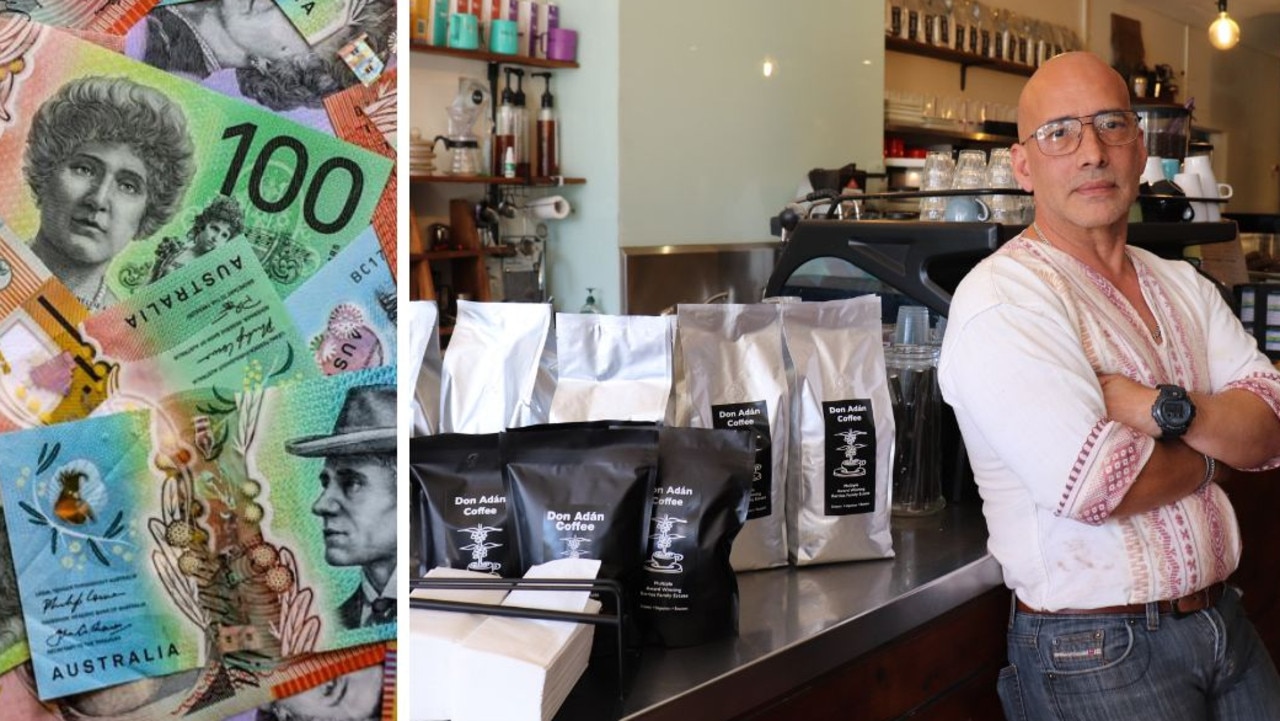
    A high-profile legal saga that has captured public attention across Spain took a dramatic new turn this week, when 45-year-old Jonathan Andic, eldest son of deceased Mango fashion empire founder Isak Andic, was arrested on suspicion of premeditated involvement in his father’s 2024 death. After a judge ruled there was sufficient evidence to reclassify Isak’s death as non-accidental, Jonathan was taken into custody, and subsequently released after posting €1 million ($1.07 million) in bail. He has repeatedly and vehemently maintained his innocence throughout the ongoing investigation.

    Isak Andic, a 71-year-old retail titan who built Mango into one of Europe’s largest clothing brands, died on December 14, 2024, after falling roughly 150 meters from a cliff in the Montserrat Natural Park, a popular mountainous region north of Barcelona. The founder was hiking at the time alongside Jonathan, who placed the emergency call that led to the recovery of his father’s body. Initially, responding authorities ruled the incident a tragic accident, marking a sudden end to the life of one of Spain’s wealthiest individuals.

    According to case documents from the Martorell court near Barcelona, investigators have uncovered multiple inconsistencies and suspicious details that undermine Jonathan’s account of the incident. Jonathan told police he had been walking ahead of his father when he heard falling rock debris, then turned to see Isak plummet from the path. However, forensic analysis has raised significant doubts about this narrative: the rugged, lightly trafficked hiking route near Collbató’s caves is a relatively gentle trail common for family and student outings, and investigators argue an accidental slip matching Jonathan’s description would be highly unlikely in that exact location.

    Further inconsistencies have emerged in key details of Jonathan’s testimony. The footprint he marked as the spot of his father’s slip does not match the marks that would be left by someone losing their footing accidentally. The position of Isak’s body and the pattern of his injuries also contradict the profile of an accidental fall, with the forensic report noting the arrangement looked “as if he had launched himself down a slide, feet first.” Investigators have also flagged conflicting accounts from Jonathan about his own position at the time of the fall: he claimed at different times that he was walking far ahead of Isak and that the two were close together. An additional discrepancy surrounds Isak’s phone: Jonathan told officers his father had been taking photos with the device moments before the fall, but the phone was found undisturbed in Isak’s pocket when the body was recovered.

    Suspicion has also fallen on three pre-hike visits Jonathan made to the cliffside site on December 7, 8, and 10, just days before the incident. The investigating judge has described these trips as evidence of “planning and study of the site.” Compounding these questions is the disappearance of Jonathan’s personal phone around the time the case was reopened for further investigation. Jonathan told police the device was stolen during a short trip to Ecuador, a detail that has not resolved investigators’ concerns.

    Prosecutors are also exploring a potential financial motive tied to the future of the Mango brand. Isak Andic, a Turkish-born Sephardic Jew who relocated to Catalonia as a teenager and co-founded Mango in the mid-1980s, grew the company into a global retail giant that employs more than 16,000 workers and posted €3.3 billion in turnover in 2024, making him Catalonia’s wealthiest individual. Jonathan worked closely with the brand for 20 years, leading the expansion of its popular menswear line, and he currently shares control of a family holding company that owns a 95% stake in Mango alongside his two younger sisters. He is married to social media influencer Paula Nata, and the couple welcomed their first child in September 2025.

    According to the investigating magistrate, tensions emerged between father and son over Isak’s plan to establish a charitable foundation, and text message exchanges between the two confirm these frictions. The judge claims Jonathan engaged in “emotional manipulation over his father in order to achieve his economic objectives” and had repeatedly expressed “feelings of hatred, resentment, ideas related to death and blame” toward Isak. Jonathan has pushed back against these claims, telling investigators he maintained a warm, positive relationship with his father up until his death.

    In the months after Isak’s death, the case was reopened in October 2025, and investigators have since questioned Jonathan’s two sisters and his uncle as part of their inquiry. Executors of Isak’s will released an early statement defending Jonathan, arguing that the public scrutiny surrounding the case has compounded the family’s private grief. Following his arrest this week, the entire Andic family issued a formal statement of support, insisting “there does not exist, nor will there exist, legitimate evidence against him.” Jonathan’s defense attorney, Cristóbal Martell, has dismissed the homicide theory entirely, calling it baseless and deeply harmful to an innocent man. “The homicide theory does not hold up,” Martell said. “But, above all, it is painful. It stigmatises an innocent man.”