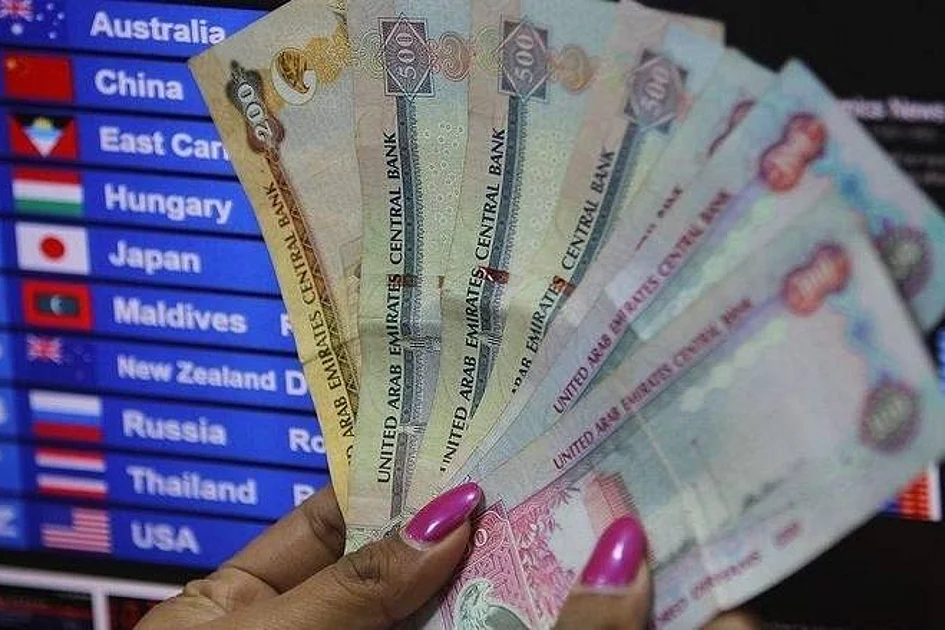
In a testament to economic resilience, the United Arab Emirates (UAE) has sustained stable inflation levels despite global economic volatility. According to the International Monetary Fund’s (IMF) Regional Economic Outlook, the UAE’s inflation is projected to average 1.6% in 2025, slightly lower than the 1.7% recorded in 2024, with a modest rise to 2.0% anticipated in 2026. This trajectory remains well within the central bank’s target, underscoring the nation’s effective fiscal management and price stability. Dubai’s Consumer Price Index (CPI) rose to 2.9% year-on-year in September 2025, up from 2.4% in August, driven primarily by significant increases in the Housing, Water, Electricity, and Gas category, which surged by 5.8%. Other contributing factors included rebounds in Recreation and Culture, alongside modest rises in Education and Food & Beverages. However, declining Transport costs helped temper overall inflation. The broader Gulf Cooperation Council (GCC) region has mirrored this stability, with inflation expected to remain below or at the 2% target through 2026. Saudi Arabia, the GCC’s largest economy, recorded a 2.2% year-on-year inflation rate in September 2025, with notable increases in Personal Goods & Services and Housing. The Kingdom’s central bank aligned with the U.S. Federal Reserve’s rate cut, reducing its repo and reverse repo rates by 25 basis points. Other GCC nations, including Bahrain, Oman, and Qatar, reported mild inflation figures, supported by increased oil production and stabilized energy prices. Globally, inflation dynamics remain complex, with the U.S. experiencing a 3% year-on-year rise in September, prompting the Federal Reserve to cut rates. Meanwhile, declining global food prices, as indicated by the FAO Food Price Index, have provided some relief to import-dependent economies. However, geopolitical tensions and trade disruptions continue to pose risks. The GCC’s inflation outlook remains cautiously optimistic, with regional stability offering a buffer against global economic challenges.
作者: admin
-
Qatar Airways sells entire Cathay Pacific stake for $897 million
Qatar Airways has finalized the sale of its entire 9.7% stake in Cathay Pacific Airways for approximately $897 million (HK$6.97 billion), marking its complete withdrawal from Hong Kong’s flagship carrier after an eight-year investment. The transaction, announced late Wednesday, involves Cathay repurchasing the shares at HK$10.8374 per share, representing a 4% discount to its last closing price but a 35% premium over the original purchase price paid by Qatar Airways in 2017. The deal will be funded through Cathay’s internal resources and existing credit lines.
Qatar Airways initially acquired the stake in 2017, becoming Cathay’s third-largest shareholder after Swire Pacific and Air China. The Gulf carrier’s exit aligns with its disciplined portfolio strategy, aimed at optimizing investments and positioning itself for long-term growth, according to CEO Badr Mohammed Al-Meer. The move also reflects Qatar Airways’ broader strategy of divesting from certain global airline investments to focus on core operations.
For Cathay, the buyback is seen as a positive development, reducing the number of shares in circulation and potentially easing selling pressure on its stock. Cathay’s shares surged 4.8% following the announcement, with Air China and Swire Pacific also experiencing gains. The Hong Kong-based airline, one of Asia’s largest cargo carriers, has been recovering from pandemic-induced losses and recently reported a 20% increase in passenger numbers for September compared to the previous year.
Cathay Chairman Patrick Healy emphasized the buyback as a sign of strong confidence in the company’s future, which includes a HK$100 billion investment plan over seven years for fleet renewal and other upgrades. Despite the divestment, both airlines will maintain their partnership through the oneworld Alliance, ensuring continued collaboration in the global aviation sector.
-
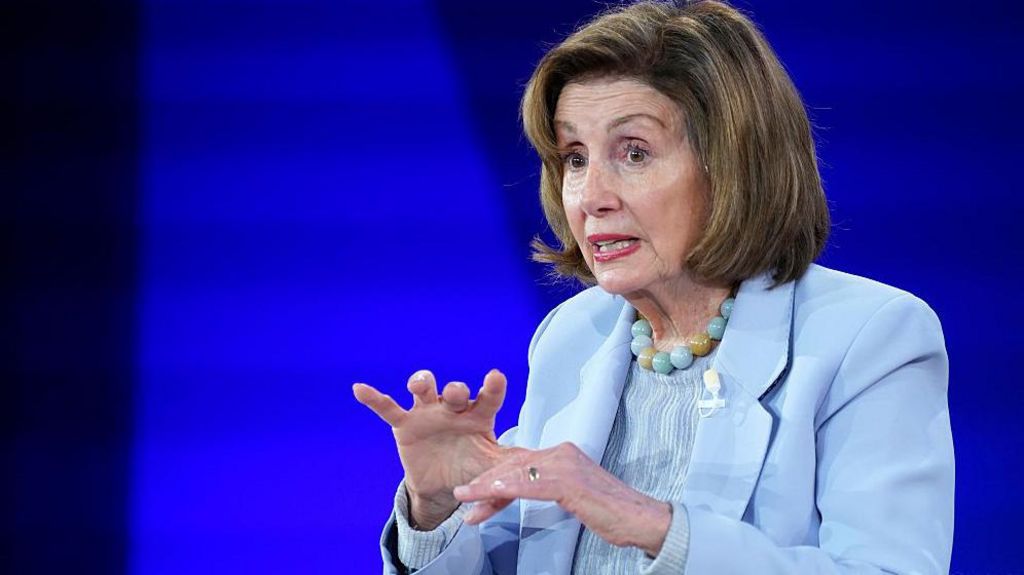
Nancy Pelosi announces retirement after decades in US Congress
In a significant announcement, US Congresswoman Nancy Pelosi has revealed her decision to retire at the conclusion of her current term in January 2027. Pelosi, 85, shared this news through a heartfelt video message, marking the end of an illustrious political journey spanning nearly four decades in the House of Representatives. Pelosi’s career has been nothing short of historic; she broke barriers as the first female Speaker of the House and led her party in the lower chamber of Congress from 2003 to 2023. Known for her strategic acumen, the San Francisco Democrat played a pivotal role in shaping key political decisions, including influencing then-President Joe Biden to step aside during concerns about his mental acuity, which ultimately led to Kamala Harris’s candidacy. As this story continues to develop, further updates will be provided. Stay tuned for the latest information via the BBC News App or follow @BBCBreaking on X for real-time alerts.
-
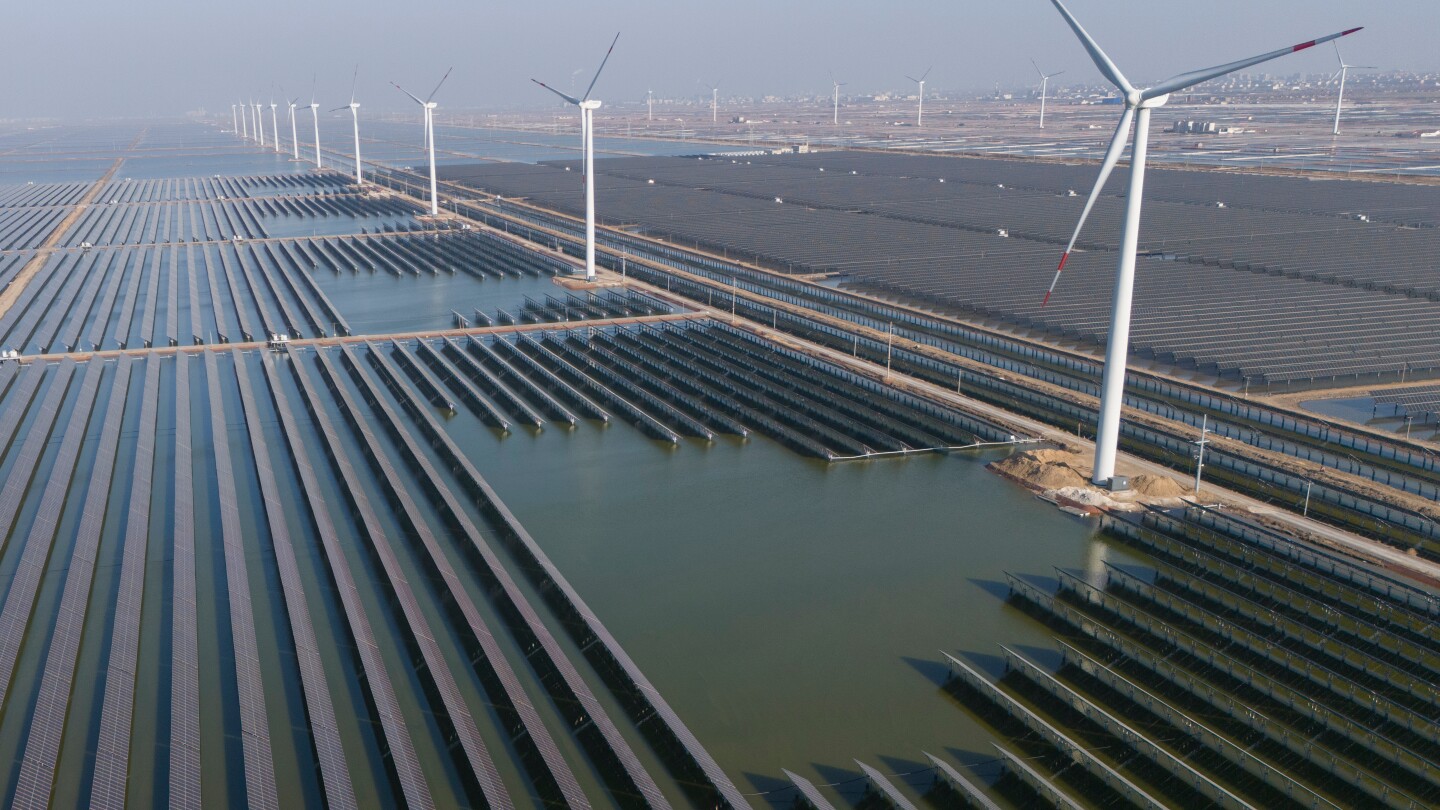
China, world’s top carbon pollutor, likely to overdeliver on climate goals. Will that be enough?
As the United Nations Climate Conference (COP30) kicks off in Brazil, China’s updated climate commitments have come under scrutiny. The world’s largest emitter of greenhouse gases recently unveiled its 2035 climate goals, detailing plans to reduce emissions by 7% to 10%. While this marks the first time China has set a specific emissions reduction target, experts argue it falls short of the 30% cut needed to align with the Paris Agreement’s aim of limiting global warming to 1.5°C. China’s role is pivotal, not only as the top emitter but also as a global leader in green technologies like solar, wind, and electric vehicles. The nation’s goals include raising non-fossil fuel energy consumption to 30%, achieving 3,600 gigawatts of solar and wind capacity, and mainstreaming electric vehicles. However, the absence of specific targets for coal power capacity raises concerns, as coal remains a cornerstone of China’s energy strategy. Despite these challenges, China has a history of surpassing its climate targets, such as exceeding its renewable energy goals six years ahead of schedule. Whether its latest commitments will suffice to combat global warming remains a critical question as the world watches COP30 unfold.
-

Philips highlights UAE’s shift toward smarter, more connected healthcare
The United Arab Emirates (UAE) is witnessing a paradigm shift in its healthcare sector, driven by technological advancements, patient empowerment, and a growing emphasis on sustainability. According to the latest Philips Health Trends Research UAE, residents are increasingly taking charge of their health, with 92% actively managing their wellbeing. This transformation is fueled by improved access to information, trust in telehealth, and confidence in AI-driven healthcare solutions. Tamer Said, General Manager for Health Systems at Philips West Africa, Gulf and Levant, highlighted the role of the UAE’s robust digital infrastructure and clear governance in fostering innovation. Philips is at the forefront of this evolution, co-creating solutions that integrate seamlessly into daily life, enabling better care for more people. AI is playing a pivotal role, with 77% of UAE residents expressing confidence in its ability to enhance care delivery. Philips’ AI-enabled tools, such as intelligent monitoring systems and precision-guided surgical navigation, are streamlining workflows and improving diagnostic accuracy. Virtual care is also gaining traction, with telehealth platforms like Philips eICU providing remote monitoring and expert oversight. Sustainability is another key focus, with 83% of patients favoring environmentally responsible providers. Philips is leading the charge by embedding sustainability into its operations, aiming for 75% renewable energy and zero waste to landfill by 2025. The research also reveals a shift in consumer behavior, with sustainability and data trust becoming core expectations. Philips is collaborating with the UAE government and healthcare providers to accelerate progress toward a connected, future-ready system. As the UAE strengthens its position as a global healthcare innovation hub, Philips remains committed to advancing patient-centered care, leveraging technology to create smarter, more inclusive, and sustainable healthcare systems.
-

French auditors slam Louvre for prioritising art over security
Three weeks following the audacious theft of €88 million worth of jewels from the Louvre, the museum faces severe criticism for its neglect of security measures. A report by the Court of Auditors, prepared prior to the heist, revealed that for years, the Louvre prioritized acquiring new artworks and enhancing exhibition spaces over essential maintenance and security upgrades. The theft, which occurred in broad daylight on October 19, saw thieves using an angle-grinder to break into display cases in the Apollo Gallery, making off with priceless jewels once owned by 19th-century queens and empresses. The report highlighted that between 2018 and 2024, the Louvre spent €105.4 million on new acquisitions and €63.5 million on exhibition spaces, while allocating only €26.7 million to maintenance and €59.5 million to the restoration of the palace building. This imbalance has drawn sharp criticism from figures like Culture Minister Rachida Dati and art expert Didier Rykner, who accused the museum of favoring ‘eye-catching initiatives’ over fundamental security. The incident has also cast doubt on the Louvre’s ambitious New Renaissance project, which aims to expand the museum’s facilities but has been criticized for lacking proper feasibility studies. The Louvre has acknowledged most of the court’s recommendations but defended its long-term vision. Meanwhile, one of the suspected thieves, Abdoulaye N, a former guard at the Center Pompidou, has been identified, with French media suggesting the heist may have been orchestrated by a wealthy third party. The investigation continues as authorities search for the missing jewels and the fourth suspect.
-
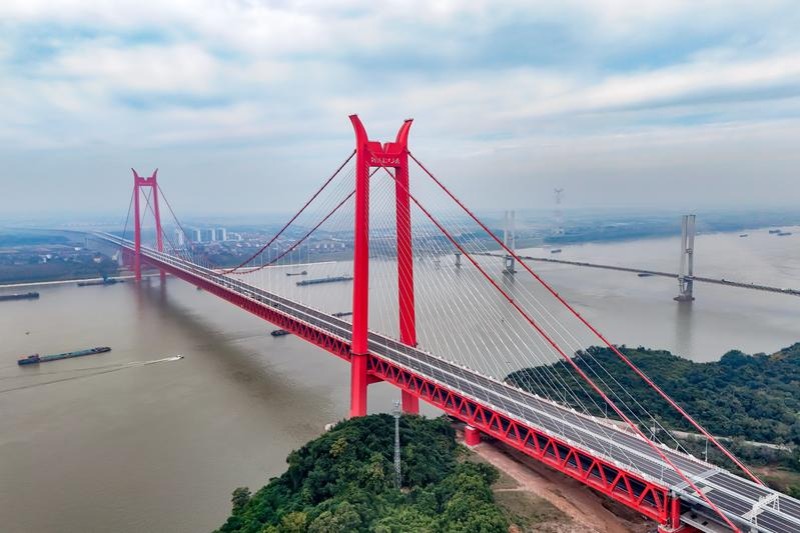
China’s first double-deck cable-stayed suspension bridge opens to traffic over Yangtze
In a landmark achievement for infrastructure development, China has inaugurated its first double-deck cable-stayed suspension bridge, the Tongling Yangtze River Third Bridge, in Tongling city, Anhui province. This engineering marvel, which opened to traffic on November 6, 2025, spans an impressive 11.9 kilometers and serves as the 11th bridge over the Yangtze River in the region. The bridge uniquely integrates expressways, intercity railways, and freight lines, facilitating seamless intermodal transport between rail and water networks. Strategically located, the bridge traverses the Tongling River Dolphin National Nature Reserve and a protected drinking water source area, reflecting its adherence to stringent ecological standards. Authorities anticipate that the bridge will significantly enhance the comprehensive transportation system in the Yangtze River Delta, fostering regional economic growth and connectivity. This project underscores China’s commitment to innovative and sustainable infrastructure development, setting a new benchmark for future endeavors.
-
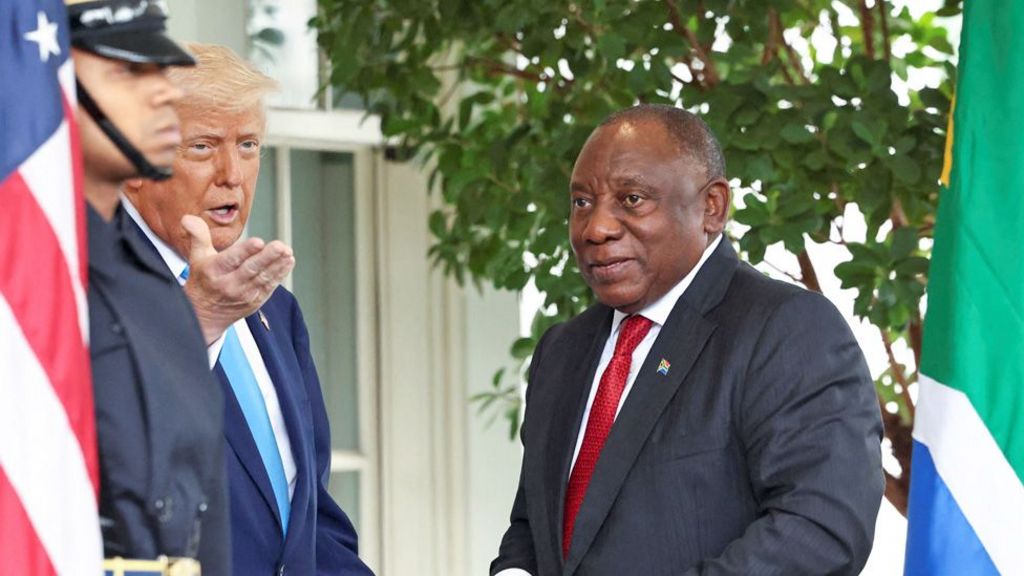
Trump wants South Africa out of the G20 as it gears up for world summit
The diplomatic relationship between the United States and South Africa has deteriorated significantly this year, marked by sharp exchanges over South Africa’s role in the G20 and contentious refugee policies. US President Donald Trump has openly criticized South Africa’s inclusion in the G20, stating that the country ‘shouldn’t even be in the Gs anymore.’ Trump, who has repeatedly accused South Africa of discriminating against its white minority, opted not to attend the upcoming G20 summit in Johannesburg, sending Vice-President JD Vance instead. South Africa, however, remains confident in its ability to host a successful summit, with Presidential spokesperson Vincent Magwenya emphasizing the country’s readiness to welcome global leaders. The G20, established in 1999 to address global economic stability, holds significant weight in international diplomacy, with member states representing over 85% of the world’s wealth. Despite Trump’s criticisms, there is no formal procedure for expelling a country from the G20, as noted by Dr. Andrew Gawthorpe of the Foreign Policy Centre. South Africa has adopted themes of solidarity, equality, and sustainability for this year’s summit, reflecting its commitment to addressing global inequalities and the legacy of colonialism. Tensions were further exacerbated earlier this year when Trump offered refugee status to Afrikaners following South Africa’s land reform legislation, which allows the government to seize land without compensation in rare cases. South African President Cyril Ramaphosa attempted to ease tensions with a visit to the White House in May, but the meeting was overshadowed by Trump’s unsubstantiated claims of white farmer persecution. Efforts to mend relations have largely failed, with South Africa facing a 30% tariff on exports to the US, the highest rate in sub-Saharan Africa. The ongoing friction highlights the complex dynamics of US-South African relations, with both countries grappling with historical legacies and contemporary political challenges.
-

US boat strikes are crimes against humanity, says former ICC prosecutor
A former chief prosecutor at the International Criminal Court (ICC), Luis Moreno Ocampo, has asserted that US airstrikes on alleged drug smuggling boats in the Caribbean Sea and Eastern Pacific should be classified as crimes against humanity under international law. These strikes, which have resulted in the deaths of at least 66 people over the past two months, have sparked significant legal and ethical debates. The Trump administration defends the actions, claiming they are part of a formal armed conflict with South American drug traffickers. However, Moreno Ocampo argues that the campaign constitutes a systematic attack on civilians during peacetime, thereby meeting the criteria for crimes against humanity. He emphasized that the individuals targeted are civilians, not soldiers, and called for investigations and prosecutions rather than lethal force. The White House countered by stating that President Trump acted within the laws of armed conflict to protect the US from cartels and dismissed the ICC as a ‘biased, unserious entity.’ The administration also highlighted that the US is not a signatory to the Rome Statute, which established the ICC. The legal justification for the strikes has been questioned by experts, with former State Department legal adviser Brian Finucane describing the US position as ‘completely unconvincing.’ Meanwhile, the political response has been divided, with Republicans largely supporting the administration’s actions, while Democrats have raised concerns about the legality and lack of evidence. The situation has also strained US-Venezuela relations, with Venezuelan President Nicolás Maduro condemning the strikes as ‘heinous crimes.’
-

Mistakenly released UK prisoner turns himself in as search continues for second freed convict
In a glaring administrative error, two inmates were mistakenly released from HMP Wandsworth, a Victorian-era prison in London, drawing sharp criticism of the UK’s overcrowded and under-resourced prison system. Billy Smith, 35, who was sentenced to nearly four years for multiple frauds, surrendered himself on Thursday after being accidentally freed on Monday. Meanwhile, Brahim Kaddour-Cherif, 24, a registered sex offender serving time for trespass with intent to steal, remains at large after his erroneous release on October 29. The Algerian national, who had overstayed his visa, was in the initial stages of deportation. These incidents have reignited scrutiny of Wandsworth, which faced similar criticism two years ago when another inmate escaped by clinging to a food delivery truck. The blunders follow stricter controls implemented after Hadush Gerberslasie Kebatu, an asylum-seeker convicted of sexual assault, was mistakenly released from Chelmsford Prison in October. Deputy Prime Minister and Justice Minister David Lammy expressed outrage, blaming the previous Conservative government for systemic failures. Government data reveals a 128% increase in erroneous releases, with 262 cases recorded in the year ending March 2025. Critics argue the Labour government’s decision to release prisoners early to alleviate overcrowding has exacerbated the issue.