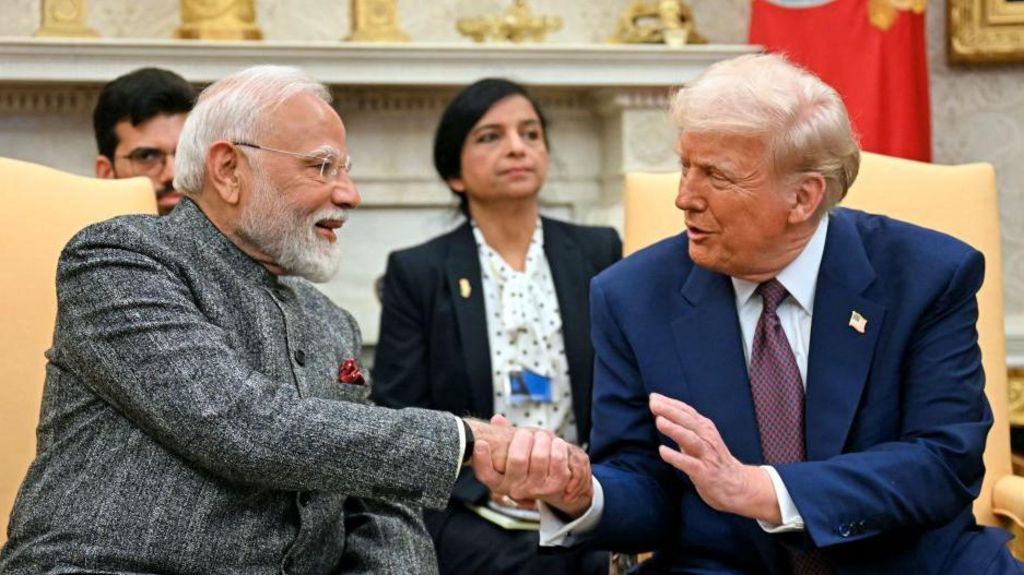
US President Donald Trump has reiterated that Indian Prime Minister Narendra Modi assured him during a recent phone call that India would significantly reduce its purchases of Russian crude oil. Trump made the statement during the White House Diwali celebrations on Tuesday, emphasizing the strong bilateral relationship between the two nations. He added that Modi shares the desire to see an end to the Russia-Ukraine conflict and has committed to cutting back on Russian oil imports. However, Modi’s social media post acknowledging Trump’s Diwali greetings did not mention any agreement on oil purchases, and the Indian foreign ministry has yet to confirm the details of the conversation. This follows Trump’s earlier claims last week, which were met with skepticism by Indian officials. India has been one of the largest buyers of Russian oil since Western nations imposed sanctions on Moscow following the Ukraine invasion in 2022. Delhi has defended its imports, citing the need for affordable energy to ensure domestic energy security. The US has criticized India’s reliance on Russian oil, accusing it of indirectly funding the war. In response, the Trump administration imposed a 50% tariff on Indian goods, including an additional 25% penalty for purchasing Russian oil. Despite these tensions, recent trade negotiations between the US and India have shown signs of progress, with reports suggesting a potential agreement to gradually reduce India’s Russian oil imports. The Indian government has acknowledged ongoing discussions with the US, emphasizing mutual interest in deepening energy cooperation. As both nations navigate these high-stakes talks, the outcome could significantly impact their economic and diplomatic ties.
作者: admin
-

At least 63 people killed in a crash of buses and other vehicles in western Uganda
A devastating road accident in western Uganda has left at least 63 people dead and several others injured, marking one of the most severe traffic disasters in the country in recent years. The tragic incident occurred early Wednesday on the highway to Gulu, a major city in northern Uganda, near the town of Kiryandongo. According to police reports, two buses traveling in opposite directions attempted to overtake other vehicles and collided head-on. The crash happened after midnight, a time when fewer bystanders are present to assist victims, exacerbating the tragedy. Irene Nakasiita, a Red Cross spokeswoman, described the scene as gruesome, with victims suffering from severe injuries, including broken limbs and heavy bleeding. Most of the injured are now receiving treatment at a nearby government hospital. Uganda has seen a worrying increase in road fatalities, with 5,144 deaths recorded in 2024, up from 4,806 in 2023 and 4,534 in 2022. Police attribute 44.5% of crashes to reckless overtaking and speeding. Authorities have urged motorists to exercise extreme caution and avoid dangerous driving practices to prevent further tragedies.
-

Thunder begin title defence with overtime win
In a nail-biting season opener, Shai Gilgeous-Alexander showcased his MVP prowess, securing a dramatic 125-124 victory for the Oklahoma City Thunder over the Houston Rockets in double overtime. The reigning NBA champions began their title defense in spectacular fashion, with Gilgeous-Alexander delivering the decisive free throws with just 2.3 seconds left on the clock, capping off a 35-point performance. Houston’s Alperun Sengun led all scorers with 39 points, including a career-high five three-pointers, but it wasn’t enough to overcome the Thunder’s resilience. Chet Holmgren also played a pivotal role, contributing 28 points to the Thunder’s hard-fought win. Reflecting on the game, Gilgeous-Alexander emphasized the team’s grit and defensive effort, stating, ‘We know that when we do it (on defense), we give ourselves a chance no matter what’s going on.’ The victory was celebrated with the raising of Oklahoma City’s championship banner and the presentation of championship rings, marking their first title since relocating from Seattle in 2008. The Thunder will face the Indiana Pacers next, while the Rockets take on the Detroit Pistons. In other NBA action, Luka Doncic’s impressive 43-point, 12-rebound, and 9-assist performance couldn’t save the Los Angeles Lakers from a 119-109 defeat against the Golden State Warriors, who were led by Jimmy Butler’s 31 points and Stephen Curry’s 23. The Lakers were notably without LeBron James, who is recovering from sciatica.
-
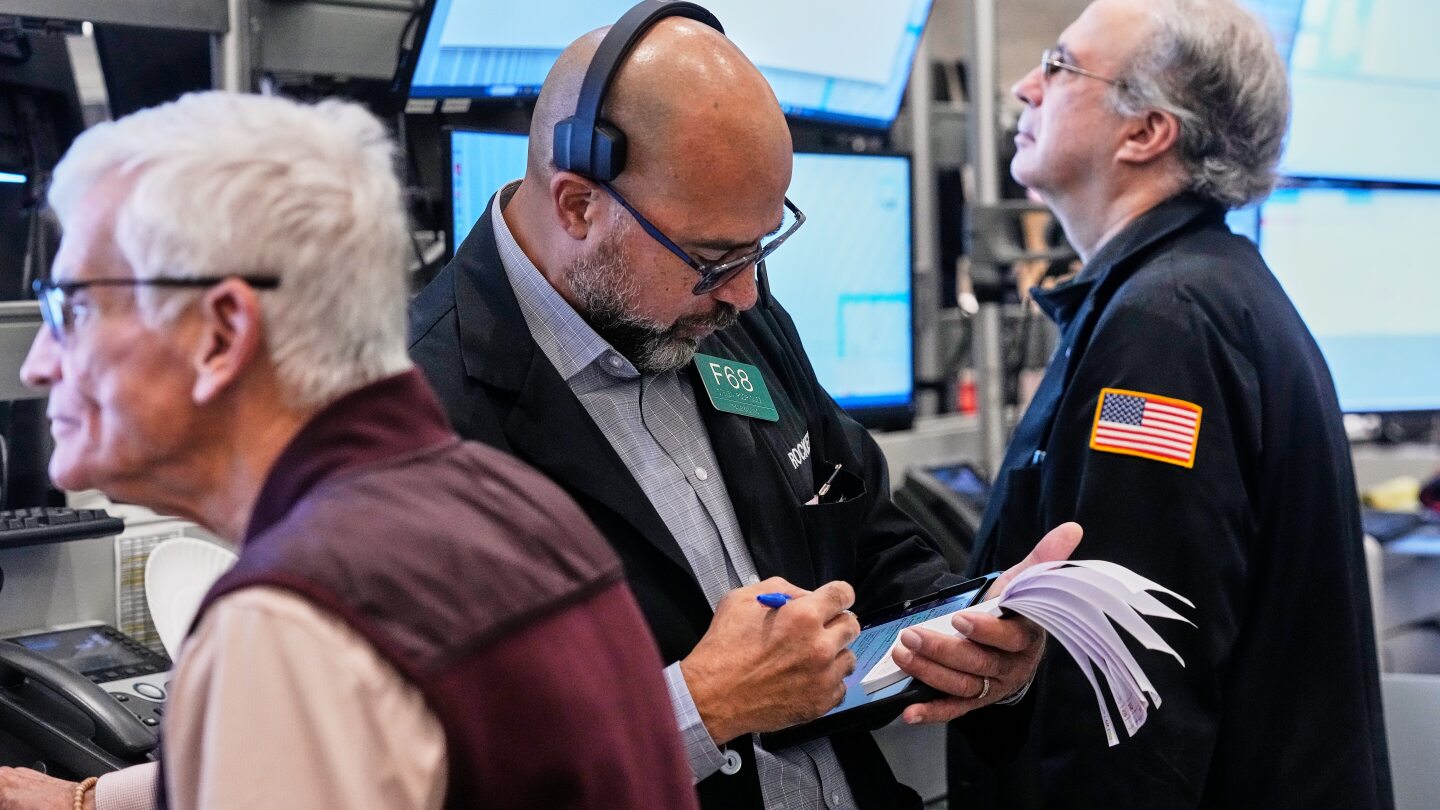
US stocks drift near their records as gold’s price falls again
Wall Street experienced a relatively calm trading session on Wednesday, with major indices hovering close to their all-time highs. The S&P 500 dipped slightly by 0.1%, remaining just below its recent peak, while the Dow Jones Industrial Average fell by 65 points, or 0.1%. The Nasdaq composite also saw a modest decline of 0.3% as of 9:35 a.m. Eastern time. Despite these minor setbacks, the overall market sentiment remains cautiously optimistic. Bank stocks showed resilience following stronger-than-expected earnings reports from Capital One Financial and Western Alliance Bancorp. The latter’s positive performance was particularly noteworthy, as it helped restore some confidence in the banking sector after recent concerns over potential bad loans. In the tech sector, Intuitive Surgical surged 16.5% after reporting robust quarterly profits, while GE Vernova added 0.5%. However, not all companies fared well. Netflix’s stock plummeted 8.3% after its latest earnings fell short of expectations, and AT&T dropped 4.5% after matching analysts’ forecasts. Texas Instruments also faced a 7.7% decline due to underwhelming results. On the other hand, Beyond Meat continued its meteoric rise, soaring 48.9% amid increased product availability at Walmart stores. Meanwhile, gold prices retreated further, slipping 0.8% to $4,075 per ounce, following a significant 5.3% drop the previous day. Despite this, gold remains up more than 50% for the year, driven by expectations of Federal Reserve rate cuts and persistent inflation concerns. Overseas, European and Asian markets showed mixed performances, with London’s FTSE 100 rising 1% and South Korea’s Kospi jumping 1.6%, while Hong Kong and Paris experienced declines.
-

Last two-horse race in Irish presidential election left winner ‘dumbfounded’
As the Republic of Ireland prepares to elect its 10th president on Friday, the 2023 race bears striking similarities to the historic 1973 election, which saw Erskine Childers emerge as an unexpected victor. This year, voters will choose between Independent TD Catherine Connolly, supported by Sinn Féin and left-wing parties, and Fine Gael’s Heather Humphreys. Notably, Fianna Fáil’s Jim Gavin remains on the ballot but has withdrawn from the campaign, mirroring the dynamics of the 1973 contest.
-

A major Russian drone and missile attack on Ukraine kills at least 6 people, officials say
In a devastating escalation of the ongoing conflict, Russia launched a massive drone and missile attack across Ukraine, resulting in the deaths of at least six individuals, including a mother and her two young daughters. The assault, which spanned the night and extended into Wednesday morning, targeted multiple Ukrainian cities, including a village in the Kyiv region where a strike ignited a house, tragically claiming the lives of the family. Regional head Mykola Kalashnyk confirmed the incident, while authorities reported at least 18 injuries in Kyiv alone. The attack also severely damaged Ukraine’s energy infrastructure, causing widespread blackouts as Russia intensifies efforts to disrupt the country’s power grid ahead of the harsh winter season. Amid these developments, U.S.-led initiatives to broker peace have faltered, with President Donald Trump expressing frustration over Russian President Vladimir Putin’s unwillingness to compromise. Ukrainian President Volodymyr Zelenskyy has called for increased military support and international pressure on Russia, emphasizing the need for sanctions, advanced missile capabilities, and coordinated diplomacy. Zelenskyy is set to engage in a week of intense diplomatic efforts, including meetings with Swedish Prime Minister Ulf Kristersson and participation in international summits aimed at bolstering support for Ukraine. Meanwhile, Ukraine’s military reported striking a critical Russian chemical plant in the Bryansk region using British-made Storm Shadow missiles, further escalating the conflict. The international community continues to monitor the situation closely as the war shows no signs of abating.
-
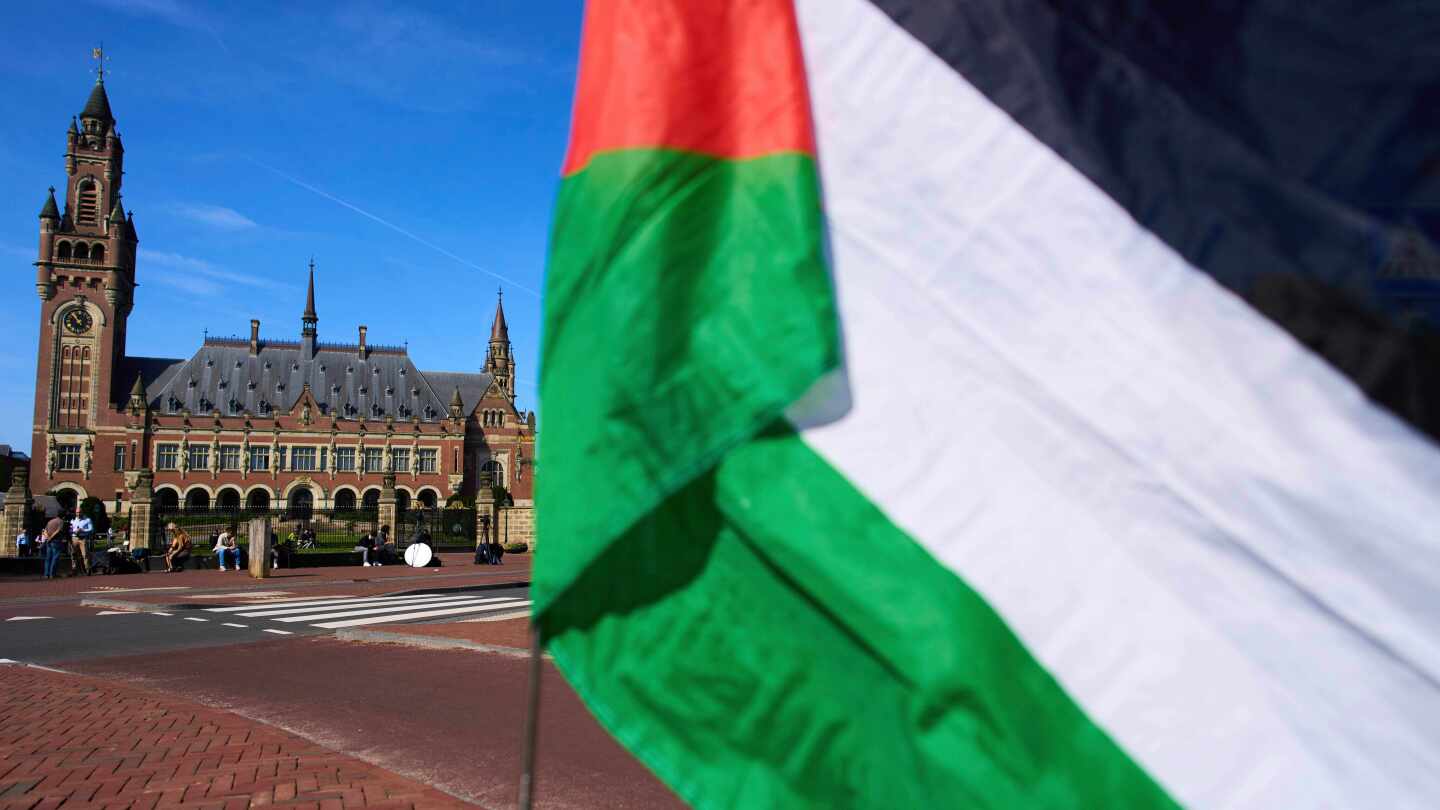
Top UN court to rule on Israel’s obligations to ensure humanitarian aid reaches Palestinians
The International Court of Justice (ICJ) in The Hague is poised to deliver a crucial advisory opinion on Wednesday regarding Israel’s legal responsibilities to ensure the delivery of urgently needed humanitarian aid to Palestinians in Gaza and the occupied West Bank. This ruling comes in response to a request from the U.N. General Assembly, made last year, following Israel’s decision to effectively ban the U.N. agency for Palestinian refugees (UNRWA) from operating in Gaza. UNRWA has been the primary provider of aid in the region. While advisory opinions are nonbinding, they carry significant legal weight and could have far-reaching implications for the U.N. and its global missions. The proceedings, which began in April, predate the fragile U.S.-brokered ceasefire that took effect on October 10, aimed at ending the two-year conflict in Gaza. Despite the ceasefire, tensions flared earlier this week after Israeli forces launched deadly strikes, citing the killing of two soldiers by Hamas militants. Under the ceasefire agreement, Israel is required to allow 600 humanitarian aid trucks into Gaza daily. The U.N. has announced plans to increase aid shipments, and Hamas has acknowledged Israel’s compliance with the agreement. However, Palestinian Ambassador Ammar Hijazi accused Israel of “starving, killing, and displacing Palestinians” while obstructing humanitarian efforts. Israel has denied these allegations, calling the proceedings biased, and did not attend the hearings, though it submitted a 38-page written response. The ICJ’s opinion could reinforce the principle that states cannot selectively restrict U.N. operations, according to international law experts. This case follows previous ICJ rulings critical of Israeli policies, including the West Bank separation barrier and the occupation of Palestinian territories. The advisory opinion is separate from South Africa’s ongoing case accusing Israel of genocide in Gaza, which Israel vehemently denies. The conflict, triggered by Hamas’ October 7 attack on southern Israel, has resulted in significant casualties, with Gaza’s Health Ministry reporting over 68,000 deaths, a figure disputed by Israel.
-
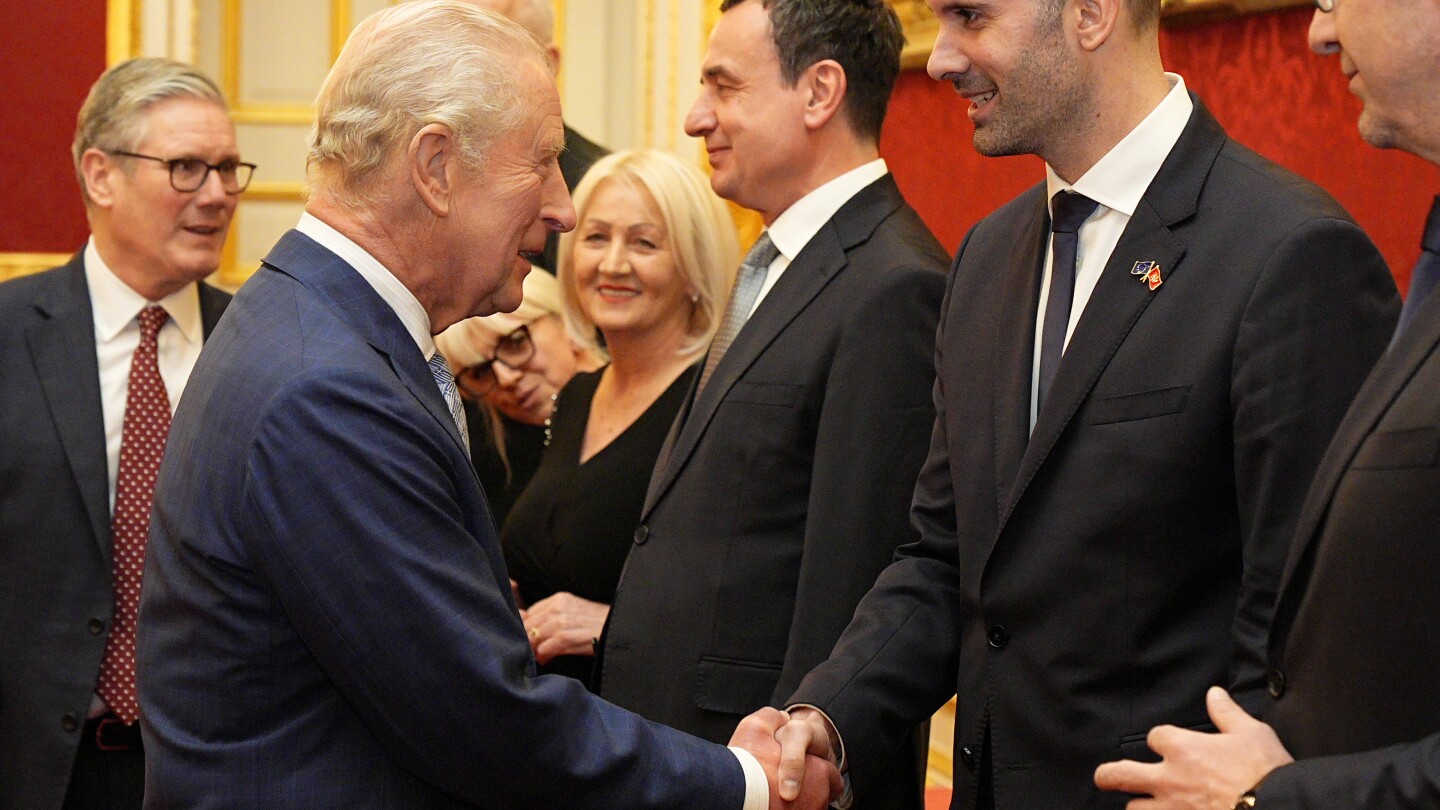
Western Balkans leaders meet in London for talks on migration and security
Leaders from six Western Balkan nations—Albania, Bosnia, Kosovo, Montenegro, North Macedonia, and Serbia—are set to meet with British and European officials in London on Wednesday. The summit, part of the Berlin Process initiated in 2014, aims to address critical issues such as migration, security, and economic growth in a region marked by volatility and Russian influence. Despite Croatia being the only Western Balkan nation to join the EU in 2013, progress for others has stalled, with Serbia and Kosovo particularly at odds over the latter’s independence. The EU’s renewed openness to expansion following Russia’s 2022 invasion of Ukraine has heightened concerns that the conflict could spill over into the Balkans, a region still recovering from its own historical conflicts. The UK, despite its 2020 exit from the EU, is hosting the summit, emphasizing its commitment to curbing unauthorized migration and bolstering regional defenses against Moscow’s interference. British Prime Minister Keir Starmer’s government is prioritizing efforts to tackle the drug trade and reduce migration flows, with gangs smuggling hundreds of thousands of people to the EU via the Western Balkans. The UK has already seen success in reducing Albanian migration through a joint task force and is now seeking to establish ‘return hubs’ for rejected asylum-seekers, though Albania and Montenegro have expressed reluctance to host such facilities. Montenegro’s Prime Minister Milojko Spajic suggested his country might consider a hub if the UK invests €10 billion in railway infrastructure.
-
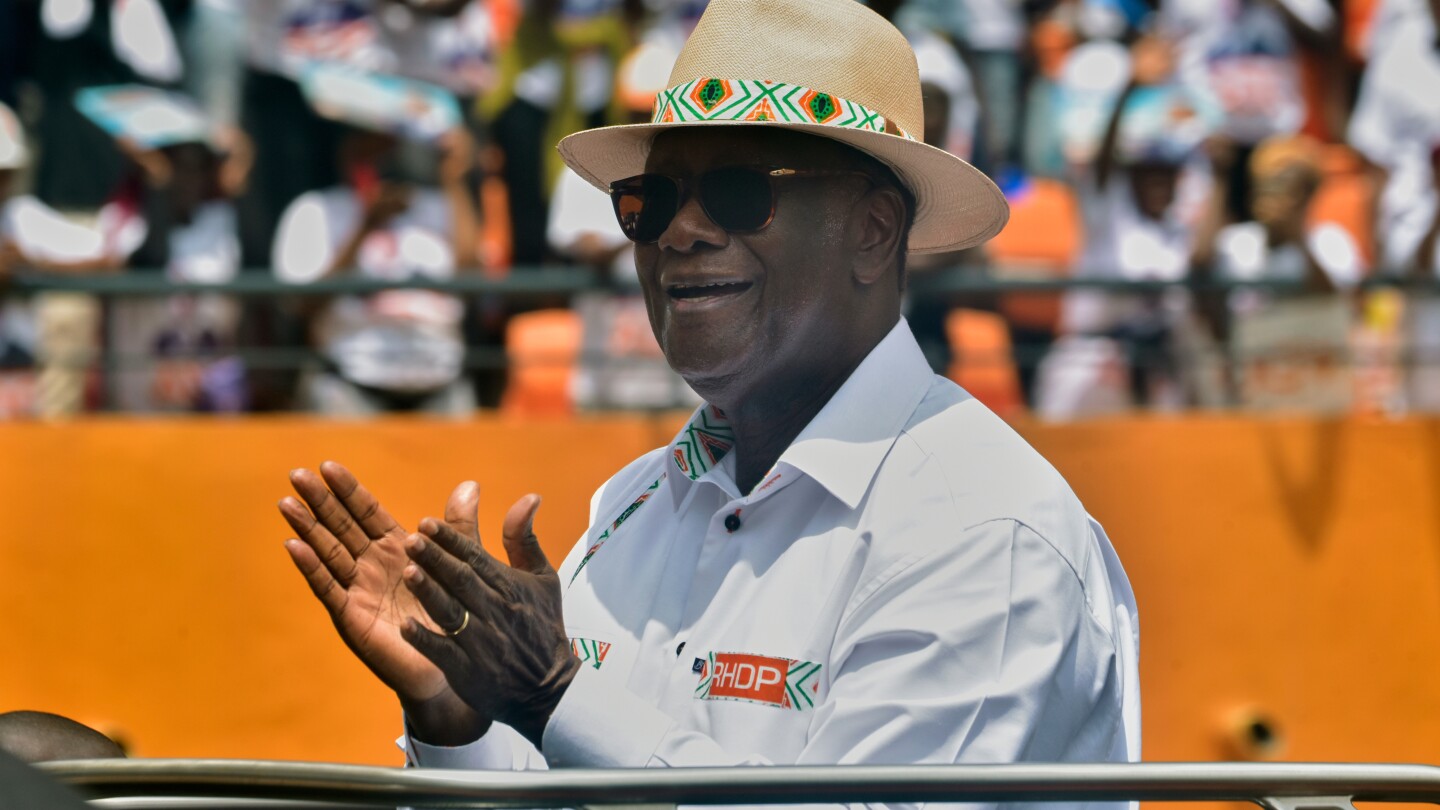
Youth anger in Ivory Coast as the 83-year-old president seeks a fourth term
In the bustling capital of Abidjan, Ivory Coast, 33-year-old slam poet Placide Konan is using his art to voice frustration over President Alassane Ouattara’s controversial bid for a fourth term in Saturday’s election. Despite Ivory Coast’s status as West Africa’s economic powerhouse and the world’s largest cocoa producer, the country grapples with stark inequality and a 37.5% poverty rate. Over 75% of the population is under 35, and many, like Konan, struggle to make ends meet. “You have to be very lucky, or a bit of a magician, to live comfortably,” he remarked, highlighting the economic challenges in a city still reveling in its role as host of the 2024 Africa Cup of Nations. Analysts predict an easy victory for the 83-year-old Ouattara, whose rule began in 2011. However, the election is marred by controversy, with key opposition leaders, including former Credit Suisse CEO Tidjane Thiam, disqualified on legal grounds. Thiam, who renounced his French nationality in March, dismissed the decision as foul play. Ouattara faces a weakened opposition field, including former commerce minister Jean-Louis Billon and ex-first lady Simone Gbagbo. The election reflects a broader trend in Africa, where long-serving leaders often clash with a youthful populace. Concerns over violence loom large, with 8.7 million registered voters and heightened security measures in place. Protests against the disqualifications have been met with arrests and restrictions on public gatherings, resulting in at least three deaths. Critics accuse the government of exploiting legal loopholes to stifle opposition, undermining stability in a region already facing significant challenges. Ouattara, who assumed power after a deadly 2010-2011 political crisis, defends his fourth-term bid by citing the country’s “unprecedented security, economic, and monetary” challenges. He has pledged to support youth entrepreneurship and independence, yet critics argue that his administration has failed to translate economic growth into sufficient job opportunities for young people. Meanwhile, security concerns persist, particularly in the north, where Ivory Coast faces pressure from armed groups spilling over from conflict-ridden Mali and Burkina Faso. Despite having one of the region’s most sophisticated militaries, the country remains vulnerable to regional instability. As Ivory Coast heads to the polls, the election underscores the deep divisions and challenges facing the nation.
-
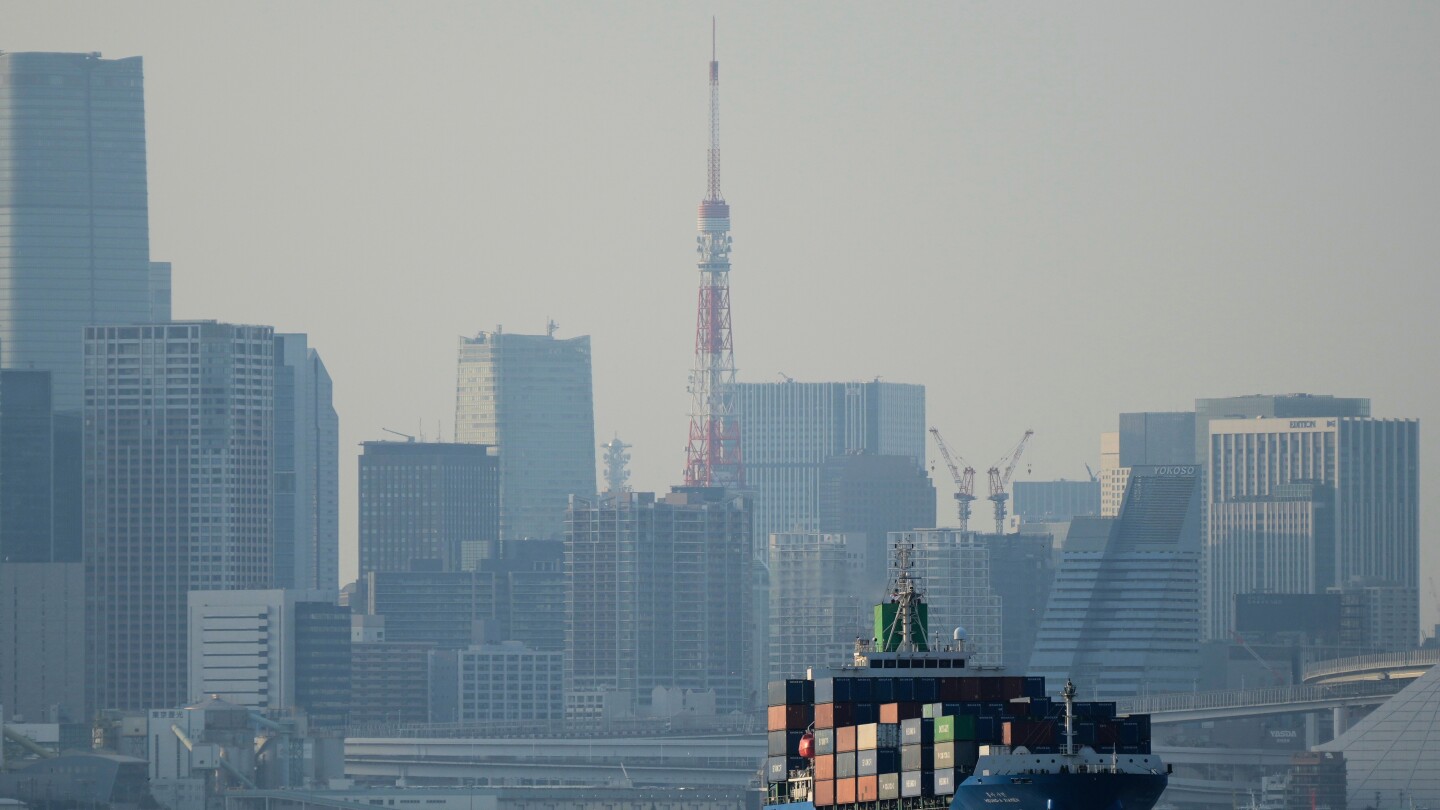
Japan’s exports and imports grow in September despite Trump’s tariffs
Japan’s export sector demonstrated resilience in September, with a 4.2% year-on-year increase, according to data released by the Ministry of Finance on Wednesday. This growth was primarily fueled by a 9.2% surge in exports to Asian markets, which helped counterbalance a significant 13.3% decline in shipments to the United States. The drop in U.S.-bound exports, marking the sixth consecutive month of decline, was largely attributed to tariffs imposed by former President Donald Trump. Notably, auto exports to the U.S. plummeted by 24.2%, a concerning trend for Japanese automakers like Toyota Motor Corp., which play a pivotal role in the nation’s economy. Meanwhile, exports to China rose by 5.8%, highlighting the growing importance of Asian trade partnerships. On the import side, Japan saw a modest 3.3% overall increase, with imports from Asia climbing 6%, including a 9.8% rise from China. The trade data coincides with the historic appointment of Sanae Takaichi as Japan’s first female prime minister. Takaichi, known for her nationalist and conservative views, has pledged to boost public spending, increase wages, and implement looser monetary policies, which could weaken the yen and benefit exporters. However, her policy agenda faces significant hurdles, as the ruling Liberal Democratic Party lacks a majority in parliament and remains internally divided. Trump’s upcoming visit to Japan later this month is expected to address the trade framework established in July, which imposed a 15% tariff on Japanese goods—a reduction from the initially proposed 25% rate. Japan had previously committed to investing $550 billion in the U.S. and opening its markets to American automobiles and rice.