
The UAE has unveiled significant updates to the Nafis Award for 2025-2026, marking a pivotal shift in the Emiratisation strategy. Announced at a recent press conference, the fourth cycle of the award, part of the Dh24-billion Nafis programme, will now prioritize the quality and sustainability of employment for UAE nationals in the private sector. This strategic move aims to deepen the impact of Emiratisation by focusing on long-term career growth and professional development rather than merely increasing the number of Emirati employees. The award introduces a new sub-category specifically for professionals in the education sector, including teachers, assistant teachers, and educational supervisors in private institutions. This addition recognizes the growing demand for Emirati talent in this critical field. The evaluation criteria for the Establishments category have also been refined, with companies now assessed on their ability to retain Emirati talent, their commitment to training, and their use of the Nafis platform for recruitment. The Individuals category, which includes 11 sub-categories, now features the new education track, allowing Emirati professionals to self-nominate for recognition. The award operates under a robust governance structure, chaired by Sheikh Mansour bin Zayed Al Nahyan, and is organized by the Emirati Talent Competitiveness Council. The timeline for the award includes awareness workshops until January, with evaluations beginning in February. The results will be reviewed by an arbitration committee before final approval. Since its launch in September 2021, the Nafis programme has seen a 437 per cent increase in Emirati employment in the private sector, with over 157,000 nationals now employed by more than 30,000 companies. The programme has also shifted career aspirations, with nearly six out of ten Emirati graduates now starting their careers in the private sector, up from 15 per cent previously.
作者: admin
-
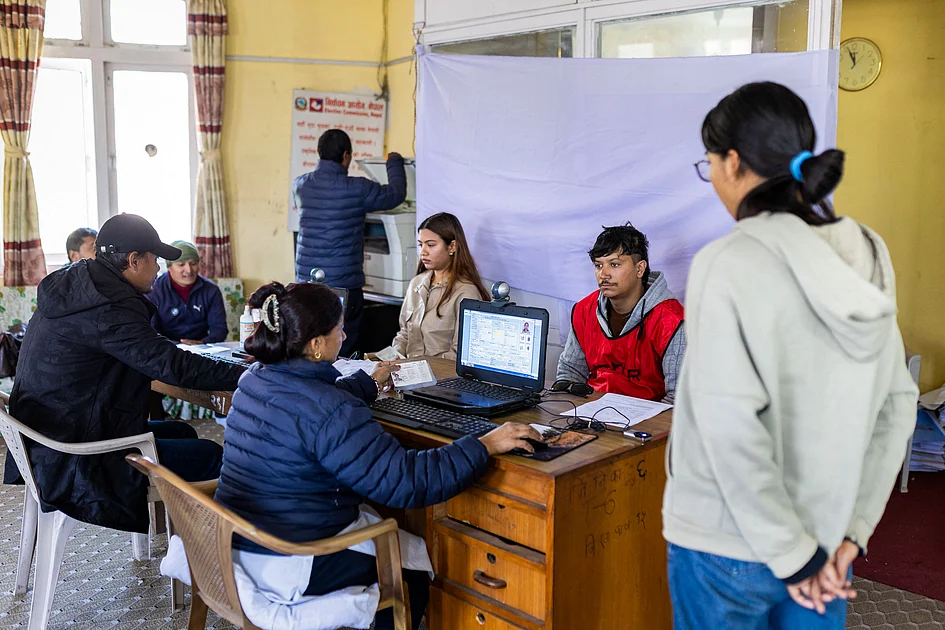
Young Nepalis drive a new wave of voters and candidates
In the wake of a transformative uprising, Nepal is witnessing a remarkable surge in political engagement, particularly among its youth. This newfound enthusiasm is not limited to voting but extends to active participation as candidates in the upcoming March 2026 elections. The movement, initially sparked by a government-imposed social media ban, has evolved into a broader demand for systemic change, fueled by years of economic stagnation and entrenched corruption. Young Nepalis, who played a pivotal role in the protests that ousted the previous government, are now stepping forward to ensure their voices are heard in the political arena. Kishori Karki, a 25-year-old law graduate, epitomizes this shift. A first-time voter, Karki has also applied to register a new political party, driven by the desire to bring fresh perspectives to Nepal’s political landscape. Her actions during the protests, including transporting an injured demonstrator to hospital, have made her a symbol of the movement’s spirit. The September 8-9 demonstrations, which saw the deaths of at least 76 people and the destruction of key government buildings, were a turning point. The subsequent appointment of former chief justice Sushila Karki as interim leader marked a significant step towards political reform. The youth-led movement has also embraced technology, with thousands of activists using the group-chat app Discord to coordinate their efforts. The introduction of an online voter registration system has further facilitated participation, with nearly 675,000 new voters already registered. This surge in political interest is not confined to the youth; older citizens like Sunita Tamang, 40, who registered to vote for the first time, are also motivated by the promise of change. Despite the challenges ahead, including a volatile political landscape and deep public distrust in established parties, the momentum for reform is undeniable. As Uparjun Chamling, a 25-year-old activist, aptly put it, ‘In the spirit of the Gen Z movement, we need new faces. But, more importantly, we need new thinking.’
-

Ex-federal worker accused of staging own attack with slashes, political slurs on body
A shocking case has emerged in New Jersey, where a former congressional staffer stands accused of orchestrating a fabricated violent political attack. Natalie Greene, 26, allegedly conspired with an accomplice to stage the incident on a nature trail in Egg Harbor Township. According to prosecutors, Greene claimed that three gunmen attacked her, tied her up, and inscribed derogatory messages on her body, including ‘Trump whore’ on her stomach. She also alleged that the attackers referenced her employment with New Jersey Republican Representative Jefferson Van Drew, though he was not named in the indictment. Greene has been charged with conspiracy to falsely report a violent attack and providing false statements to law enforcement. The incident occurred on July 23, when Greene and her co-conspirator called 911, reporting an ambush by three men. Police found Greene bound with zip ties, her shirt pulled over her head, and multiple lacerations on her body. However, inconsistencies in their stories and evidence, including a receipt for a $500 payment to a body modification artist, led investigators to conclude the attack was staged. Greene faces up to 10 years in prison and a $500,000 fine if convicted. A spokesperson for Rep. Van Drew expressed sadness over the news and wished Greene well. Greene was released on a $200,000 bond, and her lawyers have yet to comment.
-

Netanyahu’s son slashes asking price for Oxford flat after it fails to sell
Avner Netanyahu, the youngest son of Israeli Prime Minister Benjamin Netanyahu, has significantly reduced the asking price of his three-bedroom flat in Oxford, UK, after failing to sell it for nine months. The property, initially listed for £620,000 in February, has now been marked down to £500,000, representing a nearly 20% reduction and a potential loss of £2,500 for Netanyahu’s son.
-

Look: How will air taxis look like? 3 models put on display at Dubai Airshow
The Dubai Airshow 2025 has unveiled a glimpse into the future of urban mobility, showcasing three cutting-edge air taxi models that could revolutionize transportation in the UAE by the end of the decade. These models, ranging from fully electric city hoppers to hybrid long-range concepts, highlight the region’s ambitious plans to integrate air taxis into everyday travel. Dubai is set to launch its first air taxi routes in 2026, while Abu Dhabi is concurrently developing its own point-to-point air mobility strategies. For many attendees, this marks their first encounter with the aircraft that may soon replace short car journeys in the region. Among the standout models is Archer Aviation’s Midnight, an electric commuter aircraft designed for urban trips. Capable of carrying four passengers and a pilot, the Midnight boasts speeds of up to 240 km/h, operates emission-free, and features multiple redundant safety systems. Archer has already confirmed its UAE operations will commence next year, with expansion plans into Saudi Arabia. The E20 Plus, developed by UAE-based Autocraft, is another highlight. Built to withstand the region’s harsh weather conditions, this four-passenger aircraft offers a 200 km range and rapid recharging times. Autocraft has partnered with Abu Dhabi Aviation to integrate the E20 Plus into the emirate’s flight ecosystem by late 2026. Honda R&D also presented a one-third scale model of its hybrid air taxi, which combines electric flight with a Formula One-inspired range extender, targeting a range of over 400 km. Although still in the research phase, Honda envisions future autonomous capabilities, with full certification expected in the early 2030s. These innovations underscore the UAE’s commitment to pioneering advanced transportation solutions.
-

CFI Group strengthens board of directors with strategic appointments of global experts
CFI Group, a prominent global trading and investment firm based in the UAE, has announced the strategic addition of three highly accomplished independent members to its Board of Directors. This move underscores the Group’s dedication to fostering world-class governance, driving long-term value creation, and advancing innovation across its international operations. The new board members bring a wealth of expertise in institutional markets, fintech innovation, and regulated brokerage leadership, further solidifying CFI’s strategic vision and global growth trajectory. Federico Cirulli, with over two decades of executive experience in regulated brokerages and asset management, joins the board. His tenure includes leadership roles at ActivTrades Ltd UK, Swissquote Ltd UK, and CMC Markets UK Plc, coupled with his current position as CEO of Atlantide Asset Management. Cirulli is renowned for his contributions to digital transformation, global expansion, and sustainable growth. David Haglund, another new appointee, brings over 20 years of investment leadership and corporate governance expertise, particularly in emerging markets. His distinguished career includes roles as a portfolio manager at Franklin Templeton and board membership at Aramex, where he contributed to governance, risk oversight, and sustainability strategies. Prema Varadhan, the third addition, boasts over 25 years of experience in fintech and enterprise product leadership. As president of product and chief operating officer at Temenos, she has spearheaded large-scale cloud and digital transformations across financial institutions globally. Varadhan is celebrated for her work in product innovation and AI-enabled financial infrastructure. Hisham Mansour, chairman of CFI Group’s board, emphasized the significance of these appointments, stating that they mark a pivotal step in the company’s evolution. He highlighted the new members’ ability to enhance strategic thinking, innovation, and responsible growth. This expansion reflects CFI Group’s commitment to embedding governance as a cornerstone of its growth strategy, ensuring accountability, foresight, and regulatory excellence as the company continues to expand its global footprint.
-
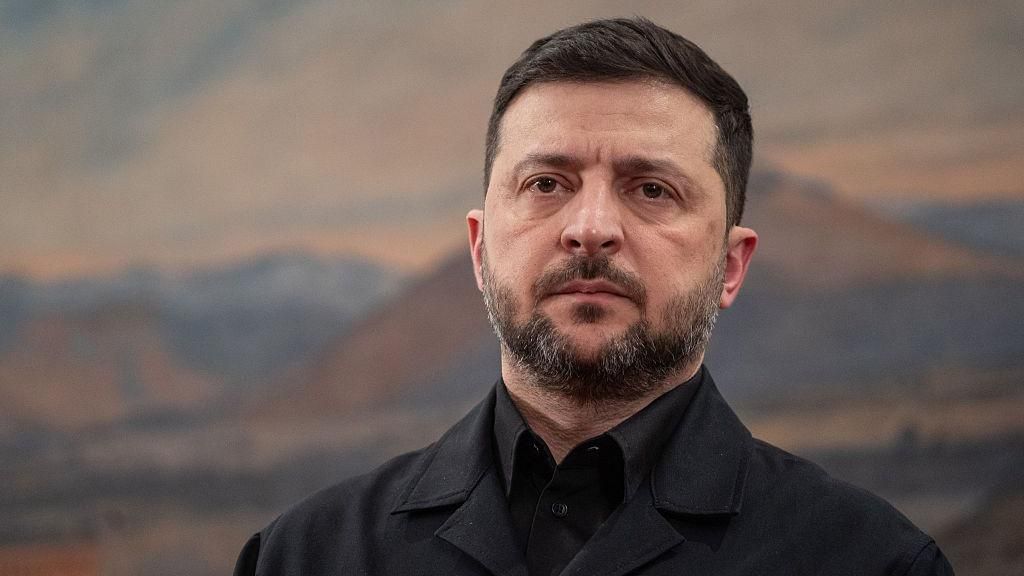
Zelensky to speak with Trump after US proposes Russia-Ukraine peace plan
The United States has presented a draft peace plan to Ukraine aimed at ending the ongoing war with Russia, a proposal reportedly crafted without Kyiv’s direct involvement. The plan, developed by US special envoy Steve Witkoff and his Russian counterpart Kirill Dmitriev, has sparked mixed reactions from both sides. Ukrainian President Volodymyr Zelensky’s office acknowledged the US’s belief that the draft could “help reinvigorate diplomacy” and expressed Ukraine’s willingness to engage with its provisions to achieve a “just end to the war.” However, details of the proposal, as reported by Axios, the Financial Times, and Reuters, suggest it includes demands for Ukraine to cede control of parts of the Donbas region, significantly reduce its military size, and relinquish many of its weapons—terms that appear heavily skewed in favor of Moscow. This has led to a lukewarm response from Kyiv. The White House revealed that President Donald Trump has grown “frustrated” with both Russia and Ukraine for their reluctance to commit to a peace agreement, prompting his administration to develop a “detailed and acceptable” plan. Meanwhile, the Kremlin downplayed the significance of the 28-point proposal, with spokesman Dmitry Peskov stating that while there have been “contacts” with the US, there is no formal consultation process. The draft plan emerged following a meeting between Zelensky and senior US military officials in Kyiv, including US Army Secretary Dan Driscoll and top US army commander in Europe Gen Chris Donahue. European leaders have also expressed concerns, with EU foreign policy chief Kaja Kallas emphasizing that any viable plan must involve Ukrainians and Europeans. Ukrainian MP Lisa Yasko criticized the lack of consultation, stating that it “looks like someone wants to decide things for us,” a sentiment that resonates deeply with many Ukrainians. As the fourth anniversary of Russia’s full-scale invasion approaches, the conflict remains unresolved, with both sides continuing to inflict significant damage on each other. Recent Russian missile and drone attacks on Ukraine’s western city of Ternopil resulted in at least 26 deaths, underscoring the ongoing brutality of the war.
-

Watch: Miss Universe Jamaica falls off stage in a nasty accident, hospitalised
In a dramatic turn of events at the Miss Universe 2025 pageant in Thailand, Dr. Gabrielle Henry, the reigning Miss Universe Jamaica, suffered a distressing fall from the main stage during the evening gown round. The incident, which occurred on November 19, has since captured global attention after a video of the accident went viral. The footage shows Henry gracefully walking in her shimmering gown, only to suddenly plummet off the stage, leaving the audience in shock and concern. Emergency responders swiftly brought a stretcher onto the stage, and Henry was carried out for immediate medical attention. Despite the alarming incident, the pageant continued, with the next contestant stepping onto the stage shortly after. Raul Rocha, President of the Miss Universe organization, later provided an update via Instagram, confirming that Henry had been taken to Paolo Rangsit Hospital. He assured the public that there were no broken bones or life-threatening injuries, though further tests were being conducted to ensure her full recovery. The Miss Universe Jamaica Organization urged supporters to remain positive and keep Henry in their prayers as she undergoes medical care. This year’s Miss Universe pageant has been marked by controversy, including a scandal involving a pageant official and the withdrawal of three judges, adding to the event’s tumultuous atmosphere.
-
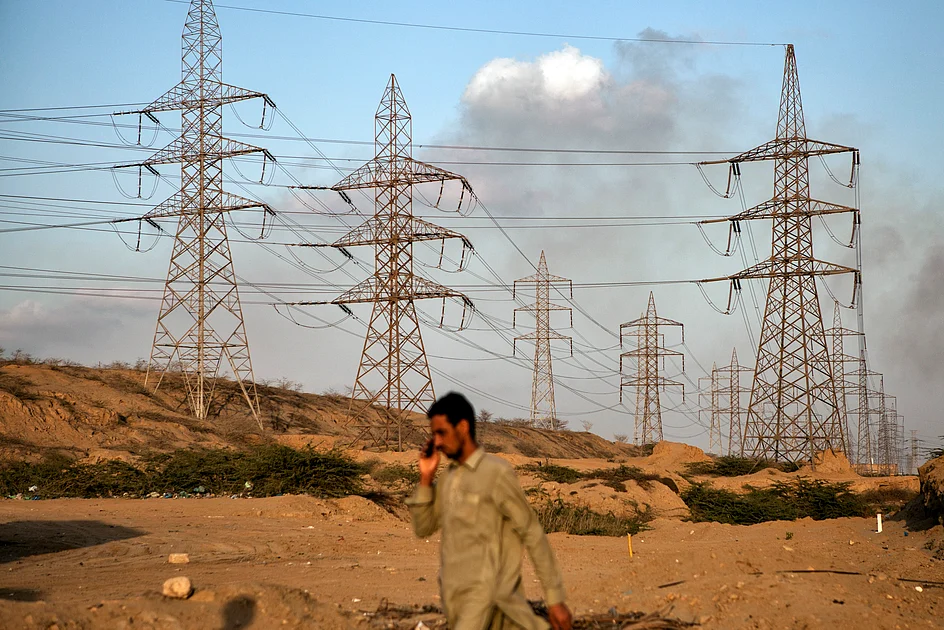
ADB approves $330m loan to upgrade Pakistan power grid
The Asian Development Bank (ADB) has sanctioned a $330 million loan to Pakistan aimed at upgrading its outdated power grid. This initiative is expected to enhance the transmission of hydropower from northern regions to major urban centers, addressing chronic energy shortages and inefficiencies. Pakistan, home to 250 million people, has been grappling with frequent power outages, escalating electricity costs, and a burgeoning circular debt in the power sector, which has reached 1.7 trillion rupees ($5.9 billion). The ADB stated that the investment will facilitate the transfer of up to 3,200 megawatts of clean energy from hydropower plants in the north, thereby reducing reliance on imported fuels and improving energy security. Emma Fan, ADB’s Pakistan director, emphasized the project’s role in accelerating the country’s transition to a more affordable and sustainable energy mix. This loan follows a $250 million disbursement in November 2023 for expanding the high-voltage transmission network in Punjab and Khyber Pakhtunkhwa provinces. Additionally, the ADB approved a $410 million package in August for the development of Pakistan’s Reko Diq copper and gold mine. Pakistan’s heavy dependence on external borrowing was evident in 2023 when it narrowly avoided default, thanks to a $7 billion IMF bailout that unlocked further loans from friendly nations.
-

US clears $93 million sale of Javelin anti-tank system, Excalibur projectiles to India
The United States has greenlit a significant defense deal with India, approving the sale of Javelin anti-tank missile systems and Excalibur guided artillery munitions worth $93 million. This decision, announced by the US Defence Security Cooperation Agency (DSCA) on Wednesday, marks India’s first acquisition under the US foreign military sales program since bilateral relations faced strain in August. The friction arose when former President Donald Trump imposed a 50% tariff hike on Indian goods in response to New Delhi’s procurement of Russian oil. The latest sale underscores Washington’s commitment to fortifying its strategic alliance with India, a key player in maintaining regional stability and economic progress in the Indo-Pacific and South Asia. India has requested 216 Excalibur projectiles and 100 Javelin systems, with RTX Corp and its joint venture with Lockheed Martin serving as the principal contractors. This deal follows India’s recent reorder of General Electric fighter jet engines for its domestically produced Tejas combat aircraft.