作者: admin

  • China, global collaboration key themes at science forum

    China, global collaboration key themes at science forum

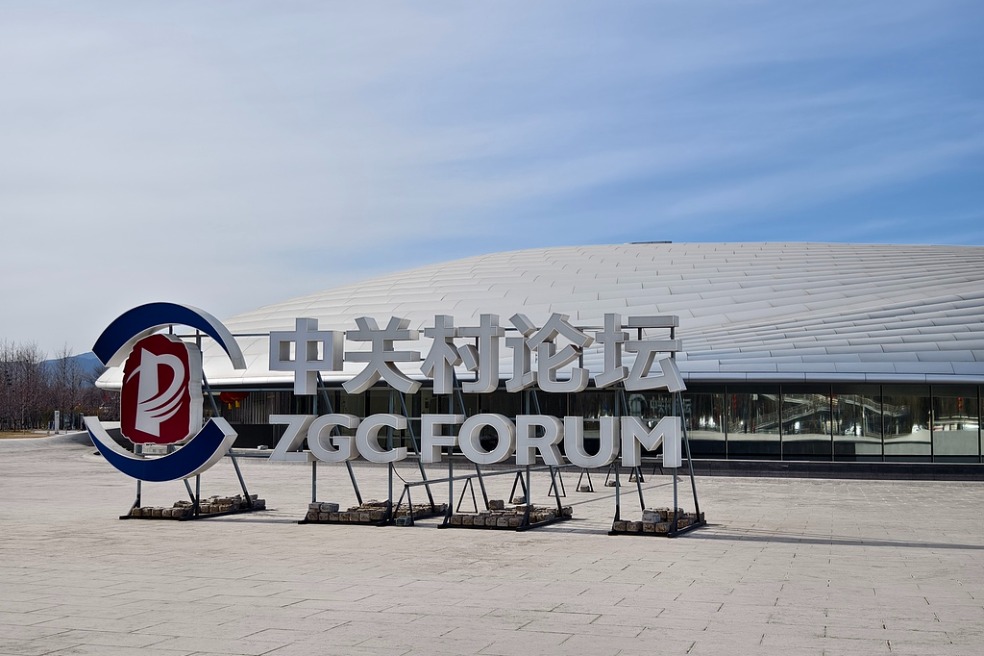
    Beijing is poised to showcase its expanding role in global scientific innovation as it prepares to host the prestigious Zhongguancun Forum from March 25-29. The event will emphasize international cooperation and China’s commitment to opening its scientific facilities and research achievements to the world community.

    At a recent press conference, Lin Xin, Vice-Minister of Science and Technology, outlined how the forum will highlight Beijing’s evolution from a national innovation center to the anchor of the broader Beijing-Tianjin-Hebei innovation hub, designed to foster deeper industrial collaboration throughout the region.

    The forum will feature specialized sessions examining cutting-edge technological fields including 6G communications, brain-computer interface technology, and advanced cell and gene therapies. Significant announcements planned for the event include China’s list of top 10 scientific advancements and the unveiling of an international cooperation action plan.

    To accelerate the commercialization of scientific breakthroughs, the forum will host frontier technology competitions and technology trade conferences. Beijing’s substantial investment in technological development was highlighted by Jin Wei, Vice-Mayor of Beijing, who noted that over 6% of government spending is allocated to foster industrial clusters exceeding 1 trillion yuan ($145.4 billion) in sectors including information technology, pharmaceuticals, healthcare, and scientific services.

    The integration of the Beijing-Tianjin-Hebei innovation hub has already demonstrated remarkable progress, with technology contract transactions reaching over 320 billion yuan during the 14th Five-Year Plan period (2021-25), representing a 1.7-fold increase from the previous five years.

    The Huairou National Comprehensive Science Center has emerged as a cornerstone of this innovation ecosystem, having developed 37 scientific facility platforms with 29 currently operational. These facilities have provided 1.77 million hours of shared machine time for global researchers, resulting in 439 significant scientific breakthroughs.

    Ahead of the forum, Luo Minmin, Director of the Chinese Institute for Brain Research, emphasized the critical importance of international collaboration in neuroscience. The institute will introduce the new Beinao-2 model at the event, with Luo noting that while the United States maintains a longer history in brain-computer interface research and Europe is making substantial progress, China is focusing specifically on developing invasive BCI technologies with potential applications for paralyzed individuals and stroke victims.

    The collaborative spirit extends beyond China’s borders, as evidenced by recent agreements between the University of Manchester and both Peking University and Tsinghua University. Duncan Ivison, President of the University of Manchester, expressed particular interest in addressing global challenges including climate change, clean energy technology, and healthcare through these partnerships.

  • Kevin Spacey and accusers settle before civil trial

    Kevin Spacey and accusers settle before civil trial

    Academy Award-winning actor Kevin Spacey has reached confidential out-of-court settlements with three men who had filed civil lawsuits alleging sexual assault against him. The resolution comes just months before the cases were scheduled to proceed to trial at London’s High Court in late 2026.

    The plaintiffs, whose allegations spanned from 2000 to 2013 during Spacey’s tenure as artistic director at London’s Old Vic theatre, had brought separate civil claims following criminal proceedings. While Spacey was acquitted of nine sexual offense charges in a 2023 criminal trial, the civil cases continued independently until this recent settlement.

    Among the accusers was Ruari Cannon, who waived his anonymity and participated in Channel 4’s 2024 documentary ‘Spacey Unmasked.’ Cannon alleged inappropriate behavior occurred during a post-performance celebration for ‘Sweet Bird of Youth’ in 2013. Two other claimants, identified only as LNP and GHI, detailed multiple alleged assaults and subsequent psychological and financial damages.

    The settlement terms remain confidential, and all court proceedings have been formally suspended. This resolution follows a separate settlement reached between Cannon and The Old Vic theatre itself, though details of that agreement also remain undisclosed. Spacey maintains his denial of all allegations, previously characterizing them as ‘ridiculous’ during legal proceedings.

  • EU leaders blast Viktor Orbán over a Ukraine loan veto, accusing him of playing election games

    EU leaders blast Viktor Orbán over a Ukraine loan veto, accusing him of playing election games

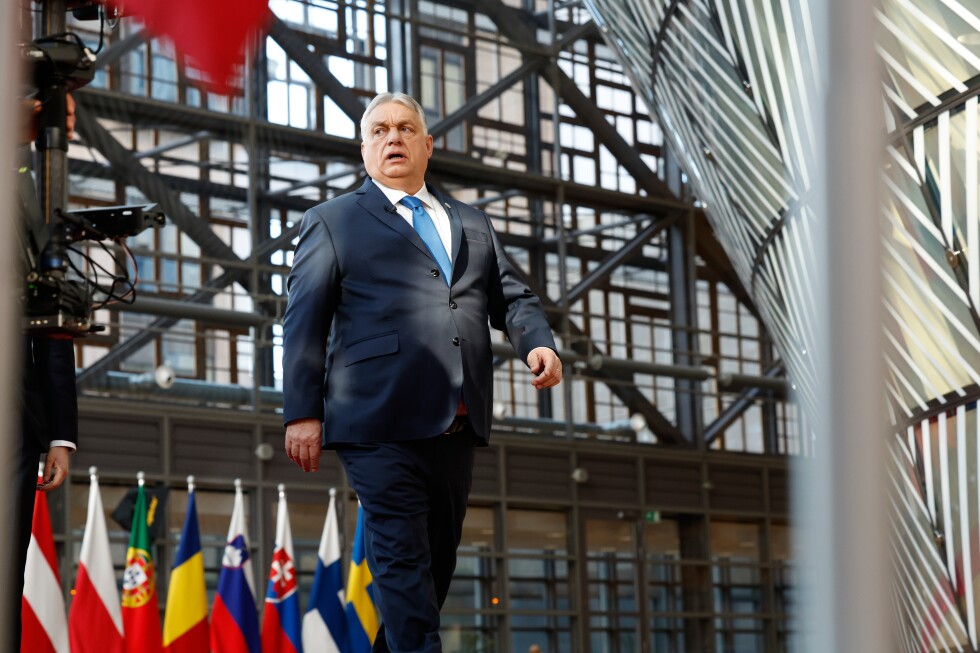
    BRUSSELS — European Union leaders launched unprecedented criticism against Hungarian Prime Minister Viktor Orbán during Thursday’s summit, accusing him of weaponizing vital Ukrainian assistance for domestic political gains. The confrontation exposes deepening fractures within the bloc as Hungary obstructs a previously approved €90 billion ($103 billion) support package for Ukraine’s military and economy.

    Finnish Prime Minister Petteri Orpo expressed the collective frustration: “He’s exploiting Ukraine as an electoral weapon, which is unacceptable. We reached an agreement, and this constitutes a betrayal of that consensus.”

    The emergency funding, deemed essential by EU officials for Ukraine’s survival, requires disbursement by early May. This timeline necessitates immediate procedural progress within the coming weeks—a prospect now jeopardized by Hungarian obstruction.

    Prime Minister Orbán, who maintains close ties with Russian President Vladimir Putin and faces declining poll numbers ahead of April elections, has intensified anti-Ukrainian rhetoric throughout his campaign. He portrays Ukrainian President Volodymyr Zelenskyy as an existential threat to Hungary while positioning himself as the sole guardian of Hungarian security.

    Belgian Prime Minister Bart De Wever challenged Orbán’s narrative: “If this is electoral theater, it cannot override our collective decisions. It’s indefensible to approve agreements then refuse implementation.”

    The deadlock originates from January’s disruption of Russian oil shipments via the Druzhba pipeline through Ukraine. While Ukrainian authorities attribute the damage to Russian attacks, Orbán accuses Zelenskyy of deliberately withholding energy supplies to Hungary.

    European Commission President Ursula von der Leyen and European Council President António Costa attempted to break the impasse by offering EU-funded pipeline repairs. Technical teams currently await security clearance in Kyiv for site inspection.

    Orbán remains unmoved, declaring: “This transcends politics—it’s existential for Hungary. Secure oil access is non-negotiable for our nation’s survival.”

    The crisis highlights structural vulnerabilities in EU governance mechanisms requiring full unanimity among member states, enabling a nation representing just 2% of the bloc’s population to block critical multinational decisions.

  • 2 men appear in court accused of ‘hostile’ surveillance of UK’s Jewish community for Iran

    2 men appear in court accused of ‘hostile’ surveillance of UK’s Jewish community for Iran

    Two Iranian nationals have appeared before Westminster Magistrates’ Court in London facing allegations of conducting hostile surveillance operations against British Jewish targets on behalf of Iranian intelligence services.

    Nematollah Shahsavani, a 40-year-old Iranian-British dual national, and Alireza Farasati, a 22-year-old Iranian citizen residing in London, are formally charged with engaging in activities likely to assist a foreign intelligence service between July 9 and August 15 of the previous year. Both defendants were arrested on March 6 as part of a broader national security investigation.

    Prosecutor Louise Attrill presented evidence indicating the defendants targeted multiple significant locations within London’s Jewish community, including the Israeli Embassy, a Jewish community center, an educational institution, and Britain’s oldest synagogue. The surveillance operation allegedly sought to gather intelligence on individuals and establishments connected to the Israeli and Jewish communities in the United Kingdom.

    During the preliminary hearing, neither defendant entered a formal plea. However, Farasati’s legal representation indicated their client would contest the charges. Chief Magistrate Paul Goldspring ordered both men remanded in custody pending their next appearance at London’s Central Criminal Court scheduled for April 17.

    The investigation has revealed broader implications for UK-Iran relations, with two additional British-Iranian nationals arrested in connection with the same probe subsequently released without charge. This case emerges against a backdrop of heightened security concerns, as MI5 Director General Ken McCallum disclosed in October that British authorities had disrupted more than twenty potentially lethal Iran-backed plots within the preceding twelve-month period.

  • Innovative care provides hope for Tibetan patient

    Innovative care provides hope for Tibetan patient

    A remarkable medical journey spanning over 3,000 kilometers has brought newfound hope to Pema Drolma, a 29-year-old Tibetan woman who spent more than 14 years confined to bed due to severe joint deformities from systemic juvenile idiopathic arthritis. Her transformative treatment at Chongqing’s Daping Hospital (Army Medical Center of Army Medical University) represents a triumph of specialized healthcare intervention for rare conditions.

    Born to a nomadic family in a remote Himalayan village within the Xizang Autonomous Region, Drolma’s condition left her completely dependent on her mother’s care since diagnosis at age 14. Her situation changed dramatically in 2024 when officials from the Tibet Development Fund identified her during rural outreach efforts and facilitated her transfer to the advanced medical facility in Chongqing.

    Under the guidance of orthopedic specialist Gou Wenlong, a multidisciplinary team spanning 12 hospital departments orchestrated a comprehensive treatment strategy. The medical breakthrough began with successful hip replacement surgeries in early 2025, requiring exceptionally delicate procedures to address fused bones. Subsequent operations addressed her knee joints, with February marking her fourth successful surgery.

    The rehabilitation process extends beyond surgical intervention, incorporating challenging physical exercises to restore joint function and muscle strength. Nutritionists have designed customized meal plans, while psychologists address social anxiety resulting from years of isolation and educational disruption.

    Lead surgeon Wang Ziming outlines the treatment roadmap: ‘We will progressively restore functional movement in her elbows and shoulder joints to enable self-feeding capabilities. We are confident that in the foreseeable future, she will not only stand independently but walk with her mother to the foothills of Mount Qomolangma.’

    Medical experts have revised the treatment timeline from an initial 3-5 year projection to 2-4 years, reflecting the remarkable progress achieved. This case occurs within the broader context of Chongqing’s medical assistance program for Tibetan communities, which since 2015 has deployed 11 medical teams comprising over 500 specialists to the region.

    Through WeChat, Drolma expressed her gratitude: ‘I never dared to imagine improvement, but meeting these exceptional officials, doctors, and nurses has been incredibly fortunate. The treatment has dramatically improved my quality of life, and my emotional state continues to elevate.’

  • Iranian president condemns attacks on Iran’s energy infrastructure

    Iranian president condemns attacks on Iran’s energy infrastructure

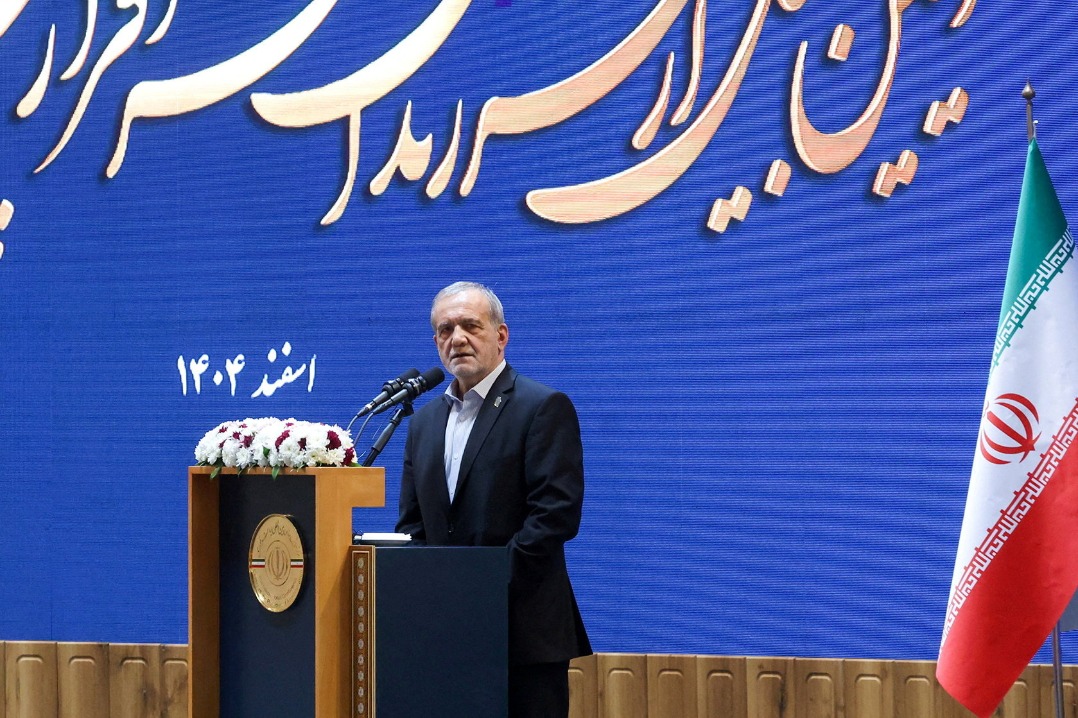
    Iranian President Masoud Pezeshkian has issued a stern condemnation of what he characterized as coordinated U.S. and Israeli assaults on Iran’s critical energy infrastructure. The presidential denunciation came through an official statement on social media platform X, responding directly to aerial strikes targeting facilities within Iran’s massive South Pars gas field in the southern region of the country.

    President Pezeshkian warned that such aggressive military actions risk escalating regional tensions to dangerous levels, potentially triggering “uncontrollable consequences” that could extend beyond the Middle East to engulf global stability. The Iranian leader’s statement emphasized that targeted attacks on national energy assets represent a severe provocation that could fundamentally alter the regional security landscape.

    Echoing the presidential sentiment, Iranian Parliament Speaker Mohammad Bagher Ghalibaf separately declared that a “new level of confrontation” had been initiated, invoking the principle of reciprocal retaliation. Ghalibaf’s social media post characterized the attacks as acts of “suicide for them (the enemies),” suggesting Tehran possesses both the capability and determination to respond in kind.

    According to Iranian state media reports, the assaults specifically targeted natural gas facilities connected to the offshore South Pars field, one of the world’s largest natural gas deposits shared between Iran and Qatar. Israeli media outlets, citing anonymous official sources, attributed the strikes to the Israeli Air Force.

    This development follows the February 28 joint U.S.-Israeli operations that struck Tehran and multiple Iranian cities, resulting in the death of Supreme Leader Ali Khamenei along with senior military personnel and civilians. Those previous attacks prompted Iran to launch extensive missile and drone counterstrikes against Israeli territory and American military installations across the Middle East, signaling a dangerous escalation in long-standing regional tensions.

  • China issues pilot work guideline for rural land contracts extension

    China issues pilot work guideline for rural land contracts extension

    The Chinese government has unveiled a comprehensive framework for implementing a nationwide pilot program extending rural land contracts by three decades beyond their current expiration dates. The landmark guideline, jointly issued by the General Office of the Communist Party of China Central Committee and the General Office of the State Council on Wednesday, establishes a structured approach to managing the transition of agricultural land rights.

    The policy document outlines fifteen specific measures designed to strengthen protections for farmers’ contractual land rights, improve rural land management systems, and reinforce organizational leadership structures. Central to the initiative is the reaffirmation of two fundamental principles: the collective ownership of rural land remains unchanged, and the household contract responsibility system continues as the cornerstone of agricultural operations.

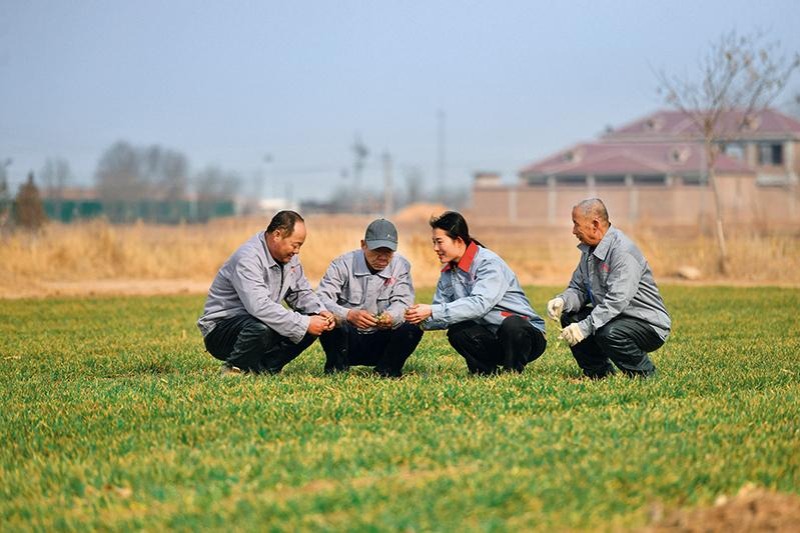
    Agricultural authorities have been preparing for this transition since 2020, gradually expanding pilot programs across various provinces. The current initiative will implement province-wide trials across 29 provincial-level regions throughout 2026, representing the most extensive testing of the land contract extension system to date.

    This policy addresses a critical juncture in China’s agricultural development timeline. The household contract responsibility system, implemented in the 1980s, initially granted 15-year land use rights to farming households. These contracts were subsequently renewed for 30 years during the 1990s. With the second-round contracts anticipated to enter their expiration peak between 2026 and 2028, the new guideline provides a systematic framework for managing this transition while ensuring social stability in rural communities.

  • China rolls out plan to build safer, more child-friendly environment

    China rolls out plan to build safer, more child-friendly environment

    China has unveiled a comprehensive national guideline to transform urban environments into safer, more inclusive spaces designed specifically for children’s needs and perspectives. The landmark policy document, jointly issued by the National Development and Reform Commission and the National Working Committee on Children and Women, establishes a framework for integrating child-centered approaches across all aspects of urban planning and public services.

    The initiative builds upon successful pilot programs that have already benefited over 110 million children across 116 Chinese cities by the end of 2025. Rather than maintaining these as temporary city-level experiments, the new guideline institutionalizes child-friendly development as a permanent, nationwide mechanism that will guide policy through the 15th Five-Year Plan period (2026-2030) and beyond.

    According to Wei Yifang, an associate researcher at the Academy of Macroeconomic Research, the guideline represents a holistic approach covering both urban and rural children through integrated policies, public services, rights protection, and living environments. The framework mandates that all public policies must incorporate children’s perspectives, with local governments required to prioritize children’s development in resource allocation and policymaking decisions.

    Key implementation measures include adapting public spaces to better serve children’s needs through increased sports facilities, entertainment venues, and creative use of underutilized urban areas. Transportation systems will undergo significant upgrades, with public buses, subways, and transit hubs incorporating child-friendly features. Ride-hailing platforms will prioritize families with young children, while railways and airlines will enhance services for infants and unaccompanied minors.

    The healthcare sector will see substantial improvements, including the incorporation of HPV vaccines into national immunization programs offering free vaccinations to girls aged 13 and above. Medical facilities will establish 24-hour emergency channels for children under three with critical conditions. Educational institutions will open sports facilities during holidays, while scenic areas will expand discounted admission policies for minors.

    Notable progress has already been achieved in several municipalities. Over 20 major cities, including Beijing, have raised height limits for free subway rides to 1.3 meters. Shanghai and Shaoxing have introduced dedicated child-friendly subway lanes, while Wenzhou and Zhuhai have relaxed restrictions on the number of children traveling free with adults.

    The initiative represents China’s commitment to creating visible, tangible improvements in children’s daily lives through attention to both major policy frameworks and seemingly small but crucial practical matters, ultimately aiming to build warmer, more welcoming environments for children and their families nationwide.

  • Deep dive into bridge’s safety

    Deep dive into bridge’s safety

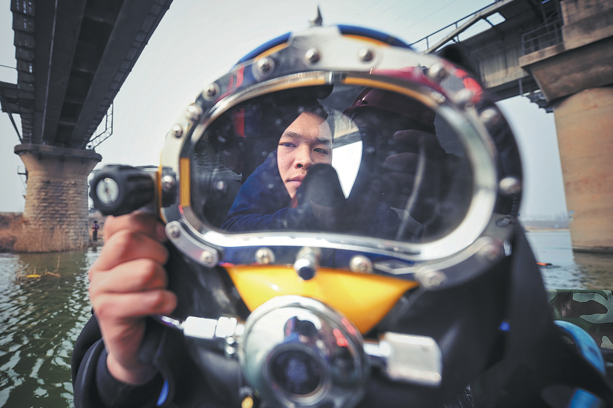
    While millions journeyed home during China’s Spring Festival travel rush, an elite team of railway divers conducted critical underwater inspections in near-freezing conditions along the Xinyan Railway connecting Henan and Shandong provinces. These specialized technicians from China Railway Jinan Group’s emergency rescue and survey unit—the nation’s sole professional railway bridge diving team—braved turbid waters with near-zero visibility to ensure the structural integrity of vital transportation infrastructure.

    Equipped with over 20 kilograms of gear, 28-year-old diver Gao Jiawang described operating in absolute darkness at 5-meter depths where “my fingers act as my eyes.” His scratched diving mask bears witness to numerous encounters with submerged obstacles and rebar. This year, however, the human divers gained a technological partner: an advanced underwater inspection robot capable of fish-like swimming and gecko-style adhesion to pier surfaces. The machine employs high-definition cameras and sonar to rapidly identify potential issues in turbulent waters, allowing divers to focus manual inspections on critical areas identified during robotic preliminary screening.

    The 46-member unit represents a unique fusion of diving expertise and engineering specialization. Beyond underwater proficiency, members must master bridge structural knowledge, interpret complex blueprints, operate specialized equipment including underwater cameras, and maintain emergency skills such as underwater welding and cutting. Many have pursued additional certifications including welding engineering and dive supervision during off-hours.

    “Every dive presents unique challenges,” noted Gao, whose deepest dive approaches 20 meters. “Northern waters require ice-breaking operations in winter, southern rivers conceal dangerous undercurrents in summer, mountain streams carry rolling rocks, while plain rivers accumulate deep silt.” Divers routinely face potential entanglement in fishing nets, equipment failures, and sudden torrents, requiring maintained calm judgment in extreme conditions.

    To date, the team has inspected over 400 railway bridges across 18 provincial-level regions, building an invaluable database of underwater structural information. During peak travel periods, operations intensify within strict two-to-three-hour windows between train services. “The most gratifying moment,” Gao reflected, “is hearing trains safely crossing after our inspection—it fills me with immense pride.”

  • Japan on the horns of dilemma: Experts

    Japan on the horns of dilemma: Experts

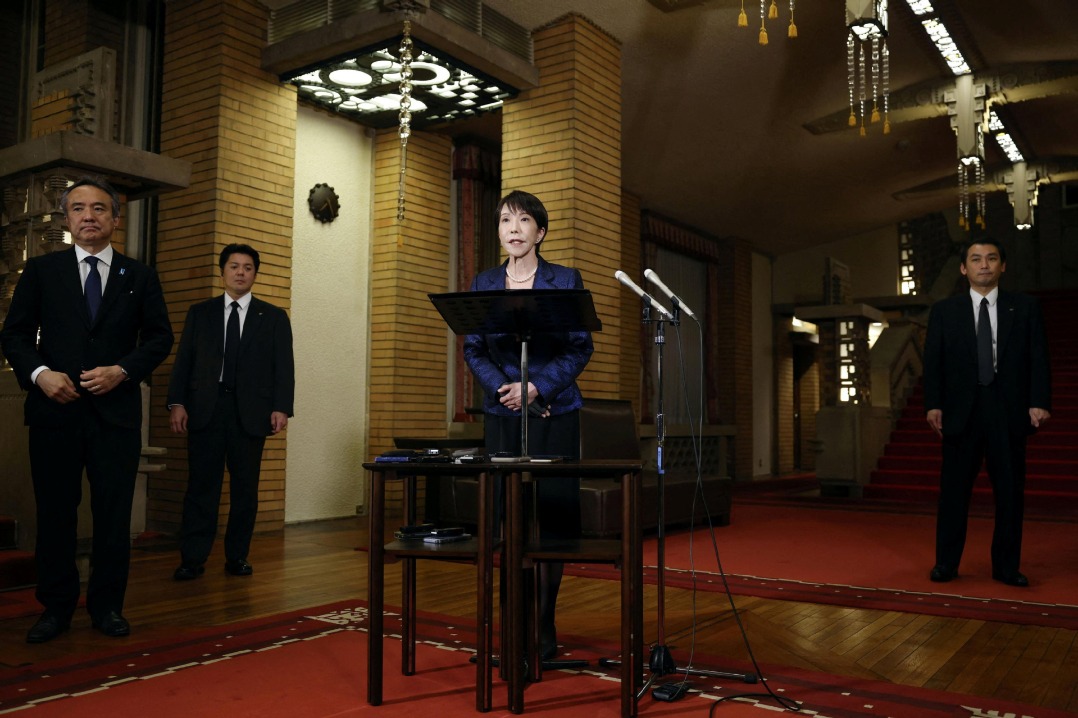
    Tokyo faces mounting political pressure as it navigates Washington’s controversial request for naval support in the Strait of Hormuz, exposing fundamental tensions between Japan’s pacifist constitution and its alliance obligations. The diplomatic challenge arrives ahead of Prime Minister Sanae Takaichi’s scheduled meeting with US President Donald Trump, creating a complex geopolitical balancing act for the Japanese government.

    Political opposition has intensified following Trump’s call for five nations, including Japan, to provide naval escorts through the strategic waterway. Former Prime Minister Shigeru Ishiba emphasized the central legal question during a Fuji Television appearance, stating that Japan must first determine whether US airstrikes on Iran comply with international law before considering any military deployment.

    Academic experts have entered the fray, with Yamaguchi University professor Atsushi Koketsu telling China Daily that US and Israeli strikes clearly violated international law and the UN Charter. Koketsu criticized Tokyo’s reluctance to address the legality of US actions, noting this silence contradicts Japan’s self-proclaimed identity as a peaceful nation committed to international legal norms.

    The legal framework presents additional complications. Under Japan’s 2015 security legislation, any deployment would require both international legal justification and classification as a “situation threatening Japan’s survival.” The Nikkei Asia reported that government deliberations from 2015 explicitly stated Japan would not support uses of force that violate international law.

    Beyond legal considerations, energy security emerges as a critical factor. The Middle East remains Japan’s primary energy source, and military involvement could damage carefully maintained diplomatic relationships with regional partners, particularly Iran. Koketsu warned that close alignment with US policy might undermine Japan’s long-term energy security and regional standing.

    Public opinion appears strongly opposed to involvement, with an Asahi Shimbun poll showing 82% of respondents rejecting support for US strikes against Iran. Media outlets including the Tokyo Shimbun have editorialized against participation, arguing Japan should avoid military entanglement and resist US pressure.

    The government’s position remains cautiously non-committal. Prime Minister Takaichi told the House of Councillors Budget Committee that Japan currently has no plans to dispatch Self-Defense Force vessels, while avoiding direct commentary on the legality of US military operations against Iran.