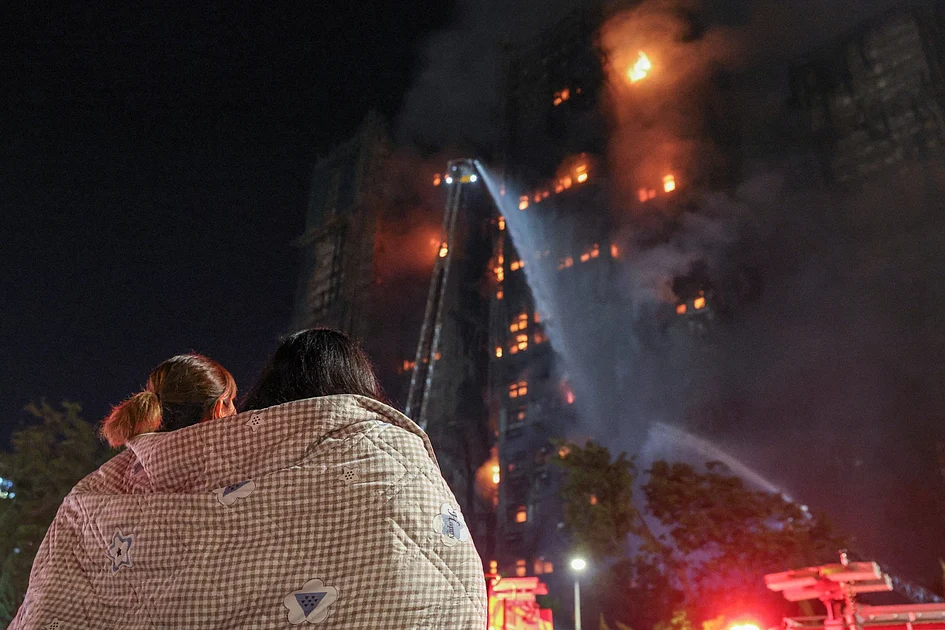
In one of Hong Kong’s most devastating fires in recent history, a blaze engulfed a 2,000-unit high-rise complex, claiming at least 55 lives and leaving hundreds unaccounted for. The fire, which began on Wednesday afternoon, sent shockwaves through the densely populated financial hub, known for its towering apartment blocks. Residents, still in shock, recounted the horror of watching the flames spread uncontrollably, with thick smoke billowing into the sky and the sound of burning bamboo scaffolding echoing through the area. Veezy Chan, a 25-year-old resident, described the scene as ‘terrifying,’ as the fire rapidly consumed multiple buildings. At a temporary shelter, anxious families awaited news of their loved ones, while social workers distributed blankets and pillows to the elderly. Shirley Chan, another local resident, expressed her heartbreak over the loss of homes and lives, calling the tragedy ‘indescribable.’ A 65-year-old resident, surnamed Yuen, highlighted the challenges faced by elderly residents, many of whom were unable to hear the fire alarm due to closed windows during ongoing maintenance. The fire also claimed the life of a firefighter, adding to the devastation. In the aftermath, volunteers like Logan Yeung stepped up to provide support, while citizens donated supplies to shelters. Hong Kong’s city leader, John Lee, announced the formation of a task force to investigate the incident, promising to provide the public with a thorough explanation. This tragic event has reignited concerns about fire safety in the city, despite significant improvements in recent decades.
作者: admin
-
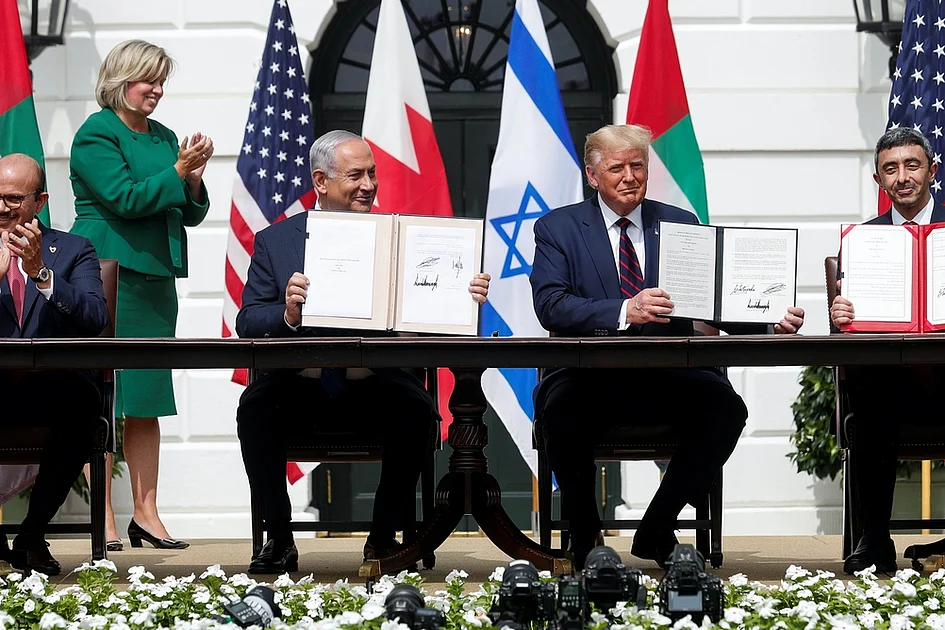
UAE: Experts explain how Abraham Accords reshape geopolitics in China, Iran
The geopolitical ramifications of the Abraham Accords are extending far beyond Middle Eastern diplomacy, fundamentally altering global power dynamics and infrastructure competition between the United States and China, according to experts speaking at a recent policy conference in Abu Dhabi.
Analysts at the Abraham Accords Conference revealed how the normalization agreements between Israel and Arab states have created ripple effects across Asia, prompting strategic recalculations in both Tehran and Beijing. The accords, initially focused on Middle Eastern reconciliation, are now influencing how China positions itself in Asia and how the United States structures its global infrastructure initiatives.
Chelsi Mueller, researcher at the Moshe Dayan Center, presented compelling evidence linking the Abraham Accords to China’s 25-year Comprehensive Strategic Partnership Agreement with Iran, signed in 2021. Mueller argued the timing was not coincidental but represented a strategic countermeasure to the region’s rapid realignment following UAE-Israel normalization. ‘Beijing perceived regional normalization as component of broader US repositioning,’ Mueller stated, adding that ‘It came in the context of US moves in the Pacific.’
The conference highlighted how the accords have become embedded in the architecture of global infrastructure competition, particularly through the India-Middle East-Europe Economic Corridor (IMEC). Experts emphasized that IMEC couldn’t have materialized without the regional cooperation framework enabled by the UAE-Israel normalization. ‘The Abraham Accords provide the foundational architecture for IMEC,’ Mueller asserted.
Michalis Kontos, Associate Professor at the University of Nicosia, underscored the geopolitical significance of this alignment, characterizing IMEC as Washington’s strategic counterweight to China’s Belt and Road Initiative. ‘The US is treating IMEC as its answer to China’s Belt and Road,’ Kontos noted, linking the project directly to transport, energy, and data-sharing corridors made possible by the Accords.
The panel concluded that China and Iran’s coordinated response, combined with US-backed infrastructure corridors depending on Accords-enabled routes, positions the Abraham Accords as a critical inflection point not only for Middle Eastern politics but for global power competition. As long as IMEC remains integral to Washington’s Indo-Pacific strategy and China-Iran agreements continue to calibrate in response to regional normalization, the Abraham Accords will maintain far-reaching implications extending well beyond diplomatic relations.
-
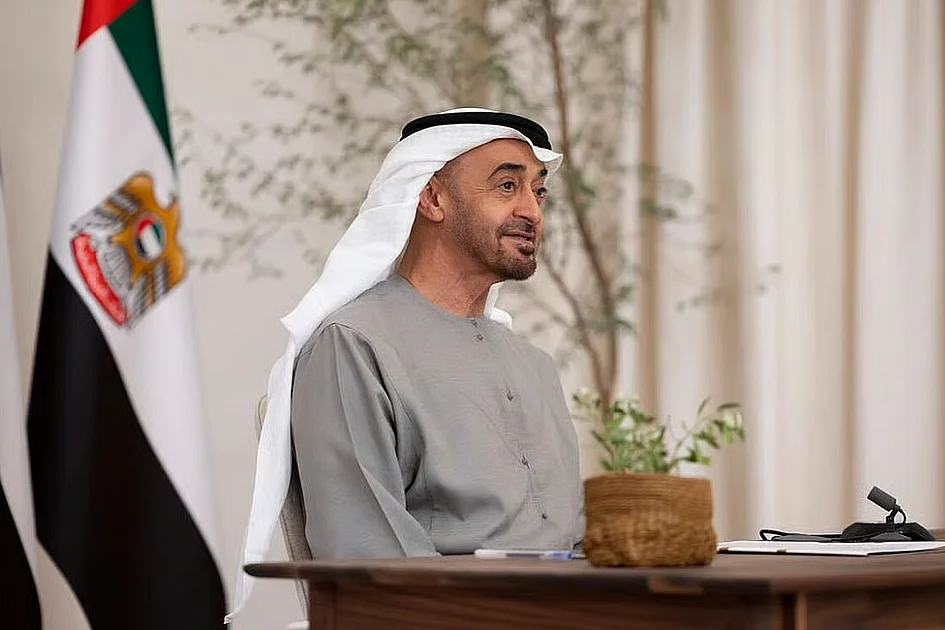
UAE President pardons nearly 3,000 prisoners ahead of Union Day
In a significant humanitarian gesture marking the nation’s 54th Union Day celebrations, UAE President Sheikh Mohamed bin Zayed Al Nahyan has authorized the release of 2,937 prisoners from correctional facilities across the Emirates. The presidential decree, announced on November 27, 2025, represents one of the most comprehensive prisoner amnesty initiatives in recent years.
The groundbreaking pardon extends beyond mere release, with the President committing to settle all outstanding financial penalties and debts incurred by the inmates as part of their judicial sentences. This dual approach of physical freedom coupled with financial relief underscores the leadership’s commitment to providing truly fresh starts for those affected.
The timing of this benevolent act coincides with Eid Al Etihad (Union Day) festivities, reflecting the nation’s values of compassion and social solidarity. Official statements emphasize that this initiative aims to alleviate burdens on families while facilitating the reintegration of pardoned individuals into society through proper rehabilitation opportunities.
This mass pardon forms part of the UAE’s broader strategy toward criminal justice reform and social cohesion enhancement. By removing financial barriers that often hinder successful reentry into society, the leadership demonstrates its innovative approach to correctional reform and community stability.
Previous similar initiatives have shown that such comprehensive amnesty programs significantly reduce recidivism rates while strengthening family bonds and community ties. The current pardon continues this established tradition of using national celebrations as occasions for mercy and social renewal.
-

Chameera’s 4 wickets against Pakistan lifts Sri Lanka into the final of T20 tri-series
In a dramatic turnaround at Rawalpindi, Sri Lanka clinched a thrilling six-run victory against Pakistan to advance to the T20 tri-series final on Thursday. The match culminated in an intense final over where fast bowler Dushmantha Chameera demonstrated exceptional skill, conceding merely three runs when Pakistan required ten for victory.
Chameera’s remarkable figures of 4-20 proved decisive, dismantling Pakistan’s top order early in the powerplay and returning to seal the game under pressure. His brilliant execution included dismissing key batsmen Sahibzada Farhan and captain Babar Azam for a two-ball duck, leaving Pakistan reeling at 43-4 within the first six overs.
Sri Lanka’s innings was anchored by opener Kamil Mishra’s commanding 76 runs off 48 deliveries, providing a competitive total of 184-5. Supported by Kusal Mendis’ aggressive 40-run contribution, the Lankan batting lineup established a foundation that ultimately proved defensible despite dew conditions in the latter stages.
Pakistan’s captain Salman Ali Agha fought valiantly with a career-best unbeaten 63, forming crucial partnerships with Usman Khan (33) and Mohammad Nawaz (27). Their 70-run stand in the death overs nearly turned the tide, but Sri Lanka’s bowlers maintained composure when it mattered most.
Sri Lankan captain Dasun Shanaka praised his team’s resilience, stating: ‘Proud of how the boys bounced back. Everybody contributed. Of course Chameera exhibited world-class bowling.’
The victory eliminates Zimbabwe from contention and sets up a final showdown between Pakistan and Sri Lanka on Saturday, with both teams demonstrating competitive form ahead of the upcoming T20 World Cup.
-
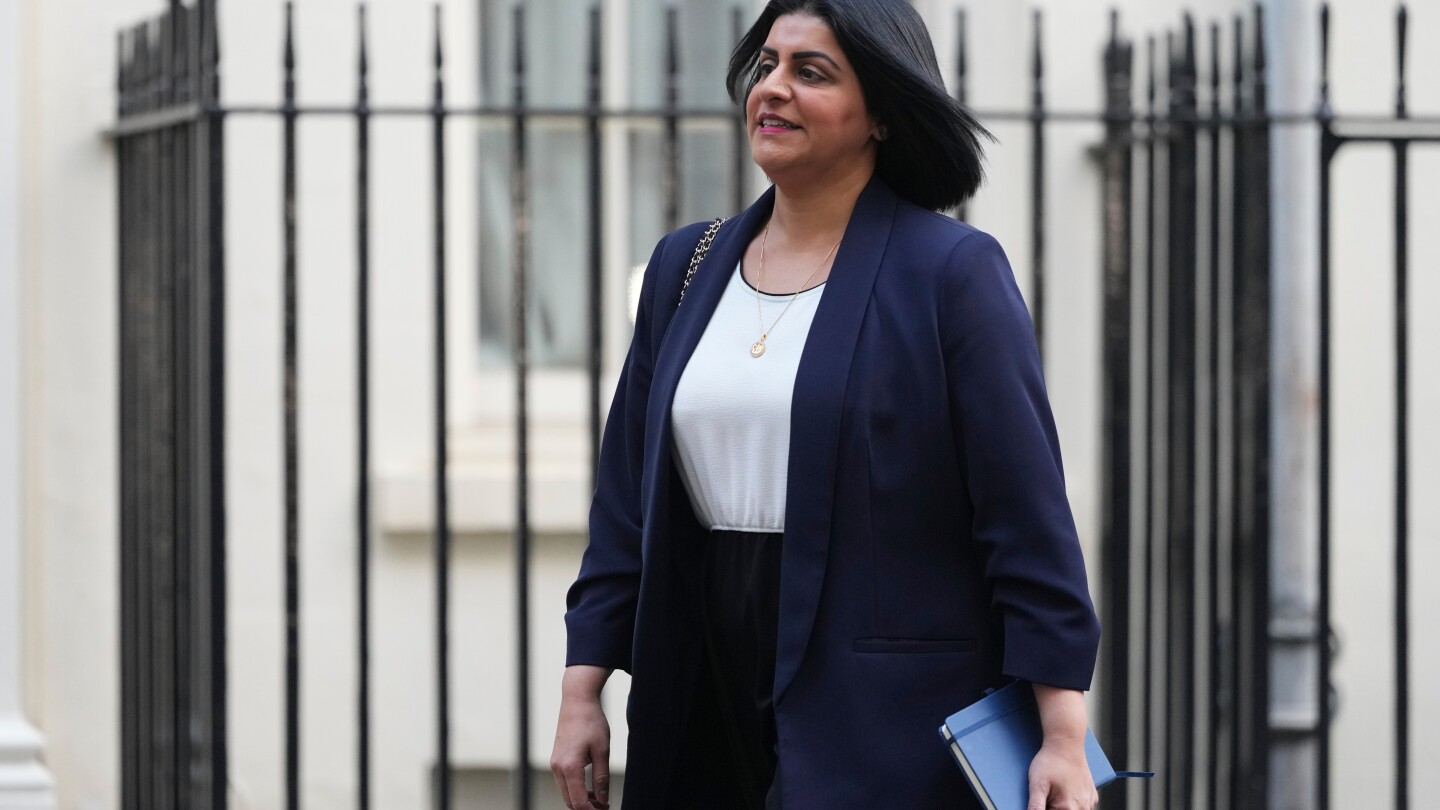
UK government welcomes sharp fall in net migration but says more needs to be done
LONDON — The United Kingdom has witnessed a dramatic 69% reduction in net migration, reaching a four-year low of 204,000 for the year ending June 2025, according to official data from the Office for National Statistics. This represents a substantial decline from the previous year’s figure of 649,000, marking the most significant drop in recent history.
The precipitous decrease stems from multiple factors: reduced arrivals of non-EU migrants for work and education purposes, increased emigration numbers, and the cumulative impact of restrictive immigration policies implemented by both Conservative and Labour administrations. The current Labour government, which assumed power in July 2024, has continued and intensified these measures as part of its broader immigration strategy.
Home Secretary Shabana Mahmood acknowledged the progress while emphasizing the need for further reductions. “The pace and scale of migration has placed immense pressure on local communities,” Mahmood stated, indicating additional policy measures would be forthcoming.
The government’s recent initiatives include sweeping asylum system reforms, termination of overseas recruitment for care workers, and an increased salary threshold for skilled worker visas to £41,700 ($55,000). These measures aim to address both legal migration patterns and the politically sensitive issue of unauthorized Channel crossings, which have remained at approximately 40,000 this year.
Despite the overall decline, separate Home Office figures revealed a 13% increase in asylum seekers housed in hotels, reaching 36,273 between June and September. This practice has sparked public protests and contributed to the growing influence of the hard-right Reform UK Party. Prime Minister Keir Starmer has committed to ending hotel accommodations for asylum seekers by 2029.
Policy experts caution that while further migration reductions are expected, the government must balance immigration control with economic growth objectives and public service requirements. Marley Morris of the Institute for Public Policy Research noted that managing these competing priorities would present ongoing challenges for the administration.
-
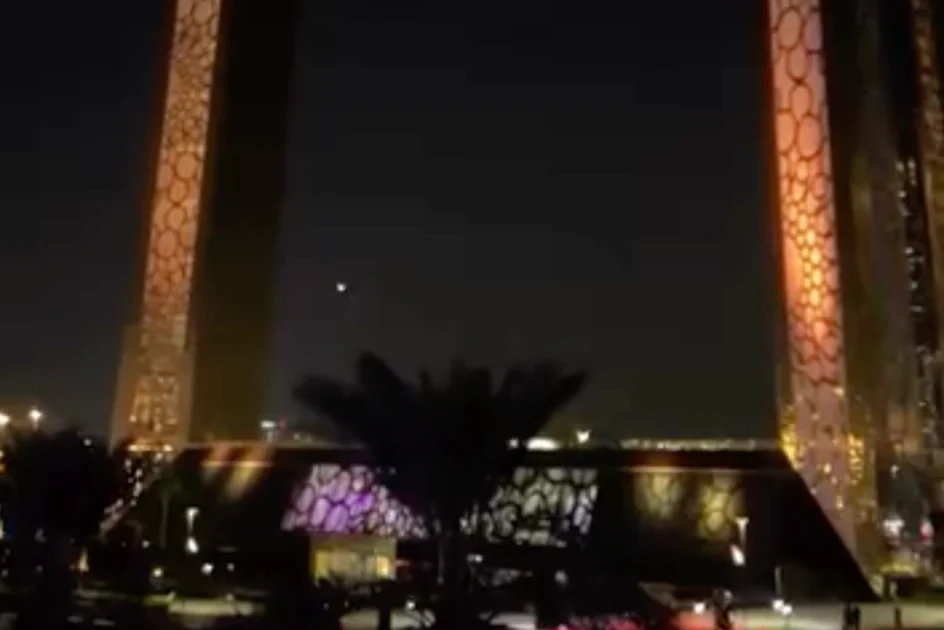
Watch: Dubai residents spot Leonid meteor shower in the sky
Dubai’s night sky recently hosted an unexpected astronomical spectacle as residents witnessed the annual Leonid meteor shower with unusual urban visibility. Amateur astronomer Abhishek Ashokan made a remarkable discovery during his evening commute on November 17th when he spotted a brilliant celestial streak near the Business Bay toll gate amidst traffic congestion.
Ashokan, whose passion for celestial observation has previously taken him to dark-sky locations like Al Quaa, immediately recognized the phenomenon’s significance. ‘Spotting celestial objects is my hobby,’ Ashokan told Khaleej Times. ‘I immediately had a hunch that I had spotted a meteor.’ Subsequent verification of his dashboard camera footage by the Dubai Astronomy Group confirmed his sighting as part of the Leonid meteor shower that peaked November 18th.
The event sparked widespread public engagement as multiple residents reported similar sightings across social media platforms. Vaisakh Babu, another Dubai resident, accidentally captured the meteor while filming the Dubai Frame in Zabeel Park on November 15th. ‘When I saw weather expert Muhammad Sajjad’s social media post, I realized what I had witnessed,’ Babu explained.
Public reaction revealed fascinating misconceptions about the phenomenon, with many observers initially mistaking the meteors for satellites, laser displays, or even fireworks. One social media user commented: ‘Because I was close to Global Village, I thought it was Skydive Dubai’s yet another stunt.’
The Leonid meteor shower occurs annually when Earth passes through debris from comet Tempel-Tuttle, typically producing 10-15 meteors per hour. The shower’s unusual urban visibility this year marks a significant departure from typical observations that require dark-sky conditions.
Looking ahead, astronomy enthusiasts can anticipate the Geminids meteor shower peaking around December 15th, with predicted rates of 80-120 meteors per hour. Sajjad noted favorable viewing conditions: ‘This year, the moon will only be 23-25 percent visible, making meteors significantly more observable compared to last year’s 80 percent moon visibility.’ Experts recommend traveling beyond city limits for optimal viewing experiences during upcoming celestial events.
-

Intl symposium on copyright protection, promotion of cultural folklore held in Fujian
An international symposium focusing on the copyright protection and promotion of traditional cultural folklore was convened in Quanzhou, Fujian province, on November 27, 2025. The event, co-organized by China’s National Copyright Administration and the World Intellectual Property Organization (WIPO), brought together over 300 participants, including officials, intellectual property experts, and business representatives from 11 countries. The symposium aimed to foster international dialogue and explore innovative strategies for safeguarding and promoting traditional cultural folklore in the digital age. Key discussions centered on balancing preservation with development, fostering industry integration, and nurturing young talent to ensure the continuity of cultural heritage. The event also emphasized the importance of international cooperation in building a governance system that respects cultural roots while embracing modernization. Participants were encouraged to collaborate on creating effective protection mechanisms, ensuring that folk art serves as a bridge connecting diverse civilizations. The symposium concluded with a call for mutual respect and equality in cultural exchanges, highlighting the role of folk art in fostering a shared future for humanity.
-
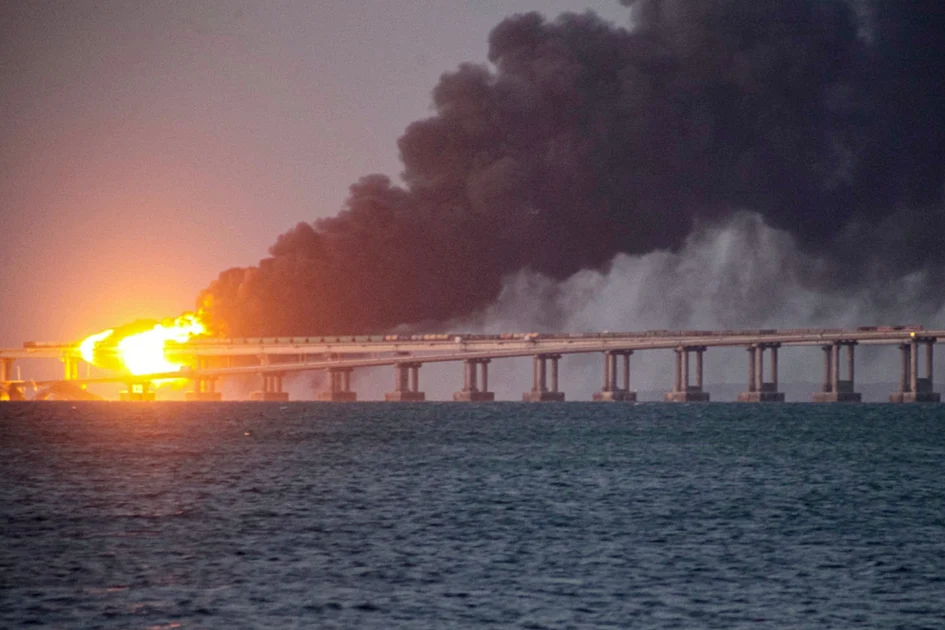
Russia sentences eight to life for 2022 Crimean bridge blast
A Russian court has handed down life sentences to eight individuals for their involvement in the 2022 bombing of the Crimean Bridge, a critical infrastructure linking Russia to the annexed Crimean peninsula. The attack, which occurred on October 8, 2022, resulted in the deaths of five people and caused significant damage to the 19-kilometer Kerch road and rail bridge. The explosion, carried out via a truck bomb, ignited seven oil tankers on a passing train and collapsed two sections of the highway. The defendants were tried in a closed-door military court in Rostov-on-Don and found guilty of orchestrating a terrorist act, illegal weapon possession, and, in two cases, smuggling explosives. Both Kyiv and Moscow have attributed the attack to Ukraine’s secret services, with Kyiv later claiming responsibility, citing the disruption of Russian military logistics as the objective. The bridge, inaugurated by President Vladimir Putin in 2018, holds immense symbolic value for both nations, representing Russia’s 2014 annexation of Crimea. Despite assurances of its safety, the bridge has been repeatedly targeted since the onset of the Russia-Ukraine conflict.
-
Kuwait citizenship crackdown leaves widows stateless and critics in exile
Kuwait has systematically revoked the citizenship of approximately 50,000 to 200,000 individuals since September 2024, marking one of the most significant denaturalization campaigns in modern Middle Eastern history. The government ceased regular reporting of figures in September 2025, leaving human rights organizations to estimate the true scale of what campaigners describe as a politically motivated purge.
This unprecedented action represents a dramatic departure from Kuwait’s historical reputation as a relative haven of democracy within the Gulf region. Unlike its neighbors, Kuwait maintained a parliamentary system since 1963 and occasionally served as a mediator in regional diplomatic crises. Historically, the nation offered sanctuary to dissidents fleeing more authoritarian regimes, earning recognition as a refuge for the oppressed throughout the 1970s.
The campaign intensified following Sheikh Mishal Al Ahmad Al Jaber Al Sabah’s ascent to power in 2023. Under his leadership, Kuwait suspended its parliament in May 2024 and nullified key constitutional articles pertaining to citizenship. These measures have been weaponized to target not only prominent activists and politicians but also ordinary citizens, particularly women who obtained citizenship through marriage.
Legislation enacted in December 2024 authorized citizenship revocation for reasons including ‘moral turpitude or dishonesty, or actions threatening state security’ – broadly interpreted to encompass criticism of the emir or religious figures. On March 6 alone, authorities stripped 464 citizens of nationality, accusing 12 of illegally holding dual citizenship and 451 of ‘forgery and fraud.’
Women constitute approximately two-thirds of those affected, primarily divorcees and widows who relinquished previous citizenships to become Kuwaiti nationals. Rendered stateless, these individuals now face exclusion from essential services including education, healthcare, state employment, and property ownership.
Case studies documented by rights organization Salam reveal harrowing personal consequences. Iman, naturalized through marriage in 2006, found herself denationalized in December 2024 despite being born in Kuwait. After publicly advocating for her rights, she faced charges of ‘insulting the state,’ endured invasive strip searches described as near-sexual harassment, and was ultimately deported to Egypt—separated from her children remaining in Kuwait.
Another woman, Layla, previously held Saudi citizenship before naturalizing as Kuwaiti in 2004. Following denaturalization, Kuwaiti authorities instructed her to reclaim Saudi nationality despite having no remaining ties to Saudi Arabia—a request Saudi officials refused, stating Kuwait must ‘deal with the consequences.’
Government rhetoric has frequently characterized affected women as ‘gold diggers’ and frauds, employing xenophobic and misogynistic narratives to justify the campaign. Research director Andrew McIntosh of Salam notes that victims have lost nationality for ‘slights, frauds, economic improprieties, political nature, or bureaucratic error.’
Exiled activist Mohammed al-Mail, whose citizenship was revoked on October 19, describes the campaign as a ‘purely political’ maneuver to consolidate power and suppress dissent. Having received UK asylum in 2017, al-Mail contends the emir has forfeited legitimacy by undermining constitutional principles.
Economic factors appear equally significant in motivating the denaturalization drive. As global transition from fossil fuels pressures Gulf petro-states, Kuwait seeks to maintain welfare provisions and public sector viability by reducing its citizen population. McIntosh characterizes this as a method of ‘defining distinct Kuwaitness’ to preserve economic resources.
Notably, the international community has remained largely silent despite violations of international statutes prohibiting arbitrary denationalization. Tiana Danielle Xavier of the Institute on Statelessness and Inclusion emphasizes that Kuwait currently provides no judicial recourse for reviewing citizenship revocation decisions, contravening established principles of due process and non-discrimination.
Al-Mail confirms seeking intervention from UK authorities, promising ‘serious, escalating steps to hold Kuwaiti authorities accountable.’ The UK Foreign Office acknowledges monitoring implications for Kuwaitis of British origin but declines commentary on individual cases.
This systematic erosion of citizenship rights transforms Kuwait’s democratic legacy into an authoritarian reality, creating a stateless underclass without legal protection or international advocacy.
-
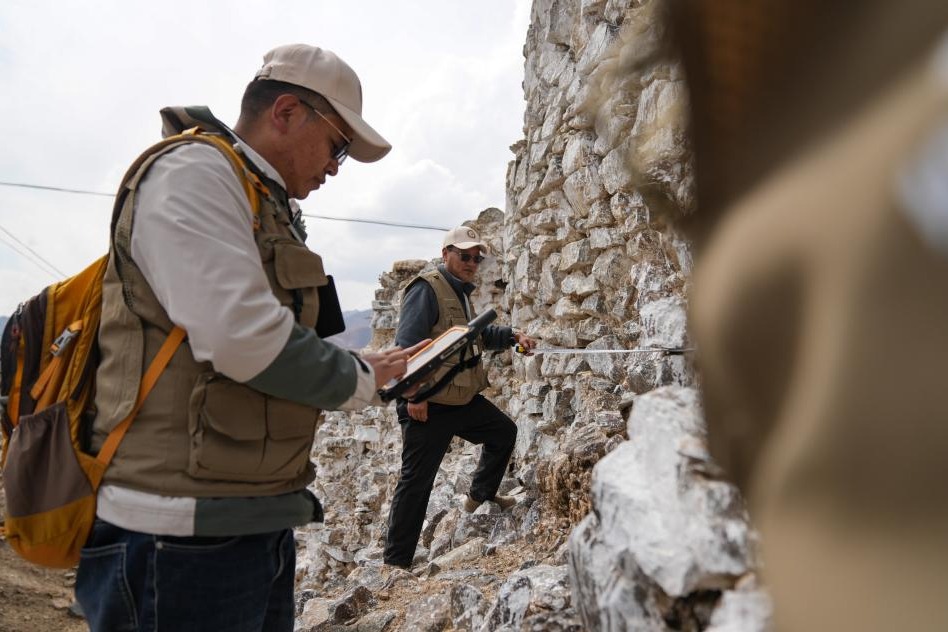
SW China’s Xizang identifies over 3,300 new cultural relics via national survey
Southwest China’s Xizang Autonomous Region has unveiled a remarkable discovery of 3,346 new cultural relic sites during the second phase of the fourth national cultural relics census. This significant find brings the region’s total number of documented cultural relics to an impressive 7,623, as announced by the regional cultural relics bureau on Thursday. The comprehensive survey, initiated in April 2024, meticulously covered all county-level units across Xizang, yielding a diverse array of historical treasures. Among the notable discoveries are ancient rock paintings in Sagya County, situated at an extraordinary altitude of 5,303.8 meters, marking the highest-altitude relic site recorded in China to date. The newly documented relics encompass a wide spectrum of historical artifacts, including ancient tombs, architectural structures, cave temples, stone carvings, and modern historical sites. Additionally, special investigations conducted in 21 border counties have added 254 relics linked to territorial defense and border garrisoning. Authorities have also expressed their commitment to intensifying efforts in documenting relics within ancient urban areas, further enriching the historical narrative of Xizang.