
The People’s Liberation Army (PLA) Hong Kong Garrison has reaffirmed its dedication to protecting Hong Kong, emphasizing its readiness to execute orders and fulfill its responsibilities in accordance with the law. This declaration came during a routine press briefing held by Jiang Bin, spokesperson for the Ministry of National Defense, on Thursday. The statement was prompted by inquiries regarding the PLA’s potential involvement in relief efforts following a devastating fire in Hong Kong on Wednesday. The blaze, which erupted in the Wang Fuk Court residential area in Tai Po, claimed 55 lives by Thursday afternoon, according to reports from Xinhua News Agency. Jiang Bin expressed profound sorrow for the victims, including a firefighter who perished while on duty, and extended heartfelt condolences to the bereaved families and those impacted by the tragedy. The PLA’s commitment underscores its role as a steadfast guardian of Hong Kong’s safety and stability, particularly in times of crisis.
作者: admin
-

Slot admits to bleak mood as Liverpool’s slump deepens with 4-1 defeat
Anfield witnessed one of its most dismal European nights in decades as Liverpool succumbed to a devastating 4-1 defeat against PSV Eindhoven in the Champions League. The loss marks a catastrophic ninth defeat in twelve matches across all competitions for the Reds, representing their worst twelve-game performance since the 1953-54 season.
Manager Arne Slot conveyed profound disappointment following the match, stating, “The emotions are very negative and disappointing. I was hoping and expecting a better performance, which was far from what we are accustomed to, even in defeat.” The Dutch manager acknowledged his team’s fundamental defensive vulnerabilities, noting, “We simply concede too many goals to compete effectively.”
The match began disastrously when Virgil van Dijk handled the ball during an early corner, resulting in Ivan Perisic converting the sixth-minute penalty. Although Dominik Szoboszlai temporarily equalized following a parried save from Cody Gakpo’s effort, PSV dominated the second half. Guus Til expertly restored the visitors’ lead before Couhaib Driouech compounded Liverpool’s misery with two late goals, capitalizing on catastrophic defensive errors.
This humiliating result follows Liverpool’s 3-0 home defeat to Nottingham Forest, signaling the alarming deterioration of Anfield’s former fortress status. The team has now suffered more home losses this season than throughout the entire previous campaign.
In contrasting Champions League action, Arsenal delivered a statement victory by ending Bayern Munich’s unbeaten start with a 3-1 triumph at the Emirates. Meanwhile, Kylian Mbappé achieved a personal milestone, scoring four goals for the first time in a Champions League match as Real Madrid narrowly defeated Olympiacos 4-3. Paris Saint-Germain emerged victorious in an eight-goal thriller against Tottenham, with Vitinha’s hat-trick inspiring a 5-3 comeback win.
-
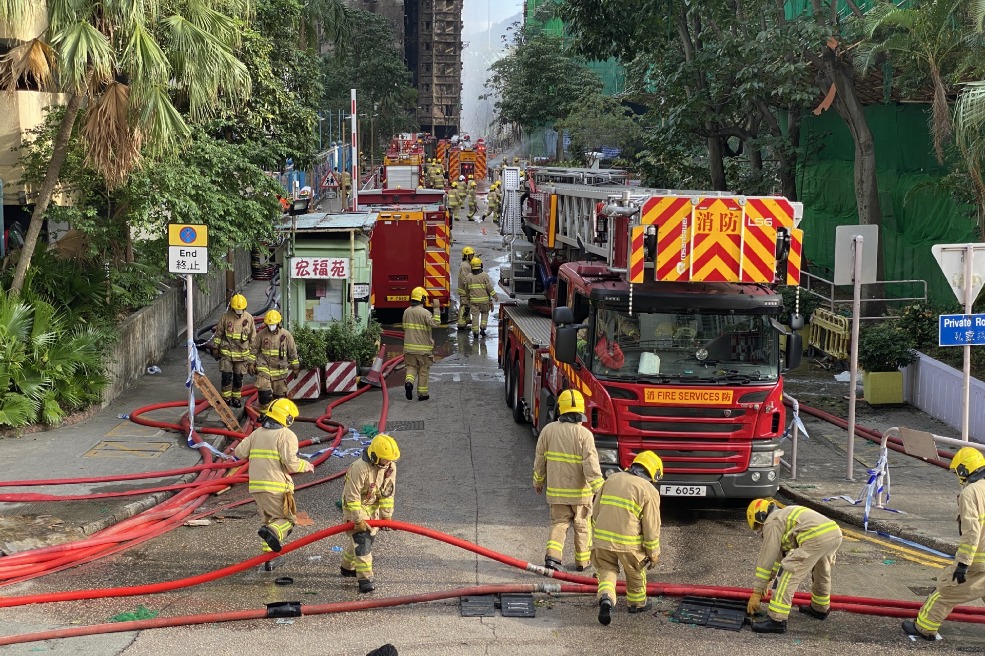
55 rescued in Hong Kong residential area fire: chief executive
A significant fire broke out at Wang Fuk Court, a residential complex in Hong Kong, prompting a swift response from local firefighters. Hong Kong Special Administrative Region Chief Executive John Lee confirmed that 55 individuals were successfully rescued during the emergency. The incident occurred on Thursday evening, causing widespread concern among residents and authorities alike. At a press briefing, Lee assured the public that affected households would receive cash grants to aid in their recovery. The fire, which has drawn attention to safety measures in residential areas, underscores the importance of emergency preparedness in densely populated urban centers. The government has pledged to investigate the cause of the blaze and implement measures to prevent similar incidents in the future.
-
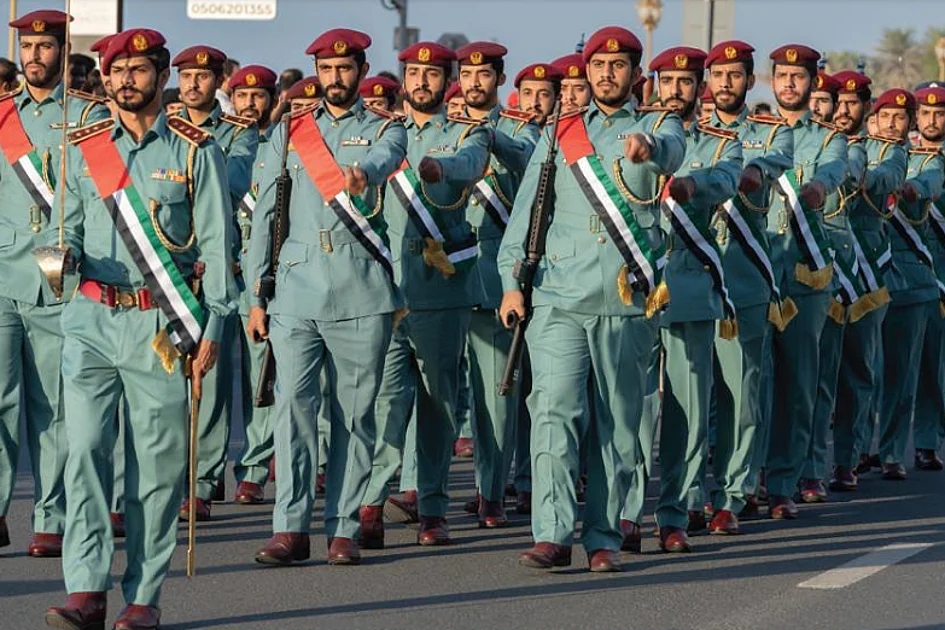
Ajman, Ras Al Khaimah to host Eid Al Etihad parades on November 28
Authorities in Ajman and Ras Al Khaimah have finalized preparations for special Eid Al Etihad parades scheduled for Friday, November 28th, as part of the UAE’s 54th National Day celebrations. The coordinated events will feature military displays and require significant traffic management in both emirates.
Ajman Police confirmed their parade will commence at 4:00 PM along Corniche Road, with full road closure implemented for the duration of the event. The procession will include organized military units, prompting authorities to advise motorists to utilize alternative routes. Detailed maps have been released to guide drivers around the parade route and suggest optimal detours.
Simultaneously, Ras Al Khaimah will host its parade along Al Qawasim Corniche, with road closures affecting the main thoroughfare leading to the waterfront area. The RAK parade is scheduled for an earlier timeframe, running from 8:30 AM to 10:00 AM, and will similarly feature military participation. Police authorities have issued specific alternative route recommendations to minimize traffic disruption.
The coordinated parades represent significant civic events within the broader National Day observances, demonstrating inter-emirate cooperation in celebrating national unity. Residents and visitors are encouraged to plan travel accordingly and follow official guidance from local police departments regarding road usage during the specified time periods.
-
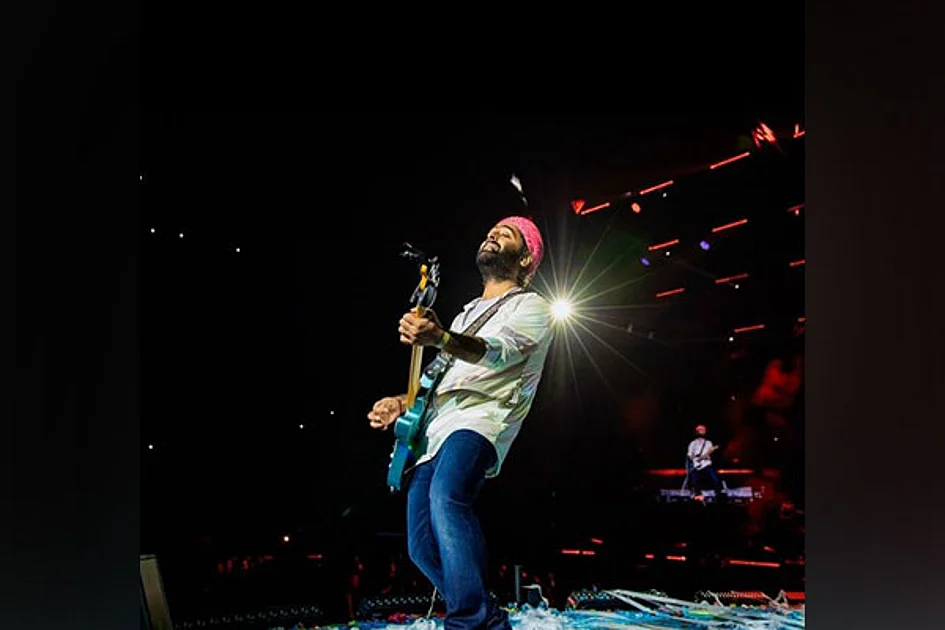
Arijit Singh, AR Rahman, Rishab Sharma set for UAE concert series
Dubai-based real estate developer Pantheon Development has unveiled an ambitious cultural initiative titled The Icon Series, featuring an impressive lineup of Indian musical talent. The concert series will commence with celebrated playback singer Arijit Singh performing at Abu Dhabi’s Etihad Arena on December 19, 2025.
The series continues with Grammy award-winning composer AR Rahman taking the same stage on January 23, 2026, followed by sitar virtuoso Rishab Sharma’s performance at Dubai’s Coca-Cola Arena on January 31, 2026. This seven-part concert program represents Pantheon Development’s strategic expansion beyond real estate into cultural and community programming.
Kalpesh Kinariwala, Founder of Pantheon Development, emphasized that the initiative aims to foster community engagement through high-quality public events. The concert series aligns with the company’s ongoing major development projects, including the groundbreaking One RAK Central in Ras Al Khaimah and the construction of VOXA, an AED 800 million mixed-use development in Jumeirah Village Triangle.
The developer has also recently signed a memorandum of understanding with NBCC, a Government of India enterprise, to collaborate on future projects in the UAE. The Icon Series will run concurrently with Pantheon’s construction activities and community-focused initiatives, with additional artists and dates to be announced in the future.
-
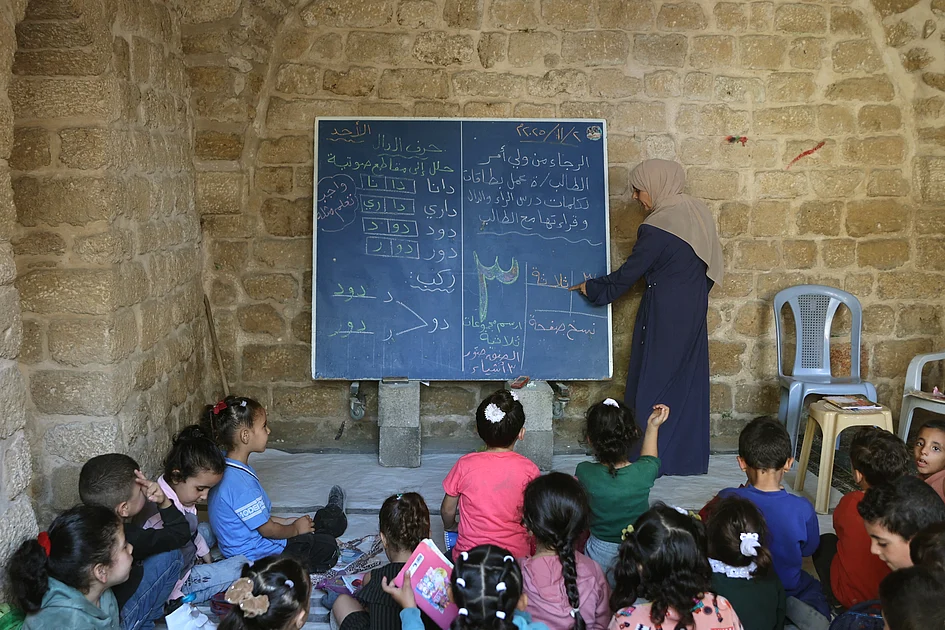
Schools but no books: Gaza’s children return to makeshift classrooms
In the aftermath of the Israel-Hamas war, Gaza’s children are returning to makeshift classrooms, but the reality is far from normal. With 97% of Gaza’s schools damaged, many requiring full reconstruction, the educational landscape is in shambles. Eleven-year-old Layan Haji, who dreams of becoming a doctor, walks through the ruins of Gaza City to attend a temporary school set up in a battered building. ‘I walk for half an hour at least. The streets are devastated, full of ruins… It is difficult and sad,’ she says, yet she remains hopeful about resuming her studies. Haji is one of 900 students at the Al-Louloua al-Qatami school, which has opened its doors to provide education for the first time since the war began. However, the lack of basic supplies like books, notebooks, and even chairs poses significant challenges. Sixteen-year-old Said Sheldan, who has been displaced multiple times, shares similar struggles. ‘I don’t have books, notebooks, pens or a bag. There are no chairs, electricity or water — not even streets,’ he laments. The war has forced many children into ‘heavy labour’ to support their families, collecting firewood, fetching water, and standing in long queues for food. To address the psychological trauma, schools have adopted innovative teaching methods, such as using games and extracurricular activities. Despite these efforts, the scale of the crisis is immense. According to the UN, over 25,000 children have joined temporary learning spaces, but this is a fraction of the 758,000 students in Gaza. International initiatives, like Qatar’s Education Above All Foundation, are providing support, but the road to recovery is long. ‘Education is facing its most critical period,’ says Hazem Abu Habib, a local initiative leader. Before the war, Gaza was ‘completely free of illiteracy,’ but now, the future of its children hangs in the balance.
-

ICE detains Jordanian man in Dallas, leaving disabled son hospitalised
Wael Tarabishi, a US citizen battling Pompe disease, has faced a severe health crisis following the detention of his father and primary caregiver, Maher Tarabishi, by immigration authorities in Dallas last month. Wael was hospitalized with blood sepsis and pneumonia, spending days in intensive care while calling out for his father. His condition is described as the most fragile it has ever been.
Maher Tarabishi, a Jordanian citizen, has been Wael’s sole caregiver since his diagnosis at age four. He was detained during a routine check-in at the Dallas immigration office on October 28, despite having a lawful status under a Supervision Order issued in 2008 due to Wael’s medical needs. Pompe disease is a rare, progressive condition causing severe muscle deterioration, requiring constant care.
Relatives claim immigration officers ignored Maher’s legal status and documentation of Wael’s condition, handcuffing him when he tried to explain his role as a caregiver. Maher was held in a crowded room with 30 others, forced to sleep on the floor without a blanket, and denied a change of clothes until his transfer to the Bluebonnet Detention Center.
Immigration authorities have provided no updates on Maher’s legal status or his longstanding permission to remain in the US as Wael’s caregiver. An ICE spokesperson labeled Maher a criminal and a member of the Palestine Liberation Organization (PLO), a claim his family denies, emphasizing his clean record and dedication to his son.
Wael, who has undergone 36 surgeries and relies on medical machines to breathe and eat, expressed his despair, stating, ‘He is the only reason I want to continue living.’ The family has launched a GoFundMe campaign to cover essential expenses now that Maher is unable to provide care.
-
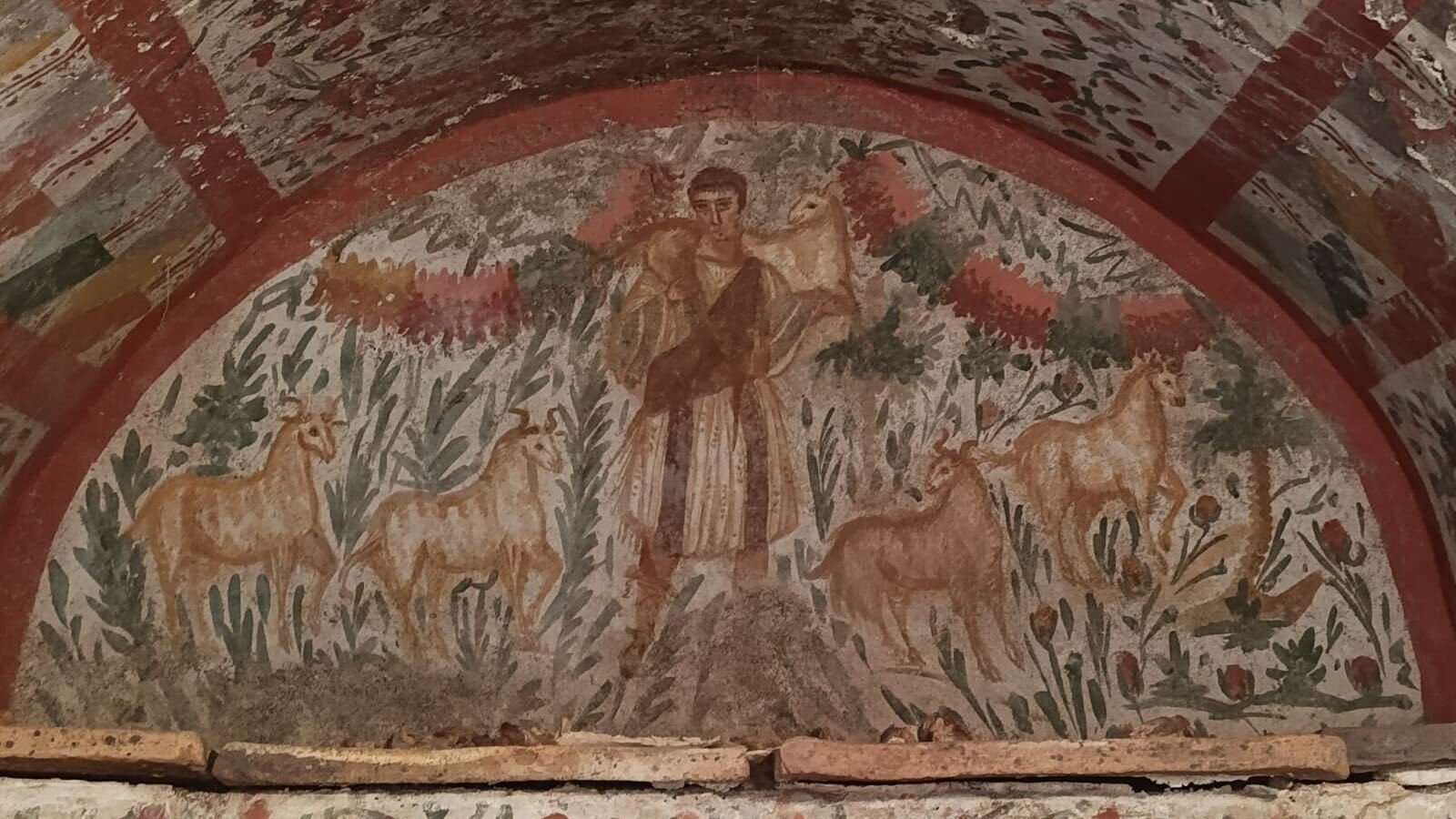
Turkey unveils rare and ancient Christian fresco during the pope’s visit
In a significant diplomatic gesture, Turkish President Recep Tayyip Erdogan unveiled a remarkable third-century Christian fresco to mark Pope Leo XIV’s inaugural foreign visit. The ancient artwork, discovered earlier this year in Iznik’s Hisardere Necropolis, represents one of the most exceptional early Christian archaeological finds in decades.
The fresco, dating to approximately 300 CE, depicts a beardless Christ as the Good Shepherd carrying a horned ram across his shoulders, flanked symmetrically by two goats. This portrayal represents a crucial transitional period between pagan and Christian artistic traditions. Turkish officials confirmed this specimen is the only known example of its kind outside Italy, with comparable depictions previously found only in Rome’s catacombs of Priscilla, Domitilla and Callixtus.
Archaeologists from the Iznik Museum and Turkish Ministry of Culture determined the burial chamber was actively used between the second and fifth centuries CE. Unlike other discovered painted tombs, this site features prominent human figures alongside traditional animal and vegetable motifs. The west wall portrays a married couple, likely the tomb’s occupants, depicted as aristocrats through their elaborate attire and adornments.
The papal visit coincides with the 1,700th anniversary of the First Council of Nicaea, which originally convened in what is now modern-day Iznik. This ecumenical council historically gathered bishops from across the Christian world to resolve foundational theological disputes. During his stay, Pope Leo will also tour the submerged remains of an ancient basilica in Lake Iznik, believed to be the actual site where the landmark council convened in 325 CE.
Experts note that Good Shepherd imagery was widely employed in Roman funerary art before becoming central to early Christian iconography. The symposium scene depicted within the tomb, while located in a Christian-era burial site, reflects persistent pagan funerary traditions symbolizing the afterlife as an eternal banquet.
Pope Leo and Ecumenical Patriarch Bartholomew of the Orthodox Church are expected to jointly commemorate the Nicaean Council anniversary in a demonstration of interfaith dialogue and historical recognition.
-
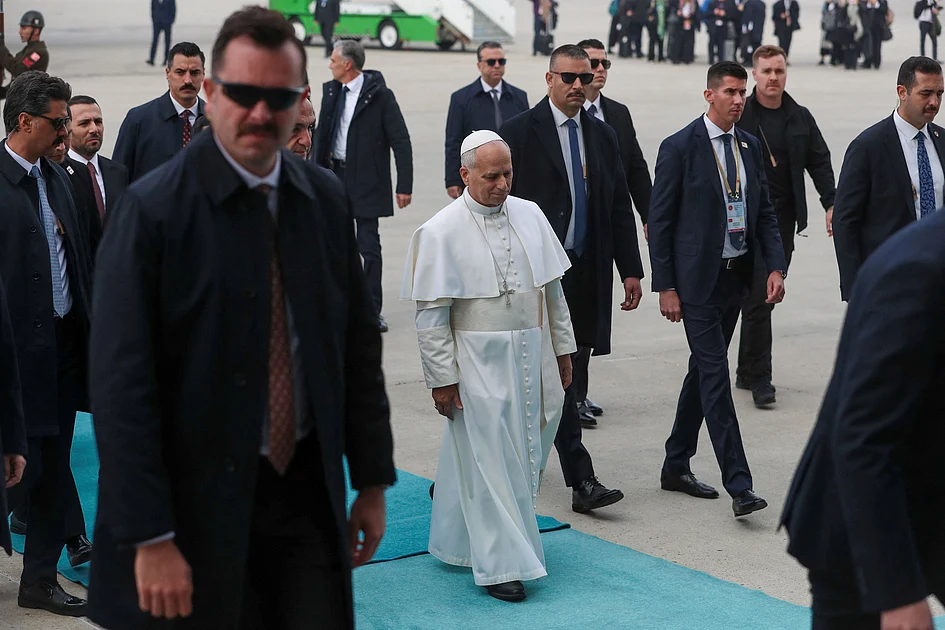
Pope lands in Turkey to meet Erdogan on first overseas trip
Pope Leo XIV commenced his inaugural international papal journey on Thursday, arriving in Turkey for a significant four-day diplomatic and religious mission. The first American pontiff landed in Ankara where he immediately expressed anticipation for this “historic moment” that carries profound significance for global interfaith relations.
The papal itinerary features high-level discussions with President Recep Tayyip Erdogan, recognized as a crucial mediator in regional conflicts. Following ceremonial respects at Mustafa Kemal Ataturk’s mausoleum, the Pope will engage in comprehensive talks addressing peace initiatives in the turbulent Middle East region before addressing Turkish authorities, civil society representatives, and diplomatic corps.
This visit marks a strategic media engagement for the new pontiff, with over 80 international journalists accompanying his delegation. Demonstrating his innovative approach to communication, Pope Leo will deliver all addresses in English—his native language—rather than traditional Italian, signaling his commitment to broader global accessibility.
The theological dimension of the journey culminates Friday with commemorations of the 1,700th anniversary of the First Council of Nicaea in Iznik. This ecumenical gathering, hosted by Orthodox Patriarch Bartholomew I, represents a significant step toward Christian unity amid ongoing divisions between Catholic and Orthodox traditions exacerbated by geopolitical tensions surrounding the Ukraine conflict.
Vatican officials acknowledge Turkey’s substantial humanitarian efforts in hosting over 2.5 million refugees, primarily from Syria. The Pope’s agenda reflects continuity with his predecessor’s advocacy for migrant rights, previously criticizing what he termed “extremely disrespectful” treatment of displaced populations.
Following the Turkish leg, Pope Leo will proceed to Lebanon on Sunday, entering a nation grappling with severe economic collapse and renewed regional violence despite recent ceasefire agreements.
-

Indonesian Air Force colonel participant writes song for China’s National Defense University
Colonel Pandu, an Indonesian Air Force officer and participant at the International College of Defense Studies under China’s National Defense University, has composed a touching song titled ‘Changping’s Heart.’ The melody, now available on the university’s official Facebook and X accounts (@StudyinNDUChina), reflects his deep admiration for the institution and his affection for China. The song, described as a beautiful and heartfelt creation, symbolizes the cultural exchange and camaraderie fostered within the academic environment. It invites listeners to explore the inspiration and stories behind its creation, offering a voice that transcends geographical boundaries and resonates with emotional depth.