作者: admin

  • South East Asian bloc to seek end to Thailand-Cambodia fighting

    South East Asian bloc to seek end to Thailand-Cambodia fighting

    Southeast Asian diplomats are gathering in Kuala Lumpur for urgent negotiations on Monday aimed at de-escalating violent border clashes between Thailand and Cambodia that have resulted in significant casualties and mass displacement. The emergency meeting marks the first direct dialogue between the conflicting nations since hostilities resumed on December 8th, with both countries mutually accusing each other of initiating the renewed combat.

    The border conflict, with historical roots tracing back over a century to the French colonial demarcation of Indochina, has recently intensified through artillery exchanges across the 800-kilometer frontier and Thai airstrikes targeting Cambodian positions. Current estimates indicate at least 41 fatalities and approximately 900,000 displaced persons from both nations, creating a severe humanitarian crisis.

    Malaysian Prime Minister Anwar Ibrahim, who previously mediated the July ceasefire alongside U.S. President Donald Trump, expressed cautious optimism regarding the diplomatic initiative. “Our duty is to present the facts, but more importantly, to press upon them that it is imperative for them to secure peace,” Ibrahim stated last week.

    Cambodia has articulated its commitment to restoring “peace, stability and good neighbourly relations” through peaceful resolution mechanisms. Conversely, Thailand has established preconditions for substantive negotiations, demanding Cambodia first declare a ceasefire and demonstrate “genuine and sustained” cessation of hostilities.

    The international community has intensified diplomatic engagement, with both United States and Chinese officials actively mediating. U.S. Secretary of State Marco Rubio held discussions with Thai counterparts, expressing hope for a new ceasefire agreement within days. Simultaneously, China’s Special Envoy for Asian Affairs Deng Xijun visited Phnom Penh, reaffirming Beijing’s commitment to facilitating constructive dialogue between the neighboring nations.

  • Southeast Asian ministers meet in Malaysia to address Thailand-Cambodia border conflict

    Southeast Asian ministers meet in Malaysia to address Thailand-Cambodia border conflict

    KUALA LUMPUR – Southeast Asian diplomats convened for an emergency meeting Monday as regional tensions reached critical levels following renewed military confrontations between Thailand and Cambodia. The Association of Southeast Asian Nations (ASEAN) facilitated the high-stakes dialogue in Malaysia’s capital, marking the second intervention this year to address violent border clashes between the member states.

    The recent hostilities have effectively nullified a U.S.-brokered ceasefire agreement originally negotiated during the July conflict and formalized at October’s regional summit attended by President Donald Trump. The previous truce, achieved under significant American diplomatic pressure including threatened trade sanctions, mandated weapon withdrawals and demining operations along the disputed frontier.

    International concern continues to mount as combat operations intensify. The U.S. State Department issued an official statement urging immediate cessation of hostilities, removal of heavy artillery, and full implementation of the Kuala Lumpur Peace Accords. The document specifically referenced mechanisms for humanitarian demining and border dispute resolution.

    Thai Foreign Minister Sihasak Phuangketkeow confirmed his country’s commitment to constructive engagement, noting recent communications with U.S. Secretary of State Marco Rubio regarding Thailand’s proposed ceasefire roadmap. Cambodian officials similarly expressed dedication to peaceful resolution through diplomatic channels.

    The current conflict ignited December 8th following a border skirmish that injured two Thai personnel. Military engagements have since expanded to include Thai F-16 airstrikes and Cambodian BM-21 rocket barrages capable of launching 40 projectiles simultaneously. Official reports indicate dozens of combat fatalities and over 500,000 displaced civilians.

    A particularly contentious issue involves alleged landmine deployments along the border. Thailand has accused Cambodia of laying new anti-personnel mines, resulting in serious injuries to Thai marines. Cambodian authorities maintain that any explosions result from remnants of their decades-long civil war. Thailand has announced formal protests to Cambodia and the Ottawa Convention chair regarding these allegations.

  • Police allege suspected gunman in Bondi Beach shooting trained with father, Australian media reports

    Police allege suspected gunman in Bondi Beach shooting trained with father, Australian media reports

    MELBOURNE, Australia — Newly revealed police documents indicate the suspect in Sydney’s Bondi Beach massacre that left 15 dead had undergone coordinated firearms training with his father and recorded a video outlining their purported justification for the attack, according to Australian Broadcasting Corp. reports.

    The disturbing details emerged Monday following Naveed Akram’s video court appearance from a Sydney medical facility. The 24-year-old suspect and his 50-year-old father, Sajid Akram, allegedly prepared for their December 14 assault through tactical exercises conducted in New South Wales outside metropolitan Sydney.

    Court documents reveal the attackers employed four improvised explosive devices during their targeting of a Jewish gathering at Bondi Beach. Fortunately, none of the devices detonated, preventing further casualties. The failed explosive attempt preceded the shooting rampage that would claim numerous lives.

    Law enforcement confronted the perpetrators during the attack, resulting in Sajid Akram’s death at the scene and his son sustaining injuries. The younger Akram now faces extensive legal consequences with 59 criminal charges leveled against him, including 15 counts of murder and a terrorism-related charge.

    The New South Wales court media unit has not yet released the official statement of facts to the public, but the ABC report provides the first comprehensive look at the planning and motivations behind one of Australia’s deadliest attacks in recent years.

  • Dubai: Meet Matthew Hayden’s daughter who is making a mark in cricket

    Dubai: Meet Matthew Hayden’s daughter who is making a mark in cricket

    In the bustling media dining hall of Dubai International Stadium, Grace Hayden maintains intense focus while simultaneously engaging in an interview and tracking every delivery bowled in the ILT20 match between Dubai Capitals and Desert Vipers. The 23-year-old Australian cricket presenter, daughter of legendary Test opener Matthew Hayden, is carving her own distinctive path in the world of sports broadcasting.

    During an exclusive conversation with Khaleej Times, Grace reflected on her unique childhood growing up in cricket’s iconic stadiums, which served as her playgrounds. She revealed how her perception of her father evolved from simply ‘Dad’ to understanding his superstar status in international cricket. “I knew Dad played cricket, but I didn’t comprehend the extent of his stardom,” she confessed. “He was always just Dad to me, even when he spent eleven months annually traveling the world.”

    Grace credits her mother, Kallie Hayden, as the family’s foundational rock who maintained family cohesion during Matthew’s extensive absences. She describes her parents’ relationship as “the greatest partnership” that extended beyond cricket into their family dynamics.

    The young broadcaster’s journey into sports presentation began with modeling, which helped develop her camera presence, followed by an audition with Channel Seven in Australia. She initially worked in horse racing before transitioning to cricket coverage with Star Sports in India during IPL tournaments and World Cups.

    Grace acknowledges her father’s brutally honest feedback on her broadcasting performances. “He is brutal,” she admits. “But his harsh critiques ultimately improve my performance. They always work in my favor.”

    Among her most memorable broadcasting experiences, Grace highlights the Indian Premier League as the pinnacle of T20 cricket, particularly describing the electrifying atmosphere at Chennai’s Chepauk Stadium when MS Dhoni comes to bat. She’s currently covering the ILT20 in the UAE, praising the tournament’s organization, the blend of established stars and emerging talents from associate nations, and the convenience of traveling between Emirates venues.

    Addressing the perception of glamour in sports presenting, Grace emphasizes the substantial behind-the-scenes work required. “People consider it glamorous, but honestly, it isn’t,” she states. “Success demands extensive research, knowing player statistics, asking insightful questions, and constant preparation.”

    As part of a growing cohort of female presenters with cricket family connections—including Mayanti Langer, Sanjana Ganesan, and Laura McGoldrick—Grace acknowledges the pressure that comes with her famous surname. “There’s always expectation because everyone watched your father excel,” she notes. “But I’ve learned to absorb that pressure competitively—if told I cannot achieve something, I’m determined to prove otherwise.”

    Regarding media attention, particularly after her Dubai Desert Safari pictures garnered headlines in Australia and India, Grace maintains a balanced perspective. “Media attention can be flattering but also volatile,” she observes. “You can be elevated one moment and criticized the next. At 23, I consider it a privilege to travel globally, work in a sport I love, and share my experiences with an engaged community.”

  • ‘The water came from nowhere’: Settlements, hotels and farms flooded in Kenya’s Rift Valley

    ‘The water came from nowhere’: Settlements, hotels and farms flooded in Kenya’s Rift Valley

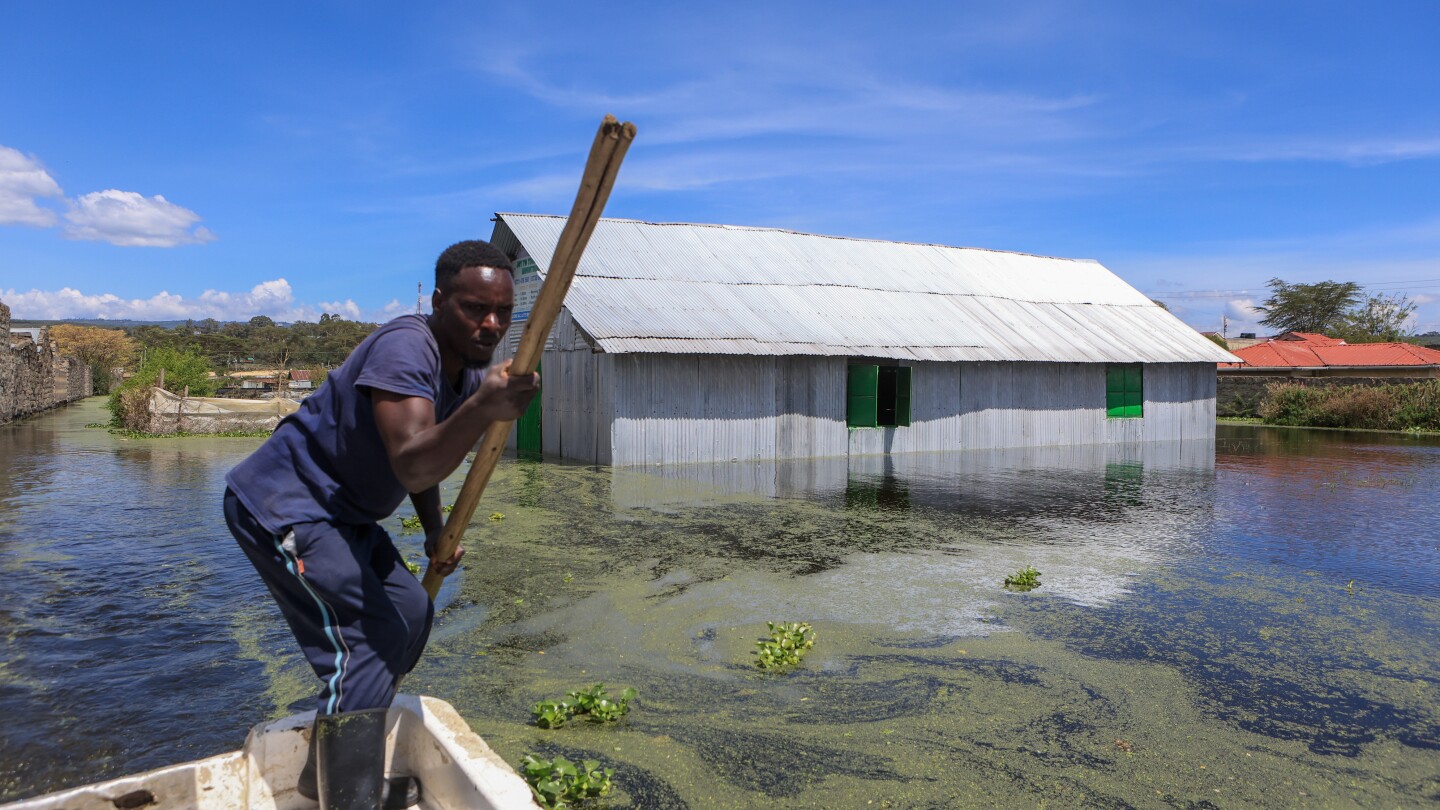
    NAIVASHA, Kenya — Dickson Ngome’s agricultural livelihood has been literally swallowed by water. When he first leased his 1.5-acre farm near Lake Naivasha in 2008, the shoreline stood approximately 2 kilometers away. Today, his property lies completely submerged beneath the expanding waters of Kenya’s Rift Valley lake system.

    The dramatic transformation occurred with startling speed. After early rains began in September and continued relentlessly for months, Ngome and his family awoke one October morning to find their home and farmland inundated with approximately a foot of water. “It seemed as if the lake was far from our homes,” recounted Rose Wafula, Ngome’s wife. “And then one night we were shocked to find our houses flooded. The water came from nowhere.”

    This personal tragedy reflects a broader regional crisis. Lake Naivasha’s expansion has displaced approximately 5,000 residents this year alone, part of a concerning pattern affecting multiple Rift Valley lakes including Baringo, Nakuru, and Turkana. According to scientific analysis, these water bodies have been experiencing steady increases over the past 15 years, with some reaching their highest recorded levels.

    Simon Onywere, an environmental planning expert at Kenyatta University, confirms the unprecedented scale: “The lakes have risen almost beyond the highest level they have ever reached.” Research published in the Journal of Hydrology documents that East African lake areas expanded by 71,822 square kilometers between 2011 and 2023, resulting in the displacement of over 75,000 households across the Rift Valley region by 2021.

    The economic repercussions are substantial. Lake Naivasha’s surrounding horticulture industry, which generates over $1 billion annually and supplies 40% of the EU’s rose market, has suffered significant losses with three-quarters of some flower farms now underwater.

    Scientific consensus points to climate change as a primary driver. Richard Muita, acting assistant director of the Kenya Meteorological Department, explains: “The Kenya Meteorological Department found that the water level rises are associated with rainfall patterns and temperature changes.” Additional factors include sedimentation from agricultural runoff, which compounds the problem by reducing lake capacity.

    Complicating the situation are historical land management issues. The Ngome family’s community of Kihoto sits on riparian land that legally cannot be privately owned. Silas Wanjala of the Lake Naivasha Riparian Association traces this problem to “a mess established by the government” in the late 1960s when temporary agricultural leases were improperly converted into permanent settlements.

    Local authorities are responding to the immediate humanitarian crisis. “We are tackling this as an emergency,” stated Joyce Ncece, chief officer for disaster management in Nakuru County. “The county government has provided trucks to help families relocate. We have been helping to pay rent for those who lack the finances.”

    Meanwhile, scientists advocate for long-term strategies including climate change mitigation, improved forecasting, and nature-based solutions incorporating indigenous knowledge. For displaced families like the Ngomes, currently sheltering in an abandoned school, the future remains uncertain as Lake Naivasha continues its relentless expansion with no signs of reversal.

  • Bourbon maker Jim Beam halts production at main distillery for a year

    Bourbon maker Jim Beam halts production at main distillery for a year

    Suntory Global Spirits, the Japanese beverage conglomerate owning iconic bourbon brand Jim Beam, has announced a complete production suspension at its primary Kentucky distillery throughout 2026. The decision comes as the company seeks to implement strategic facility enhancements while navigating challenging market conditions exacerbated by international trade tensions.

    The distillery closure, confirmed in an official statement, represents a significant operational shift for one of America’s most recognized whiskey producers. Company representatives emphasized this pause enables critical infrastructure investments while allowing adjustment to evolving consumer demand patterns. Despite the production halt, Jim Beam’s secondary distillery operations, bottling facilities, and warehousing plants throughout Kentucky will maintain normal operations, preserving employment for most of the company’s 1,000-plus Kentucky workforce.

    This strategic pause occurs against a backdrop of unprecedented bourbon inventory levels across Kentucky. The Kentucky Distillers’ Association reported record stockpiles exceeding 16 million barrels, creating substantial financial pressure through state taxation that cost distillers approximately $75 million this year alone.

    Trade policy disruptions have significantly impacted the industry’s global expansion strategy. Former President Donald Trump’s widespread tariff impositions in April triggered retaliatory measures from trading partners, particularly affecting alcohol exports. Canada’s provincial boycotts of American spirits earlier this year exemplify the cross-border trade tensions that have constrained international growth opportunities for Kentucky distillers.

    The company is engaged in constructive dialogue with labor representatives regarding workforce utilization during the production hiatus, while its Kentucky visitor center remains open to maintain brand engagement during this transitional period.

  • Alex Iwobi says Afcon is a special football tournament

    Alex Iwobi says Afcon is a special football tournament

    Fulham midfielder Alex Iwobi has articulated the profound cultural significance of the Africa Cup of Nations (AFCON), describing the tournament as a unique celebration of African heritage through football. As Nigeria prepares to compete in the 24-team continental championship hosted by Morocco, Iwobi emphasizes that AFCON offers a platform to showcase diverse cultures, music, and traditions beyond mere athletic competition.

    The Nigerian international, born in Lagos before moving to London as a child, reflects on the Super Eagles’ heartbreaking 2-1 loss to Ivory Coast in the 2023 final. Despite the devastating defeat, Iwobi acknowledges the poetic justice of Ivorian striker Sébastien Haller’s winning goal following his battle with testicular cancer. This experience has fueled Nigeria’s determination to reclaim the title they last won in 2013.

    Iwobi’s personal journey to international football reveals complex identity considerations. After representing England at youth levels, he switched allegiance to Nigeria in 2015, feeling a deeper connection to his roots. With 91 appearances, he now ranks as Nigeria’s fourth most-capped player. Alongside fellow England-born Nigerian internationals Ademola Lookman, Calvin Bassey, and childhood friend Ola Aina—collectively nicknamed the ‘innit boys’—Iwobi believes they’ve paved the way for diaspora players to represent their heritage.

    The midfielder addresses ongoing debates about AFCON’s global recognition, acknowledging increased awareness but arguing the tournament deserves greater respect. He references recent controversial comments by pundit Jamie Carragher who questioned AFCON’s status as a ‘major tournament.’ Iwobi counters that the Premier League’s substantial African contingent demonstrates the competition’s quality and significance.

    Regarding Nigeria’s World Cup qualification failure, Iwobi admits it was a ‘big disappointment’ but states the team is motivated to ‘make it right’ through AFCON success. He describes the transformative honor awaiting champions, where players become ‘royalty’ in their home countries. The 29-year-old envisions immediate celebration with family while acknowledging the life-changing impact of continental triumph.

  • Six mobility exercises can improve your running performance

    Six mobility exercises can improve your running performance

    Health specialists are advocating for a targeted mobility regimen to complement running routines, emphasizing its role in injury prevention and performance enhancement. According to Vikash Sharma, owner of Perfect Stride Physical Therapy in New York, while strength training remains fundamental for runners, strategic mobility work addresses critical biomechanical efficiencies often overlooked.

    Colleen Brough, Assistant Professor of Physical Therapy at Columbia University and founding director of Columbia RunLab, observes that restricted mobility frequently leads runners to develop compensatory movement patterns, increasing injury risk. Stiffness in key areas like the big toe or thoracic spine can force undue stress on ankles, knees, or the lower back during a runner’s stride.

    Dr. Sharma has designed a concise 20-minute routine focusing on joints most vital for runners: the big toe, hip, ankle, thoracic spine, and midfoot. The protocol requires minimal equipment—an exercise mat, a step or box, and a chair. Experts recommend integrating these exercises multiple times daily initially, even during brief breaks, to effectively build mobility before transitioning to a pre-run maintenance routine.

    The exercises include:
    1. Quadruped Rock Backs: Enhances big toe mobility through controlled rocking motions.
    2. Deficit Heel Raises: Boosts ankle mobility and calf strength using an elevated surface.
    3. Mini Split-Stance Pronation Rocks: Promotes midfoot mobility via weighted rocking and rotation.
    4. Hip Flexor Stretch with Pelvic Tilts: Increases hip extension capacity through kneeling stretches and pelvic movements.
    5. Kickstand Hip Hinge with Opposite Hand Reach: Strengthens glutes and improves hip and thoracic rotation using a single-leg hinge motion.
    6. Side-Lying Open Book Rotations: Improves thoracic spine mobility through controlled upper-body rotations while lying on one side.

    This approach, originally featured in The New York Times, underscores that consistent mobility practice not only supports a more efficient running stride but also significantly mitigates the risk of chronic pain and injury.

  • Aryna Sabalenka in Dubai: World No. 1 on facing Nick Kyrgios, her move into health-tech

    Aryna Sabalenka in Dubai: World No. 1 on facing Nick Kyrgios, her move into health-tech

    World No. 1 tennis champion Aryna Sabalenka is poised to make history in Dubai with a groundbreaking exhibition match against Australian star Nick Kyrgios on December 28. The highly anticipated event revives the iconic ‘Battle of the Sexes’ format, echoing the legendary 1973 contest between Billie Jean King and Bobby Riggs that captivated 90 million viewers worldwide.

    The Belarusian powerhouse, fresh from defending her US Open title—a feat not accomplished in over a decade—views the exhibition as more than mere spectacle. “I love moments that make people stop and talk,” Sabalenka revealed in an exclusive interview with Khaleej Times. “This format challenges old assumptions while delivering elite competition.”

    Beyond the court, Sabalenka is carving a new path as entrepreneur and investor in health-tech venture IM8, a premium supplement brand under Prenetics Global Limited. She describes her business move as “natural” given her professional focus on peak performance and recovery. The tennis star has partnered with co-founders David Beckham and Danny Yeung in what she characterizes as an authentic collaboration rather than mere endorsement.

    When discussing her preparation strategy against Kyrgios—ranked as high as world No. 13 and one of only three players to defeat all ‘Big Three’ champions—Sabalenka maintains her signature approach: “I don’t change who I am. I stay focused on my strengths: power, intensity, belief.”

    The exhibition will feature modified rules to ensure competitive engagement, though Sabalenka emphasizes her primary goal remains demonstrating that “women’s tennis is fearless, explosive, and made for the biggest stages.”

    Regarding her connection to Dubai, the champion athlete described the emirate as representing “ambition” and “forward-thinking mentality.” Her perfect Dubai day balances intense training sessions with recovery through quality cuisine and mental reset moments, leveraging what she calls Dubai’s “unique ability to provide calm within its energy.”

    Sabalenka’s business philosophy mirrors her athletic approach: trusting instincts while committing fully to authentic opportunities. As she builds her legacy both on and off the court, she aims to be remembered as “someone who played fearlessly and lived authentically,” emphasizing that for top athletes, “the hardest work happens when no one is watching.”

  • UAE approves gene therapy for new age group in spinal muscular atrophy patients

    UAE approves gene therapy for new age group in spinal muscular atrophy patients

    In a landmark decision for medical advancement, the United Arab Emirates has significantly broadened access to a groundbreaking gene therapy for spinal muscular atrophy (SMA). The Emirates Drug Establishment (EDE) has granted regulatory approval for Itvisma (onasemnogene abeparvovec) to now include eligible adults and children aged two years and above.

    This authorization elevates the UAE to the position of the second nation worldwide to approve this innovative treatment, solidifying its status as a regional pioneer in facilitating patient access to cutting-edge medical solutions. The therapy utilizes an adeno-associated viral vector to directly address the genetic root cause of SMA by delivering a functional replacement for the defective SMN1 gene.

    Dr. Fatima Al Kaabi, Director-General of the EDE, emphasized the decision’s significance, stating it underscores the UAE’s dedication to integrating advanced genetic therapies into its healthcare framework, particularly for rare genetic disorders. The approval followed rigorous evaluation of clinical evidence demonstrating sustained improvements in patients’ motor functions and a consistently positive safety profile throughout all trial phases.

    The regulatory move is a strategic component of the UAE’s vision to cultivate a world-class, innovative, and sustainable healthcare ecosystem. Dr. Al Kaabi highlighted the efficiency of the national health system in evaluating and approving novel pharmaceuticals according to the highest international scientific standards, while maintaining a careful balance between speed, scientific rigor, and transparency.

    Mohamed Ezz Eldin, Head of the GCC Cluster at Novartis—the therapy’s developer—hailed the approval as a pivotal achievement for patients and their families. He noted that close collaboration with the EDE aims to ensure rapid and equitable access to this one-time interventional treatment, potentially altering the disease’s trajectory for many.

    This milestone also reflects Novartis’s expanding commitment to neurology, building on its expertise in SMA and multiple sclerosis to address neuroimmunology, neurodegenerative, and neuromuscular diseases. For the UAE, it strategically reinforces its ambition to become a regional hub for pharmaceutical innovation, delivering high-value therapies that meet stringent quality and safety benchmarks.