作者: admin

  • Lithuanian court convicts the leader of a governing party of inciting hatred against Jews

    Lithuanian court convicts the leader of a governing party of inciting hatred against Jews

    A Vilnius district court has delivered a landmark verdict against Remigijus Žemaitaitis, leader of the coalition partner Nemuno Aušra party, convicting him Thursday for antisemitic hate speech and Holocaust minimization. The court imposed a €5,000 fine—significantly below prosecutors’ requested €51,000 penalty—for comments deemed to have “incited hatred against Jews” and “grossly downplayed Nazi Germany’s crimes.

    The case centered on inflammatory social media posts from May-June 2023, including one comparing the demolition of Palestinian schools to “pastime” activities for Lithuanian Jews, alongside antisemitic nursery rhymes and historically distorted World War II references. Judge Nida Vigelienė condemned Žemaitaitis’s language as “degrading, violating human dignity and demonstrating hatred.”

    Despite having resigned from parliament in 2024 following a constitutional court ruling that he violated his oath, Žemaitaitis returned to politics through elections last year. His populist party subsequently joined the center-left Social Democrats’ governing coalition, though he holds no cabinet position.

    The convicted leader, absent during proceedings, denounced the verdict as “politicized” and plans to appeal. Meanwhile, the Social Democrats issued a Facebook statement condemning antisemitism and Holocaust denial as incompatible with party values, while acknowledging the non-final status of the ruling.

  • Investigation underway after search completed in fire-hit buildings in Hong Kong

    Investigation underway after search completed in fire-hit buildings in Hong Kong

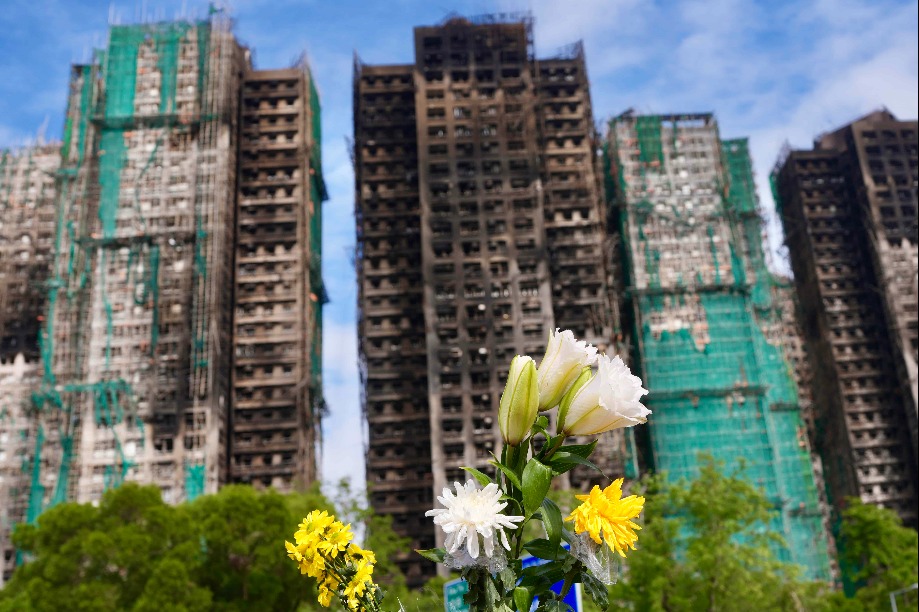
    Hong Kong authorities have initiated a comprehensive investigation and safety review following the completion of search operations at Wang Fuk Court, where a catastrophic fire claimed 159 lives. The tragedy, one of Hong Kong’s deadliest building fires in decades, has prompted immediate government action and exposed critical safety failures.

    The Hong Kong Special Administrative Region government has mandated the removal of all scaffolding nets from building maintenance projects across the territory within 72 hours for urgent fire safety inspections. Development Secretary Bernadette Linn announced that removed materials will only be reinstalled after meeting new safety standards to be issued next week.

    Police confirmed the devastating human toll on Wednesday, with 140 victims identified ranging from 1 to 97 years old, while 31 individuals remain unaccounted for. Search operations have expanded beyond the seven affected buildings to surrounding areas where collapsed scaffolding may conceal additional remains—a meticulous process requiring careful debris removal under safe conditions.

    The investigation has taken a prosecutorial turn with six arrests connected to the contractor responsible for fire safety equipment installation. Authorities allege the company deceived fire services by falsely certifying functional alarm systems during maintenance work. Parallel inquiries are examining potential document forgery regarding renovation materials.

    Substantial financial support has been mobilized, with a disaster relief fund accumulating HK$2.4 billion (approximately $308 million). The government has implemented extensive support measures including tax relief, fee waivers, and comprehensive medical coverage for victims until December 2026. Educational support provides HK$20,000 per student for academic expenses.

    The Central Government’s Hong Kong and Macao Work Office continues coordinating delivery of critical emergency supplies, including specialized protective equipment that has aided recovery operations. Previous shipments from mainland China provided essential lighting equipment that enabled nighttime search operations.

  • Linyi sets sail for Africa to forge strong ties

    Linyi sets sail for Africa to forge strong ties

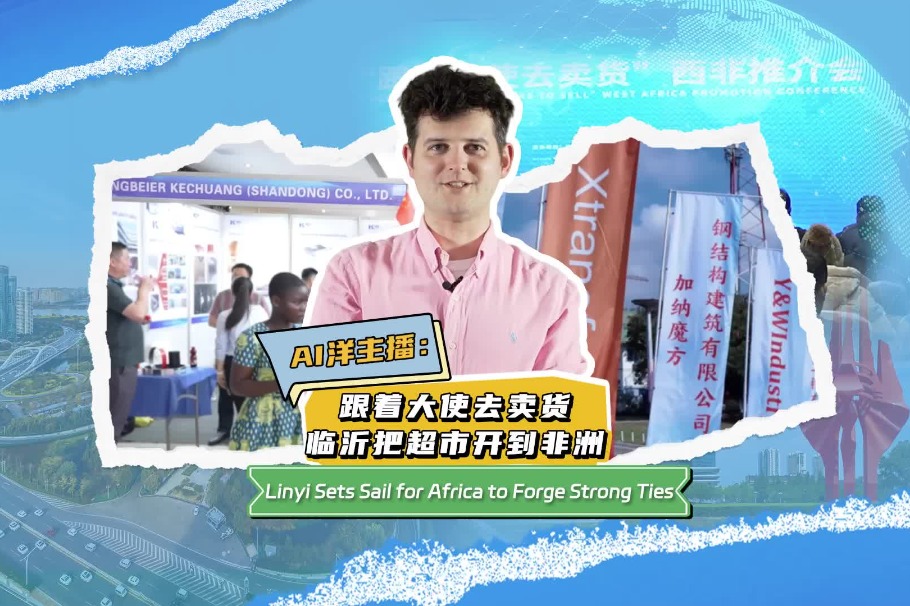
    The Chinese city of Linyi in Shandong province is dramatically strengthening its economic ties with African nations through concrete commercial initiatives. This burgeoning partnership has recently yielded significant achievements, including major contracts finalized at a trade exposition in Ghana and the establishment of new retail outlets in Angola.

    The collaborative efforts represent a mutually beneficial relationship that extends beyond symbolic diplomacy to deliver measurable economic outcomes. Both Chinese and African stakeholders are actively engaged in transforming these commercial bridges into sustainable growth channels.

    The development comes as part of China’s broader international trade strategy, with regional hubs like Linyi playing increasingly important roles in implementing global economic partnerships. The city’s international communication apparatus has been documenting these cross-continental business developments, highlighting the practical results emerging from this transcontinental economic cooperation.

    This Africa-focused trade initiative demonstrates how secondary Chinese cities are increasingly participating in international commerce, creating new economic geography that extends beyond traditional megacity trade hubs. The partnerships reflect evolving patterns of South-South cooperation that emphasize shared development and tangible commercial outcomes.

  • Henry Zeffman: Less than meets the eye to Starmer’s words on Brexit

    Henry Zeffman: Less than meets the eye to Starmer’s words on Brexit

    In a notable rhetorical pivot, British Prime Minister Keir Starmer has initiated a deliberate campaign to advocate for enhanced economic collaboration with the European Union, while simultaneously affirming his commitment to the fundamental structure of the post-Brexit settlement. This nuanced positioning represents Starmer’s most explicit acknowledgment to date that the current Brexit agreement has adversely impacted Britain’s economic landscape.

    The Prime Minister articulated this stance across multiple high-profile platforms on Monday, including an op-ed in The Guardian and speeches to influential audiences. He characterized the implementation of Brexit as ‘botched’ and lamented the ‘wild promises’ made to the British public that remained unfulfilled. ‘One element of our economic renewal will be continuing to move towards a closer trading relationship with the EU,’ Starmer declared, marking a significant evolution from his previous cautious approach to EU relations.

    Despite this rhetorical shift, government sources emphasize that substantial policy changes remain unlikely. During Wednesday’s Prime Minister’s Questions, Starmer reaffirmed that remaining outside the single market and customs union constitute ‘clear red lines’ for his administration. The apparent contradiction between rhetoric and policy reflects a carefully calibrated strategy to prepare the ground for incremental improvements in specific sectors rather than wholesale renegotiation.

    Current negotiations focus on technical enhancements including streamlined food checks, carbon tariff agreements, and potential youth mobility schemes. The recent cabinet appointment of Nick Thomas-Symonds, who has overseen EU negotiations, has sparked speculation about more ambitious goals, though government insiders characterize this as organizational restructuring rather than policy shift.

    Within government circles, a quiet debate persists regarding the possibility of customs union reintegration. Some advisors, including Starmer’s chief economics adviser Baroness Shafik, reportedly advocate rejoining the customs union as the most straightforward method to stimulate economic growth. However, practical obstacles remain substantial, including potential EU demands for concessions and the sacrifice of Britain’s independent trade policy—a cornerstone of the government’s current international approach.

    Politically, Labour strategists detect shifting public attitudes toward Brexit. According to one ‘red wall’ MP representing a strongly pro-Leave constituency: ‘It’s much less visceral than it was. Even in constituencies like mine there’s space to go quite far. The single market is a non-starter because you reopen the immigration issue. But there’s space to rejoin the customs union. It’s about trade. No-one is going to object to better trade.’

    This assessment finds support in recent polling indicating majority public belief that leaving the EU was mistaken. A cabinet minister noted the changing political landscape: ‘Brexit is becoming like the Iraq War. Lots of people supported it at the time but now you can’t find anyone who admits to it.’

    The government’s calibrated approach reflects both economic pragmatism and political calculation, seeking to appeal to progressive voters desiring closer EU ties while avoiding alienation of traditional Brexit supporters. This balancing act will likely define Britain’s evolving relationship with Europe throughout Starmer’s premiership.

  • Asia flood death toll surpasses 1,500 as calls grow to fight deforestation

    Asia flood death toll surpasses 1,500 as calls grow to fight deforestation

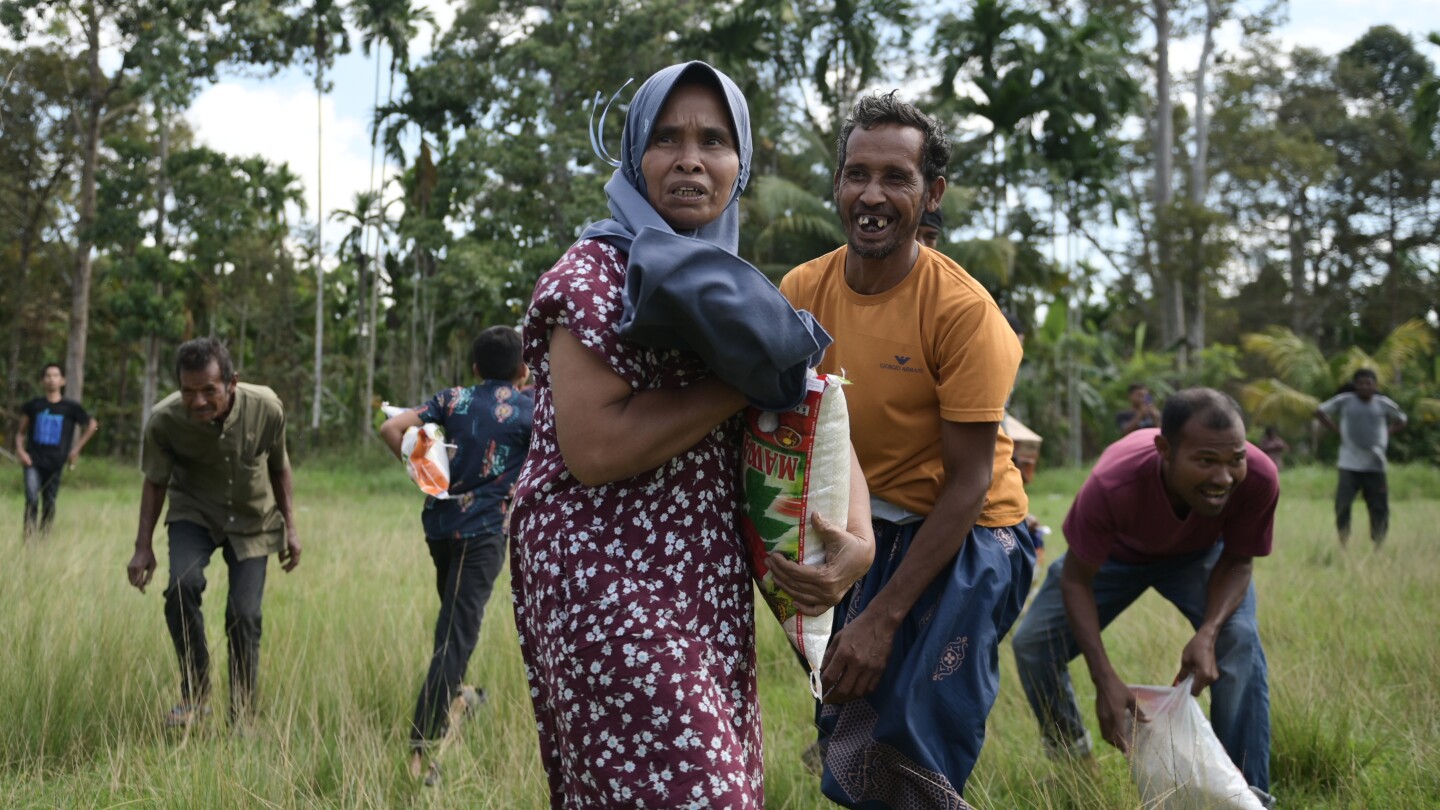
    Environmental experts are pointing to decades of systematic deforestation as a critical factor exacerbating last week’s catastrophic flooding across Southeast Asia, where the death toll has now exceeded 1,500 people. The disaster has left hundreds missing and thousands struggling with severe shortages of food and clean water in isolated regions.

    In Indonesia, where 837 fatalities have been confirmed, environmental organizations have documented alarming forest loss patterns. WALHI, Indonesia’s leading environmental advocacy group, revealed that over 240,000 hectares of primary forest vanished in 2024 alone. Global Forest Watch further quantified the long-term devastation, reporting that flood-affected provinces have lost approximately 19,600 square kilometers of forest since 2000—an area exceeding the size of New Jersey.

    Eyewitness accounts from Padang describe massive quantities of neatly cut timber scattered across beaches and flood zones, suggesting widespread illegal logging operations rather than natural tree displacement. “These were clean, neatly cut pieces of wood—they looked like the result of illegal logging,” observed Ria Wati, a 38-year-old resident.

    The ecological crisis has prompted significant government response. President Prabowo Subianto has pledged comprehensive policy reforms following his visit to devastated areas, emphasizing that “protecting our forests is crucial.” Environment Minister Hanif Faisol Nurofiq has launched investigations into eight companies suspected of environmental violations that may have worsened the disaster, with lawmakers calling for permit revocations.

    As rescue operations continue across Indonesia, Sri Lanka (479 deaths), and Thailand (185 deaths), the region faces not only immediate humanitarian challenges but also mounting pressure to address the underlying environmental degradation that turned severe weather into a catastrophic event.

  • Norway donates a Christmas tree to London every year. Here’s how the tradition began

    Norway donates a Christmas tree to London every year. Here’s how the tradition began

    LONDON — The iconic Christmas tree in Trafalgar Square was ceremoniously illuminated on Thursday, marking the continuation of a profound seven-decade tradition between London and Oslo. This annual lighting ceremony represents far more than seasonal decoration—it stands as an enduring symbol of international friendship forged during World War II.

    The tradition originated in 1947 when Norway began gifting Christmas trees to Britain in gratitude for London’s support during the Nazi occupation. When Germany invaded Norway in 1940, King Haakon VII and his government established a government-in-exile in London. The BBC’s Norwegian-language broadcasts became a critical information lifeline for occupied Norwegians, who risked severe punishment to listen to prohibited transmissions.

    Each tree undergoes an extensive selection process, with potential candidates identified five to ten years in advance. This year’s specimen, affectionately nicknamed ‘Ever Oslo,’ stands approximately 20 meters tall and is estimated to be sixty years old. Selected over competitors ‘Nordic Star’ and ‘Fjord Fir,’ the Norwegian spruce was carefully harvested on November 21st.

    The tree’s journey to London involved meticulous transportation planning. After ceremonial felling, it traveled 180 kilometers to port in a specialized cradle, underwent cleansing to remove road salt, then embarked on a 26-hour sea voyage stored below deck for protection. The final leg involved truck transportation to central London.

    The lighting ceremony—promoted on social media as ‘Britain’s national tree-sure’—traditionally occurs on the first Thursday of December and features vertically hung lights according to Norwegian custom. The tree will remain illuminated until January 5th (Twelfth Night), after which it will be recycled into compost and mulch. Meanwhile, Norwegian authorities will plant a replacement tree in the Oslo forest, ensuring the continuity of this meaningful tradition.

  • Dubai real estate sees boom of new small developers, but not all will survive

    Dubai real estate sees boom of new small developers, but not all will survive

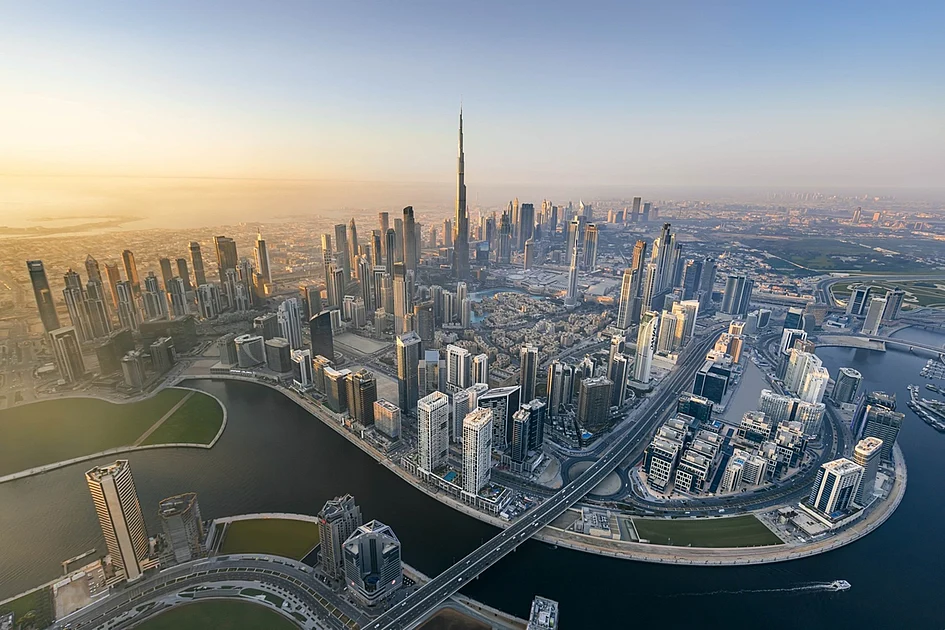
    Dubai’s real estate sector is experiencing an unprecedented surge of small-scale developers entering the market, though industry experts caution that not all newcomers will withstand the intensifying competition. The market expansion, driven by massive influxes of expatriates, investors, and millionaires over the past five years, has created fertile ground for emerging developers from Asia, Middle Eastern nations, and Europe.

    According to Cavendish Maxwell data, the first half of 2025 witnessed approximately 325 new projects introducing over 87,900 residential units to the market—averaging nearly 490 units launched daily. This remarkable growth trajectory has positioned Dubai as what industry leaders call “the most wanted brand” in global real estate.

    Imran Farooq, CEO of Samana Developers, expressed concerns about the sustainability of many new entrants’ business models. “The mainstream developers are thriving because they can sell whatever they produce,” Farooq noted. “The challenge lies with the mushrooming small developers who may lack the necessary resources and global promotion strategies that define successful operations in this market.”

    The competition is intensifying as market performance continues to break records. By October 2025, apartment sales had already exceeded the previous year’s totals with 99,758 units sold compared to 94,459 during the same period in 2024. Projections indicate 2025 could see approximately 120,000 apartment sales, representing a 27% growth in off-plan apartment transactions.

    Wissam Breidy, CEO of HRE Development, emphasized that reputation building remains crucial in this free market environment. “Reputation surpasses monetary value in importance,” Breidy stated. “Once you establish credibility as a developer, trust follows naturally. Our focus remains on client relationships and data-driven decisions rather than obsessing over competitors’ movements.”

    Industry analysts attribute Dubai’s sustained growth to strategic government initiatives, including the Golden Visa program introduced during the COVID-19 pandemic. This long-term residency option has transformed the demographic of property seekers, with more families seeking permanent homes rather than temporary accommodations. The UAE’s effective pandemic management and forward-thinking policies have bolstered investor confidence, creating what developers describe as “an era of strategic growth” for the emirate’s property market.

  • Mainland slams DPP for ‘selling out Taiwan’

    Mainland slams DPP for ‘selling out Taiwan’

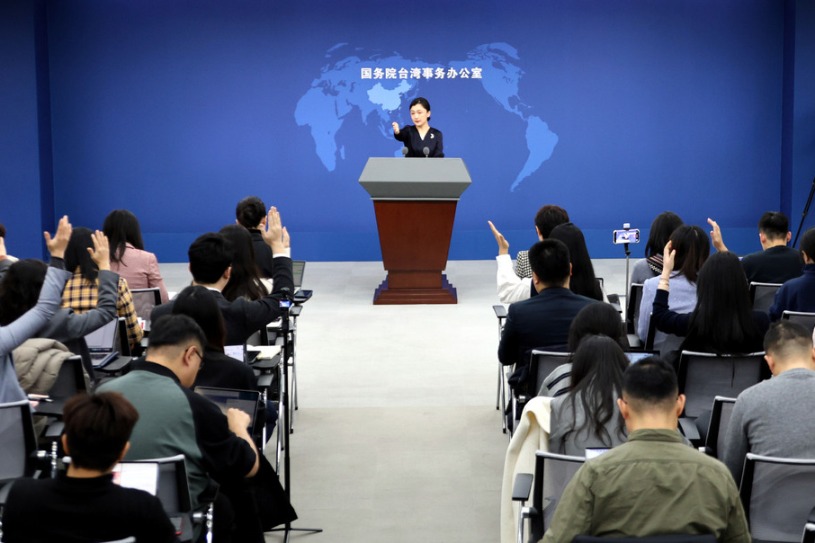
    Chinese officials have issued a stern condemnation of Taiwan’s Democratic Progressive Party (DPP) administration, accusing it of recklessly compromising the island’s economic and security interests to appease foreign powers. At a Wednesday press conference, State Council Taiwan Affairs Office spokeswoman Zhang Han characterized U.S.-Taiwan relations as fundamentally exploitative, stating Washington views Taiwan merely as “fat meat” and a “cash machine” to serve American strategic objectives.

    The criticism came in response to Taiwanese leader Lai Ching-te’s proposed $40 billion supplementary defense package aimed at purchasing American weaponry. Zhang denounced the expenditure as a catastrophic misallocation of resources that should instead benefit Taiwan’s economy and public welfare. “Buying weapons does not bring security; instead, it accelerates Taiwan’s slide into danger,” she asserted, emphasizing that subservience to external forces would “inevitably lead to self-destruction.”

    Domestic opposition to the defense budget has emerged within Taiwan, with protesters and lawmakers from the Kuomintang and Taiwan People’s Party blocking the bill from legislative agenda consideration. Simultaneously, reports indicate Taiwan is negotiating reduced U.S. tariff rates in exchange for expanded semiconductor investments, a move Zhang described as draining Taiwan’s industrial resources without regard for residents’ livelihoods.

    The spokeswoman also addressed concerning developments in U.S.-Taiwan relations, including the recently enacted Taiwan Assurance Implementation Act requiring regular review of engagement guidelines. Zhang reiterated China’s firm opposition to any U.S.-Taiwan military cooperation and urged Washington to adhere to the one-China principle, cautioning that provocative actions would undermine regional stability.

  • Chinese premier calls for implementation of new urbanization strategy to boost social, economic development

    Chinese premier calls for implementation of new urbanization strategy to boost social, economic development

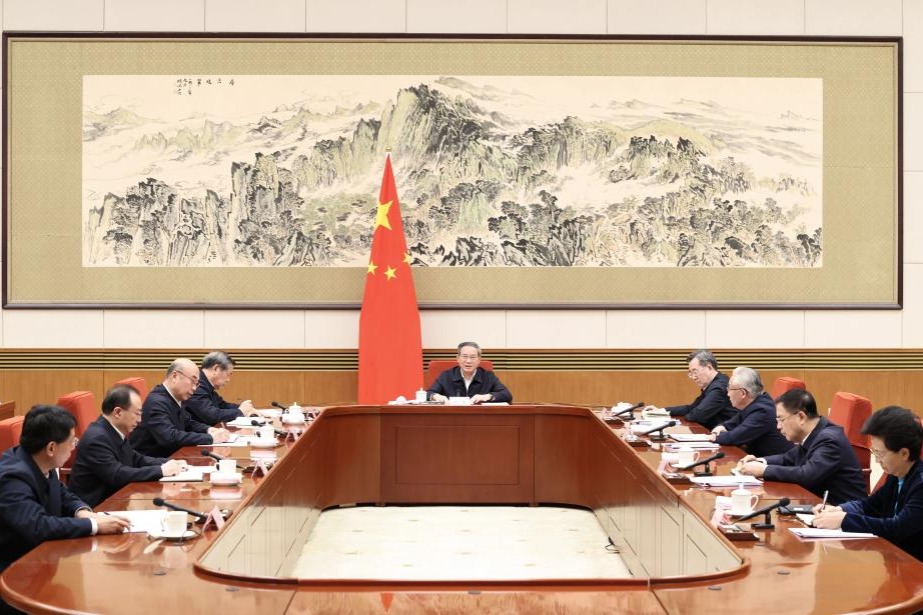
    In a pivotal State Council study session convened on December 3, 2025, Premier Li Qiang championed the accelerated implementation of China’s people-centered new urbanization strategy. He emphasized its critical role in unlocking domestic demand potential through urban-rural integration and driving comprehensive socioeconomic advancement.

    Presiding over the high-level meeting attended by Vice Premiers Ding Xuexiang, He Lifeng, and State Councilor Wang Xiaohong, Premier Li characterized urbanization as a fundamental engine for expanding domestic consumption, catalyzing industrial modernization, and strengthening China’s internal economic circulation. He noted that while significant progress has been achieved nationwide, the 15th Five-Year Plan period (2026-2030) presents substantial opportunities for further development.

    Premier Li observed that China’s urbanization is transitioning from rapid expansion to stable maturation, accompanied by profound transformations in demographic patterns, urban systems, and rural-urban dynamics. This evolution necessitates enhanced precision and effectiveness in policy implementation.

    The Premier outlined a multifaceted approach requiring localized adaptation of urbanization plans, optimized coordination between population distribution, industrial development, and urban planning. He specifically highlighted the urgency of addressing critical social challenges including employment security, social welfare provisions, housing accessibility, and educational opportunities for rural migrant populations.

    Further directives included advancing urban renewal initiatives, promoting construction of ‘quality homes,’ and fostering high-quality development within the real estate sector. Premier Li also stressed the importance of strengthening infrastructure connectivity and industrial alignment between urban and rural regions to achieve genuinely integrated development.

  • Influx of intl tourists helps illuminate the real Xinjiang

    Influx of intl tourists helps illuminate the real Xinjiang

    URUMQI, China — Northwest China’s Xinjiang Uygur Autonomous Region is experiencing an unprecedented surge in international tourism, with over 2.1 million overseas visitors recorded in the first ten months of 2025 alone. This represents a 6 percent year-on-year increase, positioning the region as an emerging global destination for winter sports and cultural exploration.

    The current winter season has attracted adventure seekers like Nicolas de Fermor, a French skiing enthusiast who chose Xinjiang over traditional European resorts. “We came specifically for the snow season,” Fermor remarked during his visit to the Silk Road Ski Resort near Urumqi. “The seamless experience—from passport-based bookings to mobile payments and English-speaking staff—exceeded our expectations. We’re already planning our return.”

    Xinjiang’s transformation into a international tourism hub stems from comprehensive policies facilitating visa processing, digital payment systems, and accommodation infrastructure. The region’s diverse attractions range from pristine snow-capped mountains and golden deserts to ancient cultural sites and vibrant marketplaces.

    Tour industry professionals report unprecedented demand. “During peak season between June and September, securing English-speaking tour guides becomes exceptionally challenging,” noted Chen Bianxia, a veteran guide with nearly twenty years of experience.

    Liang Changhong, General Manager of China CYTS Tours Holding Co., Ltd.’s Xinjiang branch, identified distinct travel preferences among visitor demographics: “While Southeast Asian tourists predominantly seek natural landscapes and increasingly favor independent travel arrangements, European and American visitors demonstrate stronger interest in the historical cultural heritage along the ancient Silk Road corridor.”

    The convergence of natural beauty, cultural richness, and modern convenience continues to redefine Xinjiang’s position in global tourism, demonstrating how strategic development and cultural accessibility can reshape travel patterns worldwide.