作者: admin

  • British Orchard Nursery expands with 15th government-linked branch

    British Orchard Nursery expands with 15th government-linked branch

    Dubai’s premier early childhood institution, British Orchard Nursery (BON), has marked a significant expansion milestone with the inauguration of its newest facility within the Ports, Customs and Free Zone Corporation (PCFC) headquarters. This opening represents the nursery chain’s 15th establishment within a UAE government entity and its 37th branch nationwide, reinforcing its position as the Emirates’ most decorated early education provider.

    The timing of this launch carries profound national significance, coinciding with both the UAE’s 54th National Day celebrations and the official designation of 2025 as the ‘Year of the Community’. This dual alignment underscores the nursery’s commitment to fostering social cohesion, familial support structures, and collaborative community development—cornerstones of the nation’s current strategic vision.

    The inauguration ceremony witnessed the presence of distinguished leadership including Sultan Ahmed bin Sulayem (PCFC Chairman), Nasser Al Neyadi (PCFC CEO), and Dr. Vandana Gandhi (BON Founder and CEO), alongside various departmental leaders. This high-level participation highlighted the institutional importance placed on early childhood development within government work environments.

    Dr. Gandhi emphasized the strategic significance of this expansion, noting its synchronization with nationwide educational quality enhancements. “Across the Emirates, regulatory bodies including KHDA, ADEK, and SPEA are implementing strengthened frameworks that prioritize educational excellence, transparency, and cultural preservation,” she stated. “Our BONQ inspection model, ISO-certified safety protocols, and EFQM-driven improvement culture directly align with these national objectives as we enter our twentieth operational year.”

    The new PCFC facility embodies contemporary pedagogical approaches centered on project-based, child-initiated learning experiences. Designed to stimulate curiosity and build emotional security, the nursery features open-ended resources, responsive learning environments, and culturally rich developmental spaces. This educational philosophy supports the UAE’s dual objectives of international benchmarking and cultural rootedness in early years’ education.

    Beyond educational services, this expansion represents a strategic partnership model between government entities and private providers. BON currently serves over fifteen government agencies, demonstrating how institutional collaboration can advance workforce support systems and sustainable, family-oriented workplace cultures. The PCFC branch specifically enhances work-life balance for government employees while extending quality early childhood services to broader community networks.
  • Why MAGA needs you to hate one group or another

    Why MAGA needs you to hate one group or another

    A profound ideological transformation has reshaped American political discourse regarding race and immigration. Throughout the 2010s, conservative voices increasingly embraced Martin Luther King Jr.’s vision of a colorblind society, particularly his famous aspiration that individuals “not be judged by the color of their skin but by the content of their character.” This marked a significant departure from historical patterns, where progressive advocates had traditionally championed King’s message.

    The landscape shifted as progressive movements increasingly rejected colorblindness as an adequate solution to systemic racial disparities. Instead, they advocated for race-conscious policies addressing income, wealth, and incarceration gaps through initiatives like Diversity, Equity, and Inclusion (DEI) programs. This approach manifested across American business, government, academia, and media spaces.

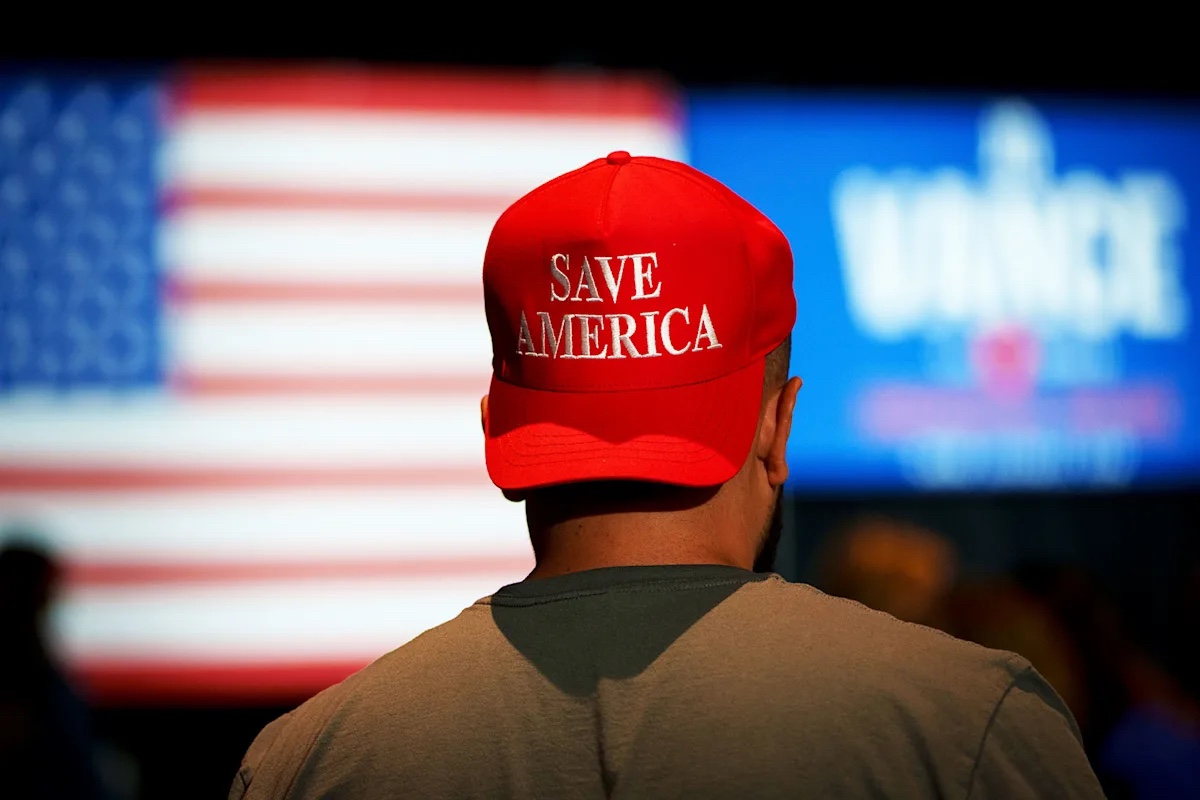
    Recently, however, a dramatic reversal has occurred within right-wing circles. Prominent MAGA figures including Donald Trump and former Homeland Security Advisor Stephen Miller have openly embraced racial collectivism—judging individuals based on their ethnic or national groups rather than personal character. This philosophy echoes early 20th-century immigration restrictionists who argued against admitting immigrants from “beaten races” and “underdeveloped nations.

    The current manifestation emerged through statements condemning entire ethnic groups based on individual actions or conditions in their countries of origin. Trump’s comments about Somali immigrants and Miller’s dismissal of individualism in favor of group-based assessment represent a fundamental philosophical shift from their previous embrace of King’s ideals.

    Historical parallels exist in the immigration debates of the late 19th and early 20th centuries, when restrictionists similarly argued that immigrants from Southern and Eastern Europe would degrade American society due to their countries’ relative underdevelopment.

    Empirical evidence contradicts the racial collectivist worldview. Indian immigrants, despite coming from a country with lower GDP per capita than El Salvador, have become one of America’s most successful demographic groups by household income, education levels, and entrepreneurial achievement. Similarly, El Paso—with its predominantly Mexican-American population—maintains dramatically lower violence rates than neighboring Juarez, demonstrating how American institutions transform outcomes regardless of ethnic composition.

    The MAGA movement’s emphasis on immigration restriction appears driven by this collectivist worldview rather than individual assessment. Recent attempts to portray immigrant groups negatively, such as false claims about Haitian immigrants in Ohio or highlighting welfare fraud among some Somalis in Minnesota, suggest strategic efforts to shift public discourse toward group-based judgment.

    This philosophical conflict ultimately represents a battle for America’s fundamental identity: whether the nation will maintain its traditional individualistic ethos or transition toward what historian John Higham termed “racism”—judging people according to collective racial accomplishments rather than individual merit.

    Recent polling indicates most Americans still support immigration and individual assessment principles, suggesting the collectivist approach may face significant public resistance despite its growing prominence in political rhetoric.

  • German parliament approves pension package after a rebellion in Merz’s party

    German parliament approves pension package after a rebellion in Merz’s party

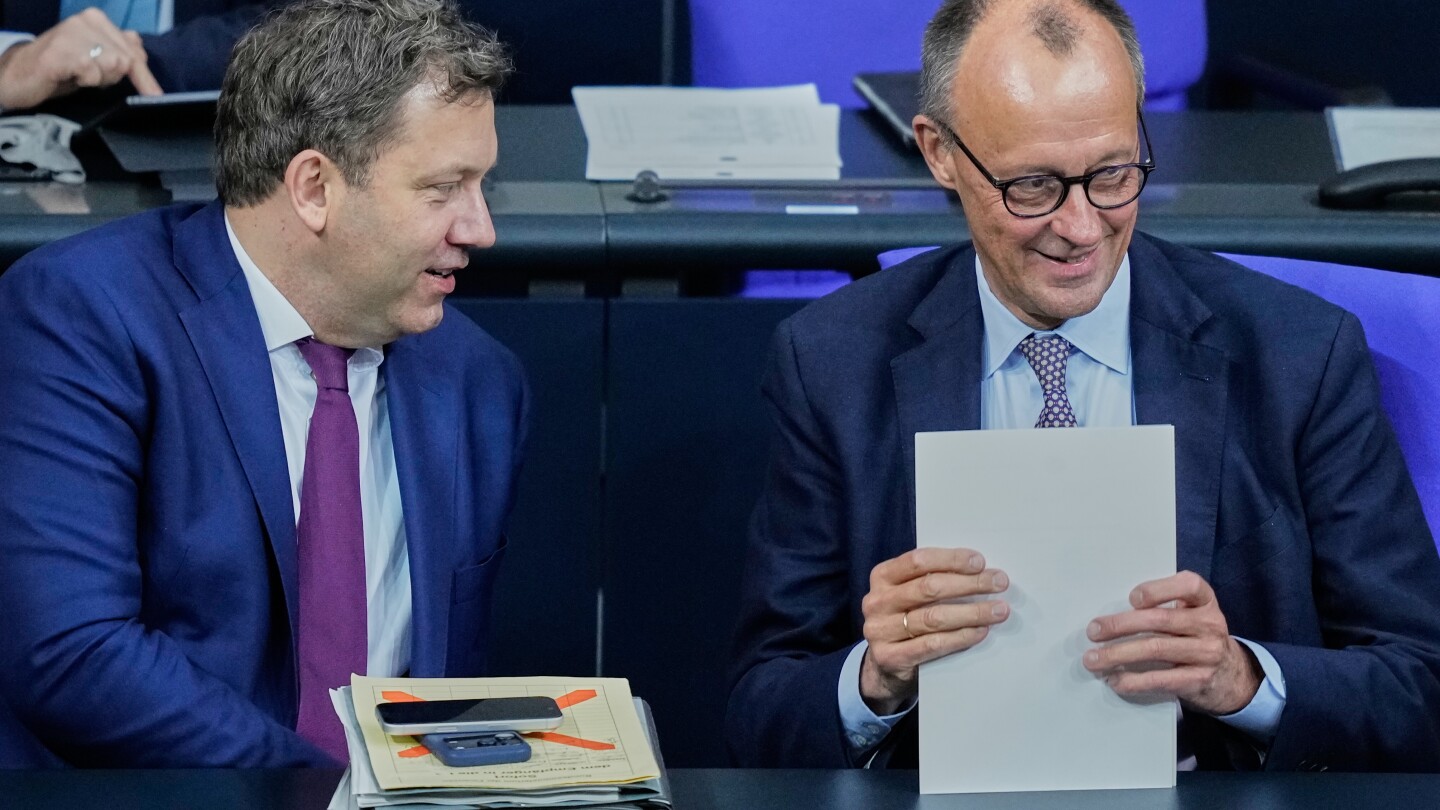
    BERLIN — Germany’s legislative body has formally endorsed a comprehensive pension reform package following weeks of internal dissent within Chancellor Friedrich Merz’s governing coalition. The legislation passed with 319 votes in favor, 225 against, and 53 abstentions in the Bundestag’s lower house on Friday.

    The approved measures include a landmark provision that will maintain state pension levels at 48% of average wages until 2031, addressing immediate concerns about retirement security. The reform package also incorporates tax incentives designed to facilitate continued employment for retirees, a concession to Merz’s conservative bloc.

    Significant opposition emerged from 18 young legislators within Merz’s center-right Union alliance, who expressed concerns about post-2031 provisions that would establish slightly higher pension levels than current law mandates. These dissenters projected potential annual costs reaching €15 billion ($17.5 billion), arguing that this financial burden would disproportionately affect younger generations.

    Coalition leaders have attempted to mollify critics by emphasizing that an independent commission will deliver proposals for more extensive pension system reforms by mid-2026. This initiative responds to Germany’s demographic challenges, particularly its aging population trend that mirrors patterns seen across many developed nations.

    The parliamentary victory comes during a politically turbulent period for Merz’s administration, which has faced multiple governance challenges since assuming power seven months ago. The chancellor has publicly acknowledged excessive public disagreements within his coalition government, which has prioritized economic revitalization and migration reduction since taking office.

  • Dubai: Man jailed, fined Dh100,000 for using bank account for drug trafficking

    Dubai: Man jailed, fined Dh100,000 for using bank account for drug trafficking

    In a decisive ruling that underscores the United Arab Emirates’ intensified campaign against narcotics-related financial crimes, a Dubai court has delivered a comprehensive verdict against an Asian national convicted of facilitating drug trafficking through his banking services. The defendant received a three-year prison sentence coupled with a substantial fine of Dh100,000, followed by mandatory deportation upon completion of his incarceration.

    The judicial authorities further mandated the complete confiscation of all funds within the defendant’s bank account and instituted a stringent two-year prohibition preventing him from processing monetary transfers or deposits for third parties, whether directly or through intermediary channels. This financial restriction requires explicit prior authorization from the UAE Central Bank, coordinated with the Ministry of Interior, before any future transactional activities can be conducted.

    The case originated from actionable intelligence received by Dubai’s General Department of Anti-Narcotics, indicating that four Asian men were actively engaged in drug consumption and storage at a Bur Dubai residence. Executing a prosecution-sanctioned raid, law enforcement officials uncovered heroin packets, precision weighing scales, and drug distribution paraphernalia within the property. Subsequent searches revealed additional narcotics quantities concealed inside a vehicle belonging to one of the suspects.

    During criminal investigations, one suspect admitted procuring narcotics from an Asian supplier, while another confessed that proceeds from drug sales were channeled through a UAE bank account. Financial records ultimately identified the defendant as the account holder. Despite maintaining that he merely lent his bank card to assist an acquaintance without knowledge of its illicit use, the court rejected his defense, establishing his responsibility for managing drug-related proceeds.

    This verdict represents the UAE’s strengthened judicial approach toward combating narcotics networks, particularly targeting the financial infrastructure that enables drug trafficking operations. The ruling serves as a stark warning about the severe consequences awaiting those who facilitate criminal activities, even through indirect financial assistance.

  • Non-capital function relocation fuels Xiong’an’s rapid growth

    Non-capital function relocation fuels Xiong’an’s rapid growth

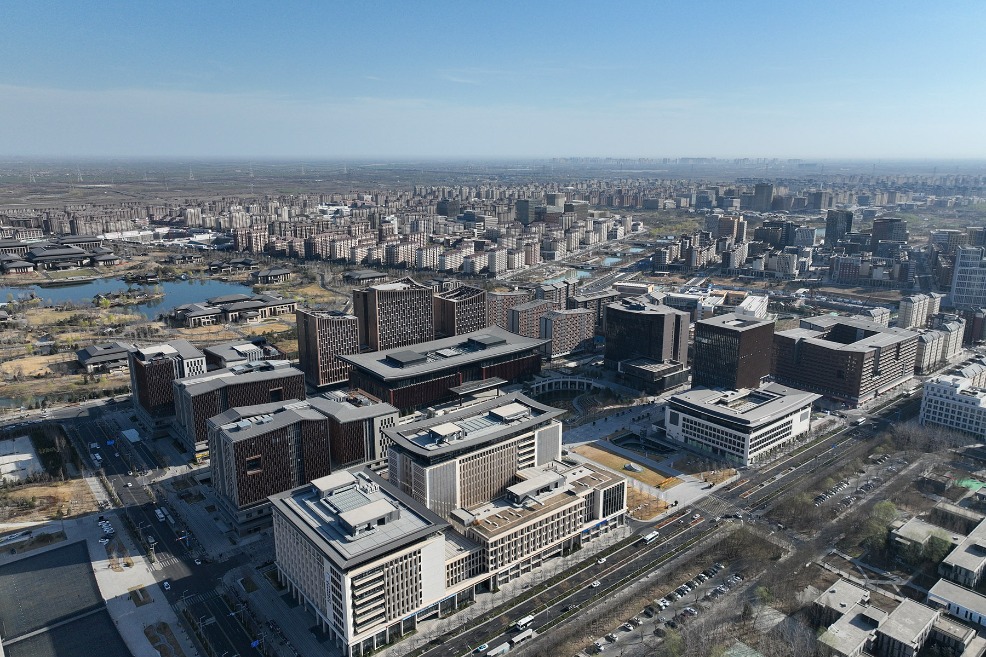
    Xiong’an New Area in Hebei Province has demonstrated remarkable economic transformation during China’s 14th Five-Year Plan period (2021-2025), establishing itself as the primary destination for Beijing’s non-capital function relocation initiative. This strategic decentralization drive has propelled the area into a phase of extensive development and quality growth, according to officials at a recent press conference.

    The statistics reveal an extraordinary economic performance, with Xiong’an achieving an average annual GDP growth rate of 17.1% over the past five years. This expansion has been supported by consistent annual investment approximating 200 billion yuan ($28 billion), accumulating to over one trillion yuan in total capital infusion, as reported by Wang Yanwei, director of Xiong’an’s Reform and Development Bureau.

    The relocation program has attracted major state-owned enterprises, with China Satellite Network Group, Sinochem Holdings, and China Huaneng Group having officially transferred their headquarters to the new area. Concurrently, construction is progressing rapidly on multiple fronts, including China Mineral Resources Group’s headquarters facility, along with four universities and two medical institutions in the initial relocation cohort.

    A subsequent wave of development is already underway, featuring the commencement of China Datang Corporation’s headquarters construction and finalized location agreements with additional enterprises and institutions, comprising three hospitals and five universities. This concentrated migration has generated powerful industrial clusters, with more than 400 subsidiaries and innovative business segments of central enterprises now established within Xiong’an.

    The area is rapidly evolving into a concentrated zone for higher education, elite talent, advanced medical resources, and state-owned enterprise innovation. This transformation is bolstered by substantial infrastructure advancements, including the nearing completion of critical transportation corridors such as the east-west axis railway and the Jingxiong Express Line connecting to Beijing Daxing International Airport.

    Public service capabilities have been systematically enhanced through the completion and operationalization of cultural and sports facilities, including the Xiong’an Sports Center and Xiong’an Library. Looking toward the 15th Five-Year Plan period (2026-2030), authorities plan to maintain focus on the relocation strategy to drive industrial innovation, technological advancement, and further talent aggregation, aiming for decisive progress in establishing a high-standard modern urban center.

  • Putin says Russia ready to supply ‘uninterrupted’ fuel to India

    Putin says Russia ready to supply ‘uninterrupted’ fuel to India

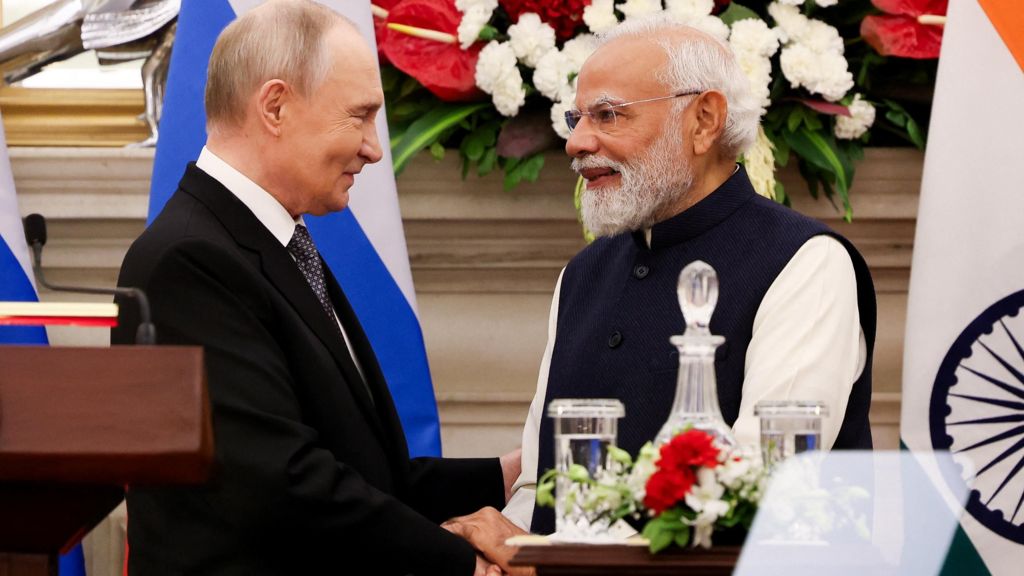
    During a high-profile meeting in Delhi, Russian President Vladimir Putin assured India of Moscow’s commitment to providing “uninterrupted shipments” of fuel, directly challenging U.S. pressure on New Delhi to cease purchasing Russian oil. The bilateral talks between Putin and Indian Prime Minister Narendra Modi highlighted growing geopolitical tensions as the United States imposes significant tariffs on Indian products in response to India’s continued energy trade with Russia.

    Putin pointedly questioned the logic behind U.S. sanctions, noting that America itself continues to purchase nuclear fuel from Russia. “The United States itself still buys nuclear fuel from us for its own nuclear power plants. If the US has the right to buy our fuel, why shouldn’t India have the same privilege?” he asked during an interview with India Today.

    The meeting occurred against the backdrop of deteriorating India-U.S. relations, which have reached an all-time low due to unresolved tariff disputes. The U.S. has imposed 50% tariffs on most Indian products, citing India’s oil purchases as indirectly funding Russia’s war in Ukraine—an accusation India firmly denies.

    While addressing the Ukraine conflict, Putin presented an ultimatum: “Either we liberate these territories by force, or Ukrainian troops will leave these territories.” Meanwhile, Modi reiterated India’s position of supporting peace and seeking a lasting solution to the conflict, without explicitly endorsing either side.

    The leaders announced several bilateral agreements, including new visa schemes for Russian tourists, the opening of Indian consulates in Russia, and the launch of Russia Today in India. They also signed memorandums covering trade, agriculture, shipbuilding, civil nuclear energy, and critical minerals. Notably, both countries agreed on an economic program extending through 2030, with ambitions to increase bilateral trade from $60 billion to $100 billion.

    Energy security emerged as a cornerstone of the partnership, though Modi avoided specific mention of oil. India, the world’s third-largest crude consumer, has significantly increased Russian oil imports since 2022 but recently begun reducing them to comply with U.S. sanctions.

    The joint statement emphasized a strategic reorientation toward joint research, development, and production of advanced defense platforms. Both leaders also highlighted their cooperation within BRICS, positioning the alliance as promoting a “more just” and “multi-polar” world order.

  • What Putin and Modi got out of Delhi meeting

    What Putin and Modi got out of Delhi meeting

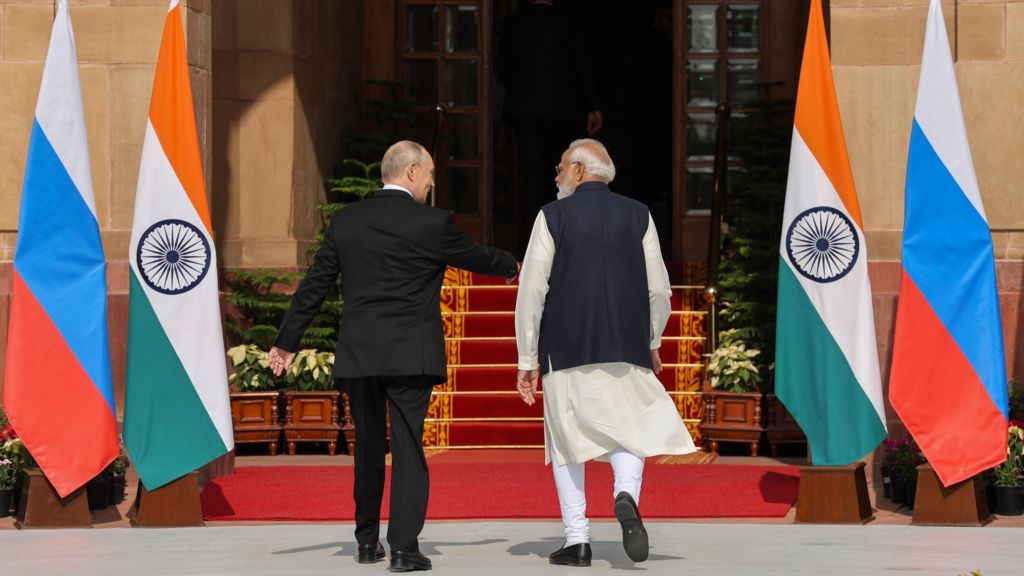
    Russian President Vladimir Putin concluded a highly symbolic visit to New Delhi, marking his first trip to India since the commencement of the Ukraine conflict in 2022. The carefully orchestrated event featured full ceremonial honors, including a military guard reception and a presidential banquet, signaling India’s continued diplomatic engagement despite Western pressure.

    During the intensive one-day itinerary, President Putin engaged in substantive discussions with Prime Minister Narendra Modi, participated in a bilateral business forum, and officially launched the India operations of RT (Russia Today), the Kremlin-funded media network. The visit’s ceremonial aspects—particularly Prime Modi’s unusual airport reception—demonstrated the enduring strength of Russo-Indian relations amid global geopolitical tensions.

    The bilateral meetings yielded several significant agreements, though falling short of anticipated major defense contracts. Both nations announced enhanced cooperation through a new economic partnership program covering critical minerals and pharmaceutical manufacturing, with plans to establish a Russian-Indian pharmaceutical facility in Russia’s Kaluga region. The leaders also advanced discussions on a potential free trade agreement between India and the Eurasian Economic Union.

    Energy security emerged as a central theme, with President Putin reaffirming Russia’s commitment to maintaining “uninterrupted oil shipments” to India. This pledge comes amid substantial pressure from the Trump administration, which has imposed heavy tariffs on Indian goods to discourage continued energy purchases from sanctioned Russian entities. Current bilateral trade has surged to $68.72 billion from $8.1 billion in 2020, primarily driven by India’s procurement of discounted Russian crude.

    Notably absent were expected announcements regarding major defense acquisitions, including advanced fighter jets and air defense systems. This omission reflects India’s delicate balancing act between its historical defense partnership with Moscow and its strategic relationship with Washington. However, officials emphasized that Russia remains India’s primary defense partner, with ongoing negotiations regarding delayed deliveries of the S-400 air defense systems and potential future acquisitions.

    The visit established an ambitious five-year framework aiming to achieve $100 billion in bilateral trade, emphasizing diversification beyond energy into sectors including shipbuilding, polar navigation training, civil nuclear energy, and visa-free travel arrangements.

  • Shah Rukh and Kajol unveil ‘DDLJ’ bronze statue in London

    Shah Rukh and Kajol unveil ‘DDLJ’ bronze statue in London

    In a landmark moment for Indian cinema, legendary actors Shah Rukh Khan and Kajol unveiled a bronze statue commemorating their iconic roles from the 1995 blockbuster ‘Dilwale Dulhania Le Jayenge’ (DDLJ) in London’s prestigious Leicester Square on Friday. This historic installation marks the first-ever recognition of an Indian film within the renowned Scenes in the Square trail, placing Bollywood’s most beloved characters alongside Western cinematic legends including Harry Potter, Mary Poppins, and superhero icons.

    The meticulously crafted statue captures the unforgettable pose of Raj and Simran, which the actors themselves recreated during the emotional unveiling ceremony. Shah Rukh Khan arrived in a sophisticated black suit while Kajol radiated elegance in a mint green saree, perfectly embodying the timeless charm that has defined their on-screen partnership for three decades.

    Directed by Aditya Chopra under the Yash Raj Films banner, DDLJ revolutionized Indian cinema with its cross-continental romance narrative that followed two non-resident Indians discovering love during a European journey originating from London’s King’s Cross Station. The film recently celebrated its 30th anniversary in October, demonstrating extraordinary longevity in global popular culture.

    During the unveiling, Khan expressed profound gratitude, stating: ‘DDLJ was crafted with pure artistic intention—we aimed to showcase how love transcends barriers and improves our world. This enduring impact over thirty years remains humbling and deeply personal.’ Kajol reflected on the emotional significance, noting: ‘Witnessing this statue unveiling felt like reliving our cinematic history—a narrative that has genuinely crossed generational boundaries.’

    The installation represents a significant cultural milestone, organized through collaboration with the Heart of London Business Alliance, acknowledging Indian cinema’s growing global influence and the specific cultural impact of what many consider the definitive Bollywood romance film.

  • UAE airline Etihad Airways launches three weekly flights to Russia’s Kazan

    UAE airline Etihad Airways launches three weekly flights to Russia’s Kazan

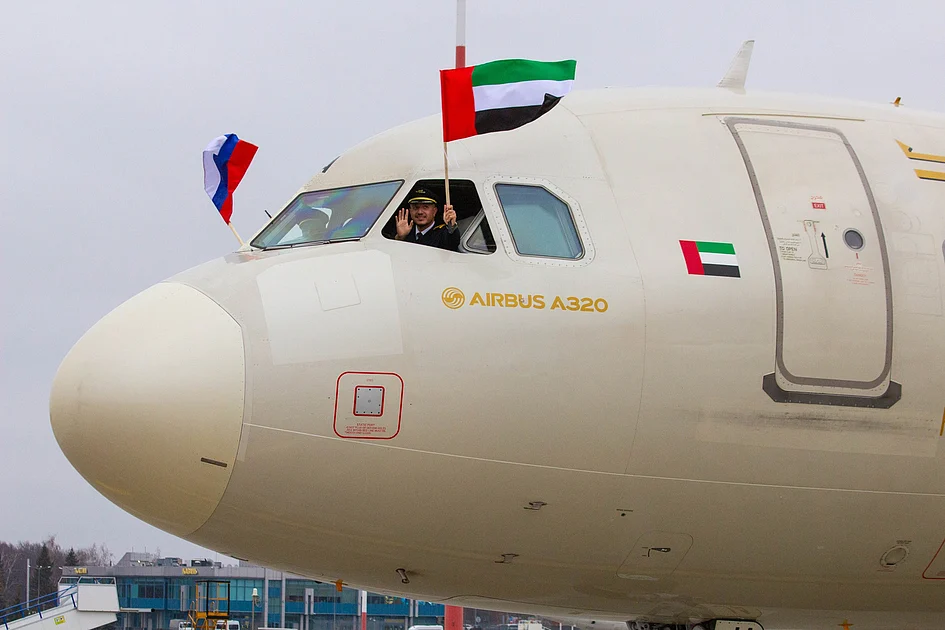
    Etihad Airways has inaugurated a significant new air route connecting Abu Dhabi with Kazan, Russia, marking a strategic expansion of its global network. The inaugural flight EY839 arrived at Kazan International Airport on December 3, 2025, receiving a ceremonial welcome that celebrated the establishment of this new travel corridor.

    The service will operate three times weekly on Tuesdays, Thursdays, and Sundays, featuring a flight duration of approximately five hours between the two cities. This scheduling is strategically designed to accommodate both business travelers and tourists seeking weekend getaways or extended holiday opportunities.

    Natalia Goryunova, Etihad Airways’ Country Manager for Russia, emphasized the significance of this new route: “We’re delighted to welcome guests from Kazan to discover Abu Dhabi, a city that beautifully blends Emirati heritage with contemporary innovation. Through our Abu Dhabi hub, passengers can enjoy seamless connections to Southeast Asia, the Indian Subcontinent, the GCC region, and Australia.”

    The new connection provides substantial benefits for travelers in both directions, offering Russian passengers enhanced access to Etihad’s extensive global network while simultaneously creating new opportunities for international visitors to explore one of Russia’s fastest-growing regional capitals. Kazan, known for its rich cultural heritage and economic vitality, becomes the latest addition to Etihad’s expanding route map, strengthening economic and tourism ties between the United Arab Emirates and the Russian Federation.

  • Burkina Faso plans to restore death penalty for treason, terrorism, espionage

    Burkina Faso plans to restore death penalty for treason, terrorism, espionage

    DAKAR, Senegal — Burkina Faso’s military-led government has initiated a controversial legal reversal by approving draft legislation to reintroduce the death penalty for severe crimes including treason, acts of terrorism, and espionage. The Council of Ministers formally endorsed the bill in a significant policy shift that marks a departure from the nation’s 2018 abolition of capital punishment.

    Justice Minister Edasso Rodrigue Bayala characterized the move as part of broader judicial reforms, stating in an official Facebook communiqué that the measure aligns with ‘the deep aspirations of our people’ for a justice system addressing contemporary challenges. The proposal must now undergo parliamentary approval and judicial review before attaining legal force.

    This development occurs against a backdrop of sweeping governmental transformations implemented since the 2022 military coup. The ruling junta has previously postponed scheduled elections intended to restore civilian governance and dissolved the independent electoral commission. Concurrently, Burkina Faso has intensified media suppression, notably suspending BBC and Voice of America radio services for reporting on alleged military atrocities against civilians. Earlier this year, authorities detained three prominent journalists, continuing a pattern of suppressing dissenting voices.

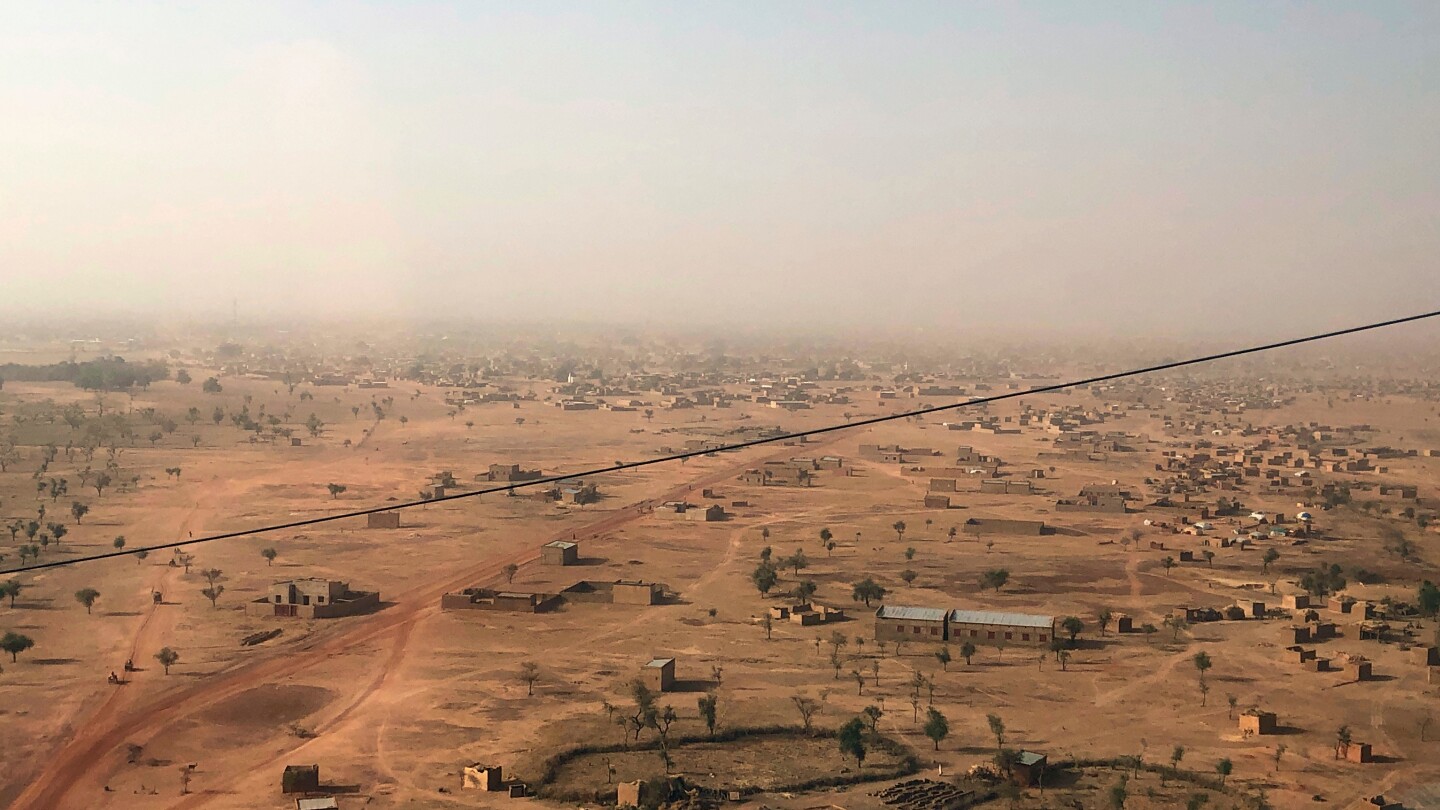
    Burkina Faso joins several West African nations experiencing military takeovers amid widespread public dissatisfaction with elected governments’ handling of security crises. The landlocked nation of 23 million people confronts escalating violence from extremist factions affiliated with Al-Qaeda and the Islamic State, particularly in the volatile Sahel region south of the Sahara. International observers have repeatedly accused the current regime of human rights violations and systematic detention of government critics.