作者: admin

  • Winter storm hits US Northeast region, snarls thousands of flights

    Winter storm hits US Northeast region, snarls thousands of flights

    A massive winter weather system has unleashed chaos across the Northeastern United States and Great Lakes regions, creating nightmarish travel conditions during one of the year’s busiest holiday periods. The powerful storm, which intensified from Friday evening through Saturday, delivered heavy snowfall and freezing conditions that grounded air travel and left communities struggling with power outages.

    Aviation tracking service FlightAware reported staggering disruptions as of Saturday afternoon, with 5,580 flights experiencing delays and approximately 860 cancellations nationwide. The New York metropolitan area emerged as particularly devastated, with its three major airports bearing the brunt of the operational meltdown. Federal Aviation Administration officials confirmed that flights bound for John F. Kennedy International Airport faced average delays exceeding two hours during the peak Saturday morning travel window.

    Emergency declarations were activated in both New York and New Jersey as state governors urged residents to exercise extreme caution and monitor rapidly changing conditions. The storm’s timing proved especially problematic, arriving just before what the Transportation Security Administration predicted would be the holiday season’s peak travel day with 2.86 million passengers expected to fly on Sunday.

    Beyond the aviation crisis, the storm’s impact extended to utility infrastructure across multiple states. Michigan reported severe power disruptions with over 30,000 homes and businesses left without electricity as ice accumulation damaged trees and power lines. Winter storm alerts remained active across a broad corridor from New York to Philadelphia, with meteorological agencies warning of continued hazardous conditions through the weekend.


  • Seized from a Gaza hospital, Dr Hussam Abu Safiya still held by Israel a year on

    Seized from a Gaza hospital, Dr Hussam Abu Safiya still held by Israel a year on

    Dr. Hussam Abu Safiya, a 52-year-old Palestinian physician, has endured a full year of administrative detention in Israeli custody without formal charges or a trial. His arrest occurred on December 27, 2024, when Israeli military forces conducted a raid on Kamal Adwan Hospital in northern Gaza, an operation that culminated in the facility’s forced evacuation and subsequent incapacitation.

    Dr. Abu Safiya is being detained under Israel’s ‘illegal combatant’ statute, a legal framework that permits indefinite imprisonment without charging individuals and denies them access to evidence presented against them. An Israeli court in Beersheba has twice extended his detention—first in March 2025 and again in October 2025—sanctioning his continued imprisonment absent any criminal charges.

    Allegations of severe mistreatment have emerged from his family and human rights advocates. Incarcerated within the notorious Ofer prison, Dr. Abu Safiya is reported to have lost over 30% of his body weight, endured brutal physical assaults, and been systematically denied medical attention. His pre-existing health conditions, which include heart disease, hypertension, vision impairment, and scabies, have reportedly gone untreated, with no specialist medical assessment provided.

    In response, the Palestinian Forum in Britain has initiated the ‘Red Ribbons Campaign,’ advocating for his immediate release alongside that of over 9,100 other Palestinians currently detained in Israeli prisons, a population reported to include more than 450 women and children. The campaign held a public vigil in London to highlight his case and decry the systemic practice of mass detention.

    Dr. Abu Safiya had remained at his post in Kamal Adwan Hospital through repeated Israeli assaults, refusing to abandon his patients and colleagues. His eldest son, Ilyas, who spoke to Al Jazeera after the family fled to Kazakhstan, stated that his father’s sole ‘crime’ was his dedication as a medical professional. The family’s tragedy was compounded when Israeli shelling killed Ilyas’s 20-year-old brother, Ibrahim, inside the hospital on October 26, 2024.

  • Preliminary results show Prime Minister Kurti’s party won Kosovo snap vote convincingly

    Preliminary results show Prime Minister Kurti’s party won Kosovo snap vote convincingly

    PRISTINA, Kosovo – Prime Minister Albin Kurti’s political party has achieved a resounding victory in Kosovo’s snap parliamentary elections, positioning the incumbent leader for another term governing the Balkan nation. Preliminary results released by state election authorities indicate Kurti’s Vetevendosje (Self-Determination) party secured approximately 50% of the vote, dramatically outperforming rival parties.

    The Democratic Party of Kosovo trailed distantly with 21% support, while the Democratic League of Kosovo garnered nearly 14% of ballots counted. Celebrations erupted outside party headquarters in Pristina as supporters chanted Kurti’s name following the announcement.

    This electoral contest emerged from prolonged political gridlock after Kurti’s party, despite winning the February 9 election, failed to establish a governing coalition. The deadlock marked an unprecedented constitutional crisis in Kosovo’s young democracy, which declared independence from Serbia in 2008 following the 1998-99 conflict that concluded with NATO intervention.

    Kurti immediately addressed the nation, stating: “Congratulations on the biggest victory in the history of the country. We don’t have time to lose and must move forward together as quickly as possible.” The Prime Minister emphasized that parliamentary formation and government establishment would proceed without delay.

    Critical challenges await the new administration, including approval of the national budget for the coming year and election of a new president before incumbent Vjosa Osmani’s mandate expires in April. Voter participation registered at approximately 44% among Kosovo’s 1.9 million eligible voters.

    The political landscape remains complex, with 20 parliamentary seats automatically allocated to ethnic Serb representatives and minority parties under Kosovo’s election laws. Kurti’s administration has faced criticism from opposition parties accusing him of authoritarian tendencies and damaging relationships with key international allies including the United States and European Union.

    The 50-year-old leader, a former political prisoner during Serbian rule, has maintained a firm stance in EU-mediated normalization talks with Belgrade, resulting in punitive measures from Western partners. Recent tensions with ethnic Serbs in northern regions culminated in violent clashes in 2023 that injured numerous NATO peacekeepers, though more recent municipal transitions occurred peacefully.

    Kurti’s government has also agreed to accept third-country migrants deported from the United States under Trump-era immigration policies, with one individual having arrived thus far. Kosovo continues to grapple with one of Europe’s weakest economies while pursuing EU membership alongside other Western Balkan nations, contingent upon normalized relations with Serbia.

  • China’s first subway through karst spring area becomes operational

    China’s first subway through karst spring area becomes operational

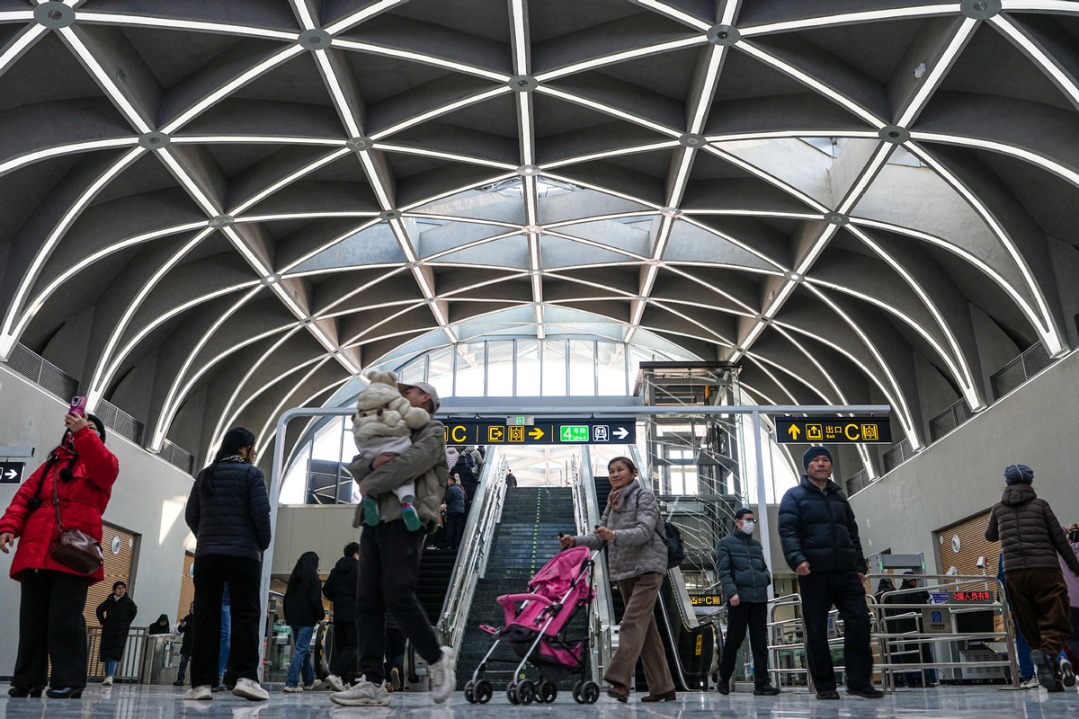
    Jinan, renowned as China’s ‘City of Springs,’ has achieved a groundbreaking engineering feat with the December 27, 2025 inauguration of the nation’s first subway line traversing a fragile karst spring region. The commencement of Subway Line 4 represents a significant advancement in urban transit infrastructure while addressing critical environmental preservation challenges.

    The newly operational line serves one of Jinan’s most congested transportation corridors, substantially reducing commute times and alleviating chronic road traffic congestion. However, the project’s development faced years of delays due to legitimate concerns about potential damage to the city’s unique hydrogeological system. Experts worried that conventional tunneling methods might disrupt the delicate groundwater flows originating from southern mountains that feed Jinan’s approximately 1,000 natural artesian springs.

    To reconcile urban development with environmental protection, engineering teams implemented innovative solutions throughout the construction process. Comprehensive geological surveys identified spring-sensitive zones, enabling route adjustments to avoid critical aquifers. Construction depth was increased strategically, and customized shield tunneling machines equipped with earth pressure balance technology were deployed to prevent ground settlement.

    At crucial station locations, engineers installed specialized U-shaped groundwater diversion channels to maintain natural water flow patterns. The effectiveness of these protective measures is demonstrated by monitoring data showing Baotu Spring, Jinan’s most iconic water feature, reaching 30.32 meters—its highest water level since 1966.

    ‘This achievement validates our scientific approach to spring protection and innovative engineering methodologies,’ stated Huang Yongliang, Senior Spring Protection Engineer at Jinan Rail Transit Group Co., Ltd. The successful implementation provides a valuable blueprint for future infrastructure projects in environmentally sensitive regions worldwide.

  • First and second largest economies in charts and figures

    First and second largest economies in charts and figures

    While China maintains its position as the world’s second-largest economy, its economic trajectory relative to the United States reveals a complex narrative of contrasting development models. Recent data indicates China’s nominal GDP has actually declined from 78% to 65% of US GDP between 2021 and 2024, raising questions among analysts about whether China will ever close the economic gap with the world’s leading economy.

    The two economic superpowers demonstrate fundamentally different structural approaches. China dominates global manufacturing with a purchasing power parity share over four times that of the United States, installing 8.6 times more industrial robots in 2024 alone. The Asian giant produced 12.7 times more steel and delivered over 1,000 times the gross tonnage of commercial ships compared to its American counterpart. China’s export prowess remains unmatched, shipping 73% more merchandise by value and 3.7 times more high-tech goods than the United States.

    Infrastructure development highlights another dimension of China’s economic approach. The country has built a highway system twice the length of America’s and dominates public transportation with 65% of the world’s high-speed rail (48,000 km versus 136 km in the US) and metro systems seven times longer than those in the United States. China’s urban landscape features four times the skyscrapers over 150 meters and five times those over 200 meters, supported by 13 times more 5G base stations.

    Human capital development reveals equally striking contrasts. China now graduates 12.2 million college students annually compared to 3.2 million in the US, including 1.7 million engineering and computer science graduates—6.7 times America’s output. Chinese universities produce twice as many scientific papers and lead in both the Nature Index and critical technology research, dominating 66 of 74 crucial technologies tracked by the Australian Strategic Policy Institute.

    The consumption patterns reflect each economy’s distinctive characteristics. China accounts for half of global e-commerce sales and 46% of luxury goods purchases, while Americans spend significantly more on services including healthcare, education, and housing. Notably, both countries now show identical life expectancies of 79 years, though China maintains a higher healthy life expectancy despite spending $1 trillion on healthcare compared to America’s $5 trillion expenditure.

    This economic dichotomy presents a fundamental question about development philosophy: whether China’s manufacturing and infrastructure-focused model can ultimately surpass America’s service-oriented, high-value economy, or if the world’s two largest economies will continue to evolve along their distinct developmental paths.

  • Zelenskyy to meet with Trump as efforts to end Russia-Ukraine war remain elusive

    Zelenskyy to meet with Trump as efforts to end Russia-Ukraine war remain elusive

    WEST PALM BEACH, Florida — In a high-stakes diplomatic engagement, President Donald Trump is scheduled to host Ukrainian President Volodymyr Zelenskyy at his Mar-a-Lago estate this Sunday. The summit represents a critical juncture in nearly four years of conflict stemming from Russia’s invasion of Ukraine, with both leaders aiming to solidify a peace agreement amid escalating tensions.

    The meeting occurs against a backdrop of intensified Russian aggression, as Moscow has recently amplified missile and drone assaults on Kyiv. Zelenskyy emphasized Ukraine’s commitment to peaceful resolution while acknowledging the challenges, stating on social media platform X: ‘We want peace, and Russia demonstrates a desire to continue the war.’

    Key negotiation points include security guarantees resembling NATO protections, territorial disputes in the Donbas region, and economic support for Ukraine’s reconstruction. The United States has reportedly agreed to provide security assurances similar to those extended to NATO members, while Zelenskyy has indicated willingness to reconsider Ukraine’s NATO membership bid in exchange for equivalent protections.

    Diplomatic efforts have accelerated significantly in recent weeks, with U.S. negotiators making substantial progress on a 20-point draft agreement that Zelenskyy described as ‘approximately 90% complete’ following earlier discussions in Berlin. The Ukrainian leader also conferred with U.S. Special Envoy Steve Witkoff and Jared Kushner on Christmas Day, noting that while sensitive issues remain unresolved, the coming weeks would involve intensive negotiations.

    Despite diplomatic advancements, fundamental disagreements persist regarding territorial concessions. Russian President Vladimir Putin demands international recognition of captured territories—including four key regions and the illegally annexed Crimean Peninsula—as Russian territory. Additionally, Moscow insists on Ukraine abandoning NATO aspirations, limiting military capacity, and granting official status to the Russian language.

    The Trump administration has demonstrated some receptiveness to Russian demands, suggesting that territorial concessions in Donbas combined with economic incentives might persuade Moscow to end hostilities. This approach contrasts with Zelenskyy’s position, which emphasizes the necessity of strong Western support and continued pressure on Russia to achieve what he terms a ‘just and lasting peace.’

    International support for Ukraine continues to strengthen, with Canadian Prime Minister Mark Carney announcing an additional $2.5 billion Canadian (US$1.8 billion) in economic assistance during meetings with Zelenskyy. Carney condemned Russia’s ‘barbarism’ while crediting both Zelenskyy and Trump for creating conditions conducive to peace negotiations.

    As preparations for the summit finalize, outstanding issues include the status of the Zaporizhzhia nuclear facility, post-war recovery funding, and technical details regarding security guarantees and monitoring mechanisms. Ukraine has communicated its positions to U.S. officials, who are expected to relay these to Russian counterparts in the continuing diplomatic dialogue.

  • Cruise ship hits reef on first trip since leaving passenger on island

    Cruise ship hits reef on first trip since leaving passenger on island

    The Coral Adventurer cruise vessel experienced a grounding incident off the eastern coast of Papua New Guinea on Saturday, marking the latest setback for the embattled cruise operator. The incident occurred approximately 30 kilometers from the city of Lae, according to a company spokesperson.

    All 80 passengers and 43 crew members aboard the ship were reported safe following the incident. Initial inspections conducted after the grounding revealed no apparent damage to the vessel’s hull, though more comprehensive assessments were scheduled for Sunday. The Australian Maritime Safety Authority (AMSA) confirmed it had not received any distress calls from the ship but stated it was monitoring the situation and stood ready to assist Papua New Guinea authorities if required.

    This incident comes as the Coral Adventurer remains under joint investigation by AMSA and Queensland Police following the tragic death of 80-year-old passenger Suzanne Rees in late October. Ms. Rees was left behind during a hiking excursion on Lizard Island, a remote Australian landmass, and was found deceased the following day after a major search operation. The vessel had departed without her and only returned hours later when crew members realized she was missing.

    The current 12-day voyage, scheduled to conclude on December 30th, now faces uncertainty as officials assess the situation. This represents the second major disruption for the Coral Adventurer in recent months, following the cancellation of its previous 60-day expedition after Ms. Rees’s death. On that occasion, the cruise operator provided full refunds to all passengers.

    Coral Expeditions CEO Mark Fifield had previously expressed the company’s profound regret over the October incident, stating the organization was “deeply sorry that this has occurred” and had offered full support to the Rees family. The company continues to collaborate with investigating authorities, though AMSA maintains its policy of not publicly disclosing investigation outcomes.

  • BBC visits Myanmar polling station as civil war rages on

    BBC visits Myanmar polling station as civil war rages on

    Amidst an intensifying civil conflict, Myanmar conducted national elections under circumstances described by international observers as profoundly compromised. A firsthand report from a BBC correspondent stationed within the country reveals a voting process marred by widespread apprehension and coercion.

    Voters at polling stations, under the watchful eyes of military personnel, confided to journalists about the palpable atmosphere of fear inhibiting free political expression. This electoral event, criticized by many global powers as a sham, lacks participation from major opposition groups and is being held while the nation is engulfed in severe internal strife. The ongoing civil war between the ruling military junta and various ethnic armed organizations, alongside pro-democracy resistance forces, has displaced millions and created a humanitarian crisis, forming a stark backdrop to the polling process.

    The junta’s justification for the election centers on a purported “roadmap back to democracy,” a claim heavily disputed by Western nations and the Association of Southeast Asian Nations (ASEAN). Analysts suggest the primary objective of the vote is to cement the military’s political control under a veneer of legitimacy, rather than to facilitate a genuine democratic transition. The international community remains largely skeptical, with many preparing to reject the outcome of a process they deem fundamentally illegitimate and unrepresentative of the Myanmar people’s will.

  • Last UAE Lottery draw of 2025: Winning numbers announced; 3 win Dh100,000 each

    Last UAE Lottery draw of 2025: Winning numbers announced; 3 win Dh100,000 each

    The United Arab Emirates witnessed the final lottery event of 2025 this Saturday evening, marking the conclusion of the year’s gaming calendar with the 29th Lucky Day Draw (No. 251227). This weekly tradition, which has undergone significant structural modifications recently, continues to captivate participants nationwide despite adjustments to its reward system.

    The announced winning combination for December 27th’s draw consisted of six day numbers (1, 6, 7, 27, 28, 29) paired with month number 9. While no participant secured the ultimate jackpot requiring perfect matching of all seven digits, three fortunate individuals achieved substantial wins of Dh100,000 each through the Lucky Chance mechanism. Their identifying codes were revealed as BZ5085484, CI5970515, and DT9633495.

    Notably, the grand prize structure has been substantially reconfigured, with the top jackpot now standing at Dh30 million—a significant reduction from the previous Dh100 million benchmark. The secondary prize remains substantial at Dh5 million, followed by tiered rewards of Dh100,000, Dh1,000, and Dh100 for subsequent achievement levels.

    The event produced numerous additional winners, including 32 recipients of Dh1,000 prizes and 9,323 participants who claimed Dh100 rewards. During the live broadcast, previous winner Mohamed Selim Ayadi, a Tunisian expatriate, shared his experience of playing for over a year before securing his Dh100,000 prize. Another long-term resident, Binu Sreedharan, expressed intentions to invest his winnings into entrepreneurial ventures after thirteen years residing in the UAE.

    The UAE Lottery system has dramatically expanded from its initial single-draw format to now encompass twenty distinct gaming experiences. This diversified portfolio includes daily predictive games like Pick 3 and Pick 4, alongside various scratch cards and electronic instant-win options. Friday’s preceding draws already produced winners in these categories, with multiple participants claiming prizes ranging from Dh850 to Dh25,000 depending on their matching accuracy.

  • Fearing deportation, Hondurans in the US send more cash home than ever before

    Fearing deportation, Hondurans in the US send more cash home than ever before

    The escalating U.S. immigration enforcement under President Trump’s administration has produced complex, contrasting consequences across Central America. Honduran national Elías Padilla represents one immediate effect: the deterrence of potential migrants. After meticulously saving for over a year from his meager earnings as a Tegucigalpa Uber driver—where he sometimes makes just $12 for 12 hours of work—Padilla has suspended his migration plans due to fears of detention and deportation.

    Padilla’s hesitation stems from widely circulated images showing Immigration and Customs Enforcement (ICE) agents apprehending undocumented immigrants in major U.S. cities. “I want to improve my life conditions because we earn very little here,” explains Padilla, noting that American Uber drivers can earn in one hour what he makes in an entire day. “But I see what Trump is doing, and it’s made me think twice.”

    Paradoxically, while Trump’s policies have discouraged new migration, they have simultaneously triggered a remarkable surge in remittances to Honduras. Undocumented Hondurans already residing in the United States are sending money home at unprecedented rates, creating an unexpected economic windfall for their native country. Many migrants operate under a heightened sense of urgency, attempting to transfer as much money as possible before potential apprehension.

    Statistical evidence reveals a dramatic 26% increase in remittances to Honduras between January and October compared to the same period the previous year. The total amount sent home surged from $9.7 billion throughout all of 2024 to over $10.1 billion in just the first nine months of this year alone.

    Marcos (pseudonym), a Honduran construction worker residing undocumented in a major U.S. city for five years, exemplifies this trend. He has substantially increased his transfers from $500 monthly to approximately $300 weekly to support his wife and two children in Tegucigalpa. “It’s like a race against time,” Marcos describes. “I just want to make sure that if I am picked up, there’ll be a little money set aside down there.”

    The immigration crackdown has also significantly impacted human smuggling operations. Jimmy (pseudonym), a former coyote who transported migrants through Mexico for two decades, reveals that smuggling costs have dramatically escalated from $12,000-13,000 to $25,000-30,000 per person due to increased enforcement measures. While Jimmy insists that approximately 40% of migrants still successfully complete the journey, the prohibitive costs have placed the option beyond reach for many potential migrants like Padilla.

    Despite the current deterrent effect, Padilla maintains that economic pressures will ultimately prevail over immigration enforcement. “Trump has only postponed my plans,” he asserts. “Not cancelled them.” This sentiment reflects the broader reality that while policies may temporarily alter migration patterns, the fundamental economic disparities driving migration from Central America remain unresolved.