作者: admin

  • China achieves major breakthrough in all-superconducting magnet

    China achieves major breakthrough in all-superconducting magnet

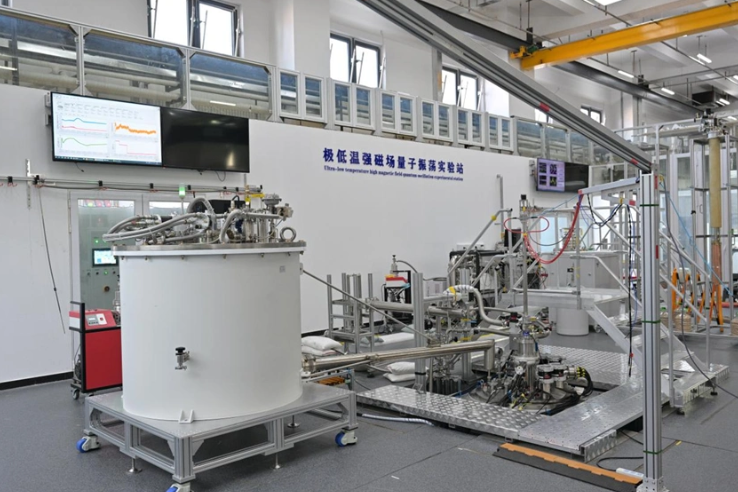
    Chinese scientists have established a new global benchmark in superconducting technology by successfully developing a 35.6 tesla all-superconducting magnet, the Chinese Academy of Sciences announced Tuesday. This groundbreaking achievement represents a significant milestone in extreme magnetic field generation capabilities.

    The record-setting magnet, featuring a 35-millimeter usable aperture, was engineered and tested at the Synergetic Extreme Condition User Facility. Designed specifically for research applications, this advanced instrument will provide both domestic and international scientific teams with unprecedented experimental conditions for cutting-edge investigations.

    This magnetic field intensity dramatically surpasses conventional benchmarks, measuring approximately 12-24 times stronger than medical MRI systems and exceeding Earth’s natural magnetic field by over 700,000 times. Such extreme conditions enable previously impossible scientific exploration at microscopic levels.

    The technological breakthrough resulted from collaborative efforts between the Institute of Electrical Engineering and the Institute of Physics under CAS. Researchers overcame substantial engineering challenges including sophisticated health monitoring systems and precision measurement techniques for high-temperature superconducting components.

    This advancement establishes critical infrastructure for pioneering research across multiple disciplines including materials science, quantum physics, and life sciences. The magnet’s exceptional properties – characterized by extreme field strength, remarkable uniformity, and exceptional stability with minimal energy consumption – position it as a transformative tool for scientific discovery.

    Beyond fundamental research, this superconducting technology holds substantial practical implications for national scientific infrastructure, advanced instrumentation, medical imaging technology, and next-generation applications in energy and transportation systems. The achievement demonstrates China’s growing capabilities in high-tech research infrastructure development with potential global scientific impact.


  • China’s bamboo industry thrives as eco-friendly plastic alternative

    China’s bamboo industry thrives as eco-friendly plastic alternative

    China has successfully established a comprehensive industrial framework positioning bamboo as a premier substitute for plastic, marking a significant advancement in sustainable material development. The National Forestry and Grassland Administration confirmed the industry now boasts an impressive annual output value exceeding 520 billion yuan ($74.8 billion) with product diversity expanding beyond 15,000 distinct items.

    This remarkable growth stems from a dedicated three-year action plan implementing systematic measures to cultivate industrial clusters and optimize the sector’s ecosystem. Government support has been instrumental, with preferential policies allocating over 900 million yuan to bolster relevant industries. The development includes establishment of a specialized standard system encompassing nine categories and 140 items, with China taking leadership in initiating several international standards for bamboo products.

    The industry’s expansion has generated substantial economic impact, with bamboo processing enterprises now numbering over 10,000 nationwide. These enterprises provide employment for nearly 29 million workers across the entire industrial chain. Ten Chinese counties have achieved exceptional scale, each hosting bamboo industries with annual output exceeding 10 billion yuan.

    China’s natural bamboo resources provide a strong foundation for this growth, with nearly 8 million hectares of bamboo forests producing approximately 150 million metric tons annually. Looking forward, the administration has committed to enhanced measures during the 15th Five-Year Plan period (2026-30), including strengthened preferential policies to maximize the bamboo industry’s potential in circular economy development. Additional efforts will focus on improving standard systems and deepening technological innovation to further support sustainable industry growth.

  • India’s Adani, Embraer announce regional aerospace partnership

    India’s Adani, Embraer announce regional aerospace partnership

    In a significant development for India’s aerospace sector, Adani Group and Brazilian aerospace conglomerate Embraer SA unveiled a comprehensive partnership Tuesday to establish a regional transport aircraft manufacturing venture in India. The strategic collaboration encompasses manufacturing, assembly operations, and substantial localization initiatives, representing Adani Group’s ambitious entry into the aviation manufacturing landscape.

    The announcement comes as Embraer strengthens its presence in the South Asian market, having established a New Delhi office last year. Currently, approximately 50 Embraer aircraft of various configurations operate within India, including civil aircraft deployed by regional carrier Star Air. While this fleet remains substantially smaller than the dominant Airbus and Boeing orders held by Indian airlines, Embraer’s market analysis projects substantial growth potential.

    According to Embraer’s market assessment, India will require at least 500 aircraft in the 80- to 146-seat category over the coming two decades. This forecast underscores the strategic timing of the partnership, positioning both companies to capitalize on India’s expanding regional connectivity needs and the government’s ‘Make in India’ manufacturing initiative.

    The collaboration marks a significant diversification for Adani Group, one of India’s largest industrial conglomerates, into aerospace manufacturing—a sector with strategic importance to India’s economic and technological development. The partnership combines Embraer’s established aerospace expertise with Adani’s industrial capabilities and deep understanding of the Indian market dynamics.

  • Israel kills TV presenter, two others in Lebanon

    Israel kills TV presenter, two others in Lebanon

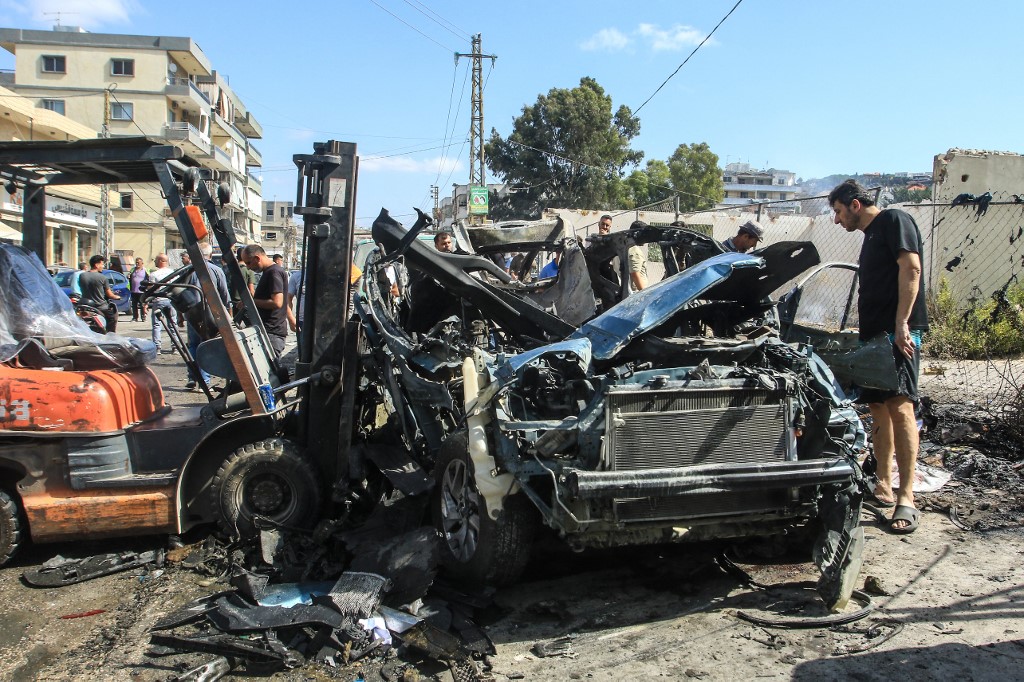
    A targeted Israeli drone strike has resulted in the death of Ali Nour al-Din, a television presenter for Lebanon’s Hezbollah-affiliated Al-Manar TV station, in the southern city of Tyre. The attack has drawn sharp condemnation from Lebanese officials and raised concerns about escalating violence against media personnel in the region.

    Hezbollah immediately characterized the killing as indicative of Israel’s expanding escalation strategy targeting Lebanon’s media community. Lebanese Information Minister Paul Morcos publicly denounced the strike on social media platform X, labeling it a clear war crime and violation of international laws protecting journalists.

    In a separate incident, an Israeli drone strike in Kfar Rumman claimed the lives of Egyptian national Abdul Nabi Ramadan Ameen Al Sayed and Lebanese citizen Samer Hteit when their vehicle was hit, according to reports from the Quds news network.

    These developments occur amid Lebanon’s formal submission of a complaint to the United Nations documenting 2,036 Israeli ceasefire violations between October and December 2025. The Lebanese government asserts these actions constitute clear breaches of UN Security Council Resolution 1701, which ended the 2006 conflict between Israel and Hezbollah.

    The current tensions follow a November 2024 ceasefire that halted months of intensified clashes that had escalated into full-scale warfare the previous September. During that conflict, Israel eliminated several key Hezbollah leaders including long-time chief Hassan Nasrallah, significantly degrading the group’s operational capabilities. Hezbollah has maintained restraint for nearly a year without launching retaliatory operations.

  • Tens of thousands flee northwest Pakistan over fears of military operation

    Tens of thousands flee northwest Pakistan over fears of military operation

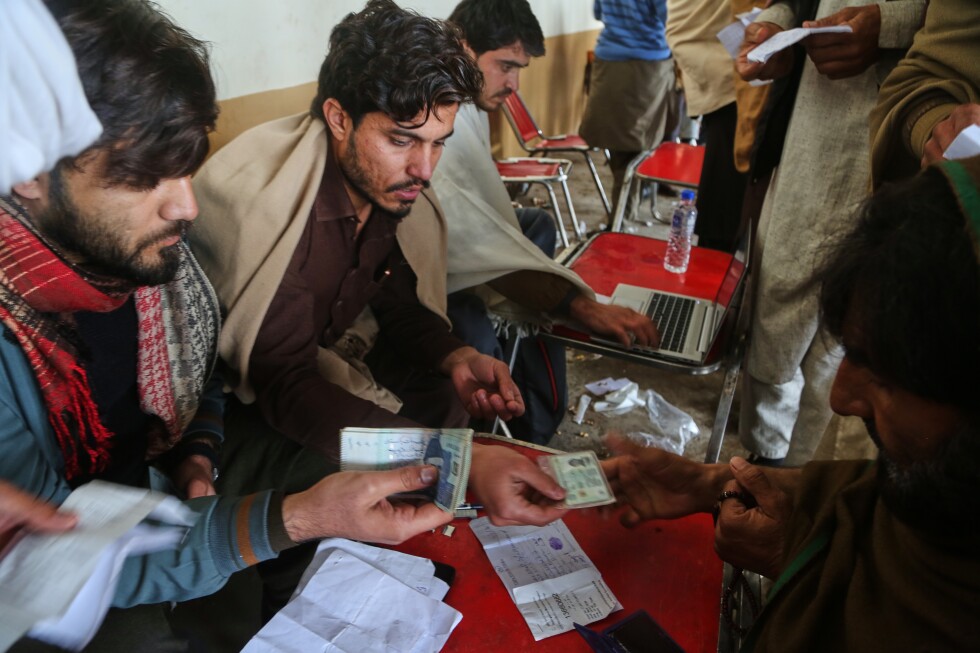
    A significant humanitarian crisis is unfolding in northwestern Pakistan’s Khyber Pakhtunkhwa province, where over 70,000 predominantly female and child evacuees have abandoned their homes in the Tirah region bordering Afghanistan. The mass displacement follows mounting uncertainty regarding potential military operations against Tehrik-e-Taliban Pakistan (TTP) militants in the area.

    Contradictory narratives have emerged between provincial and federal authorities regarding the exodus. Khyber Pakhtunkhwa provincial government spokesman Shafi Jan has publicly attributed the displacement to federal government policies, asserting that Islamabad has reversed its earlier stance on military operations. Meanwhile, Defense Minister Khawaja Mohammad Asif has categorically denied any ongoing or planned military action in Tirah, instead attributing the migration patterns to severe winter conditions.

    The displacement wave began approximately one month after mosque announcements urged residents to evacuate by January 23rd to avoid potential combat situations. This follows similar operations in August within Bajaur district that displaced hundreds of thousands. Local administrator Talha Rafiq Alam confirmed the registration of approximately 10,000 families (estimated 70,000 individuals) from Tirah’s total population of 150,000, with registration deadlines extended to February 5th.

    Eyewitness accounts contradict official statements, with 35-year-old evacuee Zar Badshah reporting mortar shell explosions in villages that allegedly killed one woman and injured four children. Minority communities including Sikh residents have also fled, citing severe food shortages exacerbated by heavy snowfall and security concerns.

    The political dimension intensifies as Khyber Pakhtunkhwa Chief Minister Suhail Afridi, representing imprisoned former Prime Minister Imran Khan’s party, has criticized military intentions and vowed to prevent full-scale operations in Tirah. Meanwhile, the military maintains its commitment to intelligence-based operations against TTP militants, who authorities claim have established sanctuaries in Afghanistan and frequently use local residents as human shields during raids.

    The situation remains particularly volatile since the Afghan Taliban’s 2021 return to power, which has emboldened TTP operations despite being a separate entity. The region previously gained national attention in September following a compound explosion that killed at least 24 people, with conflicting accounts between authorities claiming militant casualties and locals reporting civilian deaths.

  • Dutch court sentences Eritrean man to 20 years for cruel people smuggling

    Dutch court sentences Eritrean man to 20 years for cruel people smuggling

    THE HAGUE, Netherlands — In a landmark ruling addressing transnational human trafficking, an Eritrean national has received the maximum 20-year prison sentence from a Dutch court for orchestrating a brutal smuggling network that preyed on vulnerable migrants. Tewelde Goitom, operating under the alias Amanuel Walid, was convicted on multiple counts of people smuggling and extortion by the Overijssel District Court.

    The court established that Goitom led a criminal enterprise that subjected migrants to what Presiding Judge René Melaard described as “cruel, violent, and degrading treatment” throughout their Mediterranean crossing attempts. Migrants were held captive in Libyan camps under horrific conditions while their families in the Netherlands were systematically extorted for payment.

    Judge Melaard characterized the case as “exceptionally serious” due to both the scale of operations and the particularly brutal methods employed. “You and your accomplices were merciless, unscrupulous, and devoid of regard for human dignity,” Melaard stated during sentencing, emphasizing that the crimes represented “gross undermining of Dutch and European immigration policy.”

    The prosecution demonstrated that Goitom’s network operated a sophisticated extortion scheme where migrants were forced to contact relatives under duress, with payments processed through multiple jurisdictions including the United Arab Emirates. Only upon full payment were migrants permitted to continue their perilous journeys toward Europe.

    Goitom, who was extradited from Ethiopia in 2022 where he faced similar convictions, maintained throughout the trial that he was a victim of mistaken identity. The court rejected this defense along with jurisdictional challenges from his legal team, though acquitted him on two specific migrant cases due to insufficient evidence.

    In addition to the prison term, Goitom was ordered to pay over €30,000 ($35,000) in victim compensation. The ruling comes as Dutch authorities pursue another high-profile trafficker, Kidane Zekarias Habtemariam, recently extradited from the UAE after escaping custody during his Ethiopian trial.

  • France invites Chad president in bid to ease troubled relations

    France invites Chad president in bid to ease troubled relations

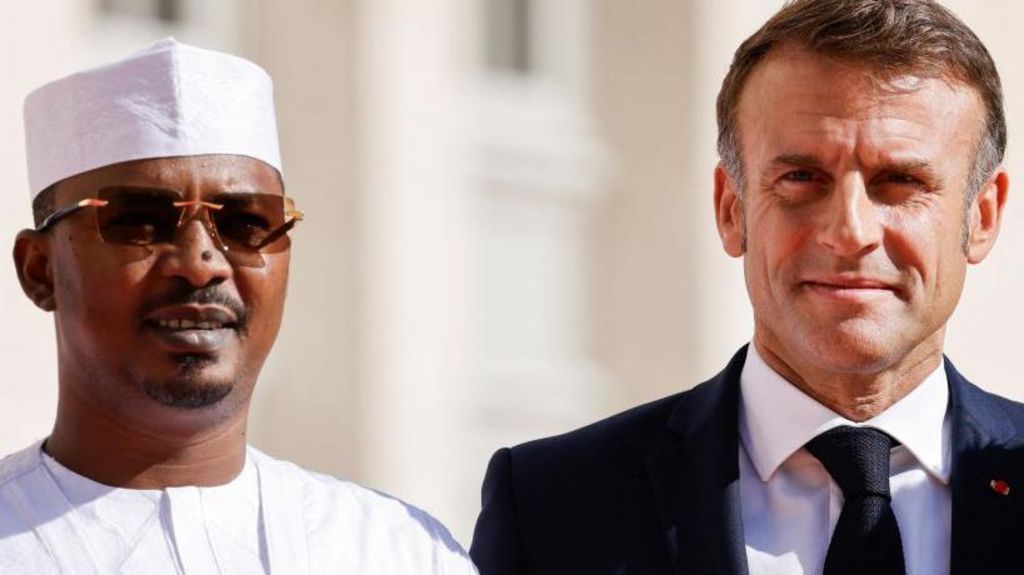
    In a significant diplomatic overture, French President Emmanuel Macron has formally invited Chadian President Mahamat Déby to Paris, signaling a potential reset of bilateral relations following recent military estrangement. The verbal invitation was conveyed by France’s Ambassador to Chad, Éric Gérard, during a Monday meeting at the presidential palace in N’Djamena.

    This development comes against the backdrop of substantial geopolitical shifts. In November 2024, Chad abruptly terminated its longstanding defense agreement with France, declaring the colonial-era pact ‘obsolete’ for addressing contemporary security challenges. This decision triggered the withdrawal of approximately 1,000 French troops who had been providing intelligence and logistical support from bases across the central African nation.

    The Chadian presidency confirmed Déby’s acceptance of the invitation while withholding specific timing details. Officials characterized the discussion as focusing on ‘renewal of bilateral cooperation’ through ‘dialogue and openness in a spirit of consultation and consideration of the interests of each party.’

    Chad’s recent foreign policy reorientation represents broader regional realignments. Prior to severing military ties with France, N’Djamena had also ordered the departure of US forces, fueling speculation about shifting alliances. While Déby has publicly denied intentions to replace Western partners with alternative foreign powers, Chad recently signed a military cooperation memorandum with Belarus, a close Russian ally.

    This diplomatic maneuvering occurs as France’s influence in the Sahel region continues to diminish following forced withdrawals from Mali, Niger, and Burkina Faso after successive military coups. Chad remains challenged by significant security threats while asserting what it terms ‘sovereign independence’ in defense matters after six decades of nationhood.

  • ‘Crying horse’ toys go viral in China ahead of Lunar New Year

    ‘Crying horse’ toys go viral in China ahead of Lunar New Year

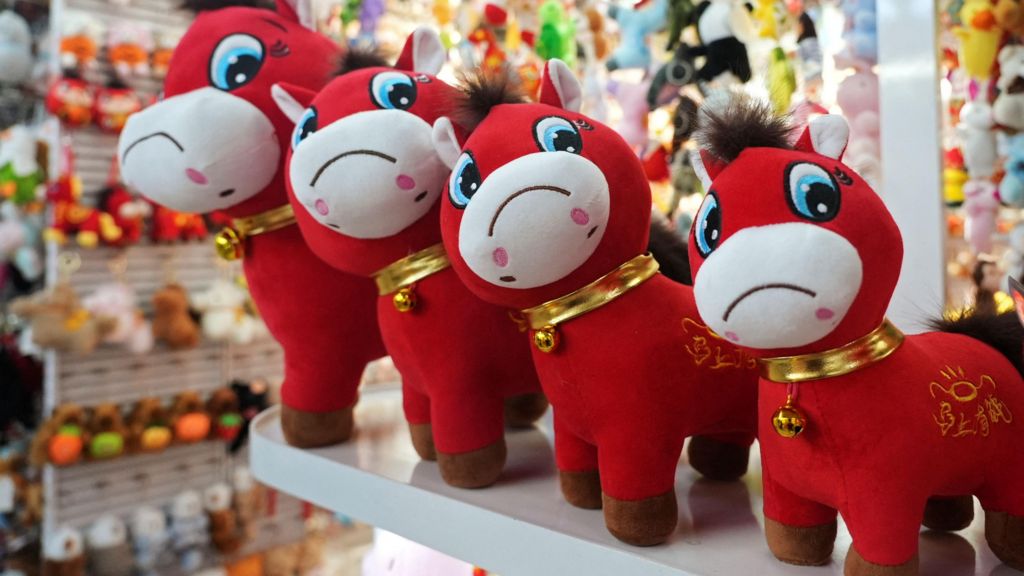
    An accidentally manufactured frowning horse plush toy has emerged as an unexpected cultural phenomenon in China, resonating deeply with the nation’s young workforce ahead of Lunar New Year celebrations. The stuffed animal, originally produced in error when a factory worker sewed its smile upside down, has transformed from a manufacturing defect into a symbolic representation of contemporary work-life realities.

    The toy’s creator, Zhang Huoqing of Yiwu-based Happy Sister shop, anticipated needing to issue refunds for the misfigured product. Instead, the melancholic equine became an internet sensation after images circulated online, triggering unprecedented demand. Zhang noted the toy’s gloomy expression particularly strikes a chord with China’s younger generation, who self-identify as ‘corporate slaves’ in today’s competitive job market.

    Consumer responses highlight the emotional connection: ‘This crying horse really fits the reality of modern working people,’ Zhang recounted from customer feedback. ‘People joked that the crying horse is how you look at work, while the smiling one is how you look after work.’

    The 20cm crimson toy, adorned with golden collar bells and embroidered with ‘money comes quickly’ in golden lettering, retails for 25 yuan (£2.62). Its design incorporates traditional Lunar New Year symbolism while subverting expectations through its sorrowful countenance.

    Manufacturing has scaled dramatically to satisfy domestic and international demand, with the item evolving into more than mere merchandise. As buyer ‘Tuan Tuan Mami’ expressed to the South China Morning Post, ‘This little horse looks so sad and pitiful, just like the way I feel at work. With this crying toy in the Year of the Horse, I hope to leave all my grievances at work behind and keep only happiness.’

    Not all observers embrace the phenomenon. Fellow Yiwu merchant Lou Zhenxian acknowledged the toy’s emotional appeal but questioned its underlying message: ‘I believe you should work hard when at work and be happy after work, it shouldn’t be two extreme opposites.’

    The toy’s popularity emerges as China prepares to welcome the Year of the Horse in February, with the zodiac animal typically symbolizing vitality and success in Chinese tradition—attributes starkly contrasted by the plush’s lamentable expression.

  • Iran official says businesses’ internet access may be restored in coming days

    Iran official says businesses’ internet access may be restored in coming days

    Iranian authorities have indicated that international internet access for businesses might be restored within days, following an 18-day nationwide blackout imposed during widespread anti-government protests. Hossein Rafieian, a senior digital economy official, stated through the Mehr news agency that corporate internet connectivity could return within “the next day or two,” though he acknowledged the final decision rests beyond his direct authority.

    The internet shutdown, which monitoring group Netblocks confirms has persisted for over two weeks, has drawn international condemnation as rights organizations report it has enabled a violent crackdown on demonstrators. According to the US-based Human Rights Activists News Agency (HRANA), the confirmed death toll has reached 5,848 individuals, including 209 security personnel, with an additional 17,091 potential fatalities under investigation. The organization estimates at least 41,283 arrests have occurred.

    Iranian officials provided their first official casualty figures last week, claiming 3,117 deaths—mostly security forces and civilians allegedly killed by protesters described as “rioters.” The protests initially emerged in late December over economic concerns but rapidly evolved into a broad movement challenging the Islamic Republic’s leadership, culminating in massive demonstrations beginning January 8.

    The economic impact of the digital blackout remains contested. Iran’s deputy telecommunications minister estimated daily losses between $3-4 million, while NetBlocks calculated a significantly higher economic damage exceeding $37 million daily. The internet monitor also noted authorities were intensifying filtering measures to limit circumvention while promoting state-approved narratives through whitelisted accounts.

  • India, EU finalise landmark trade deal, PM Modi says

    India, EU finalise landmark trade deal, PM Modi says

    In a groundbreaking development for global trade, India and the European Union have concluded negotiations on a comprehensive trade agreement that represents approximately 25% of the world’s economy. Prime Minister Narendra Modi announced the completion of this landmark pact on Tuesday, marking the culmination of nearly twenty years of intermittent negotiations between the parties.

    The agreement establishes a framework for India to gradually open its massive, previously protected market of 1.4 billion people to free trade with the 27-nation European bloc, which currently stands as India’s largest trading partner. Bilateral trade between India and the EU reached $136.5 billion during the fiscal year ending March 2025.

    This strategic partnership emerges against a backdrop of shifting global alliances and economic uncertainties. The deal follows the recent collapse of India-US trade negotiations after the Trump administration imposed substantial tariffs, including a 50% levy on Indian goods. The agreement also comes shortly after the EU finalized similar pacts with Mercosur, Indonesia, Mexico, and Switzerland.

    According to Indian government officials familiar with the matter, the formal signing ceremony will occur following a five-to-six month legal review process, with full implementation expected within twelve months. This agreement represents part of a broader pattern of nations seeking alternative trade partnerships amid increasing volatility in traditional Western alliances.