作者: admin

  • Kanye West apologises for antisemitic remarks, says brain injury affected mental health

    Kanye West apologises for antisemitic remarks, says brain injury affected mental health

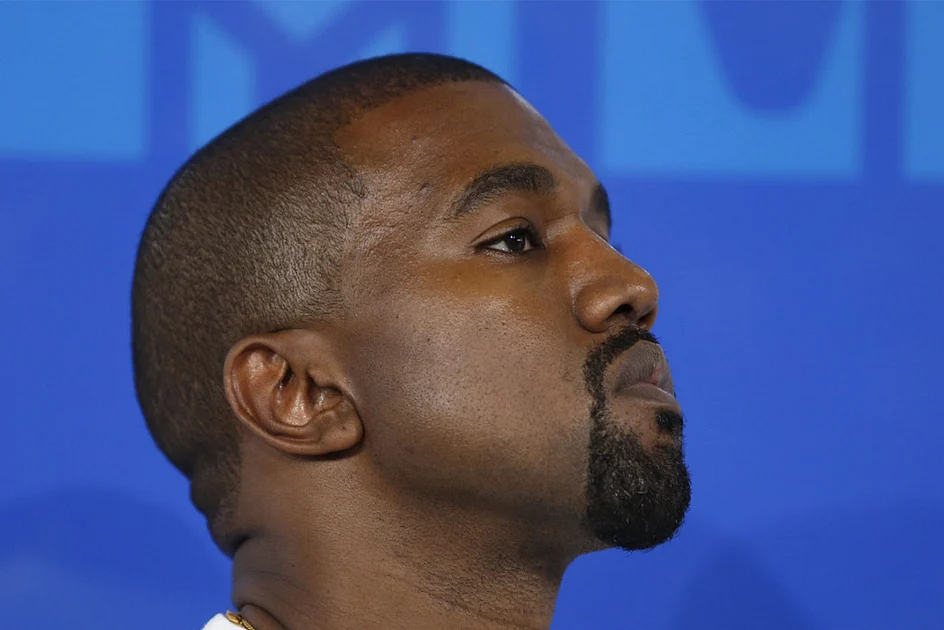
    In an extraordinary public mea culpa, music icon Kanye West (now known as Ye) has issued a formal apology for his history of antisemitic remarks and controversial behavior through a full-page advertisement in The Wall Street Journal. The rapper revealed previously undisclosed medical information that provides context for his erratic public conduct in recent years.

    The artist disclosed that a severe car accident twenty-five years ago resulted in an undiagnosed traumatic brain injury affecting his right frontal lobe. While immediate attention focused on his broken jaw and visible injuries, comprehensive neurological evaluation was overlooked at the time. This medical oversight, West explained, went undetected until proper diagnosis in 2023, significantly impacting his mental health and contributing to his bipolar type-1 diagnosis.

    West described experiencing a ‘four-month-long manic episode of psychotic, paranoid and impulsive behavior’ in 2025, during which he ‘lost touch with reality’ and gravitated toward ‘the most destructive symbols’ – including selling T-shirts bearing swastikas. He expressed particular remorse for how his actions affected loved ones, acknowledging they ‘endured fear, confusion, humiliation, and the exhaustion of trying to have someone who was, at times, unrecognizable.’

    The artist explicitly distanced himself from antisemitic ideologies, stating: ‘It does not excuse what I did, though. I am not a Nazi or an antisemite. I love Jewish people.’ He credited his wife, Bianca Censori, with encouraging him to seek professional help during his mental health crisis.

    West concluded his apology by outlining his recovery regimen involving medication, therapy, exercise, and clean living, which has provided him ‘newfound, much-needed clarity.’ He pledged to channel his energy into ‘positive, meaningful art: music, clothing, design, and other new ideas to help the world’ while seeking forgiveness from fans and those affected by his past actions.

  • China’s tech firm deploys AI model in orbit, unveils massive space computing plan

    China’s tech firm deploys AI model in orbit, unveils massive space computing plan

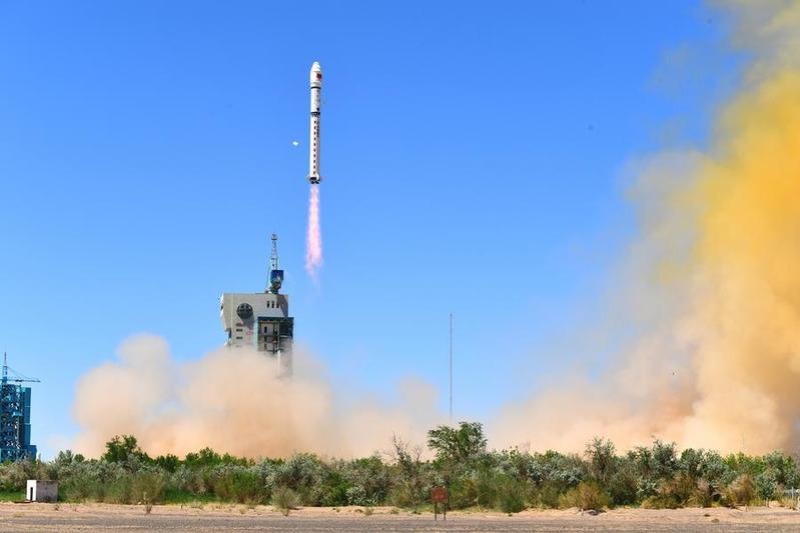
    In a groundbreaking advancement for space technology, Chinese commercial aerospace pioneer GuoXing Aerospace Technology has successfully deployed a general-purpose artificial intelligence model aboard its operational satellite constellation. The Chengdu-based startup announced this week that it has uplinked Alibaba’s Qwen3 large language model to its inaugural space-based computing center, enabling complete end-to-end reasoning tasks to be processed entirely in orbit.

    Executive Vice-President Wang Yabo confirmed this represents the world’s first deployment of a general-purpose large-scale AI model from terrestrial control systems to an operational satellite network in space. The achievement follows China’s launch last May of 12 space computing satellites, forming the initial cluster of GuoXing Aerospace’s ambitious orbital computing project.

    During recent trials, the Qwen3 model successfully completed multiple experiments with remarkable efficiency. Questions transmitted from Earth to the satellite were processed on-board, with results returned to ground stations within an impressive two-minute timeframe.

    This development emerges as artificial intelligence continues driving unprecedented demand for computing resources, sparking a new technological frontier that pushes intelligent computing capabilities into space. The movement gained momentum when SpaceX recently orbited its Starcloud-1 satellite equipped with Nvidia GPUs.

    Looking toward the future, Wang outlined the company’s visionary plan to construct an extensive network of 2,800 specialized computing satellites by 2035. This proposed constellation will comprise 2,400 inference satellites and 400 training satellites, deployed across sun-synchronous, dawn-dusk and low-inclination orbits at altitudes ranging from 500 to 1,000 kilometers.

    The sophisticated satellite network will employ laser inter-satellite links to facilitate high-speed data transfer, with ambitious targets to deliver 100,000 petaflops of inference compute capacity and 1 million petaflops of training compute power worldwide. The company anticipates deploying its second and third satellite clusters within the year, with plans to complete a 1,000-satellite network by 2030.

  • Rwanda takes legal action against UK over axed migrant deal

    Rwanda takes legal action against UK over axed migrant deal

    The Rwandan government has formally commenced international legal proceedings against the United Kingdom through the Permanent Court of Arbitration in The Hague, seeking financial compensation for what it claims are unfulfilled commitments under a terminated migration agreement. This development marks a significant escalation in the diplomatic dispute between the two nations following the collapse of the controversial asylum partnership.

    According to documents filed with the Netherlands-based arbitration body, Rwanda contends that the UK failed to honor its financial obligations under the treaty signed by the previous Conservative administration. The agreement, which envisioned relocating certain asylum seekers from Britain to Rwanda, included substantial economic support packages for the African nation.

    The legal challenge emerged after Prime Minister Sir Keir Starmer’s government terminated the arrangement in 2024, declaring the scheme ‘dead and buried’ shortly after Labour’s electoral victory. The Home Office subsequently announced that £220 million in scheduled future payments would not be disbursed to Rwanda.

    A spokesperson for the Prime Minister’s office stated: ‘We will robustly defend our position to protect British taxpayers. The Rwanda scheme was a complete disaster that wasted £700 million of taxpayer money while resulting in the transfer of merely four volunteers.’

    The original agreement, negotiated under Conservative leadership, involved total expenditures of approximately £700 million, including £290 million in direct payments to Rwanda. Additional provisions included £100 million scheduled for fiscal years 2025-26 and 2026-27, plus £120 million contingent upon the transfer of 300 individuals to Rwandan soil.

    Michael Butera, Chief Technical Adviser to Rwanda’s Minister of Justice, explained the nation’s position: ‘Through arbitration, Rwanda seeks a legal determination of the parties’ respective rights and obligations under the treaty, in accordance with international law.’

    The Permanent Court of Arbitration, an established forum for resolving interstate disputes, has acknowledged receipt of the case with its status listed as pending. Arbitration procedures typically involve extended timelines, often spanning multiple years, as parties present detailed arguments according to established timetables.

    Conservative opposition figures have characterized the legal action as ‘yet another catastrophic consequence of Labour’s decision to scrap the Rwanda scheme,’ warning that British taxpayers now face substantial financial liability due to the government’s policy reversal.

    The UK government had previously indicated efforts to recover funds following the agreement’s termination, though Rwandan authorities maintain they are under ‘no obligation’ to refund any payments already received.

  • Historic Wanping town in Beijing shines anew ahead of Spring Festival

    Historic Wanping town in Beijing shines anew ahead of Spring Festival

    The ancient town of Wanping in Beijing’s Fengtai district has unveiled its restored historical fortifications to the public, marking a significant cultural preservation achievement. This extensive renovation project, completed in late 2025, has revitalized the historic site just as the Spring Festival approaches, creating new opportunities for cultural tourism and historical education.

    The restoration initiative has carefully preserved the architectural integrity of Wanping’s ancient structures while incorporating modern visitor amenities. The town’s reopening in September 2025 has already attracted considerable attention from both local residents and international visitors seeking authentic cultural experiences.

    A spectacular 3D light show on December 31, 2025, demonstrated the town’s new capabilities as a cultural venue, blending traditional elements with contemporary technology. The event showcased how historical preservation can coexist with modern entertainment, creating a unique atmosphere for celebrating traditional festivals.

    The timing of Wanping’s renaissance aligns perfectly with the upcoming Spring Festival celebrations, offering residents and tourists alike a destination that combines historical significance with festive activities. This careful synchronization demonstrates the thoughtful planning behind the restoration project’s implementation.

    Local authorities have emphasized that the renovation not only preserves physical structures but also revitalizes traditional cultural practices associated with the area. The project represents a model for urban historical preservation that balances conservation with functional modernization.

    The renewed Wanping town stands as a testament to Beijing’s commitment to preserving its cultural heritage while adapting historical sites for contemporary use, ensuring that ancient landmarks remain relevant and accessible to modern audiences.

  • Israel preparing for talks with Trump administration on new 10-year security deal, FT reports

    Israel preparing for talks with Trump administration on new 10-year security deal, FT reports

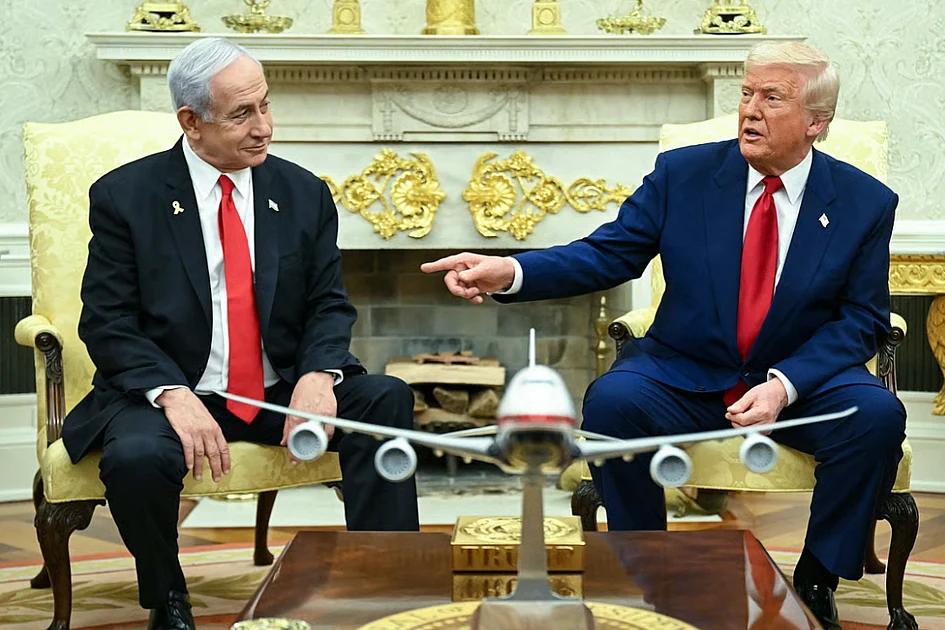
    Israel is initiating preparatory discussions with the Trump administration to establish a new decade-long security arrangement, signaling a potential transformation in one of the world’s most enduring defense partnerships. According to exclusive reporting from the Financial Times, these negotiations will focus on transitioning from direct financial assistance to collaborative defense projects as the cornerstone of bilateral security cooperation.

    Gil Pinchas, former chief financial adviser to Israel’s military and defense ministry, revealed that forthcoming talks would prioritize joint military initiatives over traditional cash grants. This strategic pivot emerges despite the current Memorandum of Understanding (2016-2028) that provides Israel with $38 billion in military aid, including $33 billion for weapons procurement and $5 billion for missile defense systems.

    The proposed restructuring aligns with Israeli Prime Minister Benjamin Netanyahu’s recently stated objective of gradually reducing dependence on American military assistance over the next decade. Pinchas characterized the $3.3 billion annual ‘free money’ component as one element that could ‘decrease gradually’ within the new framework.

    Emphasizing the broader strategic significance beyond financial considerations, Pinchas noted that ‘the partnership is more important than just the net financial issue… there are a lot of things that are equal to money.’ The U.S. State Department has not yet responded to inquiries regarding the anticipated negotiations, which are expected to commence in the coming weeks.

  • China achieves major breakthrough in all-superconducting magnet

    China achieves major breakthrough in all-superconducting magnet

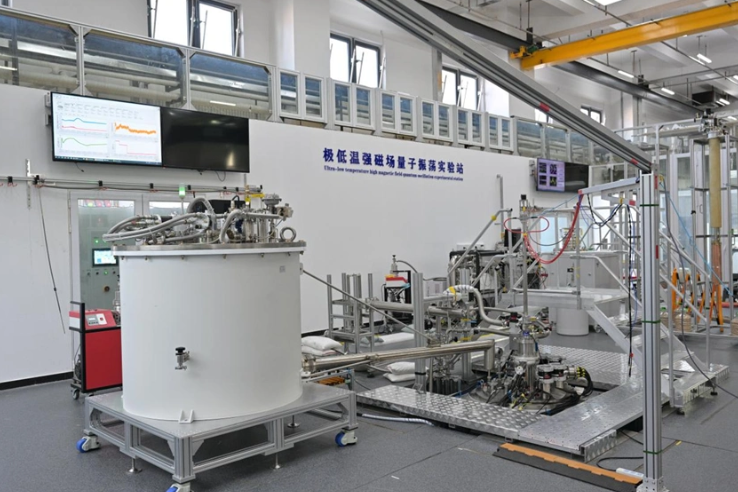
    Chinese scientists have established a new global benchmark in superconducting technology by successfully developing a 35.6 tesla all-superconducting magnet, the Chinese Academy of Sciences announced Tuesday. This groundbreaking achievement represents a significant milestone in extreme magnetic field generation capabilities.

    The record-setting magnet, featuring a 35-millimeter usable aperture, was engineered and tested at the Synergetic Extreme Condition User Facility. Designed specifically for research applications, this advanced instrument will provide both domestic and international scientific teams with unprecedented experimental conditions for cutting-edge investigations.

    This magnetic field intensity dramatically surpasses conventional benchmarks, measuring approximately 12-24 times stronger than medical MRI systems and exceeding Earth’s natural magnetic field by over 700,000 times. Such extreme conditions enable previously impossible scientific exploration at microscopic levels.

    The technological breakthrough resulted from collaborative efforts between the Institute of Electrical Engineering and the Institute of Physics under CAS. Researchers overcame substantial engineering challenges including sophisticated health monitoring systems and precision measurement techniques for high-temperature superconducting components.

    This advancement establishes critical infrastructure for pioneering research across multiple disciplines including materials science, quantum physics, and life sciences. The magnet’s exceptional properties – characterized by extreme field strength, remarkable uniformity, and exceptional stability with minimal energy consumption – position it as a transformative tool for scientific discovery.

    Beyond fundamental research, this superconducting technology holds substantial practical implications for national scientific infrastructure, advanced instrumentation, medical imaging technology, and next-generation applications in energy and transportation systems. The achievement demonstrates China’s growing capabilities in high-tech research infrastructure development with potential global scientific impact.

  • China’s bamboo industry thrives as eco-friendly plastic alternative

    China’s bamboo industry thrives as eco-friendly plastic alternative

    China has successfully established a comprehensive industrial framework positioning bamboo as a premier substitute for plastic, marking a significant advancement in sustainable material development. The National Forestry and Grassland Administration confirmed the industry now boasts an impressive annual output value exceeding 520 billion yuan ($74.8 billion) with product diversity expanding beyond 15,000 distinct items.

    This remarkable growth stems from a dedicated three-year action plan implementing systematic measures to cultivate industrial clusters and optimize the sector’s ecosystem. Government support has been instrumental, with preferential policies allocating over 900 million yuan to bolster relevant industries. The development includes establishment of a specialized standard system encompassing nine categories and 140 items, with China taking leadership in initiating several international standards for bamboo products.

    The industry’s expansion has generated substantial economic impact, with bamboo processing enterprises now numbering over 10,000 nationwide. These enterprises provide employment for nearly 29 million workers across the entire industrial chain. Ten Chinese counties have achieved exceptional scale, each hosting bamboo industries with annual output exceeding 10 billion yuan.

    China’s natural bamboo resources provide a strong foundation for this growth, with nearly 8 million hectares of bamboo forests producing approximately 150 million metric tons annually. Looking forward, the administration has committed to enhanced measures during the 15th Five-Year Plan period (2026-30), including strengthened preferential policies to maximize the bamboo industry’s potential in circular economy development. Additional efforts will focus on improving standard systems and deepening technological innovation to further support sustainable industry growth.

  • India’s Adani, Embraer announce regional aerospace partnership

    India’s Adani, Embraer announce regional aerospace partnership

    In a significant development for India’s aerospace sector, Adani Group and Brazilian aerospace conglomerate Embraer SA unveiled a comprehensive partnership Tuesday to establish a regional transport aircraft manufacturing venture in India. The strategic collaboration encompasses manufacturing, assembly operations, and substantial localization initiatives, representing Adani Group’s ambitious entry into the aviation manufacturing landscape.

    The announcement comes as Embraer strengthens its presence in the South Asian market, having established a New Delhi office last year. Currently, approximately 50 Embraer aircraft of various configurations operate within India, including civil aircraft deployed by regional carrier Star Air. While this fleet remains substantially smaller than the dominant Airbus and Boeing orders held by Indian airlines, Embraer’s market analysis projects substantial growth potential.

    According to Embraer’s market assessment, India will require at least 500 aircraft in the 80- to 146-seat category over the coming two decades. This forecast underscores the strategic timing of the partnership, positioning both companies to capitalize on India’s expanding regional connectivity needs and the government’s ‘Make in India’ manufacturing initiative.

    The collaboration marks a significant diversification for Adani Group, one of India’s largest industrial conglomerates, into aerospace manufacturing—a sector with strategic importance to India’s economic and technological development. The partnership combines Embraer’s established aerospace expertise with Adani’s industrial capabilities and deep understanding of the Indian market dynamics.

  • Israel kills TV presenter, two others in Lebanon

    Israel kills TV presenter, two others in Lebanon

    A targeted Israeli drone strike has resulted in the death of Ali Nour al-Din, a television presenter for Lebanon’s Hezbollah-affiliated Al-Manar TV station, in the southern city of Tyre. The attack has drawn sharp condemnation from Lebanese officials and raised concerns about escalating violence against media personnel in the region.

    Hezbollah immediately characterized the killing as indicative of Israel’s expanding escalation strategy targeting Lebanon’s media community. Lebanese Information Minister Paul Morcos publicly denounced the strike on social media platform X, labeling it a clear war crime and violation of international laws protecting journalists.

    In a separate incident, an Israeli drone strike in Kfar Rumman claimed the lives of Egyptian national Abdul Nabi Ramadan Ameen Al Sayed and Lebanese citizen Samer Hteit when their vehicle was hit, according to reports from the Quds news network.

    These developments occur amid Lebanon’s formal submission of a complaint to the United Nations documenting 2,036 Israeli ceasefire violations between October and December 2025. The Lebanese government asserts these actions constitute clear breaches of UN Security Council Resolution 1701, which ended the 2006 conflict between Israel and Hezbollah.

    The current tensions follow a November 2024 ceasefire that halted months of intensified clashes that had escalated into full-scale warfare the previous September. During that conflict, Israel eliminated several key Hezbollah leaders including long-time chief Hassan Nasrallah, significantly degrading the group’s operational capabilities. Hezbollah has maintained restraint for nearly a year without launching retaliatory operations.

  • Tens of thousands flee northwest Pakistan over fears of military operation

    Tens of thousands flee northwest Pakistan over fears of military operation

    A significant humanitarian crisis is unfolding in northwestern Pakistan’s Khyber Pakhtunkhwa province, where over 70,000 predominantly female and child evacuees have abandoned their homes in the Tirah region bordering Afghanistan. The mass displacement follows mounting uncertainty regarding potential military operations against Tehrik-e-Taliban Pakistan (TTP) militants in the area.

    Contradictory narratives have emerged between provincial and federal authorities regarding the exodus. Khyber Pakhtunkhwa provincial government spokesman Shafi Jan has publicly attributed the displacement to federal government policies, asserting that Islamabad has reversed its earlier stance on military operations. Meanwhile, Defense Minister Khawaja Mohammad Asif has categorically denied any ongoing or planned military action in Tirah, instead attributing the migration patterns to severe winter conditions.

    The displacement wave began approximately one month after mosque announcements urged residents to evacuate by January 23rd to avoid potential combat situations. This follows similar operations in August within Bajaur district that displaced hundreds of thousands. Local administrator Talha Rafiq Alam confirmed the registration of approximately 10,000 families (estimated 70,000 individuals) from Tirah’s total population of 150,000, with registration deadlines extended to February 5th.

    Eyewitness accounts contradict official statements, with 35-year-old evacuee Zar Badshah reporting mortar shell explosions in villages that allegedly killed one woman and injured four children. Minority communities including Sikh residents have also fled, citing severe food shortages exacerbated by heavy snowfall and security concerns.

    The political dimension intensifies as Khyber Pakhtunkhwa Chief Minister Suhail Afridi, representing imprisoned former Prime Minister Imran Khan’s party, has criticized military intentions and vowed to prevent full-scale operations in Tirah. Meanwhile, the military maintains its commitment to intelligence-based operations against TTP militants, who authorities claim have established sanctuaries in Afghanistan and frequently use local residents as human shields during raids.

    The situation remains particularly volatile since the Afghan Taliban’s 2021 return to power, which has emboldened TTP operations despite being a separate entity. The region previously gained national attention in September following a compound explosion that killed at least 24 people, with conflicting accounts between authorities claiming militant casualties and locals reporting civilian deaths.